


At 30 and a half, Shlomit Laufer was diagnosed with breast cancer and suddenly entered a world no young woman imagines for herself: egg preservation, chemotherapy, surgery, biological treatment and radiation. The cancer disappeared, but the struggle continued.
To reduce the risk of recurrence, Laufer began prolonged anti-hormonal treatment designed to block the effects of estrogen, a hormone that can fuel certain types of breast cancer. The cost was severe. At 31, decades earlier than expected, she was forced into menopause, with symptoms usually associated with a far later stage of life becoming part of her daily routine.
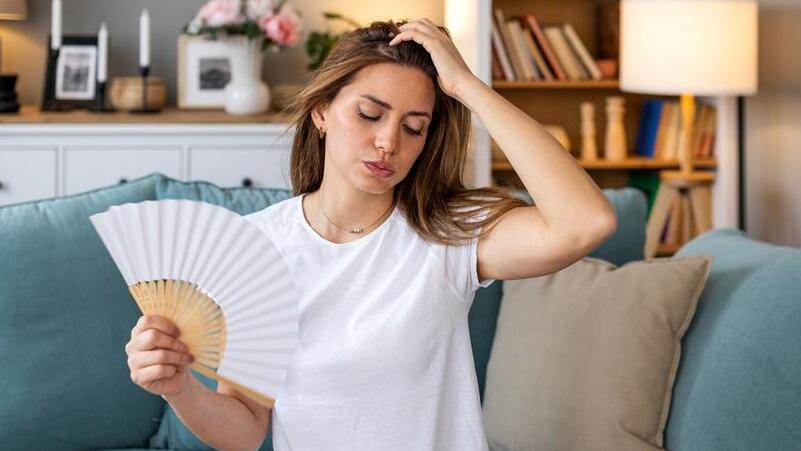
“I had a hormone-sensitive cancer, which means I cannot have hormones in my body,” says Laufer, now 39, a special education teacher. “I have to take anti-hormonal pills. You need to take them for about 10 years, and I have already been taking them for seven.”
The treatment intended to mark the path out of cancer became an inseparable part of life after it. “I have experienced all the symptoms of menopause since I was 31,” she says. “The hot flashes are extremely severe. They come at any hour, in any weather, even when it is below freezing.
“I am more irritable than I used to be, I tire more quickly, I have body aches that come and go, migraines and sleep problems. Loss of sexual desire is also something that needs to be discussed, especially among young women. As time passes, I keep discovering that everything happening to me is connected to this.”
Laufer is far from alone. Even as menopause has gained greater public attention and hormone therapy has returned to the forefront, a large group of women remains largely excluded from the conversation: breast cancer survivors, women at increased risk of blood clots and others whose medical conditions make hormone treatment unsafe, even when symptoms severely disrupt sleep, concentration, daily functioning and quality of life.
A recent comprehensive report in The New York Times described that gap: women repeatedly hearing that hormone therapy can be life-changing, while knowing it is simply not an option for them. The report examined the isolation and frustration of women who feel the menopause revolution has passed them by, along with the limited awareness of nonhormonal treatments that may ease some of their symptoms.
Laufer strongly identifies with that experience. After nearly eight years of anti-hormonal therapy, she can barely remember what her body felt like before it. “I simply do not remember life before this,” she says. “I became accustomed to hot flashes coming and going. I was always someone who felt warm, but these waves hit suddenly, and they are harder than anything else.”
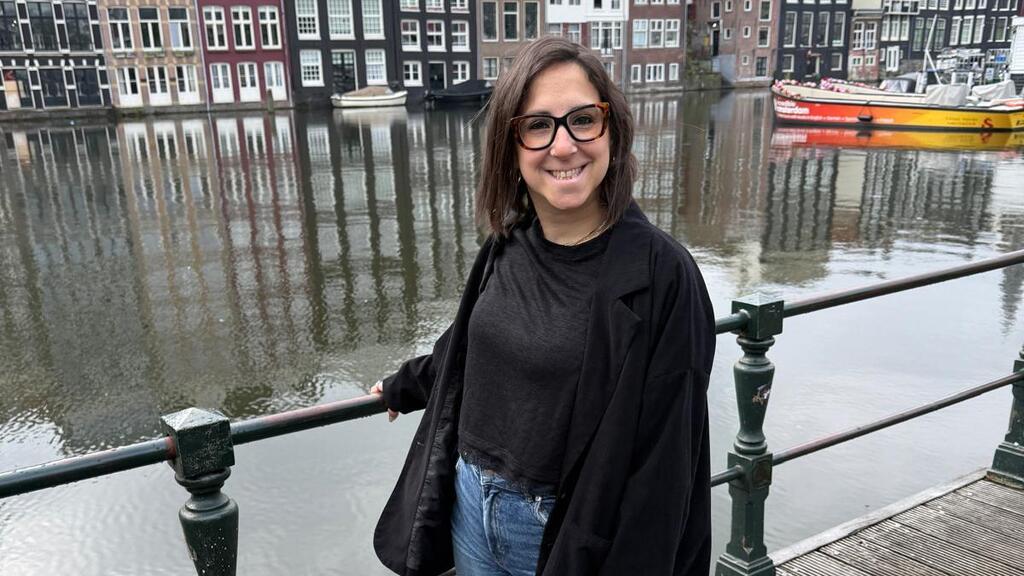
‘I had hot flashes that left me in tears.’ Shlomit Laufer
(Photo: Private)
Over the years, she tried several approaches in search of relief. “I underwent acupuncture for a long time, and it helped somewhat,” she says. “I also took an anti-anxiety medication that was supposed to ease the hot flashes, but it did not really work. More recently, I started a new medication that I had only learned about after roughly seven and a half years. Since taking it, the hot flashes have stopped, although the other symptoms remain.”
Did you ever consider stopping treatment because of the side effects?
“No. My health matters more to me,” she says. “But there were times when the hot flashes left me in tears, asking why this was happening to me, why I had to endure it, why me. Some episodes completely broke me and took a severe emotional toll. If there is one thing I want people to understand, it is that these women need real support. It makes no sense for a 30-year-old woman to suffer like this. It is absurd.”
The treatment that protects, and the toll it takes
Behind the hot flashes, sleepless nights, fatigue and irritability lies one hormone: estrogen. “We tend to think of estrogen as the female hormone associated with firm skin or a feminine body shape,” says Dr. Ora Rosengarten, a senior physician at the Oncology Institute at Shaare Zedek Medical Center and chair of the Gynecologic Oncology Group of the Israel Oncology Association. “But estrogen has many other roles that most people do not realize, including protecting the cardiovascular and respiratory systems and affecting the brain and healthy sleep.”
During natural menopause, Rosengarten explains, the decline in estrogen is not an isolated hormonal change but a broad biological event affecting numerous systems throughout the body. “The ovaries stop functioning and estrogen secretion almost completely ceases,” she says. “It falls to a much smaller amount, roughly 1%, and that brings with it a fairly large cluster of symptoms.” The result is familiar to many women: hot flashes, disturbed sleep, anxiety, depression and increased irritability.
It all begins and ends with estrogen
(Photo: Shutterstock)
The problem, she says, is not only the individual symptoms but the way they compound one another. “If severe hot flashes wake a woman during the night, she does not sleep well,” Rosengarten says. “The next day she is exhausted, and that fatigue can lead to irritability, depression, tension and difficulty concentrating.
“We are talking about a cluster of symptoms that appear together and feed into one another. It is not always possible to separate them.” That is why easing even one symptom can sometimes improve the broader picture and significantly enhance quality of life.
 Dr. Ora RosengartenPhoto: Shaare Zedek Medical Center
The reasoning behind standard menopause treatment is straightforward: If the body is no longer producing enough estrogen, the hormone can sometimes be replaced. But for women who have had hormone-sensitive breast cancer, that option is far more complicated. Those who may suffer the most severe and prolonged symptoms are often the very women who cannot receive the treatment that helps others.
“About two-thirds of breast cancer survivors had what is known as a hormone-sensitive tumor,” Rosengarten explains. “These tumors have estrogen receptors, meaning estrogen can stimulate their growth. In most cases, women are therefore given anti-estrogen therapy to block the hormone’s effects or reduce its levels even further.”

About two-thirds of breast cancer survivors had hormone-sensitive tumors
(Photo: Shutterstock)
The result is hormonal suppression far deeper than what occurs during natural menopause. “If I take a woman who is already approaching menopause, the additional medication pushes her even further, effectively to zero estrogen,” Rosengarten says.
Nor is this a short treatment. “When we talk about chemotherapy, which everyone is understandably afraid of, it is usually limited to a relatively short period of three or four months,” she says. “Hormonal treatment, however, lasts between five and 10 years.”
That is one reason physical recovery from cancer does not necessarily mean returning to life as it was before the illness. “These women have completed chemotherapy, radiation and whatever other treatments they required,” Rosengarten says. “They enter a very long period expecting to return to normal life, full functioning, family, work and friendships.
“Instead, they find themselves in an extremely difficult situation in which life does not return to normal. They are tired, unable to concentrate, irritable and depressed. It is a very challenging combination of symptoms, and they may have to live like that for years.”
Some of those women are exceptionally young. “More than 20% of women are diagnosed before age 50,” Rosengarten says. “You take a 35-year-old woman at the height of her energy and functioning and push her into menopause in an extremely sudden and severe way. It is a dramatic change in her life.”
The challenge: Providing relief without hormones
How do doctors determine when hot flashes are no longer merely uncomfortable but a medical problem requiring treatment? According to Rosengarten, the assessment begins with the woman’s subjective experience but also considers clear measures such as frequency, severity and impact on daily life.
“There are algorithms that allow us to classify hot flashes as mild, moderate or severe,” she says. “Women with mild hot flashes can generally cope, take a deep breath and move on. But women with moderate to severe hot flashes know that they trigger the entire cluster of symptoms I mentioned.”
Doctors consider not only the number of hot flashes each day but also the symptoms accompanying them. “They can be classified according to their frequency, intensity and associated effects,” Rosengarten explains. “They are often accompanied by heart palpitations, waking during the night and night sweats. Women with severe hot flashes may also experience anxiety, a sense of suffocation and other symptoms that are part of the same episode.”
For breast cancer survivors, however, the stakes go beyond quality of life. “These women must remain on treatment for many years, so we are not talking only about discomfort,” Rosengarten says. “The side effects can become so difficult that some women stop taking the medication altogether, and I have seen that happen more than once. Doing so can increase the risk of the cancer returning.”
In the United States, she says, 40% to 50% of women discontinue treatment. “The figures are better in Israel, where about 80% complete it. But that still leaves 20% who do not, while many of those who continue suffer in silence.”
Hormone therapy is not suitable for everyone
(Photo: Shutterstock)
For that reason, symptoms cannot remain a marginal concern during oncological follow-up. Rosengarten stresses that treatment does not necessarily begin or end with medication. “I strongly recommend exercise,” she says. “I also recommend acupuncture, one of the few interventions shown to improve hot flashes.”
“At Shaare Zedek, we opened a recovery program for patients that includes physical activity, nutrition, guidance and additional treatments. It helps women considerably as they emerge from the crisis that often follows the end of active cancer treatment.”
But there is a limit to what these measures can achieve on their own. “Exercise can help with fatigue and sleep, but it does not help with hot flashes and their accompanying symptoms,” she says. “For those, we need a better solution. The simplest option would of course be estrogen, but we cannot give it.”
For years, treatment options for hot flashes worked only indirectly. “We relied on medications developed for other conditions that happened to reduce hot flashes, including some antidepressants and blood-pressure drugs,” Rosengarten says. “The drawback is that these medications can cause side effects of their own.”
A black cohosh-based product known as Cimidona is also available in pharmacies and offers some benefit, she says. But the more significant development has come from a different direction: newer, more targeted medications designed to act on the brain mechanism that causes hot flashes.

Breast cancer treatment may end, but follow-up care continues
(Photo: Shutterstock)
“Hot flashes are regulated by a particular center in the brain through specific molecules,” Rosengarten explains. “Once those molecules were identified, blockers were developed to prevent hot flashes. We now have two drugs developed in recent years that target that specific site in the brain. Their major advantage is that they have very few significant side effects.”
The first is fezolinetant, marketed as Veoza, for women with moderate to severe hot flashes. “We still lack specific data on its use in breast cancer survivors receiving anti-hormonal therapy,” Rosengarten says. “A study is underway, but the results have not yet been published. The drug may prove suitable, but we need to proceed cautiously until its safety in this particular setting is established.”
The second medication is elinzanetant, a non-estrogen drug that also targets the brain mechanism responsible for hot flashes. “A large study published about a year and a half ago specifically examined the drug’s effect on women who had recovered from breast cancer and were receiving anti-estrogen hormonal therapy,” Rosengarten says. “It showed a very significant improvement in hot flashes, including their duration, intensity and frequency, as well as sleep, which, as I explained, is directly linked to the hot flashes.”

Exercise can help
(Photo: Shutterstock)
For breast cancer survivors, the potential benefit goes beyond easing a single symptom. It could help them remain on treatment that reduces the risk of recurrence without enduring an intolerable decline in quality of life. “The medication was submitted for inclusion in Israel’s health basket last year, and we hope it will be approved in the coming year,” Rosengarten says. “It could help women tolerate anti-hormonal therapy better, suffer less and complete the full course of treatment.”
Still, Rosengarten emphasizes that medication cannot replace the foundations of good health. “The most important thing is maintaining a healthy lifestyle,” she says. “For breast cancer survivors, that means proper nutrition and 150 minutes of intensive physical activity each week.”
“Medication comes afterward. It can ease symptoms and improve quality of life, but a healthy lifestyle also has a protective effect during treatment and over the long term, helping reduce the risk of recurrence and improve overall life expectancy.”