

If you think visiting an art museum or gallery is just a cultural pastime, think again. A new study from King’s College London has found that viewing original artworks can have immediate and measurable health benefits — reducing stress, improving heart function, and even lowering the risk of chronic disease.
Published this week, the study is the first to precisely measure the physiological effects of art on the human body, and the results were striking.
Gallery
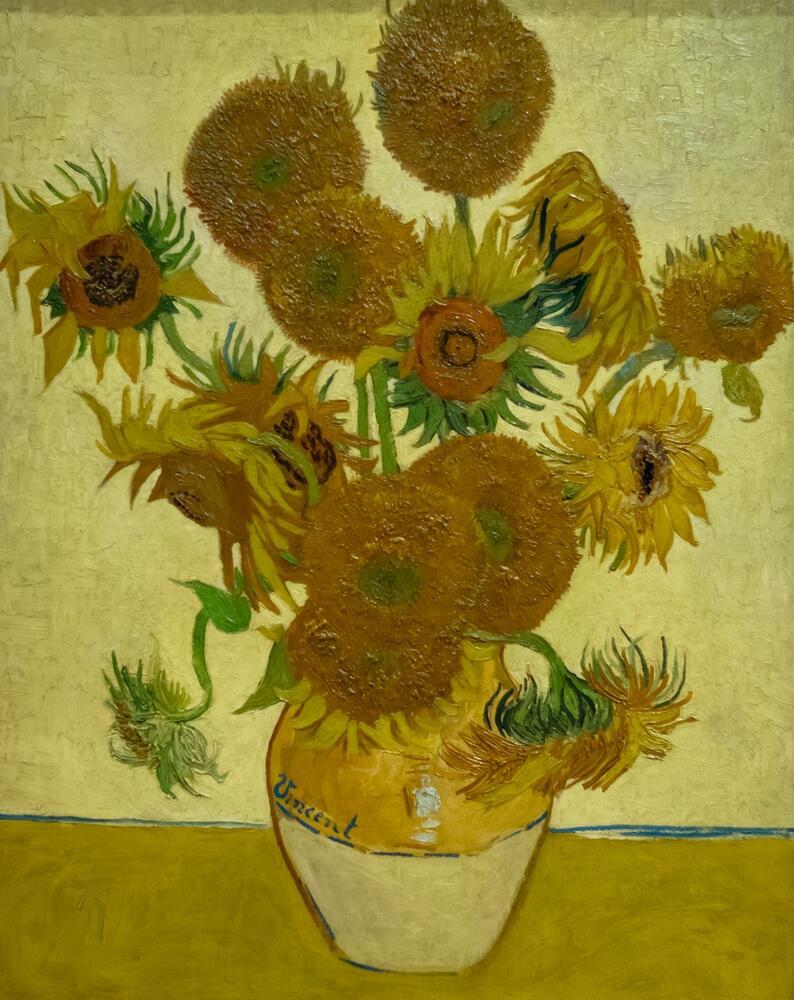
Vincent van Gogh’s famous Sunflowers painting displayed at the National Gallery in London
(Photo: Andy Soloman / Shutterstock)
Art vs. cortisol
Fifty volunteers aged 18 to 40 participated in the experiment. Half viewed original masterpieces by Van Gogh, Manet, and Gauguin at London’s Courtauld Gallery, while the others saw replicas of the same paintings in a neutral, non-gallery setting.
All participants wore digital sensors that continuously tracked heart rate and skin temperature during 20-minute viewing sessions. Saliva samples were taken before and after to assess hormonal changes.
Results showed that cortisol levels — the body’s main stress hormone — dropped by 22% among those viewing original art, compared to just 8% among those viewing reproductions. Participants exposed to original artworks also displayed more dynamic heart activity, suggesting that art engages the body through emotional stimulation and stress regulation simultaneously.
But the most surprising finding was that art influenced multiple biological systems at once.
“From a scientific standpoint, the most exciting result was that art had a positive impact on three different systems — the immune, endocrine, and autonomic — simultaneously,” said Dr. Tony Woods, the study’s lead researcher at King’s College. “It’s a unique and truly surprising discovery.”
Inflammation down, calm up
Levels of pro-inflammatory cytokines (IL-6 and TNF-alpha) — proteins linked to stress and chronic diseases — dropped by 30% and 28%, respectively, among those who viewed original artworks, while the replica group showed no change.

The Courtauld Gallery in London
(Photo: Shutterstock / Nigel J. Harris)
“Stress hormones and inflammatory markers like cortisol, IL-6, and TNF-alpha are tied to a wide range of health problems — from heart disease and diabetes to anxiety and depression,” Woods explained. “The fact that original art reduced these markers suggests that cultural experiences can genuinely protect both mind and body.”
The study also noted clear signs of emotional arousal among gallery visitors — lower skin temperature, higher heart rate, and greater heart-rate variability — indicating that art not only relaxes the body but also excites it in a healthy, balanced way.
“Our study shows the stress-reducing properties of viewing original art and its ability to engage and move us at the same time,” Woods added. “In short, seeing art in person really is good for your health.”
Health benefits for everyone
Another key finding: the positive effects were universal, regardless of participants’ emotional intelligence, background, or familiarity with art.
“This research proves for the first time what we’ve long suspected — that art truly is good for your health,” said Jenny Waldman, director of the Art Fund, which co-funded the study. “What’s special is that the findings show these benefits are universal. We want to encourage everyone to visit museums and galleries and experience these powerful effects for themselves.”

Tel Aviv Museum of Art
(Photo: Shutterstock)
Researchers emphasized that viewing art in person provides a full sensory and emotional experience — texture, scale, lighting, and atmosphere — that cannot be replicated through photos or screens.
The study, conducted at the Institute of Psychiatry, Psychology, and Neuroscience (IoPPN) at King’s College, was published as a preprint ahead of peer review under the title “The Physiological Impact of Viewing Original Versus Replica Artworks: A Comparative Study.”
In recent years, the concept of “cultural prescribing” — where doctors recommend museum visits, concerts, or theater as part of treatment — has gained traction in the medical community. This new research offers fresh scientific evidence that such advice may be more effective than anyone realized.
So next time you’re feeling stressed, consider a trip to your local museum or gallery — the science now shows it really can do your body good.