

Thirty-three Israelis die every day from smoking-related harm, the country’s smoking rate remains significantly higher than the OECD average and, for the first time, more teenagers are trying electronic cigarettes than regular cigarettes, according to the Health Ministry’s 2025 smoking report, which is set to be submitted to the Knesset on Tuesday.
The report paints a grim picture of Israel as a country that continues to have a high number of smokers compared with much of the Western world.
Gallery
Israel's smoking rate remains significantly higher than the OECD average
(Photo: Shutterstock)
A study examining smoking-attributable mortality in Israel found that the toll has risen in recent years compared with the previous study, conducted in 2014. According to the data, smoking could be linked to about 12,386 deaths in Israel in 2022, about 23% of all deaths that year. Most were attributed to active smoking, with secondhand smoke also contributing to the toll.
In practical terms, nearly one in four deaths in Israel is connected to smoking, an average of 33 deaths every day.
Among men in Israel, the daily smoking rate stands at 24.3%, higher than the 18.5% average among men in developed countries. Israel ranks 32nd out of 50 countries. Among women in Israel, the daily smoking rate is 11.8%, also slightly higher than the OECD average of 11.4%. The weighted smoking rate among Israel’s adult population was 23.1%.
Smoking remains the leading preventable risk factor for serious illness, disability and death. Globally, it kills more than 8 million people each year and is responsible for half of premature deaths from chronic and malignant diseases, including cancer, respiratory disease, diabetes, heart disease and stroke. Despite the known risks, Israel’s 2025 data show little change: for more than a decade, the adult smoking rate has remained stuck at about 20%.
Thousands of fines in Jerusalem, none in affluent cities
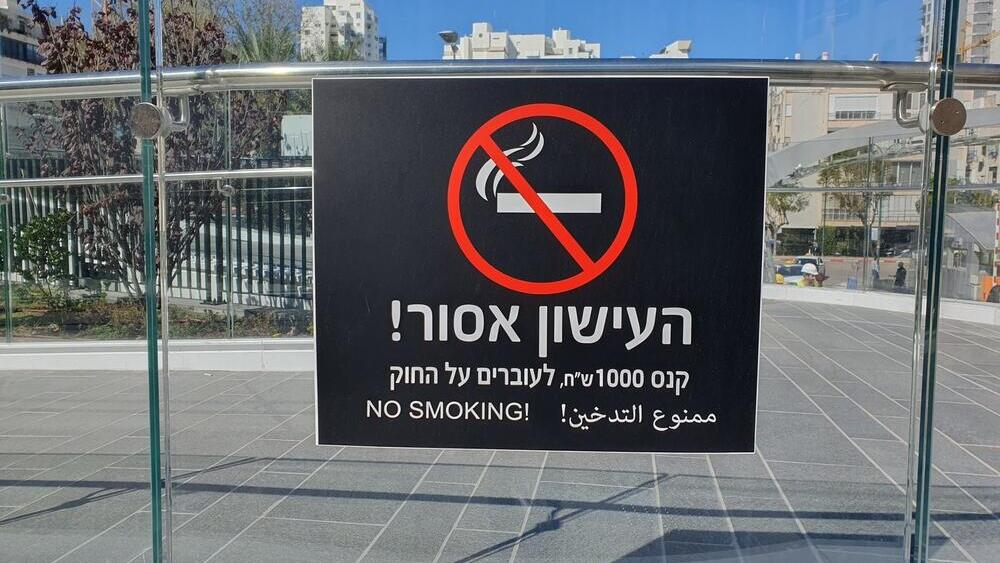
Israel’s law banning smoking in public places gives local authorities and municipal inspectors enforcement powers, with all fine revenue going directly to municipal coffers. As part of mandatory reporting, the Health Ministry’s enforcement and supervision division required local authorities to submit their 2025 enforcement figures, based on the number of fines issued during the year.
The data show a steady rise in municipal reporting: 92 local authorities submitted 2025 figures, compared with about 80 last year and only 50 in 2023. But despite the increase in reporting, the total number of fines remained almost unchanged nationwide, with 11,692 fines in 2025 compared with 11,605 in 2024.
Teen vaping overtakes cigarettes
(Photo: Shutterstock)
The enforcement map shows Jerusalem leading by a wide margin, with 4,240 smoking-related fines issued by 440 inspectors. Haifa and Tel Aviv also ranked among the top 10: Haifa recorded about 2,500 fines in 2025 with only 40 inspectors, while Tel Aviv-Jaffa issued 1,320 fines.
But the report also reveals what it describes as a troubling pattern: wealthy local authorities with large budgets and extensive municipal inspection systems where the smoking law was barely enforced, or not enforced at all, over an entire year.
In Rishon Lezion, Israel’s fourth-largest city, only 120 fines were issued, a low enforcement rate relative to the size of its population. Ashdod and Ness Ziona reported zero fines, indicating no enforcement at all. The same was true in Herzliya, Ra’anana, Ramat Hasharon, Mevaseret Zion and Yokneam Illit. Rosh HaAyin issued only one fine during all of 2025, while Rehovot issued 10.
Nearly half of Arab men smoke
The gaps between different population groups in Israel remain especially stark. The smoking rate among Arab men stands at 46.2%, twice the national average. Among Arab women, the rate is 13%, compared with 15.7% among Jewish women.
The disparities are also visible in exposure to secondhand smoke: 28.9% of the Jewish population and 48.5% of the Arab population are exposed to involuntary smoking.
In 2023, the highest smoking rates among men were recorded in the Nazareth district, at 39.7%, followed by Hadera at 36.2% and Acre at 35.2%. Among women, the highest smoking rates were found in the Holon, Safed and Tel Aviv districts, at 19%, 19.1% and 16.5%, respectively.
Fewer people smoke in the Tel Aviv area than in Nazareth, Hadera and Acre districts
(Photo: Shutterstock)
The lowest smoking rates among men were recorded in the Petah Tikva, West Bank and Ramat Gan districts. Among women, the lowest rates were found in the Golan, Acre and Nazareth districts.
Teen vaping overtakes cigarettes
The figure that most worries health officials concerns young people, where smoking appears to be increasing.
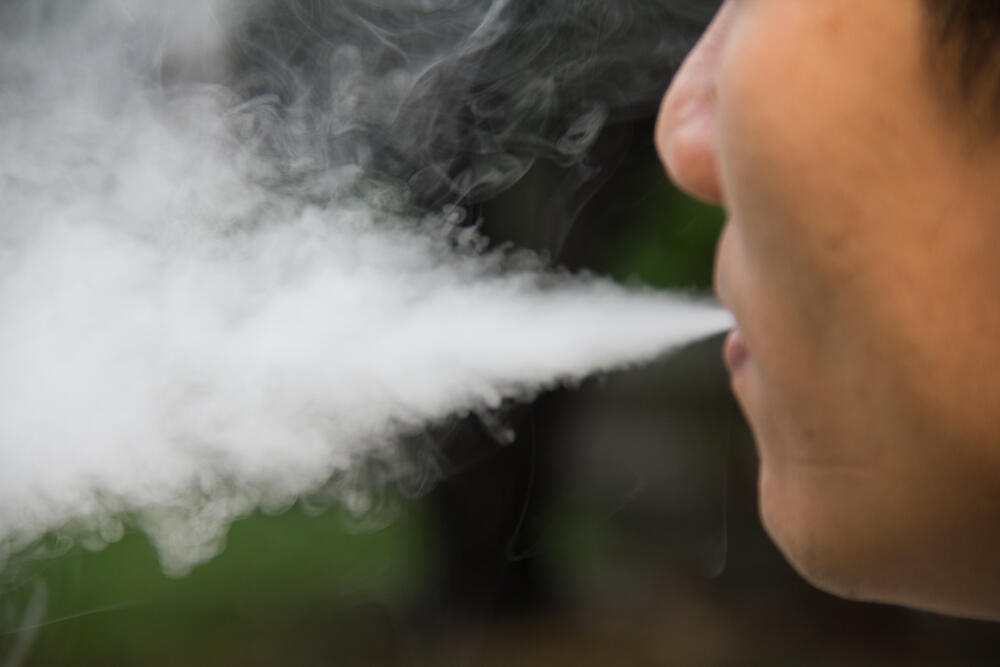
Findings from the 2025 HBSC international study show an increase from 2023 in the share of eighth- and 10th-grade students who have tried smoking cigarettes. For the first time since the measurements began, the share of teens who have tried electronic cigarettes surpassed the share who have tried regular cigarettes: about 20% of students reported trying e-cigarettes, compared with about 19% who tried regular cigarettes.
About 17% of students said they had smoked an e-cigarette at least once in the previous month. Smoking rates were higher among boys than girls. By sector, smoking rates were higher among Arab boys and Jewish girls.
The increase from 2023 to 2025 was especially sharp among eighth-grade Arab boys, where the experimentation rate rose from 9.5% in 2023 to 25% in 2025, an increase of 15 percentage points in two years. Among 10th-grade Arab girls, the rate also rose, from 5.3% in 2023 to 6.9% in 2025.
The report warns that marketing tactics are becoming more sophisticated, with attractive flavors, compact designs and youth-focused marketing making e-cigarettes more accessible and appealing. E-cigarette use is higher among Haredi students in eighth and 10th grade than in other sectors.
(Photo: Vered Barequet / shutterstock)
The Health Ministry said several steps were advanced over the past year, including a requirement for graphic warning labels on smoking products, set to take effect in August 2026. Under the measure, 75% of packaging space will be dedicated to warnings on a range of smoking products. A bill requiring plain packaging, without colorful branding, for all tobacco products has also been submitted to the Knesset.
Health Ministry Director General Moshe Bar Siman Tov said that while youth e-cigarette use is rising and the age of exposure to smoking and nicotine products continues to decline, significant legislation initiated by the ministry to protect the public has not advanced in the Knesset Finance Committee.
“These are professional measures based on scientific knowledge and international experience, intended to reduce addiction, illness and mortality,” he said. “Delaying them harms the state’s ability to protect public health. The Health Ministry will continue to use every tool at its disposal to advance the fight against smoking and protect the younger generation.”
“The data in the report show that smoking continues to be one of the significant causes of illness and death in Israel, especially among children and teenagers,” he added.
Cannabis left out of the report
The report does not address cannabis, despite recent public debate following far-reaching recommendations by a special Health Ministry committee. The committee had recommended gradually ending the use and marketing of smoked medical cannabis within three years, taking extra caution in treating post-trauma and transferring responsibility to the health funds for closer monitoring.
Medical cannabis patients reacted angrily to the recommendations, and Health Minister Haim Katz later shelved them.
Responding to the smoking report, Katz said, “Smoking continues to be one of the significant risk factors to public health, and accordingly the ministry is working to reduce the scope of the phenomenon. The data in the report require us to continue acting with determination to prevent the exposure of children and teenagers to smoking products, while strengthening prevention, enforcement and public information efforts.”
Prof. Siegal Sadetzki, head of the Health Ministry’s public health division, said Israel’s prolonged state of emergency may also push people toward risky behaviors such as smoking as “a dangerous way of coping with stress and anxiety.”
“These behaviors are understandable given the reality, but they harm physical and mental health, and therefore various steps must be taken to reduce their consequences and possible harm,” she said.
(Photo: Shutterstock)
The Israel Cancer Association said Israel’s current smoking situation “is at the most extreme low point of the decade.”
“Instead of making progress, the State of Israel is sliding backward,” said Moshe Bar-Haim, the association’s director general. “The health system is dealing with a heavy burden of patients suffering physiological damage caused by tobacco use. The fight to reduce smoking rates is an essential need and requires cooperation by the Knesset, the government, the police and local authorities. We must place the fight against Israel’s leading preventable cause of death and illness at the top of the national agenda.”