

Since the 1960s, Parkinson’s treatment has revolved around one substance: dopamine. In people with the disease, the brain cells that produce it gradually die, and without it movement becomes slow, stiff and tremulous, while balance deteriorates. Most Parkinson’s drugs try to make up for that loss, each in a different way.
Over the weekend, another drug joined the list — one that takes a different approach. The U.S. Food and Drug Administration approved tavapadon, developed by pharmaceutical company AbbVie, for the treatment of Parkinson’s disease in adults. It is a once-daily pill that will be sold under the brand name Juvmo. According to AbbVie, more than 11 million people worldwide are living with the disease.

Dopamine works like a key: It binds to receptors on nerve cells, much like locks, and activates them. Dopamine has five receptor types divided into two families, and they are involved in nearly everything dopamine does in the body, including movement, sleep, appetite, mood, attention and thinking. Each family is more prevalent in different parts of the brain, which means a drug aimed at one family behaves differently from one aimed at the other.
The main drug used to treat Parkinson’s, levodopa, contains a substance that the body converts into dopamine. Alongside it are drugs that mimic dopamine and bind directly to its receptors, known as dopamine agonists, including pramipexole and ropinirole. These drugs act mainly on D2 receptors, but those receptors are also found in brain regions associated with reward, thinking and the body’s automatic regulation. That helps explain some of the side effects the drugs can cause, including compulsive behaviors, sudden sleep attacks and swelling in the legs.
Tavapadon is also a dopamine agonist, but it targets different receptors: D1 and D5. D1 receptors are concentrated mainly in brain circuits that drive voluntary movement. For decades, researchers have tried to develop a drug that would selectively activate them. Early attempts showed that the concept could work, but the compounds broke down too quickly in the body, were poorly absorbed when taken as pills and caused severe involuntary movements. One also caused a drop in blood pressure.
Tavapadon was designed to overcome those problems. It is resistant to the enzymes that break down dopamine and remains in the body for a long time, allowing it to be taken once a day. It also does not fully activate the receptor, but only partially. According to its developers, this more restrained activation is intended to improve movement without causing overstimulation, which can lead to involuntary movements.
The drug was originally developed by Pfizer, later transferred to biotech company Cerevel and came to AbbVie when it acquired Cerevel in 2023 for $8.7 billion.
What happened in the trials?
Two large trials enrolled more than 800 patients who had been diagnosed within the previous three years and had received little or no treatment until then. Some received tavapadon and others received a placebo for about six months. In both trials, the drug produced statistically significant improvements in movement and daily functioning.
In the first trial, about 45% of patients who received the drug reported a marked improvement in their condition, compared with 12% of those who received a placebo. In the second trial, the figures were 46% and 19%, respectively, with improvement appearing after about five weeks of treatment.
A third trial examined a problem that is familiar to patients who have lived with Parkinson’s for years. In many, after years of levodopa treatment, the effect of each dose wears off before the next dose is due and symptoms return. The trial included 507 such patients. Adding tavapadon to their treatment gave them about one additional hour a day of good functioning without troublesome involuntary movements compared with the placebo group.
 Prof. Tanya Gurevich Photo: Shimon Shalbitz
Medical centers in Israel also participated in the trials. Prof. Tanya Gurevich, director of the Movement Disorders Unit at Ichilov Medical Center and the principal investigator for the study in Israel, said: “Unfortunately, no treatments have yet been approved that have been shown to slow the progression of the disease. Against this background, tavapadon represents a new generation of dopamine agonists, with the potential to reduce side effects such as involuntary movements and impaired impulse control. It is a promising treatment option that may benefit patients in both the early and advanced stages of the disease, and we hope it will soon be available in Israel as well.”
She added: “Based on the experience accumulated at the Israeli centers that participated in the study, both patients and researchers felt that tavapadon may offer an advantage over existing treatments in the same drug class.”
AbbVie has not yet said when it will launch the drug or how much it will cost, and did not respond to a request for comment from Reuters. Analysts expect the drug to enter use gradually, in part because of negotiations over coverage under U.S. government health insurance programs. It is also unclear when the new drug will become available in Israel.
This is not AbbVie’s first Parkinson’s treatment in recent years. About two years ago, the company launched Produodopa, a small pump that continuously infuses levodopa under the skin around the clock. The treatment does not require surgery, and according to the company, it improves patients’ quality of life by helping control symptoms at night and preserve daily functioning and abilities.
A more targeted treatment
The most common side effects in trials of the new drug were nausea, dizziness and headache. In an extension study in which 991 patients took the drug over a longer period, each of those side effects occurred in about 10% of participants.
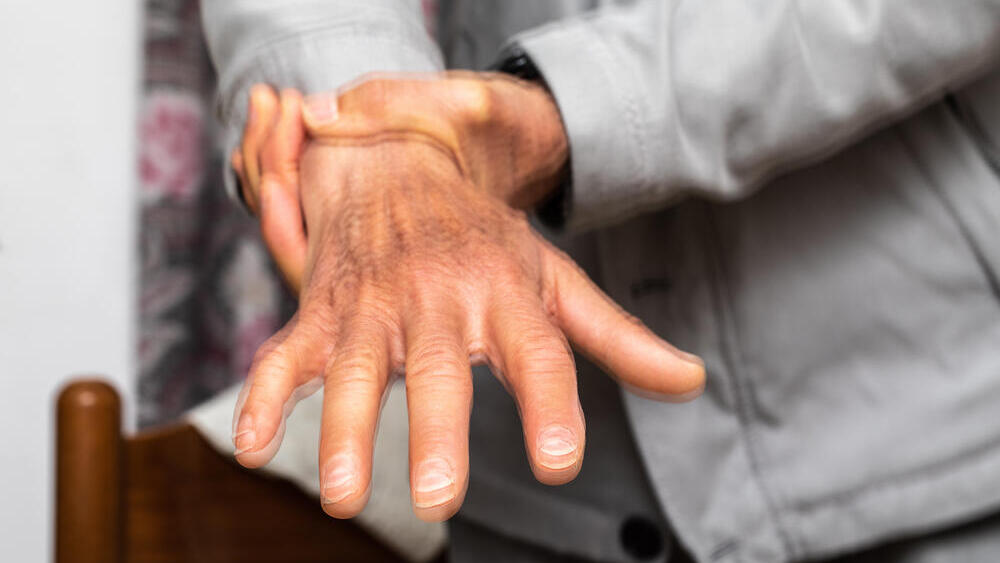
Patients experience slow, stiff movement and tremors, as well as impaired balance
(Photo: Shutterstock)
Not all participants remained in the studies. In the first trial, about one-third of those who received the higher dose discontinued treatment before the study ended, compared with about 15% in the placebo group. In the second trial, about one-quarter of patients receiving the drug dropped out, most of them during the period when the dose was being gradually increased.
At the same time, side effects commonly associated with older drugs were rare. Drowsiness was reported in 4% of patients receiving the drug, compared with 3% in the placebo group, while the rate of compulsive behaviors was similar to that in the placebo group. No involuntary movements were reported in either group. The researchers themselves noted that the relatively short follow-up period, about six months, does not allow conclusions to be drawn about long-term tolerability, and that an extension study is intended to examine that question.
The major question is how tavapadon will compare with drugs patients already take. In all the trials, it was compared only with a placebo, not with another active drug, meaning that its purported advantage in terms of side effects has not been tested directly against older medications. In an article in The Lancet Neurology, experts wrote that it is still too early to determine the drug’s place relative to existing treatments, and that larger, longer trials will be needed to do so.
It is also important to remember that tavapadon, like other Parkinson’s drugs, is intended to relieve symptoms and was not tested as a treatment to slow the progression of the disease. For patients, it offers another treatment option, one that works in a more targeted way than those available until now.