

On a typical weekend, Amir, a pseudonym, comes home after a week of work, meets up with friends and starts snorting drugs. Sometimes hours pass before they even leave the house. From there, they head to a party that lasts until morning, and when the party ends, the night does not necessarily end with it.
“Even when the party is over, a lot of the time it’s still not enough,” he said. “We keep going to an after-party at a club or someone’s house, and we keep taking drugs.”
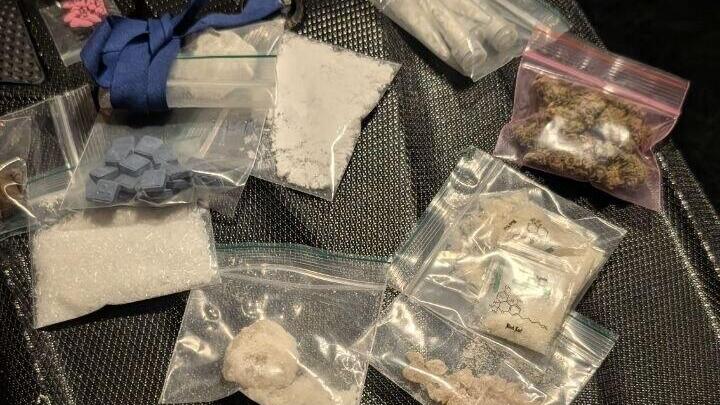
A few hours or a day later, he returns to his other life. Amir, 38, from Givatayim, a city near Tel Aviv, works as an analyst. He is successful at his job, is well regarded and feels his career is continuing to advance. No one at the company where he works knows that almost every weekend, another life begins for him.
Jackie, also a pseudonym, does not fit the traditional image of a drug addict either. The 40-year-old high school teacher and mother of two lives in central Israel. Less than two years ago, the world of techno, outdoor raves and music festivals was almost entirely foreign to her. Today, she goes out most weekends and regularly uses stimulants and, at times, psychedelic drugs.
The two are very different. Amir already acknowledges that he sees signs of dependence in himself, perhaps even addiction. Jackie, by contrast, is convinced at this stage that drugs have actually improved her life. But they have one thing in common: They work, function and maintain relationships — and to a large extent, it is precisely their ability to function at a high level that allows them to continue.
The war did not start the process — but it accelerated it
Three years after the Hamas-led Oct. 7, 2023, attack, data show the phenomenon extends far beyond Tel Aviv’s club scene.
A study by the Israel Center on Addiction and Mental Health, or ICA, followed samples of Jewish adults in Israel at four points in time: April 2022, December 2023, June 2024 and February 2025. Over that period, researchers found an increase in problematic use of prescription sedatives, opioids and drugs more broadly.
In several areas, including problematic drug or alcohol use, researchers recorded a sharp increase after Oct. 7, followed by some decline during 2024. But the downward trend did not continue. After the rate stood at about 25% in 2024, it climbed again to 26.8% in February 2025.
ICA’s 2025 annual report presented the same broader picture: More than one in four Israelis were found to be engaging in high-risk use of addictive substances. Among young adults ages 18 to 26, the figure was one in three, as it was among those who served in the military during the war, either on active duty or in the reserves.
According to the report, use of sedatives and sleeping medications rose 2.5-fold compared with the period before the war. Opioid use nearly doubled, with a similar increase recorded in stimulant use. Additional data were collected during 2026 but have not yet been analyzed.
The Health Ministry has explicitly identified the trend. Since the outbreak of the war, it says, there has been an increase in harmful use of alcohol and drugs, as well as addictive behaviors, particularly among people who were already at risk. The ministry points to trauma, insecurity, prolonged exposure to news and the loss of a sense of control as factors that can drive people to seek numbness or escape.
 Dr. Roy ZuckerPhoto: Yariv Goldfarb
Dr. Roy Zucker, a specialist in internal medicine and infectious diseases who works in drug-use harm reduction, said he is seeing the change on the ground as well.
“There is unequivocally an increase in substance use in Israel,” he said.
But Zucker said it would be overly simplistic to blame the war alone.
“It already started during COVID,” he said. “It’s a process that has grown over the years, in Israel and around the world. What we have been going through here served as a kind of catalyst.”
At the heart of the increase, he said, is a simple human need: escape.
“The crazy reality we’re living through and the desire to escape a little — if not to physically get away from here, then to escape mentally,” Zucker said. “These substances provide a few hours of escape from reality.”
Prof. Shauli Lev-Ran, a psychiatrist, co-founder of the Israel Center on Addiction and Mental Health and its academic director, explains the same mechanism through the body’s stress response.
“Human beings and other living creatures can remain in survival mode for a limited amount of time,” he said. “A zebra being chased goes into a state of stress, it runs away and eventually the chase ends. We are not built to live for prolonged periods at the level of stress appropriate to a survival situation.”
But in Israel, he said, “the alarm never passed.”
 Prof. Shauli Lev-RanPhoto: Rami Zerenger
Oct. 7 did not remain a single-day traumatic event. It was followed by a prolonged war, repeated reserve duty, the evacuation of communities, air raid sirens, missile attacks, time spent in bomb shelters, loss and uncertainty.
“We look for some way to regulate ourselves,” Lev-Ran said. “The brain learns: Before, I was stressed. I couldn’t sleep, calm down or enjoy myself. I took something — and now I can. The brain is a good student, and it learns to repeat that action again and again. For some people, problematic use develops and, at the extreme end, addiction.”
‘The scary thing about my drug use is that I’m succeeding in life’
Amir was first exposed to drugs during his post-army backpacking trip, a common rite of passage for young Israelis after completing mandatory military service. At first, it was mainly cannabis, and later he experimented with stronger substances. But for years, he said, his drug use in Israel was rare: “Once in a while, if at all.”
After Oct. 7, that changed.
“Since then, my use has increased significantly, and so has the use among a lot of people around me,” he said. “I go to parties much more often and use a lot more drugs. It’s no longer something that happens occasionally.”
Amir primarily uses mephedrone and ketamine, and sometimes cocaine, MDMA and ecstasy.
The drugs provide several things at once.
“They make me enjoy myself more and let go. But there’s also an element of escape,” he said. “Those are a few hours when I don’t have to think about what’s happening here. I don’t have to think about the war, the news and this whole reality.”
Since the war began, he has been partying and using drugs nearly every weekend, with his use sometimes spilling into the middle of the week. Drugs are no longer confined to parties.
“It has seeped into almost everything,” he said. “It happens at home, too, when I meet up with friends. And it’s not easy for me to say this, but there are also times when I use alone.”
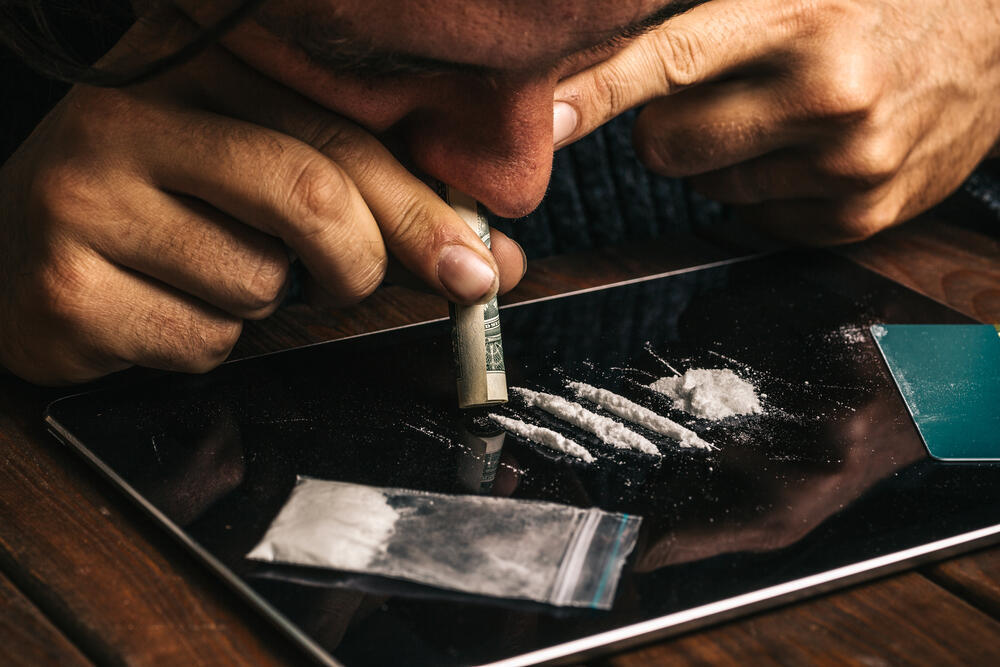
(Photo: Shutterstock)
He and his friends have tried to set rules: weekends only. Never alone. Never before work.
“But most of the time, it doesn’t really last,” he acknowledged. “I’ve told myself quite a few times, ‘This is the last time,’ but in reality, it wasn’t. The pattern always comes back.”
If Amir had begun missing work, failing to complete assignments or running into financial trouble, it might have been easier to recognize that a line had been crossed. Instead, almost the opposite has happened.
“That’s the scary thing about this whole story. I don’t feel like I’m paying a significant price in my professional life,” he said. “I’m good at what I do, I’m successful and my trajectory is only going up.”
There are days when he is more tired, takes less initiative and does only what is required of him. But he still considers those effects marginal.
“I don’t see a clear impact from the parties and drugs on my success — and that’s probably one of the things that keeps me going,” he said.
No one at work knows. Amir fears that if his drug use were discovered, colleagues would see him as unserious or irresponsible, damaging the professional standing he has built.
“I make sure they don’t find out,” he said. “It’s clear to me that if people at work knew, they would look at me differently.”
But Amir himself is no longer convinced that everything is fine.
“Deep down, I know I have a problem. I know I’ve developed a dependence, and maybe some degree of addiction,” he acknowledged.
During one recent period when he was using drugs almost every day, there was a physical price as well.
“I felt really bad. I had chest pains and felt like my heart was going to explode. I even tried to seek help,” he recalled.
He said that when he looked for treatment, he mainly encountered group-based options. His fear that someone might recognize him ultimately stopped him from pursuing them.
“I didn’t want to join a group where someone might know me or tell someone else,” he said. “I was afraid people would find out. So in the end, I gave up on getting help.”
Prof. Lev-Ran said Amir’s story illustrates one of the major traps of addiction among successful, high-functioning people.
“First of all, this is a person with strengths. The fact is that he manages to keep going,” Lev-Ran said. “But that’s what is deceptive and paradoxical: The same strengths that help him keep going often also prevent him from seeking help because he hasn’t yet reached the point of saying, ‘I can’t do this anymore.’”
Society, he said, uses too narrow a definition of the word “functioning.”
“There is functioning at work and functioning in school, but there is also functioning as a parent,” he said. “I may read a story to my children, and no one can accuse me of not functioning — but I’m not really present.”
Lev-Ran likens it to an iceberg. Above the waterline are the things that are easy to see: Did the person show up for work, submit the report, pay the bill or finish the assignment? Below the surface are their relationship with their body, relationships with others, romantic life, parenting, leisure and sense of self.
“Work and school are sometimes the red line,” he said. “Below that line, I tell myself I’ve crashed. But the fact that I haven’t crossed that red line doesn’t mean everything is OK.”
One way to think about substance use, he said, is as a relationship.
“Sometimes it’s even the most stable relationship a person has. The state wasn’t there for me, relationships can disappoint — but the substance is always there. It’s loyal.”
That is why, Lev-Ran said, the question is not simply whether someone clocked in for work in the morning.
“The question is how this relationship affects my other relationships — my romantic relationship, friendships, parenting, family, money, leisure and my relationship with myself.”
At 40, she discovered a new world: ‘I prefer who I am on drugs’
Jackie’s story is very different. She is 40, divorced and a mother of two. For years, she was immersed in her studies and work. She used cannabis and occasionally experimented with other substances, but the party scene was barely part of her life.
In the years after her separation, she said, she went through a prolonged period of loneliness, family tensions and difficulty finding her place as a mother and partner. Then, in early 2025, she decided to go alone to an outdoor rave. The experience changed something in her.

(Photo: Shutterstock)
“I had this incredible feeling of freedom,” she said. “I realized this was something that had been missing from my life. I had to relearn how to be present, communicate with people, meet people, move, use my body and listen to music.”
In less than two years, parties became a regular part of her routine. She now goes out most weekends and primarily uses stimulants, along with psychedelic drugs at times.
But Jackie does not describe the drugs as a problem she knows she needs to solve. Quite the opposite.
“I prefer who I am when I’m on drugs,” she said.
Jackie recalled being invited to a party on the condition that she not use drugs. Her response to her friend was almost a statement of principle.
“I’d love to come, but I’m going to do drugs,” she said. “If I come without drugs, you won’t meet me. If you want to meet me, I need to do drugs.”
In Jackie’s view, the substances unlocked something in her that had been closed off for years. Once a woman who struggled even to dance at a wedding, she began meeting people, building new friendships and feeling comfortable in her body.
“Today I know how to dance, I have friends, I know how to have fun,” she said. “There were parts of me that were missing.”
The change, she said, has also carried over into the classroom and her home life.
“If I come in bitter and depressed and haven’t spoken to anyone for two days, I have no patience for my students,” she said. “They talk and it annoys me, and I bark at them to be quiet. When I’m happier, it really improves that, too.”
She said drug use has also helped her be more present with her children.
“If I use drugs and see that I’m functioning better, that I’m a happier person, that I enjoy being with my students more and enjoy being with my children more — then wow, that’s great,” she said. “Suddenly I know how to enjoy situations and give of myself. It changes my life.”
Her partner saw things differently. When her drug use increased to several times a week, she said, it became a source of arguments and even threatened the future of their relationship. There were periods when she tried to stop, but as time passed, her feelings of guilt actually diminished.
“At first, there were a lot of moments when I thought there was something wrong with me, that what I was doing wasn’t OK and that I had to stop,” she said. “But the more I see that I like the effect it has on me and on my life, the less I think I’m overdoing it.”
Still, Jackie hopes that eventually she will no longer need the substances.
“The goal is to be the best version of myself without the help of drugs,” she said. “Right now, I see them as a learning tool.”
“Is it possible for someone in distress to use an addictive substance and for it to actually help them function better in the short term? Absolutely. I’m worried about the person who will be there in 2028 and 2030. It’s a gradual, creeping process. At some point, something that was a friend can become an enemy.”
Lev-Ran recognizes in Jackie’s account a mechanism well known in psychiatry: self-medication.
“People don’t use substances because they’re bad people, but because they feel bad,” he said.
Someone dealing with depression, anxiety, loneliness or emotional distress may discover that a particular substance provides relief, he explained, and in the short term, it sometimes genuinely works.
“Is it possible for someone in distress to use an addictive substance and for it to actually help them function better in the short term? Absolutely,” he said. “Otherwise, people wouldn’t turn to it.”
That is precisely what makes the initial stage so deceptive.
“There is a period when we feel the benefits much more than the costs,” Lev-Ran said. “But we can go from something that helps us do a particular thing to a situation where, without it, we can no longer do that thing. That is already the development of dependence.”
When considering Jackie, whose intensive drug use began only in early 2025, Lev-Ran is not looking solely at her condition today.
“I’m worried about the person who will be there in 2028 and 2030,” he said. “It’s a gradual, creeping process. At some point, something that was a friend can become an enemy.”
From the bathroom at a wedding to the living room: ‘Hard to have fun without it’
The change is not only in the amount of drugs being used, but also in the place they occupy in social life.
“People used to do it on the down low. Today, it’s completely out in the open,” Amir said. “It’s not just at parties anymore. It’s at people’s homes, gatherings with friends and even weddings. Since when did people do drugs like this at weddings? Today, you go to the bathroom and see a line of people going into a stall together to snort drugs.”
(Photo: Shutterstock)
The Health Ministry has also noted that the use of “party drugs,” including MDMA, ketamine, GHB and cocaine, is increasing among both younger and older Israelis, not only in clubs but also at social gatherings.
Dr. Zucker said the significant change, in his view, is not necessarily the increase in drug use at parties, where such substances have been present for years, but their spread beyond that setting.
“What’s interesting is the shift in substance use outside parties,” he said. “Suddenly, it’s a few friends at someone’s house, too, and there are lines waiting on the kitchen counter.”
Over time, he said, conditioned associations can develop: A person no longer simply wants a drug at a party but begins to feel they need it to enjoy the event itself.
“The brain creates associations about how you’re supposed to have fun,” Zucker said. “People tell themselves, ‘I can’t enjoy myself with my friends if there isn’t a line around. What am I supposed to do with them without it?’”
Amir already recognizes that feeling in himself.
“You get used to it,” he said. “It becomes harder to enjoy a party or let loose without a substance. A certain threshold develops that you need to reach, and over time you also need to use more to get the same feeling.”
According to Zucker, some of this normalization stems from the failure of the old fear-based messaging about drugs.
“All our lives, we were taught that life is black and white: You did drugs — you got addicted, you’re finished, you’re going to die,” he said. “Then someone tries something for the first time, terrified, and discovers that not only did they not die or immediately become addicted — they actually enjoyed it.”
From there, he said, it is easy to swing to the opposite extreme.
“Black turns into white, without understanding that there is an entire gray world in between.”
That gap is also why Zucker advocates a harm-reduction approach: not portraying drug use as risk-free, but also not relying solely on the message “don’t do drugs,” which is ineffective for people who intend to use them anyway.
“If I said about everything, ‘Drugs are bad,’ people wouldn’t listen to me when I tell them there’s a particular substance they really need to be careful with,” he said.
The risk is compounded, he said, because users do not always know what they are consuming. Substances sold under a particular name mayFfourtljbjnkn.knklinnmlllll actually contain mixtures or entirely different drugs.
“People simply don’t know what they’re putting into their bodies,” Zucker said. “And if you don’t know what you’re putting into your body, how can you know what is dangerous to mix?”
Lev-Ran points to five warning signs that do not depend on whether someone is still showing up at the office.
The first, and most important, is loss of control.
“I said I would use once a week, but by Tuesday I’m already at an event,” he said. “I said Thursday’s party would end that night, and it turned into 48 hours. I tried to cut back and couldn’t.”
The second is entering risky situations, such as driving under the influence, working while impaired or repeatedly returning to situations in which the person has already been harmed.
The third is when the substance becomes the primary or only means of emotional regulation.
“I used to exercise, meet friends, listen to music,” Lev-Ran said. “Now I have only one thing. Take it away from me — and I’m finished.”
The fourth warning sign is the price a person is paying, even if the consequences are not yet dramatic. The fifth is a narrowing of life: friends they no longer see, hobbies that have disappeared, places they no longer visit and activities that were once part of their lives.
“There isn’t one single criterion,” Lev-Ran stressed. “But the more of these areas I look at and say, ‘Yes, there’s an issue there,’ the greater the likelihood that I’ve slipped into problematic use or addiction. It’s a spectrum.”
For Amir, there is another factor: money. Some months, he said, he spends thousands of shekels on drugs. He deliberately avoids calculating the exact amount.
“I don’t even look at my monthly expenses because I don’t want to know how much it really is,” he said. “When you’re older, you have a career and an income. You’re no longer a 23-year-old with no money who’s afraid of getting into trouble. It’s actually the success that allows you to keep going.”
The days afterward are not always easy. At times, he is more tired and sluggish, takes less initiative and does only what he has to do. But for him, those consequences still do not outweigh the perceived benefits.
“Ultimately, I go back to it because it’s fun,” Amir said. “It makes me feel good, keeps me alert for many hours and sometimes I feel like it makes me more creative.”
Israel will have to confront this in the aftermath, too
Lev-Ran struggles to find an exact precedent elsewhere in the world for what Israel has experienced since Oct. 7. Events such as the Sept. 11 attacks in the United States were enormous national disasters, but they were discrete events. In Israel, an initial trauma was followed by years of war, alongside a technological reality in which drugs are far more accessible than in the past and other potentially addictive behaviors are available on every smartphone.
“We’re writing the book on this as we go,” he said.
“It’s like trying to fill a bucket with a hole in it. You can invest enormous resources in filling it, but if you don’t fix the hole, the water keeps leaking out.”
One population of particular concern, he said, is young people — especially those who served in the military, either on active duty or in the reserves, as well as those exposed extensively to graphic videos and threatening content on social media.
But in Lev-Ran’s view, addiction is not an issue confined to a single “at-risk group,” nor is it something that should be addressed only at the margins of rehabilitation programs.
“There is no recovery from trauma and no mental health recovery without addressing addictive substances and addictive behaviors,” he said. “It’s like trying to fill a bucket with a hole in it. You can invest enormous resources in filling it, but if you don’t fix the hole, the water keeps leaking out.”
He is nevertheless optimistic about Israeli society’s ability to recover. But first, he said, people need to abandon the old image of an addict as someone incapable of functioning.
“There are many otherwise ordinary people using a lot of substances, and a very large proportion of people with problematic use or addiction are also functioning,” he said. “If, after Oct. 7, someone still has a stereotypical image of what addiction looks like, it’s time to refresh it.”
Amir already knows he is in a problematic place, but he, too, finds it difficult to give up what drugs have provided him during this period.
“I think it helped me survive this period better,” he said. “I had more fun, I was happier, and it helped me avoid sinking into all the shit this country has been through. I didn’t feel an immediate price, but I know that I, and many people around me, have a problem. I also know that in the long run, using this frequently can’t be good. It can’t be good for the body.”
Jackie is still in a different place. She hopes that in a few years she will no longer need that help.
“I want to learn to be in the moment and give of myself, and then be able to enjoy things at the same level without drugs,” she said. “That’s the goal — to be the best version of myself, but without their help.”
Lev-Ran suggests that people like Amir and Jackie begin not by asking, “Am I addicted?” but with a broader question.
“If you say that the substance is helping you function, you may be right,” he said. “But ask yourself, in a quiet moment: Alongside the benefits, are there areas of your life that people on the outside don’t see where you’re paying a price? In your relationships, your sense of competence, your ability to cope with difficulties on your own, your presence with the people you love.”
Showing up for work in the morning, he said, is an important measure, but it is only one measure.
“To thrive, and not merely survive, we also need to be able to tolerate frustration, boredom, loneliness and stress,” Lev-Ran said. “If we constantly rely on a substance to regulate those feelings, a moment will come when we need that ability — and it may no longer be available to us.”