

It’s happening again. A flashing red headline, a TikTok video with dramatic music and yet another social media influencer delivering a grim, anxiety-inducing warning about “the deadly virus spreading on a cruise ship.” Within minutes, feeds fill with conspiracy theories about secret laboratories, planned lockdowns and ominous predictions about the end of humanity. The narrative is already scripted: “The World Health Organization is plotting against us again,” “Pharmaceutical companies are already preparing the next vaccine at our expense” — and suddenly it feels like a rerun of an old nightmare.
But once you strip away the layers of “likes” and the chase for virality, a far less dramatic truth emerges: reality is not a Netflix horror series, and the hantavirus is, at this point, certainly not the next COVID-19. That’s not just my opinion — it is also the assessment of the World Health Organization.
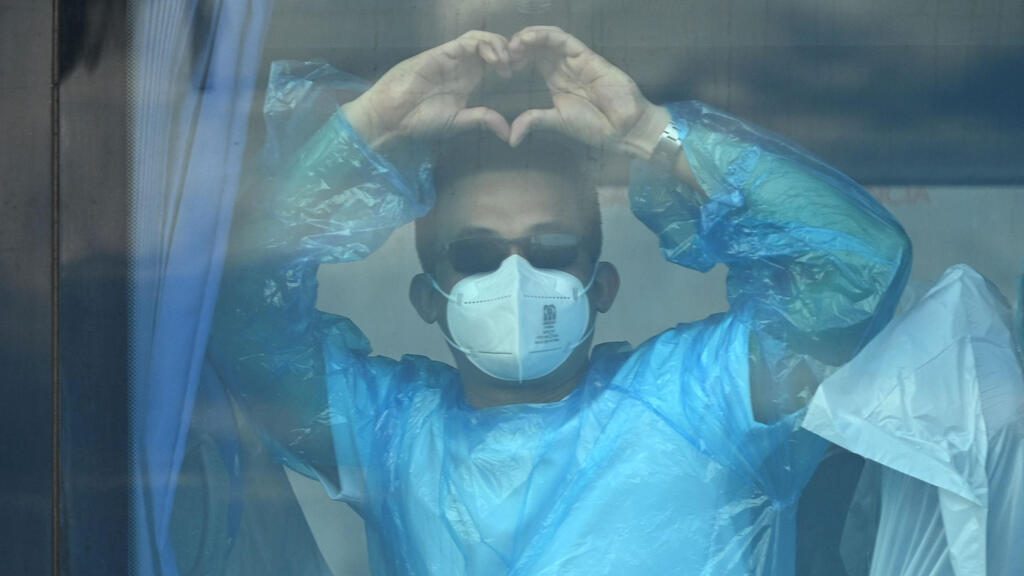
The main problem in the current era is not necessarily the virus itself, but the people presenting it to the public. Into the professional vacuum step individuals with no medical knowledge or epidemiological authority, taking an isolated incident and distorting it to keep audiences engaged and prevent them from scrolling away. In a world where “the truth is sometimes too boring for the algorithm,” fear has become the strongest currency. So before canceling your next flight, it is worth reviewing the facts.
The numbers
As of now, nine passengers are known to have developed symptoms, seven of whom were confirmed in laboratory tests. Three patients died.
According to inquiries conducted by Israel’s Health Ministry with health authorities around the world, there were no Israelis on the ship, and no Israelis have so far been identified among those who came into contact with the patients.
The Health Ministry said that “based on currently available information, and according to assessments by all relevant authorities, the risk of widespread global transmission and of the disease reaching Israel in particular is considered extremely low due to the modes of transmission and the measures being taken by health authorities worldwide to prevent its spread.”
This is not a new virus
Hantavirus has been known to science for decades. The specific Andes strain responsible for the current incident was first identified in South America in 1995. Scientists are familiar with how it operates, its genome and the way it responds to environmental conditions. Unlike outbreaks driven by an unfamiliar evolutionary “jump,” this is a known virus that has been monitored for three decades.
It has happened before — and faded
This is not the first outbreak of the Andes strain. During a 2018 outbreak, 34 people were infected and 11 died. At the time, there were also predictions of catastrophe, but the virus subsided once basic preventive measures were implemented. The same pattern has repeated itself: the virus emerges, affects a specific area and is then contained.
It is very difficult to contract
Diseases such as measles or COVID-19 spread easily through the air or via tiny respiratory droplets. Hantavirus, by contrast, requires what could almost be described as VIP conditions to pass from one person to another. Transmission requires close and prolonged contact — often at the level of couples sharing a bed.
For the average person passing an infected patient in a hallway or sitting in the same large room, the risk is considered very low. During the 2018 outbreak, there were isolated cases in which patients with exceptionally high viral loads transmitted the virus after more limited exposure, but those cases were the exception, not the rule.
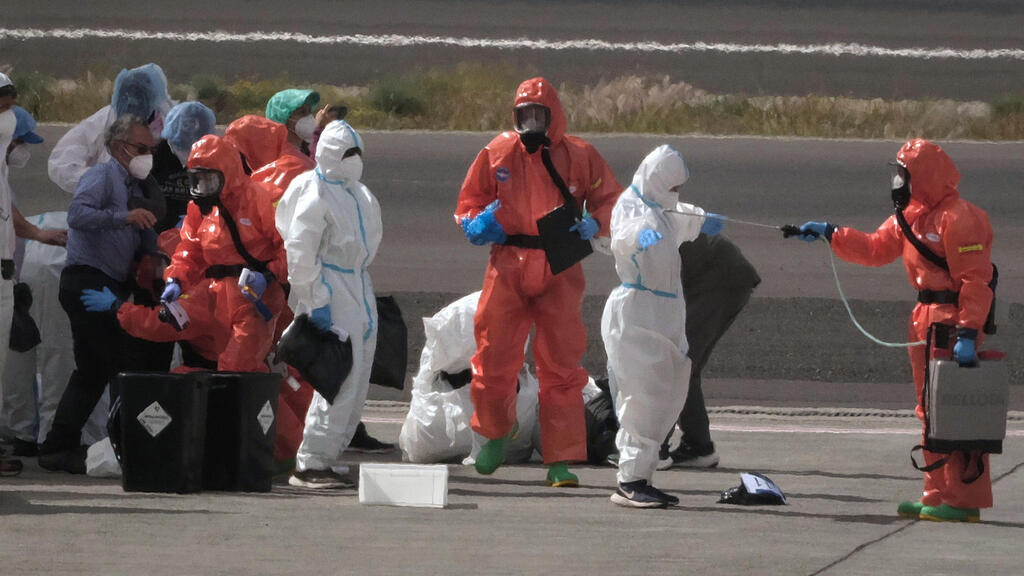
Passengers were sprayed with disinfectant at the port of Tenerife after arriving from the cruise ship
(Photo: AP Photo / Arturo Rodriguez)
The 'closed ship' effect
The fact that the incident occurred on a cruise ship creates the impression of a rapidly spreading epidemic. A ship is a closed, crowded and highly controlled environment. While it may appear to be an ideal setting for viruses, epidemiologically it can actually be an advantage: once passengers are isolated — whether onboard or elsewhere — it becomes relatively easy to break the chain of transmission.
Unlike in open cities, authorities know exactly who is where and can more easily trace passengers who have already disembarked.
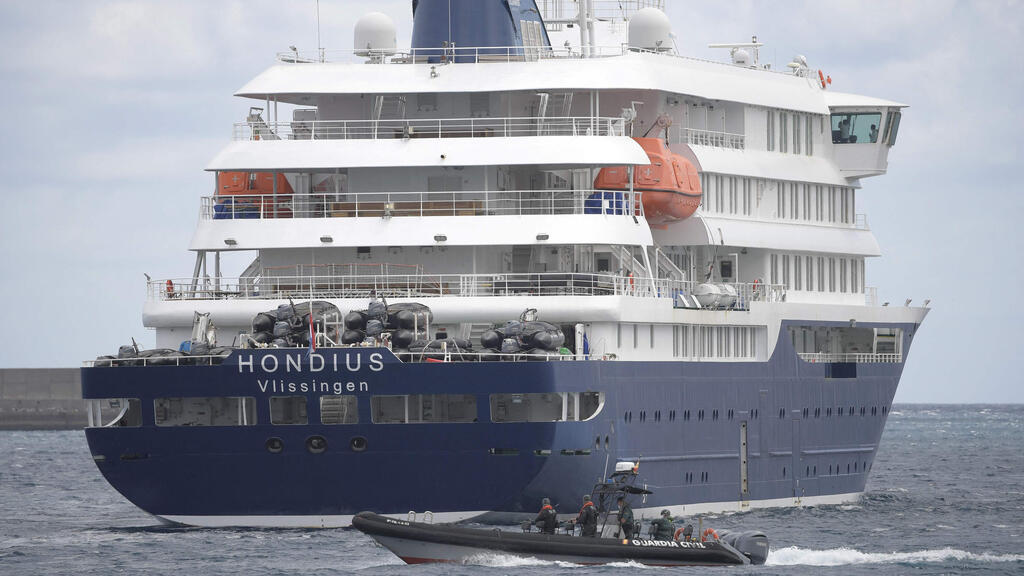
The cruise ship MV Hondius
(Photo: JORGE GUERRERO / AFP)
The virus undermines itself
There is a common principle in viral evolution: a virus that is too deadly is ultimately a “poor strategist.” The Andes strain has a very high mortality rate — up to 40% — and that is precisely what limits its spread.
A virus that “wants” to survive must remain under the radar, like influenza: infecting millions while causing relatively mild illness in most cases. When a virus kills its host quickly and efficiently, it effectively cuts off its own ability to spread. In addition, transmission occurs mainly when clear clinical symptoms are already present, unlike COVID-19, where infected people could spread the virus before realizing they were sick.
In conclusion, we live in an era in which there is no correlation between follower counts and professional expertise. The desire of influencers to generate content often outweighs public responsibility. The truth is that this is a tragic but manageable incident, and there is no evidence of a mutation or change in the virus’s behavior — but that reality simply does not generate many shares.
The next time you encounter a video promising that the end is near, remember: the most contagious virus on social media is fear itself. And perhaps, after six years of collective sleeplessness, it is time to listen to the dry facts rather than to algorithms hungry for our attention.
It is time to develop immunity not only to viruses, but also to the information we consume. Pay close attention to where you get your health updates: are they coming from a professional who is accountable for what they say, or from someone enjoying the spotlight and free to say anything without consequences?
Those comments remain online, but your health exists in the real world. Do not let people who profit from fearmongering set your agenda. The truth may be less viral, but it is the only way to remain calm — and stay alive.
Dr. Roy Zucker is an infectious disease specialist at Clalit Health Services.
First published: 09:50, 05.12.26