

Instead of cutting the amount of food you eat to lose weight, a new analysis of a clinical trial points to a different approach: changing what goes on the plate. The study, published in JAMA Network Open, found that participants who switched to a low-fat vegan diet based mainly on vegetables, fruit, grains and legumes consumed fewer calories each day, even though they were not asked to count calories or limit portion sizes.
The original trial on which the analysis was based also found an average weight loss of 6.4 kilograms, or about 14 pounds, in just 16 weeks. Researchers attributed the change in part to a roughly 30% reduction in the diet’s “calorie density,” meaning the number of calories in each gram of food.
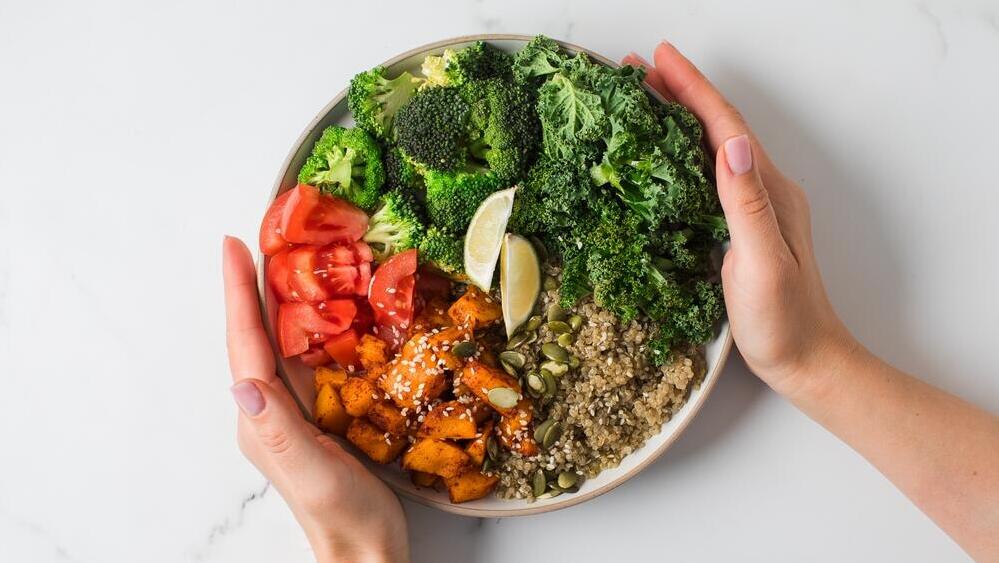
Plates stayed full, calories dropped
The new findings are based on a clinical trial conducted in Washington from 2017 to 2019 involving 244 adults who were overweight. Half followed a low-fat vegan diet for 16 weeks, while the other half continued their usual diets. In the current analysis, researchers examined data from 223 participants who completed the study to determine how changes in the composition of their diets affected energy intake.
The data showed that although the daily weight of food consumed by participants in the vegan group remained almost unchanged, their calorie intake fell significantly. At the start of the trial, the group consumed an average of about 1,834 calories a day. By the end, that figure had fallen to about 1,343 calories — a reduction of 491 calories a day. Because the control group also recorded a slight decline, the net difference in the change between the two groups was about 357 calories a day.
The analysis also found a link between the two variables: The more the calorie density of the diet declined, the more weight participants tended to lose.
The explanation lies in food volume. Vegetables, fruit and legumes contain large amounts of water and fiber, so they take up relatively more space on the plate and in the stomach while providing relatively few calories per gram. That makes it possible to eat a comparatively large amount of food, feel full and still consume fewer calories.
The change in what participants ate was clearly reflected in the data. Meat, dairy products and eggs nearly disappeared from the vegan group’s diet. Meanwhile, average vegetable consumption rose from about 250 grams to 393 grams a day, fruit intake increased from about 106 grams to 185 grams and legume consumption tripled, from about 36 grams to 110 grams a day.
Even this counts
(Photo: Shutterstock/Aerial Horizons)
Dr. Hana Kahleova, the lead researcher and director of clinical research at the Physicians Committee for Responsible Medicine, said: “Plant foods are rich in water and fiber, so you can fill your plate, feel full, and still take in fewer calories.”
The vegan junk-food trap
Before loading up your plate, however, the researchers stress that the label “vegan” does not necessarily mean a diet is low in calories.
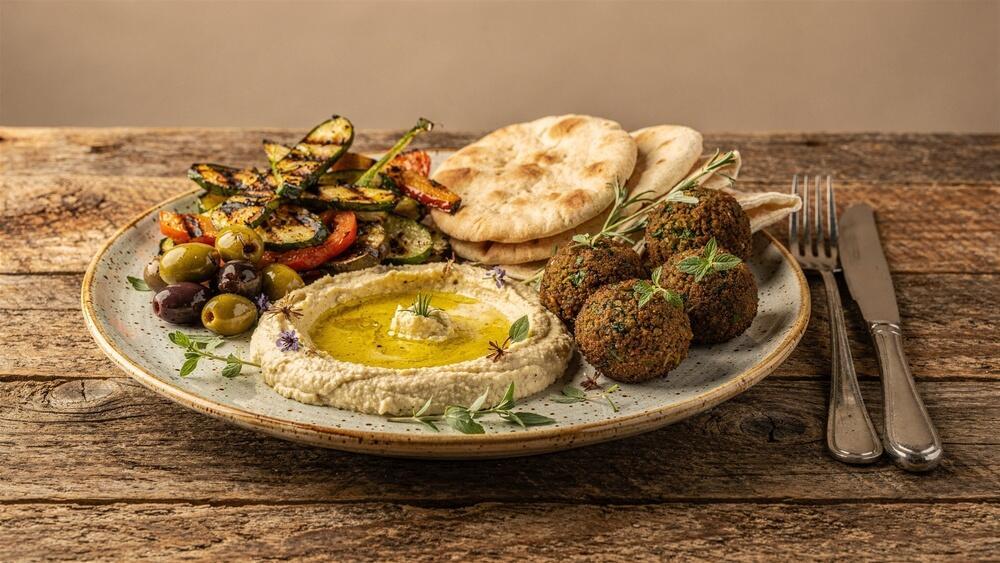
The diet tested in the trial was both vegan and low in fat, consisting mainly of vegetables, fruit, grains and legumes, with no animal products or added fats. Vegan foods such as oils, nuts, seeds and avocados can certainly be part of a healthy diet, but they are relatively calorie-dense. Processed vegan products such as chips, pastries and sweets can also contain large amounts of calories.
In other words, the benefit does not depend solely on removing animal products from the diet, but also on what replaces them and on the calorie density of the meal as a whole.

This is less the idea
(Photo: Shutterstock/Farknot Architect)
Despite the encouraging results, the study has several limitations that should be taken into account. First, this was a retrospective analysis of data from an earlier trial rather than a study designed from the outset to examine calorie density. Second, some of the dietary data were based on food records completed by the participants themselves. In addition, the relatively short follow-up period — 16 weeks — does not allow conclusions to be drawn about the diet’s effects over many years.
It is also important to note that the study was funded by the Physicians Committee for Responsible Medicine, a U.S. organization that advocates, among other things, for plant-based diets, and several of the researchers are affiliated with it. According to the researchers’ disclosure, however, the funding organization was not involved in the data analysis or the decision to publish the findings.
Ultimately, the study provides further evidence that the question is not only how much food is on the plate, but primarily what kind of food it is. When a larger share of a meal consists of foods with low calorie density, it may be possible to feel full without calories adding up as quickly.