

A multinational research team led by an Israeli engineer and involving top U.S. universities has unveiled a pioneering implantable device that could someday eliminate the need for daily insulin injections for people with diabetes.
The study, published Jan. 28 in Science Translational Medicine, describes a living, cell‑based implant that functions as an autonomous “artificial pancreas.” Once placed in the body, the device continuously monitors blood glucose levels, produces insulin internally and releases exactly what the body needs — without external pumps, injections or patient intervention.
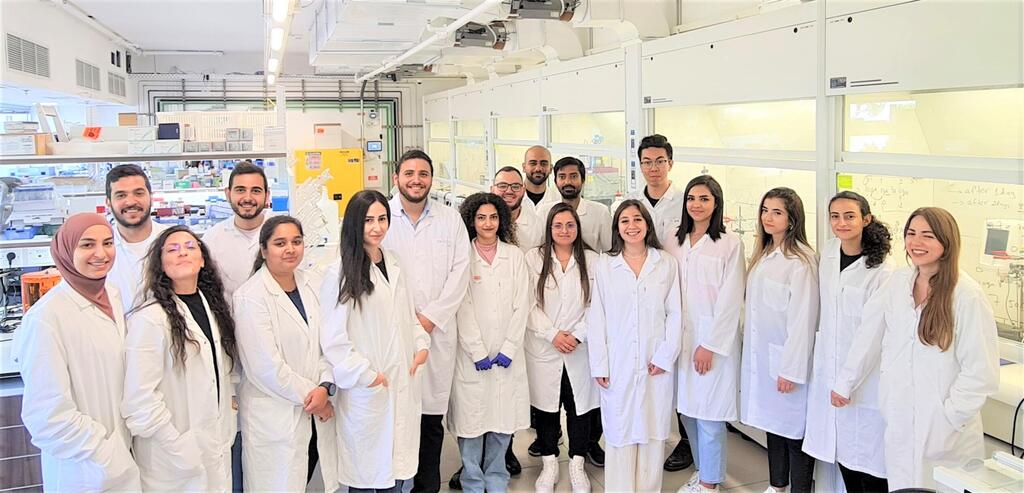
Members of the Farah lab
(Photo: Technion)
The breakthrough centers on a novel protective technology researchers call a “crystalline shield”, engineered to prevent the body’s immune system from rejecting the implant — a major hurdle that has stymied cell‑based therapies for decades. The shield allows the implant to operate reliably for years.
Tests in mice showed effective long‑term glucose regulation, and studies in non‑human primates confirmed that the cells inside the implant remain viable and functional, the researchers said. Those results, they added, provide strong support for future clinical testing in humans.
The work was led by Assistant Professor Shady Farah of the Technion — Israel Institute of Technology’s Faculty of Chemical Engineering, in collaboration with scientists at the Massachusetts Institute of Technology, Harvard University, Johns Hopkins University and the University of Massachusetts. The collaboration traces back to Farah’s postdoctoral work beginning in 2018 at MIT and Boston Children’s Hospital/Harvard Medical School, under tissue‑engineering pioneers including Robert Langer, a co‑founder of Moderna.
 Assistant Professor Shady Farah Photo: Technion
Farah’s co‑first authors on the paper are Matthew Bochenek of MIT and Joshua Doloff of Johns Hopkins. Other contributors include Technion researchers Dr. Merna Shaheen‑Mualim and former master’s students Neta Kutner and Edward Odeh, who also helped adapt the work for publication.
While the initial focus is on diabetes, the team emphasized that the platform could one day be adapted to deliver other biologic therapies continuously, offering a new approach to chronic conditions such as hemophilia and other metabolic or genetic diseases.
If successfully translated into human treatment, experts say the technology could reshape the management of chronic illness by replacing lifelong drug regimens with self‑regulated, living therapeutics working continuously inside the body.