

Sleep is the third most essential human need—right after air and water. It’s critical for survival, emotional regulation and daily functioning. But how much sleep do we actually need? What’s the link between sleep and weight gain? Can geography shape sleep habits? And why do men experience erections during REM sleep? Get comfortable—this deep dive into the science of sleep is about to begin.
How long can a person survive without sleep? In 1964, an American teenager named Randy Gardner set the Guinness World Record for the longest time without sleep: 264 hours (11 days and 24 minutes). He later slept for 17 hours and returned to his normal routine. His record was surpassed 20 years later by California stuntman Robert McDonald, who stayed awake for nearly 19 days. Since 1997, Guinness no longer tracks sleep deprivation records due to health risks.
Does geography affect how we sleep?
A global study found that people in Argentina sleep the most, followed by residents of Spain, Ukraine, Turkey and Mexico. On the opposite end, the Japanese sleep the least. Israelis fall in the middle, sleeping about seven hours a night on average—between Brazil and Romania.
How do dolphins sleep while swimming?
Some animals sleep similarly to humans, while others—like dolphins—have evolved unique abilities, including sleeping with one hemisphere of the brain at a time, allowing them to stay partially alert while moving.
How many hours of sleep are recommended?
Sleep needs vary across the lifespan. Infants require the most sleep, while adults generally need between six and eight hours per night.
What are the stages of sleep?
Sleep isn’t a passive state; the brain remains active in what can be called "night shift mode." The four key stages are defined by electrical brain activity (EEG), eye movements (EOG) and muscle tone (EMG):
Stage 1 – Light sleep (onset): This brief transition from wakefulness lasts a few minutes, marked by slowed brain activity and muscle relaxation. It makes up about 5% of total sleep time.
Stage 2 – Light sleep (sustained): Representing about half of total sleep, mostly in the night’s second half, this stage features EEG patterns known as spindles and K-complexes.
(Photo: Shutterstock)
Stage 3 – Deep sleep: Characterized by slow brain waves, relaxed muscles and steady heart and breathing rates. In children, growth hormone is released; in adults, tissue repair occurs. This stage, mainly in the night’s first half, is also when parasomnias—like sleepwalking, talking, teeth grinding, bedwetting and night terrors—may occur.
REM sleep – Dream sleep: About 90 minutes after falling asleep, REM (rapid eye movement) begins. Brain activity mimics wakefulness, muscle tone drops and vivid dreams occur. In men, erections happen regardless of dream content. REM sleep repeats every 90 minutes in sleep cycles.
What is a dream?
A dream is a subjective experience during REM sleep—images, sounds, emotions and scenarios play out like a vivid internal film. Dreams occur nightly and share features like lack of awareness, little control and no judgment or logic.
Dreaming is universal and also occurs in animals. Sigmund Freud, founder of modern psychology, published The Interpretation of Dreams in 1900, proposing that dreams hold personal, symbolic meaning and can be explored through psychoanalysis.
How do mental health and dreams intersect?
People with depression spend more time in REM sleep, and the transition to REM happens more quickly. Antidepressants tend to reduce REM duration. Depressed individuals often report emotionally negative dream content. Those with anxiety or emotional distress frequently experience nightmares reflecting their inner turmoil.
(Photo: GettyImages)
What’s the link between sleep and weight gain?
A study comparing individuals sleeping 5.5 hours or less to those sleeping seven hours found the short-sleep group consumed an average of 385 more calories per day, leading to weight gain. Another study found that people who slept less than six hours had waistlines 3 cm larger than those who slept more.
Sleep deprivation disrupts the balance of leptin and ghrelin, two hormones that regulate hunger and fullness—making us hungrier and more prone to overeating. Want to maintain a healthy weight? Aim for 6–8 hours of quality sleep each night.
How to build better sleep habits
- Go to bed only when you feel genuinely sleepy. Getting into bed when you're too alert will likely increase the time it takes to fall asleep.
- Enter bed in a relaxed state. Falling asleep is harder when you're anxious or preoccupied with thoughts and worries. Try to release tension and wind down before lying down.
- Keep your environment dark. Melatonin—the hormone that regulates your biological clock—is produced in darkness. Exposure to light inhibits or delays its release, lowering sleep quality. Dim your home’s lights about two hours before bedtime and avoid screens (phones/computers) an hour before sleep. Watching TV, however, is generally fine and doesn’t interfere with sleep.
- Create a pleasant sleep environment. A comfortable mattress, cozy blanket and good pillow can make all the difference. Make your bedroom feel like a relaxing retreat.
- Exercise improves sleep quality but should be completed at least two to three hours before bedtime.
More sleep hygiene tips:
- Avoid alcohol within two hours of bedtime. While it may help you fall asleep initially, alcohol disrupts deep sleep. Once its sedative effect wears off, the body may experience a kind of “mini-withdrawal” during the night, increasing alertness and decreasing sleep quality.
- Limit caffeine, and avoid it altogether after 4 p.m. Remember, caffeine isn't only in coffee—it’s also in tea, cola, energy drinks, energy bars and chocolate.

(Photo: Shutterstock)
- Get morning sunlight for 30–60 minutes. Natural light helps reset your biological clock. Special receptors in your eyes send signals to the brain's internal clock, halting melatonin production and promoting wakefulness.
What’s the best sleep position?
The most important factor is comfort. Despite popular advice, we can’t really control how we sleep throughout the night. We know the position we fall asleep in and the one we wake up in, but we shift positions several times while asleep.
One exception: people with snoring or sleep apnea should avoid sleeping on their back. A practical solution is sewing a tennis ball into the back of a sleep shirt or using a pouch to discourage that position.
Sleep and ADHD
There’s a high prevalence of sleep disorders in children with ADHD. These include difficulty falling asleep, fragmented sleep and restlessness. If a child with ADHD symptoms also shows signs of sleep problems, a sleep clinic evaluation is recommended.
Conversely, some sleep disorders may mimic ADHD. Interrupted or poor-quality sleep can lead to symptoms like inattention and hyperactivity, resulting in misdiagnosis. In such cases, treating the sleep disorder can resolve the symptoms.

(Photo: Shutterstock)
Sleep deprivation in children also leads to impulsivity, mood swings and concentration issues—often mistaken for attention disorders.
Children’s sleep should be calm and uninterrupted. Sleep-disordered breathing in children results in drops in blood oxygen levels and fragmented sleep. The most common cause is enlarged tonsils or adenoids.
Main signs of sleep-disordered breathing include snoring, gasping or noisy breathing during sleep, open-mouth sleeping, head tilting and dry mouth in the morning. Other symptoms may include fatigue, daytime sleepiness and concentration or learning difficulties.
What to do: Visit a pediatrician or family doctor and ask for a referral to a sleep study. At Assuta’s sleep medicine unit, children can now undergo sleep testing from the comfort of their home.
Why can’t I fall asleep?
Trouble falling asleep and insomnia are considered an “arousal disorder,” a state in which the brain prevents the transition into sleep. The first stage of treatment is diagnosis and monitoring of sleep times, awakenings and the patient’s lifestyle habits.
 Prof. Yaron DaganPhoto: Assuta
 Dr. Amit Green Photo: Assuta
In the next stage, a “sleep restriction” is used — limiting sleep to defined times in order to shorten the time it takes to fall asleep and improve sleep efficiency within a limited time window. At this stage the need for sleep itself rises, restoring the positive feeling of getting into bed that has been lost by many who suffer from insomnia. Later in the treatment, sleep time is gradually increased.
The following phase is about creating good sleep habits by changing life habits that affect sleep, such as scheduling exercise, avoiding screens and social media at night, adjusting caffeine intake and other lifestyle behaviors that help or hinder sleep. Patients also learn to craft a “sleep‑promoting environment” — for example keeping the bedroom quiet, dark and screen‑free. Relaxation techniques are also taught, such as meditation, guided imagery and mindfulness, which help calm the mind and body and allow smoother entry into sleep.
What else can be done to treat sleep disorders?
CBT (cognitive‑behavioral therapy) for insomnia is a treatment process that teaches sufferers how to identify the psychological arousal that triggers physical arousal and hinders falling asleep and staying asleep. Therapy helps recognize and manage thoughts and emotions that interfere with sleep. The behavioral component of the treatment helps develop sleep‑promoting habits and change behaviors that delay or block sleep. One of the standout advantages of this therapy is its high success rate — about 88% — and a short treatment duration: approximately six sessions over two to three months.
What is a sleep‑disordered breathing condition and how is it treated?
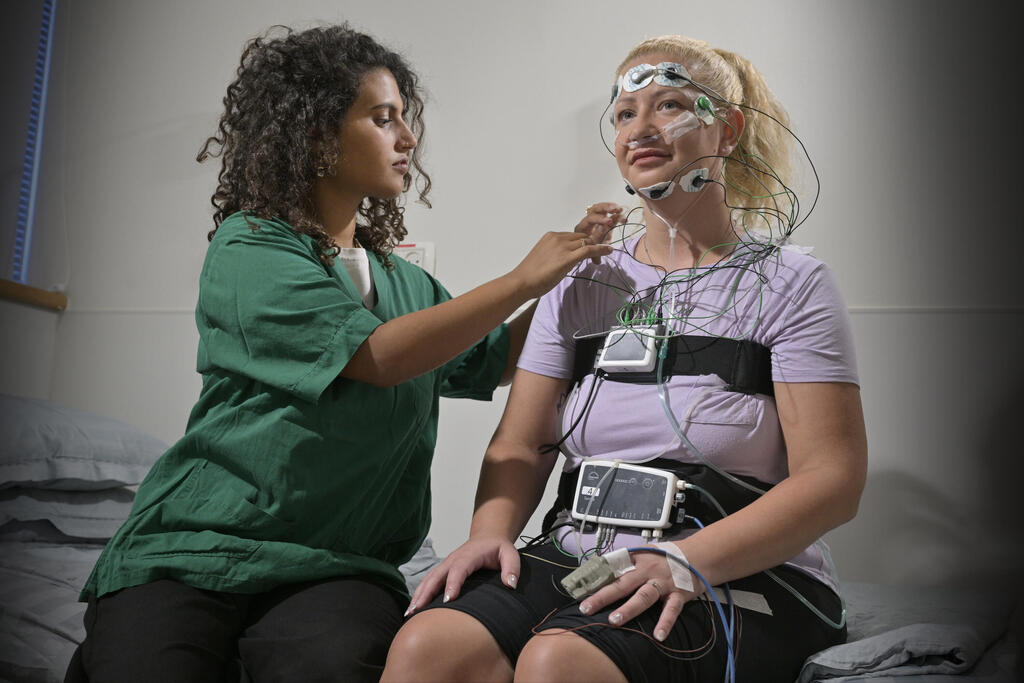
If you snore, wake with a dry mouth, feel excessively sleepy during the day or have restless, interrupted sleep, you might have a sleep‑disordered breathing condition. Such a condition significantly increases risk for cardiovascular diseases (high blood pressure, heart attacks, stroke) and also reduces alertness and performance during the day. Individuals diagnosed at home sleep testing centres with moderate to severe sleep‑disordered breathing experience dozens or hundreds of breathing interruptions each night, snoring, low oxygen levels, changes in blood pressure and unrefreshing sleep.
(Photo: Assuta)
Diagnosis is made via a sleep study (now often available for home use). If the problem is mild and limited to snoring, weight loss (in cases of excess weight) may improve the condition. In mild to moderate cases with snoring, a dentist‑fitted mandibular advancement device (MAD) can help open the airway and prevent breathing interruptions and snoring. In severe cases, CPAP therapy (the same device used by U.S. President Biden) is recommended. CPAP delivers air via a mask during sleep to prevent breathing interruptions and snoring, allowing restful, quality sleep and helping eliminate that constant feeling of fatigue.
The device is first provided for a trial period of several days to allow adaptation. After that, the patient returns to the clinic to review data with a technician. Only when both patient and technician are satisfied with the treatment does the patient receive a personal machine for home use.
- Prof. Yaron Dagan, sleep‑disorders specialist and head of the Sleep Medicine Network at Assuta; Dr. Amit Green, sleep‑psychologist in the Sleep Service, Assuta Medical Centers.