

At one of the most powerful moments in the film “Waltz with Bashir,” director Ari Folman sits with a therapist and describes the night of the Sabra and Shatila massacre during the First Lebanon War.
“I’ll tell you what amazes me,” he says. “There was a massacre. The massacre was carried out by Christians. Around them were circles of people, ours. Each circle had fragments of information. The first circle had the most information, and still no one’s jaw dropped. They didn’t understand that what they were seeing was genocide.”
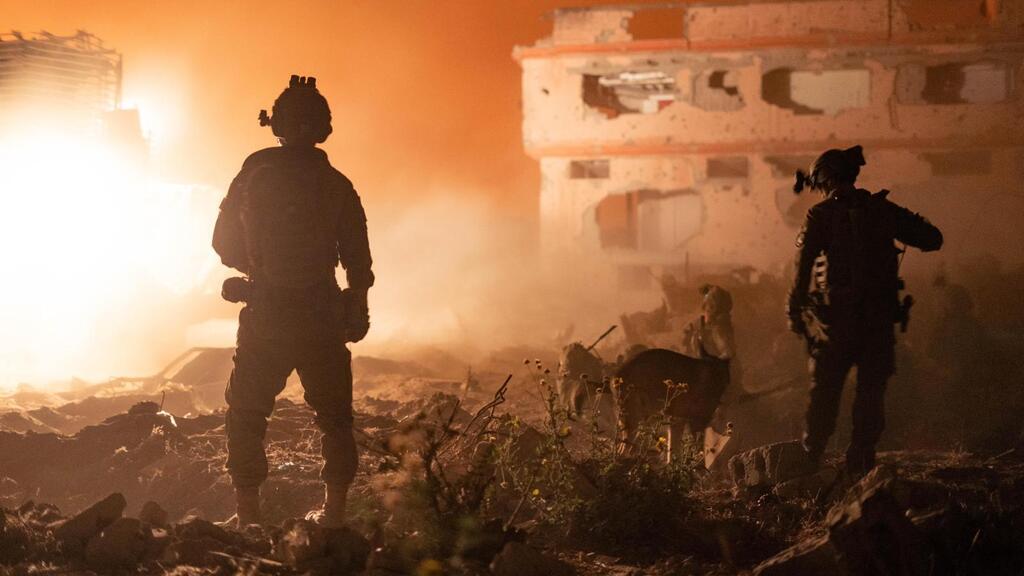
Folman, whose memories of the war were erased for two decades, suddenly recalls the illumination flares he fired, lighting up the night sky as the Phalangists slaughtered Palestinian civilians in the refugee camps.
The therapist explains his amnesia: “The reason you didn’t remember the massacre is that, in your perception, the first circle of murderers and the circle around them were the same circle. At 19, you felt guilty. You were cast as a Nazi against your will. It’s not that you weren’t there. You were there. You fired the flares. But you didn’t carry out the massacre.”
Four decades after the First Lebanon War, as Israel begins to confront the aftermath of the October 7 massacre and the war that followed, Folman’s story illustrates what psychology now calls “moral injury.”
The term, still not formally recognized as a diagnosis but widely studied as a clinical phenomenon, describes the conflict between a person’s moral code and actions they carried out or witnessed.
“For years people said it was PTSD, but PTSD is about life-threatening danger,” explained Prof. Yossi Levi-Belz, who has researched the phenomenon for more than a decade. “Ari Folman wasn’t in life-threatening danger. He stood on a roof and fired illumination flares. But his internal moral code told him: you were not OK. You cooperated with a massacre.”
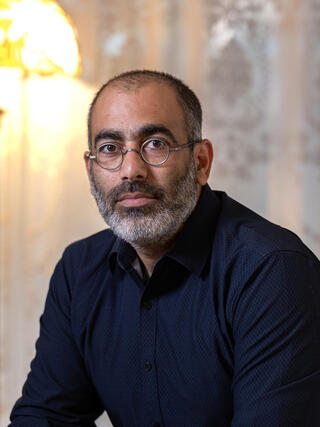 Prof. Yossi LeviPhoto: Yuval Chen
In other words, moral injury arises when a person feels they violated their own values, or were complicit in something that contradicts their ethical identity. The consequences can be severe, ranging from depression and anxiety to substance abuse and suicidal thoughts.
“The army, like all of Israeli society, went to war after October 7 in a very aggressive posture,” Levi-Belz said. “The phrase ‘Never Again is Now’ that echoed at the beginning of the war essentially said: we are going to confront modern-day Nazis.”
That mindset, he argues, created fertile ground for moral injury that often surfaces only later.
“When you enter combat with a desire for revenge, you may do things that afterward you look at differently.”
From research to the battlefield
Levi-Belz, head of the Lior Tsfaty Center for Suicide and Mental Pain Research at the University of Haifa, has not studied the issue from an ivory tower. Since October 7, he has served nearly 300 days of reserve duty as a clinical psychologist in military intelligence. He has met hundreds of soldiers, both in combat zones and later in therapy rooms and retreats.
Their accounts, he says, align with years of research he conducted with Prof. Gadi Zerach of Ariel University.
“I heard quite a few soldiers describe cases where they shot at people and later discovered they were uninvolved,” Levi-Belz said. “In military intelligence, I met people who said, ‘Listen, I marked houses that in the first month killed 2,000 to 3,000 Palestinians. At the time it seemed right. It seemed justified.’”
 Prof. Gadi ZerachPhoto: Harimonim
He noted that the concept of “collateral damage,” once applied more rigidly, became more flexible in the early weeks of the war. “If Sinwar is sitting inside a building surrounded by 50 or 100 people, the question of whether to strike becomes easier than it was on October 6.”
Not everyone who encounters such situations develops moral injury, and the reaction is not always immediate.
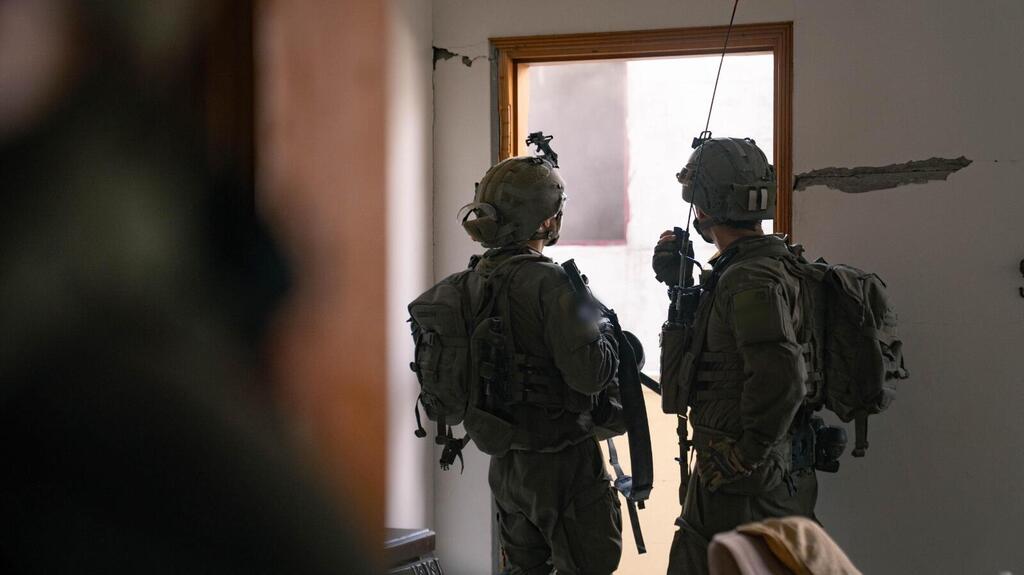
IDF troops in Gaza
(Photo: IDF)
“One of the complexities of moral injury is that it does not always appear at the moment of action,” Levi-Belz said. “Sometimes it emerges weeks later, after you take off the uniform. Sometimes years later.”
He described cases of veterans who only confronted their internal conflict when holding their first newborn child. “They are holding something small and pure, and suddenly that moment from the war returns. The contradiction between their values and what they did or saw becomes unbearable.”
A widespread phenomenon
Levi-Belz and Zerach began researching moral injury in Israel in 2017, following similar studies abroad.
“One of our early findings, already in 2019, was that like other armies, between 20 percent and 35 percent of Israeli soldiers report experiencing at least one event during service with the potential for moral injury,” Zerach said.
Their studies found that repeated exposure increases the risk of long-term consequences, including post-traumatic symptoms.
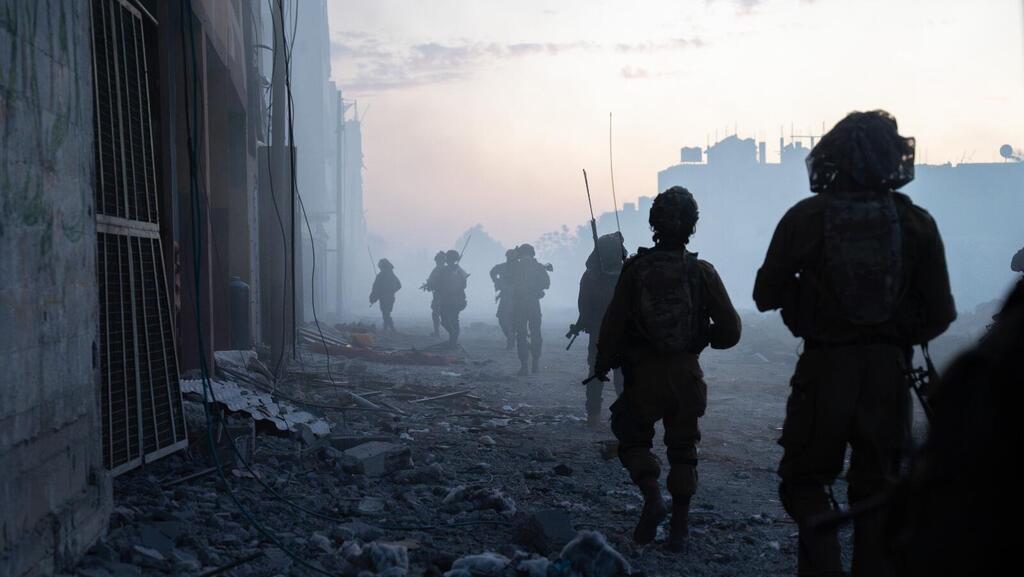
(Photo: IDF)
New data from the current war are still being collected, but Levi-Belz estimates the numbers are significantly higher.
“There is no doubt that among IDF soldiers and reservists there has been an increase in moral injury compared to routine operations,” he said. Based on clinical experience and preliminary samples, he estimates that 40 percent to 50 percent of soldiers, particularly reservists, encountered morally injurious events during the war.
Zerach points to additional risk factors. Many soldiers entered the war personally affected, knowing victims of the October 7 massacre. The war has also been fought in densely populated civilian areas.
“War is always terrible,” he said. “But when it takes place within a civilian population, soldiers face impossible situations, where it is not always clear who is the enemy and who is an innocent civilian.”
Shame and betrayal
Researchers describe two primary forms of moral injury. One centers on shame-related emotions: guilt, self-condemnation, disgust and a loss of trust in one’s moral self. The other involves what they call “trust violation,” marked by anger, cynicism and a sense of betrayal by leaders or institutions.
If untreated, these patterns can evolve into broader psychological disorders, including PTSD, depression and suicidal ideation.
Some critics bristle at the term, fearing it undermines the image of the IDF as a moral army. Levi-Belz rejects that interpretation.
“Moral injury happens in every army in the world,” he said. “It does not mean the army is immoral. It means there are constant conflicts.”
The concept extends beyond soldiers. In a representative survey conducted one month after the October 7 massacre, 48 percent of Israelis reported feeling betrayed by leaders or commanders. Those who reported betrayal also showed higher levels of depression and post-traumatic symptoms.
“The hostage crisis created a massive moral wound,” Levi-Belz said. “Many Israelis felt that decisions being made in real time contradicted their moral compass.”
Recognition and recovery
Dr. Tamar Lavi, a clinical psychologist specializing in trauma, has also encountered numerous cases of moral injury.
“We see many who are tormented by actions they took: harming civilians, firing at collapsing buildings, seeing bodies, entering a house and suddenly finding a child’s room,” she said.
 Dr. Tamar LaviPhoto: Ran Yehezkel
Others struggle with feelings of abandonment. Soldiers left exposed in combat or commanders who hesitated on October 7 describe lingering resentment and betrayal.
Despite the pain, the researchers remain cautiously optimistic.
“The message to returning soldiers is clear: you are not alone,” Zerach said. “We all have an ethical obligation to change in light of what happened, to become a more compassionate society toward what occurs on the battlefield.”
According to Levi-Belz, moral injury often affects those with the most complex moral frameworks.
“In the end, moral injury belongs to those whose moral worldview is not simplistic,” he said. “There is a conflict between what they did and what they feel. I think we want soldiers like that to preserve human dignity. In my view, that strengthens the army.”