

The plant’s name, Tribulus terrestris, comes from the Greek word tribulus, meaning "morning star," an ancient weapon made of a spiked metal ball.
The Hebrew name, Kotev, also points to the plant’s hard, thorny fruit, familiar to nearly every hiker or cyclist in Israel for its remarkable ability to puncture tires and shoe soles.
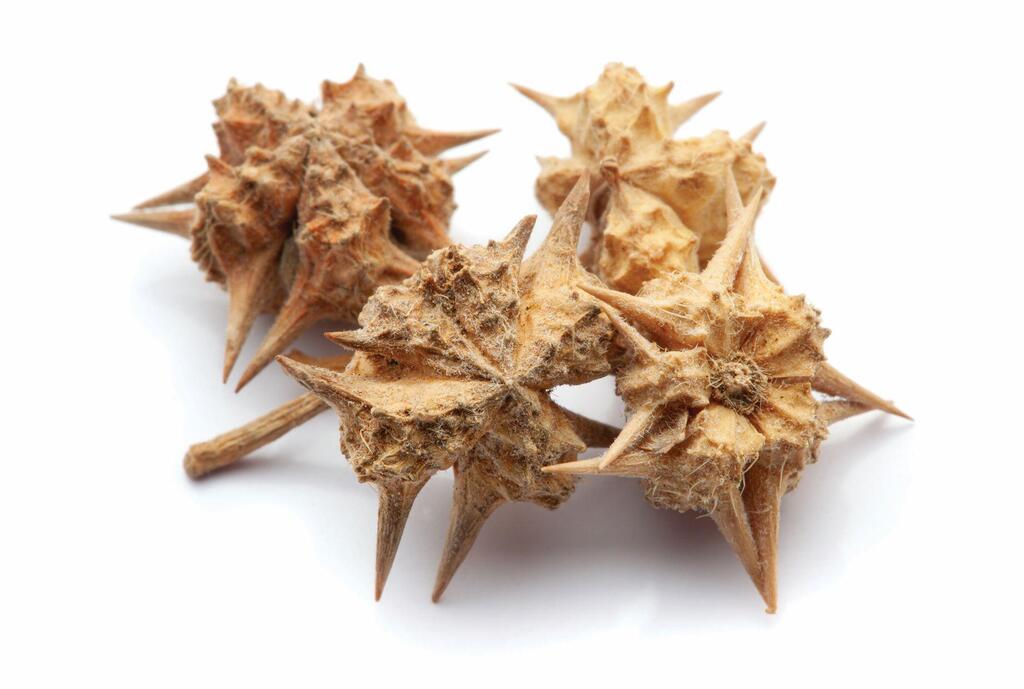
Tribulus terrestris
(Photo: Shutterstock)
According to Western medicine:
Clinical studies show that tribulus extract may significantly improve sperm concentration, cell shape or morphology, and motility, making it a potentially important aid in male fertility treatment.
The plant is rich in steroidal saponins, led by protodioscin, a compound studied for its potential to increase levels of nitric oxide in the body, which helps widen blood vessels and improve blood flow to the genitals.
Although there is scientific debate over whether it can directly raise testosterone levels in healthy men, the plant has been shown to significantly improve sexual desire and satisfaction with sexual function among men experiencing reduced vitality.
According to traditional medicine:
In Ayurvedic medicine, the plant is known as "gokshura" and is considered a "rasayana," a nourishing and rejuvenating herb used to strengthen the body, treat urinary tract problems and improve sexual function.
In Chinese medicine, it is used to support the liver, move stagnant energy (qi), and treat dizziness.
In Mediterranean medicine, it is used as a natural aphrodisiac and as a key ingredient in formulas designed to treat fertility problems in both men and women.
What is the proper dosage and use?
Capsules or dry extract: Choose a standardized supplement containing at least 40% saponins.
The commonly used dosage in studies ranges from 750 milligrams to 1,500 milligrams per day, divided into two or three doses. It is available at health food stores and pharmacies, either as a standalone supplement or as part of fertility and male vitality formulas.
Caution:
Men with conditions affected by hormone levels, such as prostate cancer, should consult a doctor before using it.
Diabetes and blood pressure medications: The plant may enhance the effects of drugs used to lower blood sugar or blood pressure, so these levels should be monitored carefully when combining them.
Note: Anyone taking herbal supplements should consult a physician to ensure they do not interact with other medications or affect medical conditions.
The writer is a clinical dietitian and herbal medicine practitioner.
First published: 20:35, 05.04.26