

Pink noise has become a global trend, with millions listening to it to fall asleep and parents placing noise machines in children’s rooms. But new research suggests the artificial sound may interfere with the most restorative stages of sleep and disrupt the body’s recovery process.
A study conducted at the University of Pennsylvania School of Medicine and published in the journal Sleep found that pink noise reduced REM sleep, the stage associated with dreaming, and impaired overall recovery. By contrast, wearing simple earplugs proved significantly more effective in protecting sleep from traffic noise.
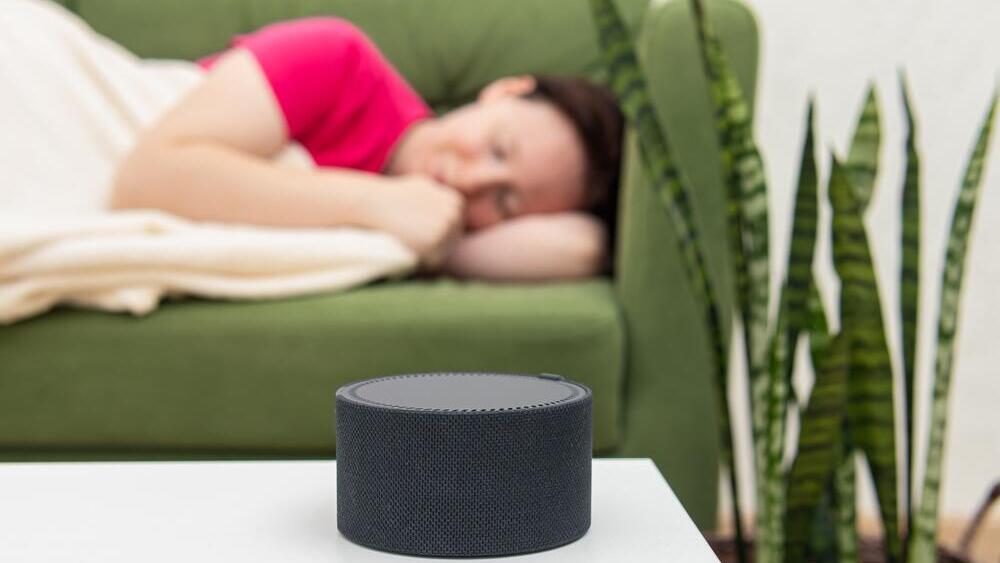
New research suggests the artificial sound may interfere with the most restorative stages of sleep
(Photo: Shutterstock / Svetlyachock)
“REM sleep is critical for memory consolidation, emotional regulation and brain development,” said Dr. Mathias Basner, the study’s lead author and a professor of sleep and chronobiology in psychiatry. “Our findings suggest that playing pink noise and other types of broadband noise during sleep may be harmful, especially for children whose brains are still developing and who spend more time in REM sleep than adults.”
What the researchers examined
The research team monitored 25 healthy adults ages 21 to 41 in a controlled sleep laboratory. Participants were given eight hours of sleep over seven consecutive nights. None had sleep disorders or regularly used noise to fall asleep.
During the trial, participants slept under varying conditions: exposure to aircraft noise, pink noise alone, a combination of aircraft and pink noise, and aircraft noise while wearing earplugs. Each morning, they completed cognitive tests and questionnaires assessing sleep quality and alertness.
Why deep and REM sleep matter
Over a typical night, the brain cycles between deep sleep and REM sleep. Deep sleep plays a central role in physical recovery, memory processing and clearing metabolic waste from the brain. REM sleep is responsible for emotional regulation, motor skill development and brain growth. Together, these stages operate in a delicate balance to ensure restorative rest.
Pink noise belongs to the category of broadband noise, a continuous sound covering a wide range of frequencies with a steady, static quality. Natural sounds such as rainfall and ocean waves fall into this category, as do household appliances like fans and air conditioners.
The numbers tell the story
Compared with quiet nights, exposure to aircraft noise led to an average loss of about 23 minutes of deep sleep per night. Earplugs largely prevented that loss.
Pink noise alone, played at 50 decibels, roughly equivalent to moderate rainfall, was associated with a reduction of nearly 19 minutes of REM sleep. When pink noise was combined with aircraft noise, both deep sleep and REM sleep were significantly shortened, and participants spent an additional 15 minutes awake during the night. That increase in wakefulness did not occur when each noise was presented separately.
Participants also reported that their sleep felt lighter, that they woke more often and that overall sleep quality declined under exposure to either aircraft noise or pink noise. Those negative effects nearly disappeared when earplugs were used.
A widespread habit with limited research
The researchers noted that earplugs are already used by about 16% of Americans and appear effective in reducing noise-related sleep disruption. At the same time, they called for more research into the long-term effects of pink noise and other sounds marketed as sleep aids.
White noise and ambient sound podcasts account for an estimated 3 million daily listening hours on Spotify, and the five most popular YouTube videos under the search term “white noise” have amassed more than 700 million views combined. Despite the widespread use, research on their impact remains limited and at times inconclusive, according to a review conducted by Basner and colleagues.
Disruption of REM sleep has been associated with conditions such as depression, anxiety and Parkinson’s disease. Basner emphasized that children spend far more time in REM sleep than adults, making them particularly vulnerable to disruption. Yet many parents place noise machines near infants’ and toddlers’ beds in an effort to help them sleep.
“In general, our results are a warning sign against the use of broadband noise, especially for infants and toddlers,” Basner said. “We need more research in vulnerable populations, on long-term use and on safe noise levels in relation to sleep.”