

The Early Starters program is unique in Israel and abroad. While many nonprofits operate in the same general space, none approach early childhood trauma from a full, 360-degree perspective, Naftalovich said, or integrate all of these elements into a single model. For parents, the impact is deeply personal.
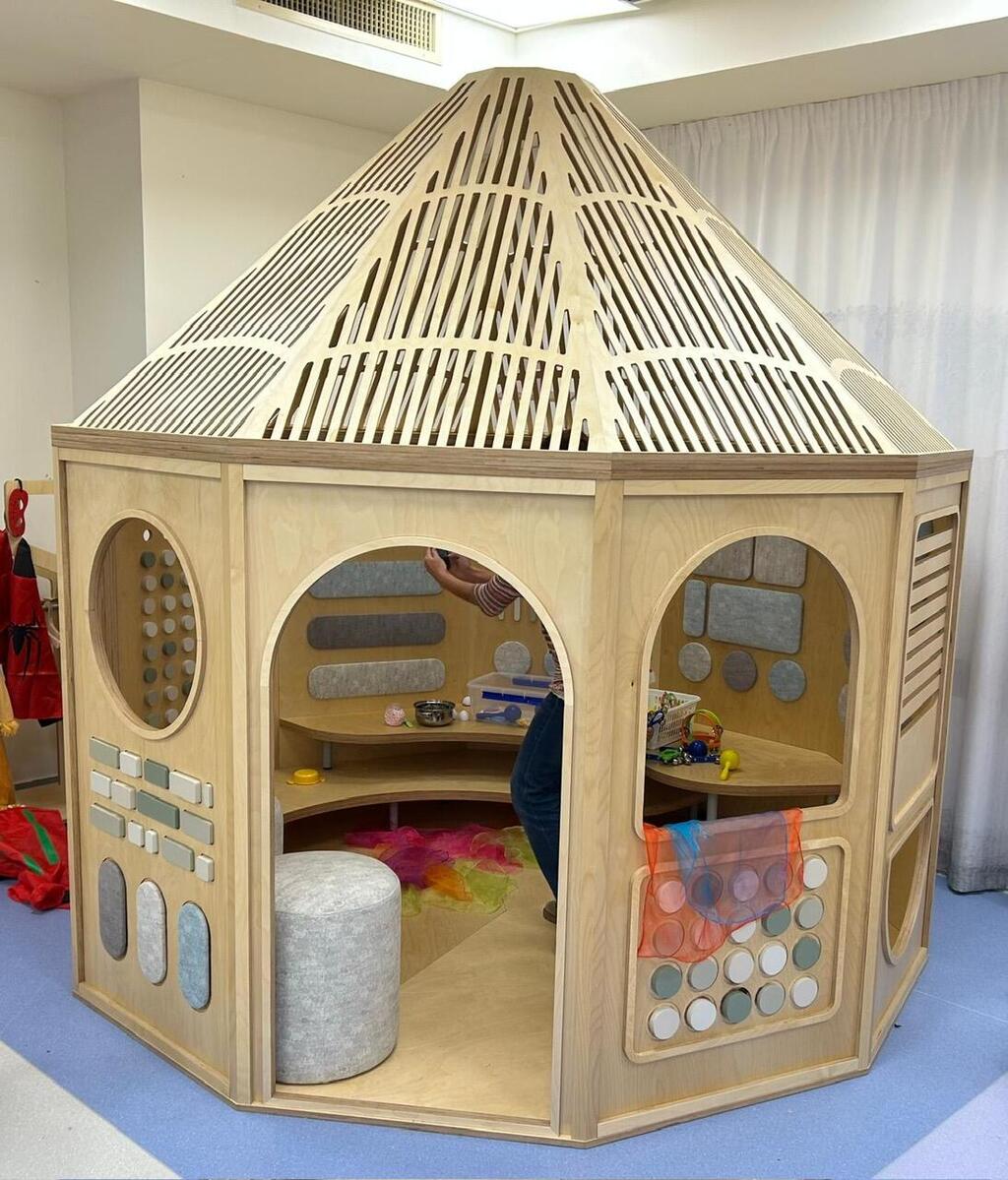
The house sits quietly in the classroom corner, itself a safe and open space filled with toys, art supplies, and books. Without posted instructions, children freely explore and decide for themselves. Gentle pastel-themed curtains encourage calm and openness. The room smells faintly of vanilla. Classical music plays softly in the background.
Shlomi is a town of about 8,500 residents. It lies less than 10 kilometers from the Israel-Lebanon border. According to the last census, this traditional community was evacuated in 2023. The evacuation happened when Hezbollah rockets began to fall.
“All the citizens came back to Shlomi between March and April after the war, and we decided to rebuild the community,” explained Nilly Levi, a longtime educator who now runs the Shlomi safe space. “The idea is that they will feel safe, they will communicate,” Levi continued. “It's a place that gives them hope and happiness.”
The Shlomi safe space, created by the Israeli NGO Early Starters, features five fluid zones: a soft area for calming and regulation; a creative area; a socio-dramatic "home-like" space; an area for construction and physical activity; and a dining and parent rest area. Fabric-wrapped walls with illustrated facades invite children into a quiet, protected world of imagination.
This NGO is dedicated to creating safe, trauma-informed early learning environments for young children in emergency settings. In response to two years of war in Israel, Early Starters has opened eight safe spaces in the north and south.
Shlomi’s residents became disconnected during the year and seven months they lived in hotels or rented apartments. Parents and children felt strain; family communication often suffered. About half a year after residents returned home, in November, Early Starters decided to invest in Shlomi. Now, the safe space operates three days a week. It welcomes around 35 families at a time for after-school and morning sessions.
It is the eighth such center in Israel, and there are many others worldwide. But in Shlomi, the safe house, designed for children from newborn to five years old, introduces several new features. Notably, it has a small house large enough for parents and children together, enabling shared family experiences not found in other centers. Other innovations include flexible zones tailored for calming, creativity, purposeful movement, and joint parent–child activities within an environment specifically designed for trauma recovery.
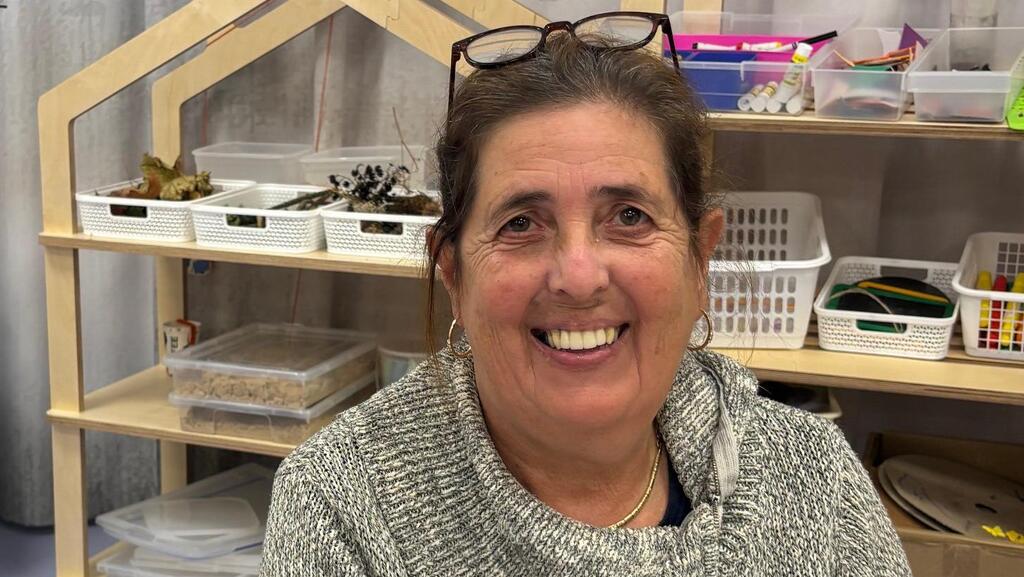
Nilly Levi
(Photo: Maayan Hoffman/The Media Line)
The most striking is the small house in the corner. “The idea is that children who feel less safe can go in there with their mothers or grandmothers,” Levi said. She noted that Shlomi is the only center with a house large enough for both parents and children. In other locations, the house is meant only for children. “You see, the mothers communicate with their kids. Sometimes two children and two parents go inside, and they play together. They build, they tell stories, they talk about themselves.”
Some children who have experienced trauma need to begin their visit there before joining the larger group. One little girl was inside with her mother on a Thursday. She played peekaboo with colorful scarves. Levi said the child tends to always start there and then slowly make her way out.
Beyond the physical space, the program gives parents dedicated time with their children and an opportunity to work through challenges together through drama and imaginative play.
The Shlomi center adapts the international Early Starters model with new elements for trauma-affected children. Built from in-depth research by a multidisciplinary team, it uses the Design Mind methodology to support safety, capability, and optimism for children who have experienced trauma.
All elements were chosen to be calm. Sounds soothe, lighting stimulates alpha waves, materials help children reconnect with their bodies, colors support emotions, and soft shapes encourage calm.
Early Starters co-founder and CEO Ran Cohen Harounoff explained that traumatic experiences heighten sensory sensitivity. A person’s sensory perception becomes intensified, especially in children. As a result, unlike typical play spaces filled with bright colors and sudden stimulation, these safe houses are intentionally gentle, designed to soothe rather than overwhelm.
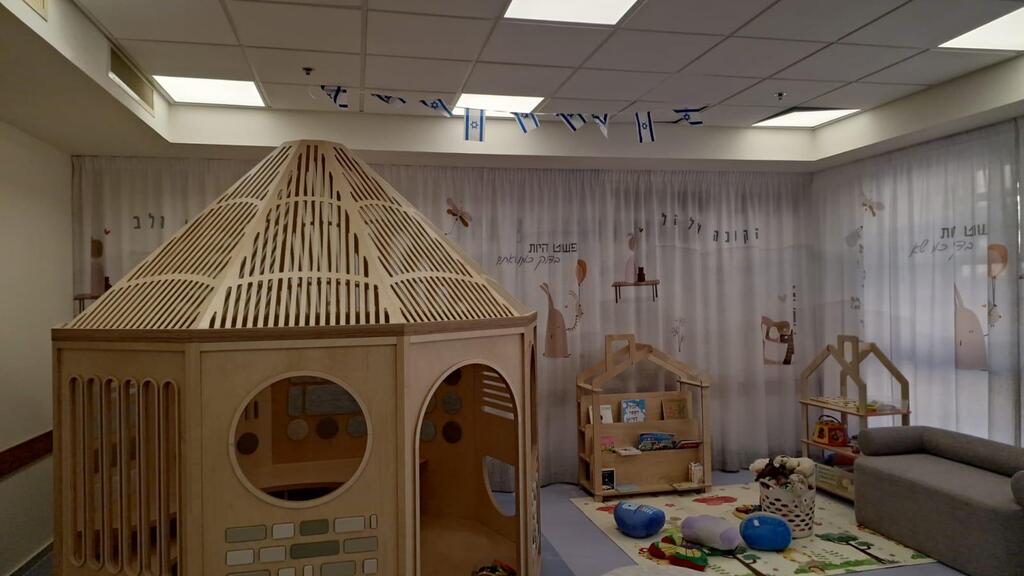
Inside the safe space
(Photo: Maayan Hoffman/The Media Line)
The entire project is grounded in research, including work on how people physically and emotionally respond to their surroundings. One often-cited 2021 study, “The bouba/kiki effect is robust across cultures and writing systems,” shows that people across cultures tend to associate sharp, angular shapes with tension or threat, while rounded shapes are perceived as softer and more pleasant. Those findings helped inform the design of the safe space, which deliberately favors gentle curves over harsh lines.
Trauma also affects how people experience their own bodies. One of the key capacities disrupted by trauma is interoception, the sense of being connected to what is happening inside the body. As the Early Starters team explains, trauma happens while the body is fully present and unable to escape. To cope, the nervous system often disconnects from bodily sensations as a form of protection.
To counter trauma response, the space uses soft, flexible materials for touch. Mats, cushions, and materials like slime or kinetic sand help children gradually reconnect with their bodies.
Sound is carefully utilized. Calming music helps regulate the nervous system. In Shlomi, classical music quietly plays to reduce anxiety and maintain a soothing environment. Smell is considered too. Scents like vanilla or butter cookies help signal safety and relaxation.
Early Starters International was founded in 2017 and has worked across the world, from Africa and Greece to Russia and Ukraine.
Harounoff said the program began when he and co-founder Sarah Wilner recognized a recurring gap in early childhood education and care during short-term crises, whether caused by war, earthquakes, or mass displacement. Early on, the organization worked with Syrian refugees in Greece and later in a refugee camp in Malawi. Over time, those experiences shaped the idea of creating safe spaces that could welcome both children and their parents. “Children and parents have no real answer in times of crisis,” Harounoff said.
According to the organization’s website, “safe spaces created for young children during emergency situations that focus on the developmental needs of young children reduce the trauma caused by the humanitarian crisis and ensure that every young child has a safe place to play, learn, and develop mentally and emotionally.”
“The whole thing is about the experience the parent and child have together,” added Helli Naftalovich, director of the organization’s Israel arena.
The safe house is a central feature of every Early Starters center, Harounoff said. It serves as a setting for imaginative play, which takes on added meaning for children who were forced to leave their homes, as was the case for families in Shlomi. For some children, particularly those from communities in the south, their homes were damaged or rendered unsafe after terrorists entered them. Through imaginative play in the safe house, children can regain a sense of security and control. At times, they reenact scenes of running in and out of make-believe shelters built into the structure.
The Early Starters program is unique in Israel and abroad. While many nonprofits operate in the same general space, none approach early childhood trauma from a full, 360-degree perspective, Naftalovich said, or integrate all of these elements into a single model. For parents, the impact is deeply personal.
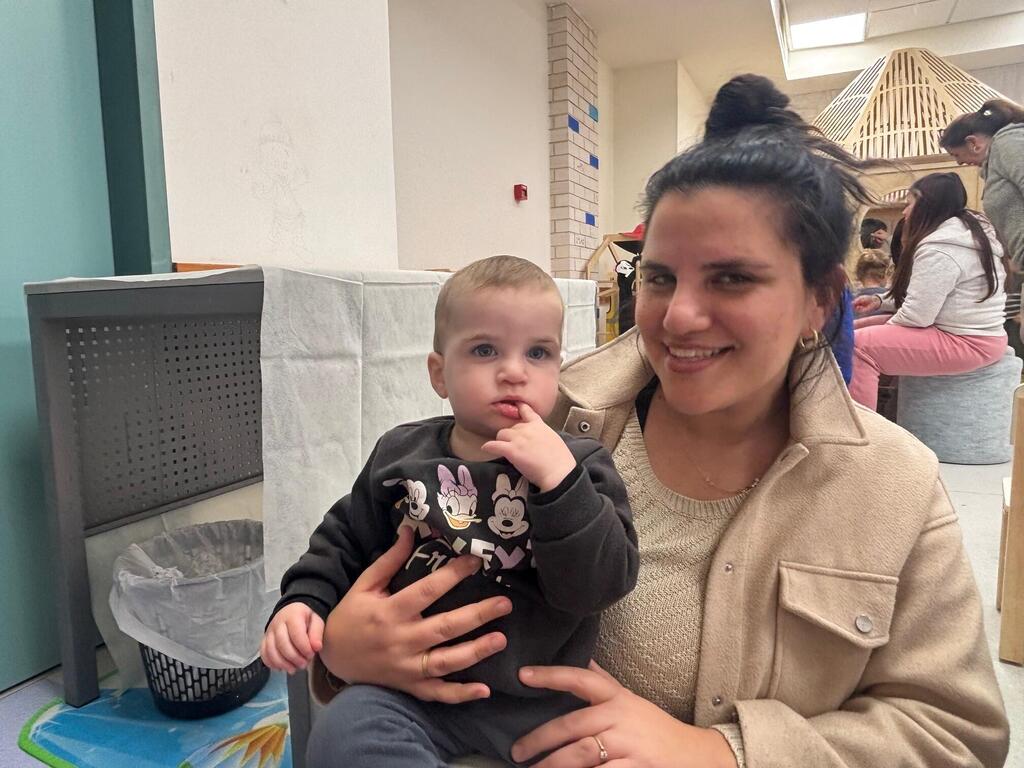
Shani Barshatski and daughter Leah
(Photo: Maayan Hoffman/The Media Line)
Shani Barshatski is the mother of three-year-old Yam and one-year-old Leah. During the war, she and her family moved seven times before they were able to return to Shlomi. A doctor by training, Barshatski continued working in hospitals throughout her pregnancy, often under intense stress. Returning home brought relief, but rebuilding a sense of normal life proved harder than expected.
“After we came back from the evacuation, the children had more difficulty managing their emotions and some behavioral issues,” Barshatski said. “We found this place is very good to come to after preschool. It keeps them occupied, and they make connections that they need to heal after this difficult time.”
She described the safe space as “calming” and the activities as “diverse.” “I think it's very good for the community,” Barshatski added. “When we come here, we connect with other mothers with kids the same age, and that is also very good.”
Another parent, Shir Dayan, is the mother of two-year-old Ari. During the war, her family moved to an apartment in Kfar Vradim. Ari was just two weeks old when the rockets began. Finding stable housing and the basic necessities for raising a newborn were constant challenges. Although the family was thrilled to return home in the spring, Dayan said the transition back was difficult, especially after months without regular routines for children.
She said the center meets several of her needs. It gives her son a place to play outside the home a few times a week. It has helped her build new friendships. Most importantly, she said, it has strengthened her bond with her baby.
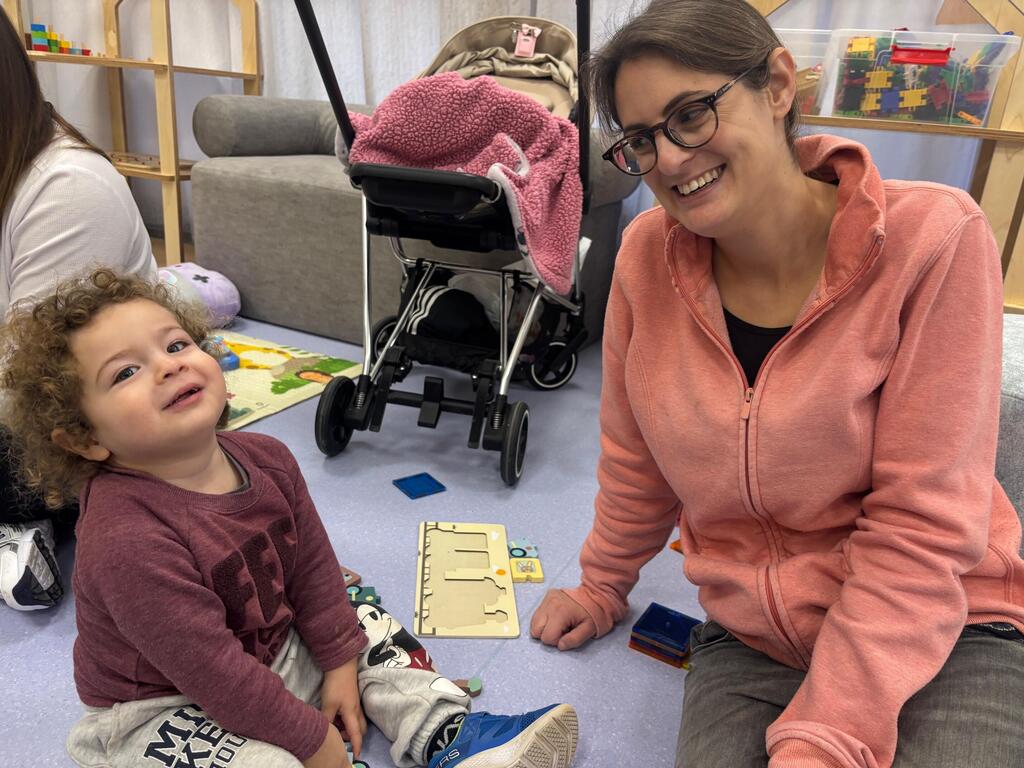
Shir Dayan and son Ari
(Photo: Maayan Hoffman/The Media Line)
Levi said many parents struggle to regain authority after returning home. While families lived in hotels, days and nights blended together, and parents lost control over routines because meals and activities were provided by the hotel. Their parental role changed, often without them realizing it.
At the same time, many young children are experiencing anger. Because they are so young, Levi said, they cannot express it in words. Instead, the emotions emerge as tears, yelling, or defiance.
For fathers who served in the reserves, there can be an added layer of disconnection. Now, many are searching for ways to rebuild those bonds.
The Shlomi center opened in November 2025, and Levi said the team is already seeing early results and planning to expand. “Now, these parents have friends, they talk together, think together,” she said.