


For four years, Wendy Duffy, 56, a former caregiver, lived with the memory of her only son, Marcus, 23, choking to death in front of her — despite her attempts to save him. Nine months later, she tried to take her own life, was hospitalized, placed on a ventilator and recovered. The years that followed included therapy, medication and a memory that would not let go.
On April 24, physically healthy, she ended her life through a medically assisted suicide procedure at a clinic in Switzerland — wearing her son’s shirt, with a song by Lady Gaga and Bruno Mars playing in the background. Her death has ignited a fierce debate in Britain over the limits of the right to die.
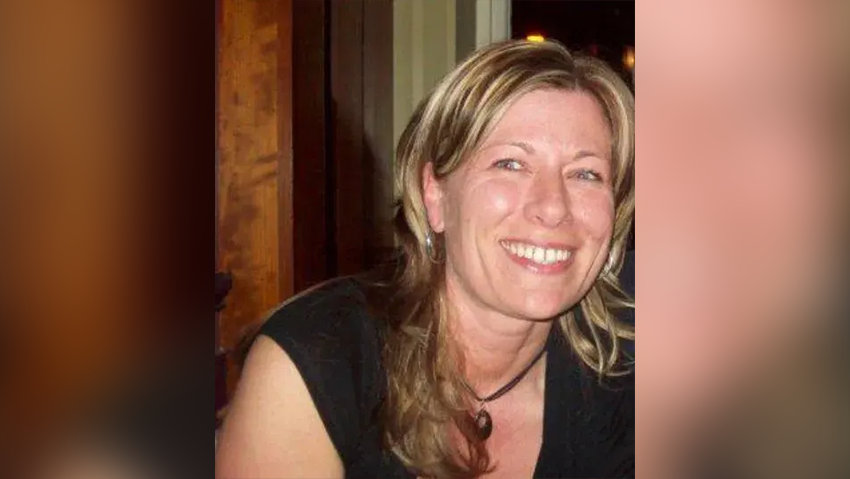
She paid about £10,000 (roughly $12,500), exhausting her life savings. The case, widely covered in the media, stirred public controversy in Britain, in part because she was not terminally ill but suffered from deep, prolonged psychological pain. The organization involved described it as a “sane suicide” — a charged term that has prompted broad moral and legal debate.
The tragedy that led to Duffy’s decision occurred four years earlier. Her only son, Marcus, 23, choked to death while eating a sandwich. Duffy, who had medical training, tried to resuscitate him herself, without success. Since then, she said, she lived with unrelenting trauma. She repeatedly described him as “my beautiful boy” and said the memory of his final moments — especially the fact that she tried to save him with her own hands — continued to haunt her. In an interview with the Daily Mail days before her death, she said, smiling despite the subject matter, that since that day “nothing has ever been the same.”
Nine months after Marcus’ death, Duffy attempted suicide by overdosing on medication. She was hospitalized in critical condition, placed on a ventilator for about two weeks and eventually recovered. But she said the attempt did not change her sense of emptiness. In the years that followed, she underwent psychiatric treatment and took medication, but said neither helped.
“No treatment and no medication managed to make me whole again,” she said. “I can’t wait to die — it’s the only way my spirit can be free.” She said one reason for publicly sharing her story was to “highlight the unfairness of the system toward my family in Britain.” “I wish it were possible in Britain, then I wouldn’t have had to travel to Switzerland at all,” she said.

Wendy's son, Marcus
(Photo: Social media)
She spoke openly about her decision to end her life: “It will be hard for everyone, but I want to die. I will have a smile on my face when it happens, so please be happy for me. My life — my choice.” She added that, for her, it was a “happy” decision, while acknowledging it would cause pain to those around her. She said she chose a medical procedure in part out of consideration for others: “I could jump off a bridge or a building, but that would leave whoever finds me dealing with it for the rest of their lives,” explaining that she preferred a “clean and orderly” death.
Asked what her son would think of her decision, she said: “I think he would tell me to pull myself together, but in the end he would understand.” She said she chose to wear her son’s shirt when she died “because it still has his smell,” and asked for the song “Die With A Smile” by Lady Gaga and Bruno Mars to be played. She also requested that her personal belongings be donated after her death.
Duffy’s family — four sisters and two brothers — knew of her plan to travel to Switzerland, but she did not share the exact timing to protect them from potential legal consequences. In Britain, assisting a suicide can lead to investigation and prosecution. Duffy is not the first Briton to turn to such a clinic, but reports said “no one has spoken about it publicly to this extent before.” Last year, a woman from Wales named Anne ended her life at the same clinic after telling her family she was going on vacation, without revealing her true intention.

(Photo: Shutterstock)
The procedure followed a months-long process that included evaluations by a team of experts, including psychiatrists, who were given full access to her medical records. Pegasus, the Swiss clinic, said the process is particularly rigorous. Its founder, Rudi Habegger, said: “I can confirm that Wendy Duffy, at her request, received assistance to end her life on April 24, and that the procedure was carried out without complications and in full accordance with her wishes. I can also confirm that neither we nor the professionals who assessed her mental state had any doubt regarding her intent, her understanding and her independent judgment.”
He said that, in historical legal terms in England, the case would be considered a “sane suicide,” adding that the organization uses the same term. He said there are clear limits to their work: “There is a red line we cannot cross — otherwise it is no longer assisted suicide, but something that could be called murder.”
Under Swiss law, assisted suicide is permitted as long as it is not carried out for financial gain, which is why the clinic operates as a nonprofit. The fee covers medication, doctors’ salaries, logistical expenses and burial costs, with part of it going to the state. Concerns that taxpayers were bearing the costs of what critics call “death tourism” led to an arrangement under which the clinics cover the costs of police and coroner involvement — a standard procedure in any death.
Duffy died on the same day a British bill on assisted dying failed to advance after the House of Lords did not have time to consider all its provisions. The bill, introduced by Labour lawmaker Kim Leadbeater in October 2024 as a private member’s bill, had already passed the House of Commons twice, though by a narrower margin the second time. More than 1,000 amendments were submitted in the House of Lords, and debate was halted when time ran out before completion.
The case has reignited public debate. Supporters of assisted dying protested outside Parliament, and Rebecca Wilcox, daughter of Dame Esther Rantzen — a British television presenter and prominent supporter of assisted dying since being diagnosed with advanced lung cancer — accused the House of Lords of “democratic vandalism.” “This delay, this lack of a vote, this lack of choice — they have a real human cost,” she said, adding: “It may look like a sea of warmth and smiles, but it’s hard for me not to feel enormous anger that we are here again instead of celebrating a vote.” Rantzen, 85, was unable to attend due to her health. Leadbeater said “it is not right — neither democratically nor morally — that the bill fell due to procedural delays.”

Medically assisted suicide at the 'Blue House,' Dignitas, Switzerland
(Photo: Shlomi Wolfner)
Opponents, however, voiced sharp criticism. Alistair Thompson of Care Not Killing, a British group opposed to euthanasia and the legalization of assisted suicide, said: “This is a tragic case that illustrates the real dangers of legalizing assisted dying. In recent years, we have seen people with diabetes, eating disorders and even those struggling with changes in appearance seeking to end their lives under such laws. Instead, we should invest in high-quality palliative care, not approve the deaths of people suffering in different ways.”
He added: “We have also seen cases of people who are heartbroken. In Canada, for example, a man sought assisted death after losing his home. That is precisely the problem: once you legitimize killing, the question becomes only who qualifies and when, and you end up with heartbreaking cases like this.”
Labour lawmaker Rachael Maskell said complex grief must be better understood and treated. “There is nothing more tragic than losing a child, but Wendy’s story underscores how much we need to invest in trauma care. The answer is not ending life,” she said.
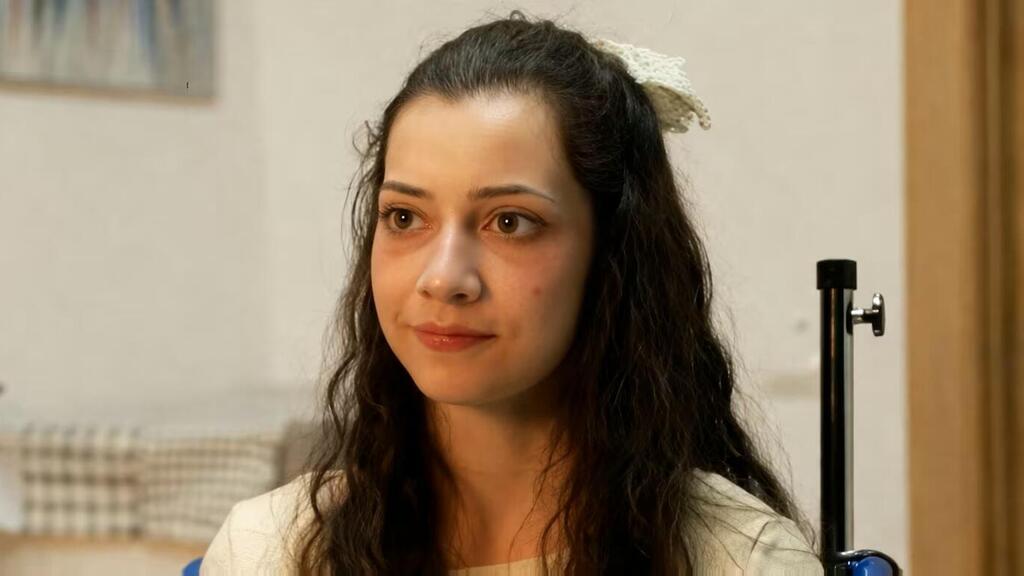
Noelia Castillo
(Photo: 'Y ahora Sonsoles', (Atresmedia))
The debate has also taken on an international dimension following another recent case: a 25-year-old woman, Noelia Castillo, a survivor of gang rape, who chose medically assisted suicide in Spain. The case sparked international controversy and led the Trump administration to instruct the U.S. Embassy in Madrid to review the actions of local authorities. The U.S. State Department expressed “serious concerns” about “systemic human rights failures” that enabled the procedure, noting reports that she expressed hesitation in her final moments.
In Israel, the case also drew criticism. Prof. Yechiel Barilan, an internist and lecturer in ethics at the Faculty of Medicine at Tel Aviv University, said: “On its face this is a legal decision, but in practice it is a value-based and political one.” He added that he was “shocked by the case and by the trend that sanctifies the ‘right to die.’ The idea that a young person, with sexual trauma and disability, ‘solves’ her problems through death sends a very troubling message.”