

Immunotherapy, which recruits the body’s immune system to identify and destroy cancer cells, has transformed treatment for many types of cancer. In most cases of prostate cancer, however, it has little effect.
The reason is that most prostate tumors attract very few T cells, the immune cells responsible for directly attacking malignant cells. Researchers describe these as “cold” tumors because the immune system barely notices them and fails to mobilize a meaningful response.
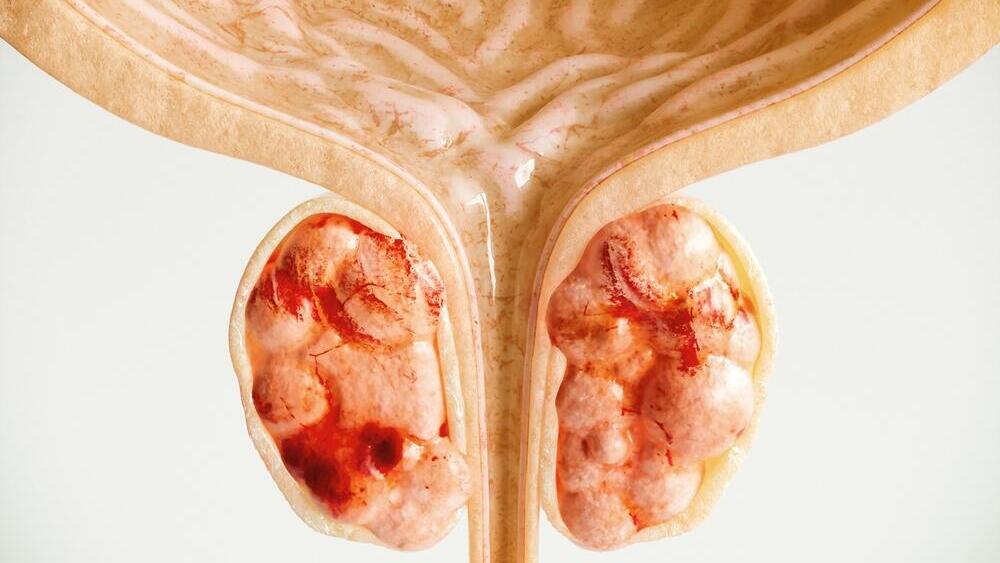
Without enough T cells inside the tumor, immunotherapy has little to work with.
A joint research team from Duke University and the University of Rochester in New York has now developed an experimental technology that may help change that.
The approach is based on CRISPR, the gene-editing method that allows researchers to target and modify specific segments of genetic material with high precision.
In a study published in Nature Biomedical Engineering, the scientists used an adapted version of the tool to alter the way prostate cancer cells process messenger RNA, or mRNA. The intervention made the tumors far more visible to the immune system.
In mice, the treatment drew more immune cells into the tumors and significantly improved the effectiveness of immune checkpoint therapy.
The tumor that hides
The finding builds on research that began about 12 years ago, when a team led by Professor Eric Wagner of the University of Rochester discovered that mRNA molecules in glioma cells, a type of brain cancer, were unusually short.
Researchers later found that similar shortening occurs in many other cancers. It is now thought to be one strategy tumor cells use to evade treatment and may also help explain why some tumors remain “cold” and fail to trigger an immune response.
Messenger RNA, widely known from the coronavirus vaccines, acts as a courier that carries genetic instructions from DNA to the cell’s protein-producing machinery.
Shorter mRNA molecules are often more stable and remain active longer. They may therefore produce larger quantities of a particular protein, sometimes without the cell’s normal regulatory controls.
The researchers identified a specific chain of events in prostate cancer cells.
The mRNA that encodes a protein called SPSB1 becomes shortened, causing the cell to produce too much of the protein.
Excess SPSB1 then destroys the MHC-I complex, a type of molecular flag on the cell surface that allows T cells to recognize malignant cells.
Without MHC-I, prostate cancer cells become almost invisible to the immune system and effectively slip beneath its radar.
Even when immunotherapy releases the brakes on T cells, those cells have nothing to recognize or target. That is the practical meaning of a “cold” tumor.
Restoring the molecular signal
The team, led by researchers at Duke University School of Medicine, developed a CRISPR/Cas13 gene-editing system designed to restore the shortened mRNA to its normal length.
In many familiar applications, CRISPR tools cut DNA or RNA to alter them. In this case, however, the system attaches itself to a specific section of the molecule without cutting it.

Research breakthroughs may expand prostate cancer treatment options in the coming years
(Photo: Shutterstock)
By doing so, it prevents cancer cells from shortening the molecule’s tail.
When the mRNA remains at its natural length, less SPSB1 protein is produced. MHC-I returns to the cell surface, allowing immune cells to identify the cancer.
As a result, immune checkpoint therapy became far more effective.
In mice, more immune cells entered tumors that had previously been “cold” and attacked the malignant cells. The researchers said their testing did not identify unintended off-target effects from the experimental treatment.
‘Cancer is smart, but it is not magic’
Wagner said immunotherapy offers a fundamentally different way of treating cancer, with the significant advantage that it does not necessarily require drugs that also damage healthy tissue.
The challenge, he said, is that some tumors respond well to immunotherapy while others, particularly “cold” tumors such as prostate cancer, resist it or fail to respond altogether.
The new tool strengthens the immune system’s ability to eliminate the cancer and could potentially be used alongside existing immunotherapies.
Wagner said the study presents a unique preclinical model showing that shortened mRNA molecules can be lengthened again in a way that produces a therapeutic benefit.
Cancer, he said, is “very smart in its ability to evolve, but it is not magic.”
If it can be attacked with immunotherapy together with a complementary drug that strengthens the immune response, he added, it may be possible to destroy the tumor before it can evolve quickly enough to escape.
Wagner, who is also a member of the Genetics, Epigenetics and Metabolism Research Program at the University of Rochester Medical Center’s Wilmot Cancer Institute, plans to test the technology in other “cold” cancers.
His team recently received pilot funding from Wilmot and Roswell Park Comprehensive Cancer Center to examine the tool in pancreatic cancer, another tumor type that usually responds poorly to immunotherapy and often develops silently until it is diagnosed at an advanced stage.
The researchers stressed that the work remains preclinical.
The findings were demonstrated in mice, and further research will be required to determine whether the approach is safe and effective in humans.
The study was funded by the National Cancer Institute, part of the U.S. National Institutes of Health.