

Nearly 1,000 physicians, scientists, researchers and tech professionals gathered for the third annual conference of the nonprofit Lema’anchem, held in collaboration with Reichman University, to explore the growing role of artificial intelligence in healthcare systems.
The question is no longer if AI will be used in medicine, but to what extent and how. The integration of AI tools into public healthcare is now an established fact, and their adoption is accelerating rapidly. As professionals in every field face pressure to reinvent themselves and demonstrate the unique value of human expertise in the AI era, this imperative is even more critical in medicine where the consequences can be life or death.
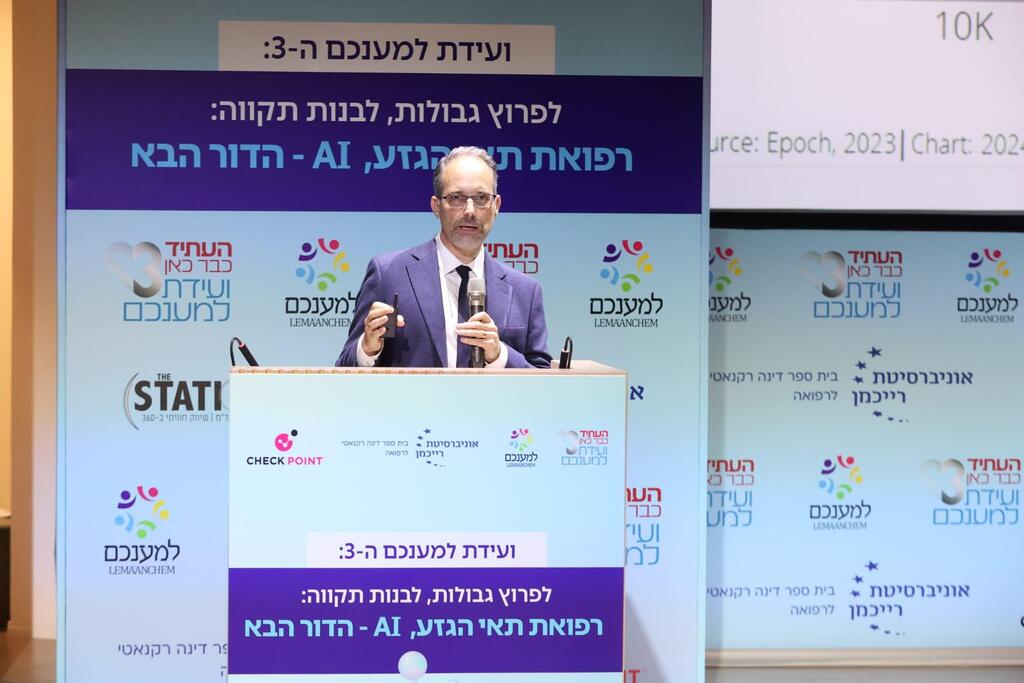
Notable figures attending the event included businessman Benny Steinmetz, chair of Lema’anchem’s Friends Association; Baruch Sheinberg, president of the 3rd Lema’anchem Conference; and entrepreneur Benny Eljam, a founding member of the organization. The event was moderated by media personality Guy Zo-Aretz, a supporter of Lema’anchem.
Prof. Ran Balicer, deputy director and head of innovation at Clalit Health Services, delivered one of the conference’s most striking assessments of AI’s rapid adoption in healthcare. He predicted that “within a short time,” any physician interpreting imaging scans without AI assistance would be seen as acting below standard practice—and potentially open to malpractice claims. “It’s entirely clear that the human eye cannot detect what an AI-based system can,” he said.
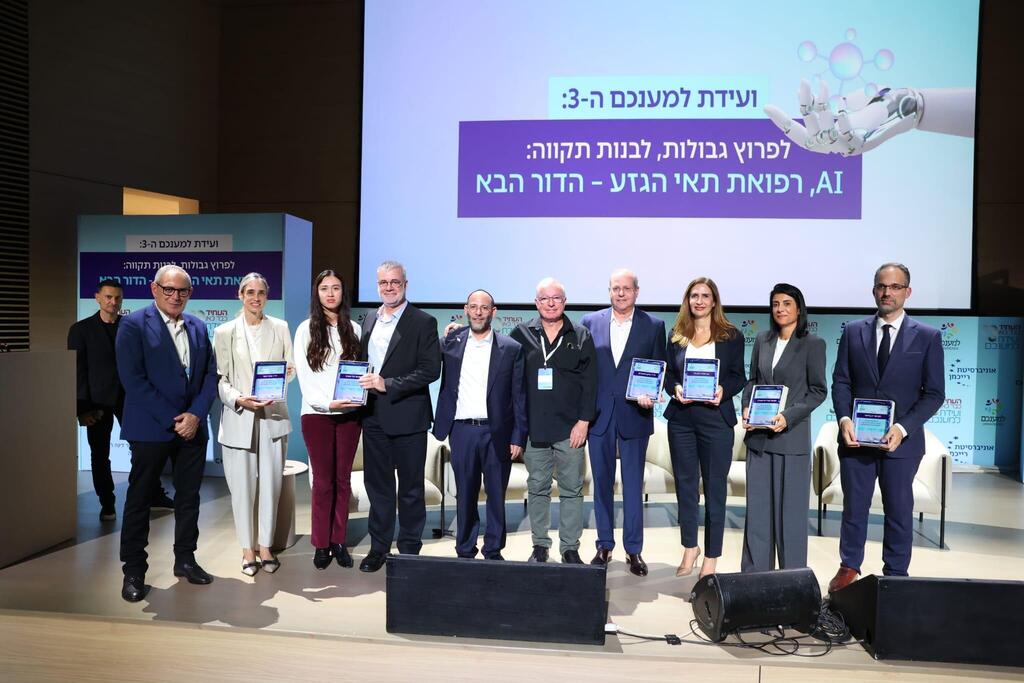
A high-level panel of healthcare executives was at the center of the conference. Participants included Dr. Eitan Wertheim, CEO of Clalit Health Services; Prof. Eli Sprecher, director-general of Tel Aviv’s Sourasky (Ichilov) Medical Center; Sigal Dadon- Levi, CEO of Maccabi Healthcare Services; Prof. Orly Weinstein, director-general of Sheba Negev; and Dr. Michal Mekel, director-general of Rambam Health Care Campus.
Dr. Wertheim emphasized that AI is already serving as a “primary decision-support tool” in treating various diseases. Prof. Sprecher predicted that the next major shift is still ahead: “Within a few years, patients will become their own care providers—and the pressing question is what role will be left for the healthcare system.”
Dadon-Levi shared that doctors in her organization currently spend up to 40% of their time on documentation. “We’ve implemented an AI-based system that records appointments, processes the data and generates a summary. The doctor only needs to approve it with a click, and it’s automatically uploaded to the patient file. This dramatically reduces physician burnout and wasted time,” she said.
Dr. Mekel described the launch of an AI-powered triage system in her emergency department that offers diagnostic suggestions and testing pathways. She stressed the system supports clinical decision-making rather than replacing physicians.
Gil Shwed, founder and chairman of Check Point Software Technologies and recipient of the Israel Prize, remarked that “the AI revolution is very similar to the internet revolution—both have transformed every aspect of how we work, often in ways we don’t fully grasp. So much so that those who don’t keep up are left far behind. And just like then, the world is gripped by fear of what’s coming.”
To those who are anxious, he offered reassurance: “Yes, the challenge is enormous—but it’s also clear to all of us that the world today is better than it was 30 years ago. And it will be the same with artificial intelligence.”
Shwed also highlighted the critical role played by Lema’anchem: “When someone faces a crisis in a field they don’t understand—like medicine—and they have no idea what to do or who to turn to, it doesn’t matter if they’re uneducated or highly sophisticated, poor or wealthy. Suddenly, they feel helpless. But when they can reach out to Lema’anchem and someone offers good advice or says, ‘It’s okay,’ or ‘It’s legitimate to go see this top doctor,’ that not only provides trust and reassurance—it can change the entire medical outcome.”
(Photo: Kobi Hershberg)
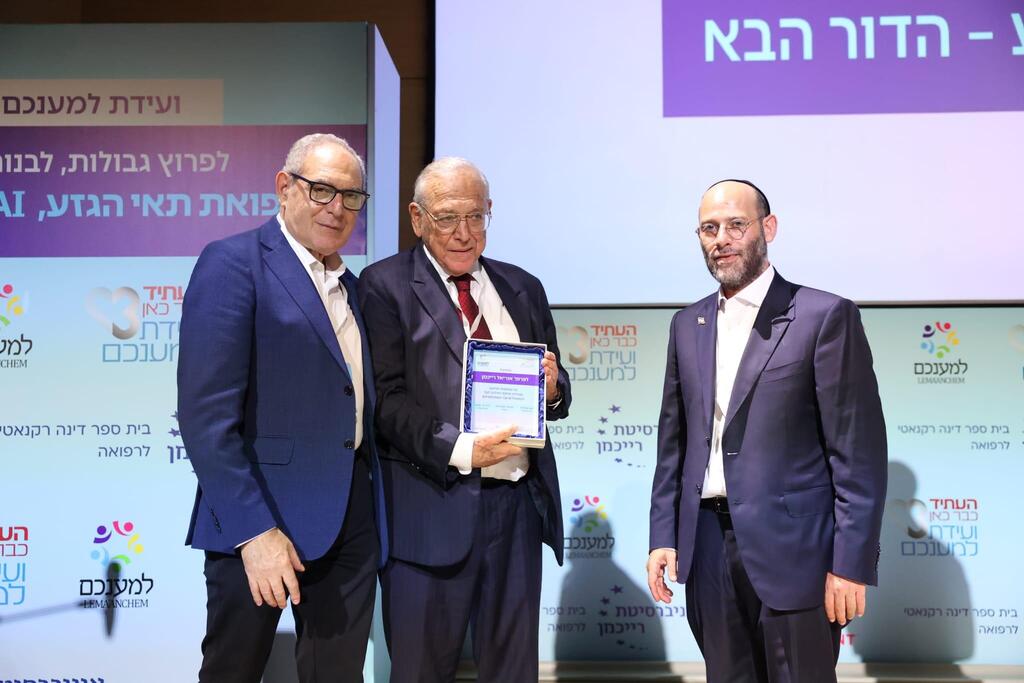
Prof. Uriel Reichman, founding president and chairman of Reichman University—host and partner of the Lema’anchem conference—used the stage to issue a public appeal to Israel’s government and Health Ministry leadership, calling for an end to what he described as discrimination against medical students at the university he established, including wounded IDF veterans.
Prof. Reichman began by outlining the broader challenge of medical education in Israel: “Israel has become the country most reliant on physicians trained abroad—about 69%—a figure more severe than in any OECD nation. Public universities currently receive over 80,000 shekels per medical student. In addition, the Health Ministry provides students studying abroad with loans of up to 360,000 shekels—loans that are converted into grants once they return to work in Israel as doctors.”
“The actual annual cost of training a doctor in Israel is around 100,000 shekels,” Reichman continued. “This amount is almost entirely funded by the Health Ministry for every medical school—except ours. This is unjust and unacceptable discrimination.”
He clarified, “We are not asking for funding for our medical school—only for support for the students enrolled here. Despite goodwill shown by the former health minister, our students encountered a cold shoulder from the ministry’s director-general. We are demanding that this discrimination be corrected. It cannot be that students who want to remain in Israel—rather than study in Budapest, Prague or Amman—are not considered eligible for the same loans granted to others. It cannot be that the state treats people who serve the country and want to stay here unequally.”
Prof. Reichman added that these students contributed 13,000 days of reserve duty over the past two years. About a third come from Israel’s geographic and social periphery. “This year, we have about 155 students who are severely wounded IDF veterans, and 57 more who began their studies last year,” he said.
He concluded by thanking Lema’anchem chairman and founder Yossi Erblich “for tireless, selfless work on behalf of the public, and for securing major donations to support medical students, wounded IDF veterans and those in need.”
At the conference, Prof. Ayal Hendel of the Faculty of Life Sciences and the Center for Nanotechnology at Bar-Ilan University presented groundbreaking developments in genetic therapy. He explained how doctors can now take a healthy gene and implant it in place of a faulty one in a patient’s body—a process that, in simple terms, leads to healing.
Dr. Nitzan Gonen showcased one of the most intriguing scientific breakthroughs of recent years: her team succeeded in growing artificial testicles in a lab setting. She explained how this achievement could revolutionize the treatment of infertility issues once considered untreatable.
(Photo: Kobi Hershberg)
One of the most captivating lectures came from Prof. Eran Meshorer, of the Department of Genetics at the Hebrew University’s Life Sciences Institute and chair of the Israel Stem Cell Society. “Embryonic stem cells have opened up exciting new avenues for developing models of human diseases and early embryonic development,” he said. “They are already being used in clinical trials for a range of regenerative conditions, including Parkinson’s disease.”
Prof. Arnon Afek, founding dean of the Dina Recanati School of Medicine at Reichman University, added: “Forty percent of our students identify as traditional or ultra-Orthodox. Yes, we have ultra-Orthodox students, including one who left the Mir Yeshiva at age 28, and others with six children, studying medicine and proving that Haredim can be fully integrated into Israeli society. It’s not impossible—it’s very possible. You just have to want it.”
Prof. Afek also noted the school’s state-of-the-art medical technologies and remarked, with a touch of irony: “Since the Council for Higher Education required it, we even conduct cadaver dissections—so no one needs to worry. Even though, in our opinion, they’re entirely unnecessary.”
Also in attendance at the conference was Dr. Miri Mizrahi Reuveni, director of the Dina Recanati School of Medicine, who emphasized the importance of integrating research with hands-on clinical experience for medical students from their very first year.
Yossi Erblich, founder and chairman of Lema’anchem and leader of the conference, addressed the nation’s current challenges and the opportunities facing the organization in light of them. “After two difficult years of war, our people are longing for hope, unity and healing,” he said. “In hospital waiting rooms, all the parts of the Israeli mosaic sit side by side. There, disagreements vanish, and walls of prejudice come down. Our aspiration is to take this special model and extend it beyond the walls of medical centers.”
Erblich also thanked former hostage Noa Argamani, who attended the conference as a guest of honor. The audience gave her an emotional welcome, rising to their feet and applauding her warmly.
President Isaac Herzog, who was abroad on a diplomatic mission, sent a message of support to the conference. “The collaboration between Lema’anchem and leading medical institutions, faculties and experts is a powerful force for partnership and innovation,” he wrote. “Lema’anchem, a recipient of the President’s Volunteer Medal, is truly remarkable. Its name has become synonymous with dedicated and professional medical support.”
Prof. Joseph Press, president of Lema’anchem, thanked the participants for attending and for supporting the organization’s work. He also outlined its development plans for the coming year, highlighting a major initiative: the establishment of a new rehabilitation center dedicated to young people battling anorexia. The center will offer comprehensive care to support recovery, rehabilitation and a return to healthy, fulfilling lives.
Prof. Press described the project as a significant step that will bring real hope to hundreds of individuals and their families. He emphasized his personal commitment to doing whatever it takes to see the initiative launched within the next year.
Prof. Irit Avivi, head of the Hematology Department at Sourasky Medical Center, gave a talk on the transformative impact artificial intelligence is expected to have on medicine. “Today it may still sound like science fiction,” she said, “but within a decade at most, AI will become an integral part of medical practice—improving accuracy, efficiency and outcomes.”
Shahar Karny, co-founder and CEO of PhenoTA, and Prof. Yuval Ebenstein, professor of chemistry and biomedical engineering at Tel Aviv University and founder of Jaxbio, also spoke about AI’s growing role in enhancing the precision and success of blood test analysis.
Maj. Gen. (res.) Yohanan Locker, chairman of Clalit Health Services, offered words of praise to the chairman of the conference. “Anyone who knows Yossi Erblich wouldn’t be surprised that this conference has become so central and influential in such a short time,” he said. “I salute you for your scholarship contributions to students during the war.”
Dr. Gadi Neuman, vice president of Lema’anchem and head of its Research and Innovation division, shared that the organization receives no fewer than 30,000 inquiries each year. “Recently, we also opened a new mental health counseling department, with in-person services at our offices,” he said. “Naturally, this has gained momentum in light of the past two years.”
He concluded by expressing pride in being part of Lema’anchem, particularly in its efforts to promote medical innovation and anticipate future trends in healthcare.