

The class is already underway. Around the table sit men and women in their seventies and eighties, some with notebooks, others with tablets, all with a spark in their eyes. One participant raises her hand and adds an insight that brings a broad smile to the lecturer’s face. He sets aside the material he had planned to teach and says, “That direction is worth exploring.”
This is no rare scene, but an image that is becoming increasingly common. People in later life are returning to study not out of necessity, but out of curiosity, and rediscovering each time that their brains respond just as they once did: when challenged, they awaken.
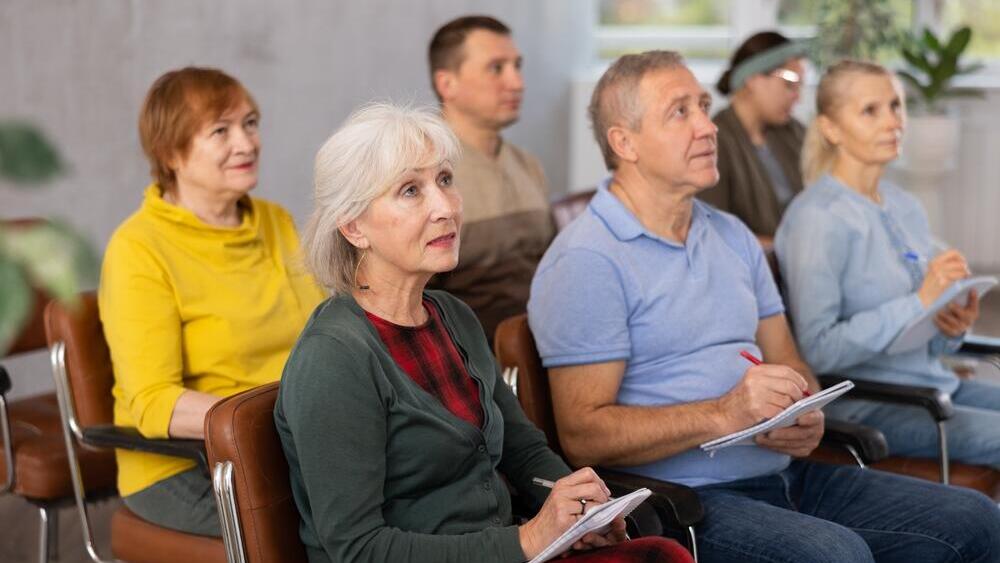
What may look from the outside like an ordinary lesson is, in fact, a form of brain training. Every question, every new idea, every discussion that briefly unsettles certainty is the brain’s way of staying fit. This training is not merely an intellectual exercise; it lies at the heart of the longevity approach, which views a person as a single system in which body, mind and brain work together to preserve vitality over the years. Longevity is not only about extending life, but about preserving its quality.
Each time we learn something new, try an unfamiliar and intriguing experience, seek to understand a complex process or grapple with an open question, the brain is exercising. It activates neural networks, creates new connections and strengthens existing ones in order to represent newly acquired knowledge. “Cognitive reserve” is the term used to describe the brain’s ability to function properly in the face of illness or injury.
This capacity allows the brain to compensate for damage that naturally accumulates over the years. Cognitive reserve is built over long periods during which the brain is engaged in mental effort, curiosity and new learning. It helps maintain clear thinking, cognitive flexibility, concentration and information retrieval precisely when they are needed, even in older age.
Alongside this, research evidence shows that consistent cognitive activity significantly reduces the risk of cognitive decline and diseases such as dementia and Alzheimer’s. Learning a new language, playing music, studying history or literature all provide the brain with fresh material and encourage it to preserve and strengthen neural connections. Even when neurodegenerative diseases are already present, people with high levels of cognitive activity often show later onset of symptoms, thanks to that same “reserve” which provides natural protection.

Each time we learn something new the brain is exercising
(Photo: Shutterstock)
One factor that gives learning in later life a particularly strong cognitive advantage is social learning, which enables interaction among learners. This form of learning involves conversation, debate, brainstorming and the exchange of ideas.
Such learning engages and challenges a wide range of cognitive abilities, including cognitive flexibility, emotional regulation, response inhibition and working memory. When learners are required to respond, share or engage with questions raised by others, they must generate new, unanticipated responses, hold and process new information in their minds and integrate it with existing knowledge.
This approach is embodied in practice by the Gilman Program, a unique collaboration between Tel Aviv University and the “Ad 120” senior living network in Tel Aviv. As part of the program, lecturers from the Faculty of Humanities teach full academic courses in a community setting, where participants learn, discuss, argue and rediscover the joy of curiosity.
The brain does not shut down at a certain age; it is simply waiting for an invitation. When we learn, doors begin to open again: doors to thought, to memory, to connection and to a sense of meaning. Aging well is not a miracle bestowed on the lucky; it is a choice. And the choice to learn is the choice to remain alive, in the deepest sense.
The author is a cognitive psychologist, an expert in cognitive enhancement in later life, a cognitive consultant and the head of the Longevity field at the Ad 120 senior living network.