


The new generation of obesity medications has transformed the treatment of a complex chronic disease, enabling many patients to lose significant amounts of weight.
But as these drugs become more effective, a new question is moving to the center of obesity care: not only how much weight a patient loses, but what the body loses along with it.
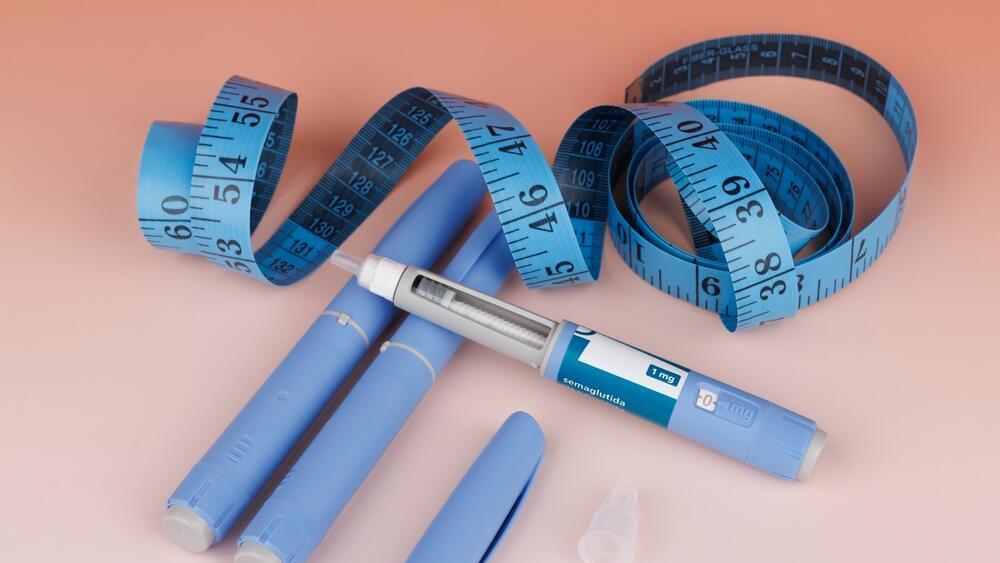
Weight loss can bring major health benefits, but the number on the scale tells only part of the story. Along with fat, the body may also lose muscle mass and bone density, particularly when food intake drops sharply and treatment is not accompanied by appropriate nutrition and exercise.
For that reason, professional organizations increasingly emphasize that obesity medication should be given as part of a broader treatment program rather than as a stand-alone solution.
The World Health Organization has published global guidance recommending that long-term medication be considered for adults living with obesity as part of comprehensive care combining nutrition, physical activity and behavioral change.
That approach was reinforced by a wide-ranging World Obesity Federation position paper published in April in the journal Obesity Reviews. The paper examined the new era of obesity medications and stressed that, alongside their strong effect on weight reduction, clinicians must also consider the risk of muscle and bone loss.
The challenge is no longer simply achieving weight loss, but ensuring that the weight loss is healthy.
More than a number on the scale
Dr. Hadar Milloh Raz, an endocrinologist, said the purpose of obesity treatment is medical and functional.
“The goal is to reduce the risk of type 2 diabetes, high blood pressure and excess blood lipids, improve quality of life and ultimately reduce the risk of cardiovascular disease,” she said.
 Dr. Hadar Milloh RazPhoto: Sheba Medical Center
She described the new drugs as “an amazing and powerful therapeutic tool that changes lives,” because they help patients gain control over eating and weight in ways that were previously impossible for many of them.
But precisely because the medications are so effective, she said, some patients may mistakenly believe the drug can do all the work on its own.
“Their significant impact on weight loss sometimes leads patients to think this is a magic solution that requires no additional intervention,” she said. “Over time, as patients lost more weight and remained on treatment for longer, we learned about the risks of poor-quality weight loss. Sometimes it brings new problems and even illnesses that did not exist before the weight loss.”
That means it is not enough to monitor only total body weight. Clinicians must also examine the quality of the weight loss: what the body is losing, what it is preserving and how damage to muscle and bone can be prevented.
Muscle loss is a natural process that begins as early as a person’s 30s, but rapid or poorly balanced weight loss can accelerate it.
“Every patient receiving medication should take part in a comprehensive support program that includes adapted physical activity and personalized nutritional counseling,” Milloh Raz said.
Eating less means every bite matters more
Nutrition becomes especially important because one of the main effects of weight-loss drugs is a significant reduction in appetite and food intake.
That is part of what makes the medications effective, but it also forces patients to think differently about what they eat.
“I make sure to tell my patients that with high effectiveness comes great responsibility,” said Dr. Yafit Kessler, a clinical dietitian.
“Advanced medications for obesity are groundbreaking, but they do not replace nutritional guidance from a clinical dietitian. On the contrary, they make it essential.”
When people eat less, she said, it becomes harder to consume all the nutrients the body needs. Nutritional support is therefore critical both to the success of the process and to preserving health and maintaining the results.
The question is no longer simply how to eat less, but how to eat well enough within a smaller amount of food.
 Dr. Yafit Kessler
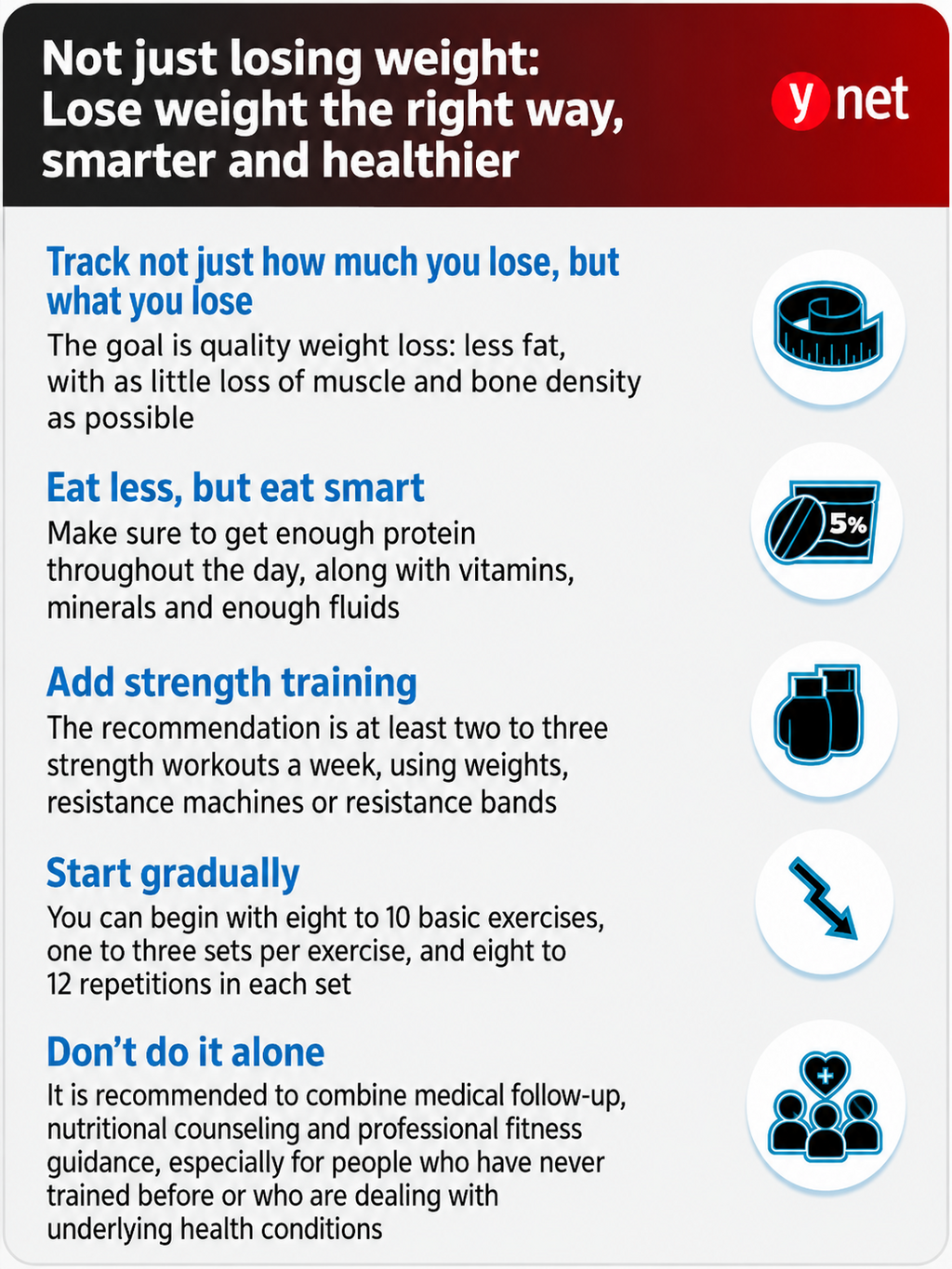
“It is important to consume enough protein throughout the day and spread it across meals,” Kessler said. “To preserve bone mass, it is important to get enough calcium and vitamin D. Patients should also make sure they receive sufficient vitamins and minerals, drink enough fluids and, when necessary, be monitored for nutritional deficiencies.”
Nutritional guidance can also help reduce side effects and build healthier eating habits rather than merely restricting quantities.
“The goal is not only weight loss, but improving overall health while preserving function, muscle mass and quality of life over time,” she said.
Muscle needs a reason to stay
If nutrition provides the body with the raw materials it needs, physical activity, especially strength training, gives the body a reason to use and preserve them.
During a calorie deficit, the body searches for energy sources. When people eat less, as often happens under the influence of obesity medications, the body draws from fat stores, but not exclusively.

Despite the injections, what goes on the plate still matters
(Photo: Shutterstock)
“Without adequate stimulation of the muscles through physical activity, particularly strength training, the body does not use only fat stores, and a significant part of the weight loss may come from muscle mass,” said Danny Zalewski, an exercise physiologist and clinical dietitian at Ichilov Medical Center.
“If weight is later regained, which commonly happens after stopping medication, most of the regained weight will be fat, while the lost muscle mass will not be meaningfully restored without strength training.”
That can create a damaging cycle of weight loss and regain.
 Danny ZalewskiPhoto: Sourasky Medical Center
“With every cycle of weight loss, the body also loses muscle mass, and with every cycle of weight gain, it mainly regains fat,” Zalewski said. “Over time, body composition can deteriorate. The percentage of fat rises, muscle mass falls and, even if the total weight is similar, the person is in a less healthy metabolic state.”
Muscle is important not only because it affects body composition.
“Muscles are the body’s metabolic engine,” he said. “Muscle mass is one of the main tissues that determines resting metabolic rate. The more muscle a person loses, the more metabolism may slow, making further weight loss harder and increasing the risk of regaining weight.”
There are also practical consequences in daily life.
Muscles are responsible for basic activities such as getting up from a chair, climbing stairs and carrying groceries. A decline in muscle mass can lead to weakness and reduced quality of life.
Muscle also plays an active role in health by improving insulin sensitivity, helping regulate blood sugar and reducing inflammatory processes in the body.
How to train properly
The main way to reduce muscle loss, Zalewski said, is to make strength training a regular part of the weight-loss process.
“Studies show that physical activity, especially resistance training, is one of the most important tools for preserving muscle mass during medication-assisted weight loss,” he said.
“Strength training gives the muscle a stimulus that tells the body to preserve it. Even when the body is in a calorie deficit and eating less, the signal from training tells it that the muscle is still needed.”
He recommends at least two to three strength-training sessions each week.
“To preserve, and sometimes even increase, muscle mass, training must allow the load to increase gradually,” he said. “That is why training with weights or resistance machines will often be more effective than training based mainly on body weight or resistance bands.”
Yoga and Pilates can be excellent for flexibility, posture, balance and quality of movement, he added, but they are not enough on their own when the goal is to preserve muscle during weight loss.
For beginners, Zalewski recommends starting simply and progressing gradually.
A basic session can include eight to 10 exercises, with one to three sets per exercise and eight to 12 repetitions per set.
The resistance should allow the movement to be performed safely while still creating moderate to high effort by the end of the set. Over time, patients can gradually increase the weight, number of sets or complexity of the exercise.
Basic exercises may include standing up from and sitting down on a chair, similar to a squat, as well as chest presses, rows, lat pulldowns, shoulder presses, step-ups, arm curls and core exercises.
These can be performed using free weights, machines, resistance bands or body weight.
People who have never trained before, or who have underlying medical conditions, should begin with professional guidance and follow a program adapted to their individual ability.
The central message, the experts said, is that successful obesity treatment cannot be measured only by how quickly the scale moves.
The goal is to lose fat while preserving muscle, bone, strength and long-term function.