

“A few weeks ago, my daughter filmed me snoring. I watched the video and I’m still in denial, telling myself it was probably just a one-time thing,” says Yaara, one of the women interviewed for this story, who declined to give her full name (as did the other interviewees). “Personally, I don’t mind being identified, but my husband is against it. He’s the one who feels embarrassed.”
Yaara’s candor is unusual. Women are often reluctant to admit they snore, even though statistics show that one-third of women under 50 snore during sleep, and after 50, the rate rises to match men’s — about two-thirds. Still, snoring is seen as a male issue, and many women are too embarrassed to acknowledge it, let alone share it with others.

Beyond self-image and the potential strain with a partner disturbed by the noise, snoring is also a health issue that should not be ignored. “Everyone snores occasionally,” says Dr. Ori Elkan, head of sleep-related breathing disorders and an ear, nose and throat specialist at Rabin Medical Center in Petah Tikva. “But some people snore more than others. Women, who are often more concerned about aesthetics, are also more aware of the impact of snoring on fatigue, which is why many seek treatment.”
‘I was embarrassed to travel abroad with friends’
“When I was little, my mother used to snore, but she always denied it,” says Talia, 50, a secretary from Jerusalem. “One night, my father recorded her, and she was really hurt, because she didn’t think snoring was feminine. Now that I snore myself, I understand her. But unlike her, I don’t deny it.
“It took me a while to get there. For years, I was too embarrassed to travel abroad with friends, afraid I’d snore at night. My snoring is pretty loud, and there were even times I woke myself up from it. But I’ve come to terms with it. Today, I understand that we associate snoring with overweight men. As if women don’t snore, burp or pass gas. That’s just not true. We’re human, and even delicate, polite women snore — especially as they get older.”
Do you suffer from sleep apnea?
“No, so my snoring doesn’t affect my quality of sleep or pose a health risk. But it does affect my relationship, because my husband can’t stand it. There were nights when he would get up in the middle of the night and go sleep in the living room. Eventually, we just decided to sleep in separate bedrooms.
“I also managed to go abroad twice with friends — I simply took a room of my own and explained why.”
Does your partner snore?
“No.”
'You’ve been snoring for months and I can’t sleep because of you'
Keren, 54, who works in human resources and lives in a moshav in central Israel, discovered she snores after months of complaints from her husband. “A few months ago, there was tension at home. I thought it was because of a dog I brought home that my husband didn’t like. But then one morning he shouted at me: ‘You’ve been snoring for months and I can’t sleep because of you.’ I had no idea. He hadn’t communicated it properly. I told him, ‘Why didn’t you just say something? I can’t guess on my own.’ He said he tries to move me when it happens but can’t, even though he weighs 20 kilos more than me. I told him he shouldn’t be mad — it’s something I wasn’t even aware of — and I went to the doctor.”

(Photo: Shutterstock)
What did the doctor say?
“He recommended exercise. I laughed, because I’m already very athletic and run marathons. So he suggested a home test with a mobile sleep lab. The results confirmed that I snore but showed I don’t have sleep apnea. The doctor said surgery was possible but too aggressive for a non-life-threatening problem, and suggested alternatives like an oxygen mask to prevent snoring or a dental device. My sister-in-law had such a mask at home, so I borrowed it.”
Did it help?
“It stopped the snoring, but the motor was noisy and it was cumbersome to sleep with. Eventually, I decided to stop using it and told my husband that if the problem returns, it’s his responsibility to tell me. Last week, he woke up grumpy again and said he hadn’t slept all night.”
How does that make you feel?
“It’s unpleasant. I’m talking to you openly now, but I still cringe. I know it comes from our culture that snoring seems unfeminine and unsexy. I know it’s silly, but it’s ingrained so deeply that I still shrink from it. I hate disturbing my husband, and I hate that he doesn’t tell me until he explodes. It’s as if he puts the whole responsibility on me, even the responsibility to know that I snore. The funny part is that he snores sometimes too, but it doesn’t bother me.”
Keren says she once discussed the issue with a running partner. “He told me his wife snores and they moved into separate bedrooms. I told my husband, but he hated the idea. He insists on us sleeping together — I honestly don’t get why. After so many years, I don’t think sharing a bed is essential. Intimacy doesn’t necessarily mean sleep. You make time for that elsewhere.”
So what’s the plan?
“This time, after I got another sour face from him, I decided that’s probably the solution. We have a study at home and I’m planning to put a bed there. That seems like the most effective fix.”
'For years we’ve slept in separate rooms'
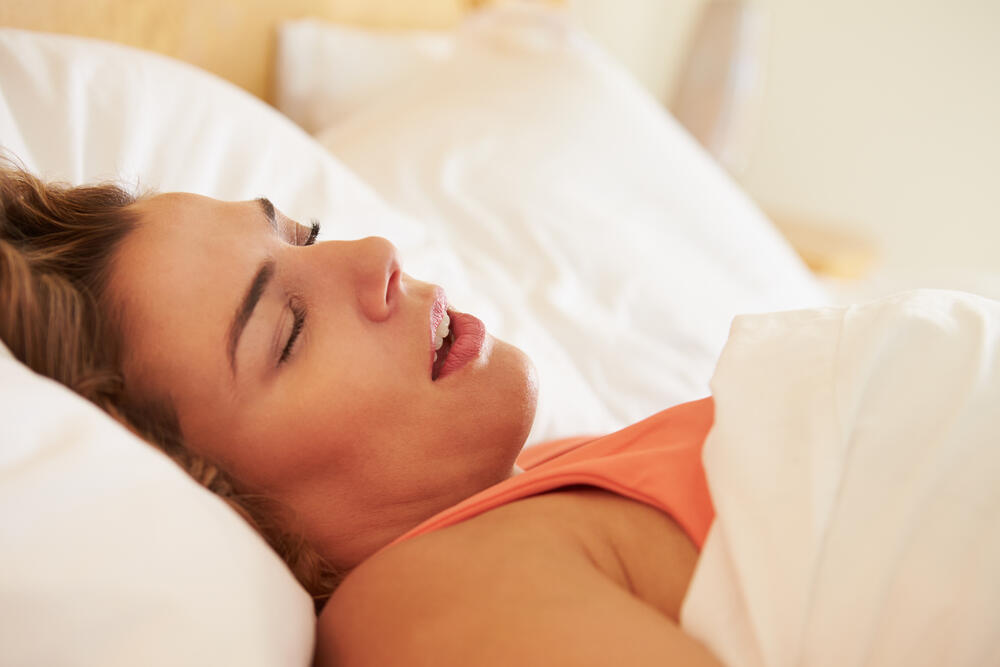
Yaara, 48, an architect from central Israel, hasn’t shared a bed with her husband in years. “One morning I woke up and saw he had moved to the living room,” she recalls. “I asked him why, and he said I snore. I didn’t believe him, so the next night he recorded me. I listened to it and was horrified. Loud, harsh snoring. Since then, that’s the routine: we go to bed together, but if I start snoring — which happens often — he moves to the sofa. Even my daughter, whose room is next to mine, sometimes wakes me up to make me stop.”
(Photo: Shutterstock)
Have you thought about treatment?
“Honestly, I have other health issues and I don’t have the energy to deal with this too. I probably have sleep apnea too, because sometimes I wake up gasping for air. Maybe I’ll check it in the future. Maybe I’m a little afraid to know the truth. When I first heard the recording, I was disgusted. It sounded like a pig.
“I grew up with three brothers, and sometimes we go camping together, just the four of us. Luckily, one of them snores too, so I use him as cover — as if the noise is his, not mine. For me, snoring feels very intimate, like the recording and the sounds I make at night are deeply personal. And because I can’t control it in my sleep, it becomes public. Snoring is also linked with old age. What do I have to do with snoring? On the other hand, I’m a big woman, I don’t wear feminine clothes, and with my messy ponytail and my snoring, I feel authentic. I’m not going to kill myself trying to ‘fix’ it. As long as it’s not dangerous and my husband has found a solution, I live with it in peace.”
Who is more likely to snore?
Anatomical factors: People with abdominal or neck obesity are more prone to snoring, as excess fat narrows the airway. A long palate, large tongue, enlarged tonsils, a short, wide neck or smaller-than-average jaws can also reduce the size of the upper airway “box.”
Pregnancy: Pregnant women often snore due to fluid retention, weight gain, swollen mucous membranes and upward pressure from the growing abdomen on the lungs and trachea.
Environmental factors: A cold or the use of muscle relaxants, such as cigarettes, marijuana, alcohol or sedatives, can contribute to snoring.
Sleeping position: Lying on the back increases the likelihood of snoring. For about half of male and female snorers, this is the primary cause.
Can snoring harm your health?
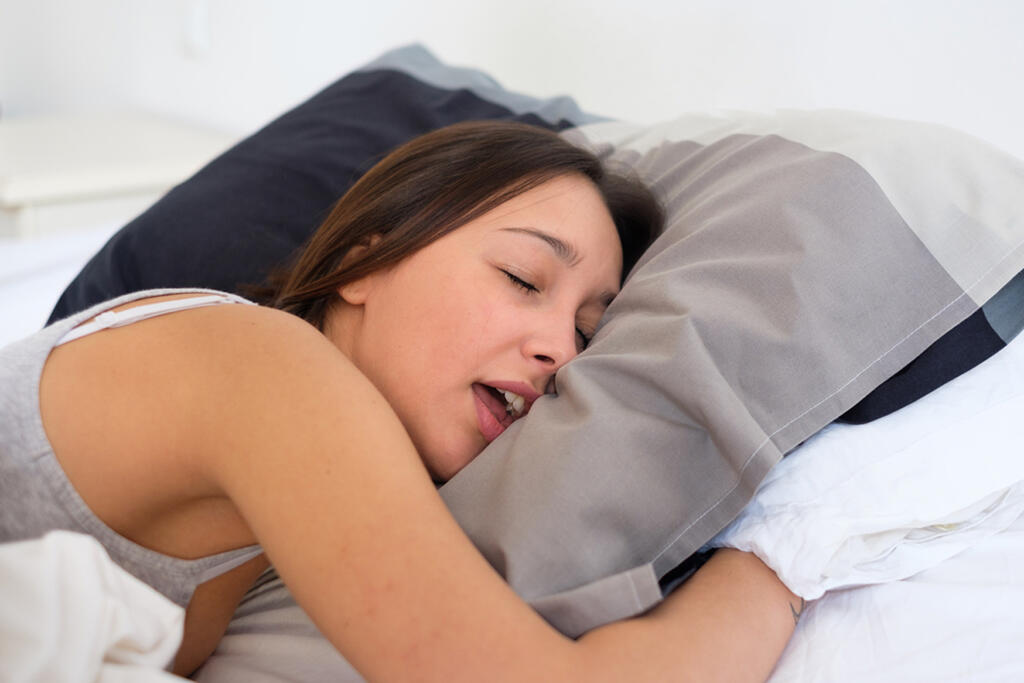
“Snoring is caused by vibration of the upper airways,” explained Dr. Ori Elkan, head of the sleep-related breathing disorders unit at Rabin Medical Center. “When the tissues in the area — usually the palate, but sometimes the tonsils or tongue — are loose and close together, the airflow causes snoring. In sleep apnea, the tissues actually meet, blocking the airway and causing a choking sensation.”
(Photo: Shutterstock)
Can snoring wake the snorer as well?
“Yes, especially when falling asleep or at the end of each sleep cycle, when sleep is lighter. Sometimes people wake from the noise, sometimes from the sensation of choking, and sometimes from aspiration when saliva enters the windpipe.”
Diagnosis
“The first step is to determine whether the snoring is linked to sleep apnea, which affects around 10% of the population (15% of men and 7% of women). Sleep apnea lowers quality of life — causing fatigue, drowsiness, irritability, depression and anxiety, reduced libido, memory problems and slower reaction times — and can also lead to high blood pressure, diabetes, high cholesterol, heart rhythm disorders, heart attacks, strokes, car accidents and, in rare cases, even tumors.
“Today, patients don’t always need to spend the night in a sleep lab. A portable sleep monitor can be taken home to test sleep quality,” said Dr. Elkan.
Solutions for snorers without sleep apnea
“If a person sleeps well and wakes up refreshed, the snoring is only an aesthetic problem that bothers those around them,” Elkan said.
Options include separate bedrooms, earplugs for the partner or preventing back-sleeping through apps, electronic devices that gently vibrate when the sleeper rolls onto their back, special belts or even a pillow barrier (a bag filled with towels) placed in bed.
A dental night guard that pushes the lower jaw forward can also help, as can weight loss, regular exercise and avoiding alcohol. “Another active solution is strengthening the throat muscles,” Elkan noted. “Studies show that people who play wind instruments snore less, so you can either practice those muscles — or pick up a trumpet and disturb your neighbors with music instead of snoring,” he said with a smile.
Solutions for snorers with sleep apnea
These patients may benefit from CPAP, a mask that works “like a reverse vacuum cleaner,” pushing air into the nose. The drawback is that the device is bulky and makes some noise, though less than snoring.
Surgery to tighten loose tissues is another option, but Elkan cautions that it is “an aggressive treatment for a relatively mild condition.” It is painful, and like any tissue tightening, it is not permanent, lasting five to 20 years.