

Moti Tzarfati, 77, arrived last week at Sheba Medical Center for a colonoscopy, fully awake and without sedation.
A few days earlier, staff from the gastroenterology unit called and offered him the option to undergo the test without sedation for security reasons. If a siren sounded during the procedure, he would be able to cover himself with a sheet and quickly move with the team to a protected area.
Colonoscopy without sedation


“I didn’t hesitate for a second,” he said. “It didn’t hurt at all. I was awake and watched the screen in front of me the whole time. It’s interesting to see something moving inside your stomach.”
Polyps were found during the test, removed and sent for laboratory analysis. Since then, Tzarfati has become an enthusiastic advocate of the method.
“As soon as I got home, I started raising awareness among friends my age,” he said. “If my video brings even one patient to early detection that saves their life, I’ve done my part.”
Prof. Shomron Ben-Horin, head of the Institute for Digestive Diseases at Sheba, which is located above ground and is not fortified, explained during the procedure: “Moti Tzarfati, a dear patient, is undergoing a colonoscopy without sedation, and we removed three polyps. People are afraid to come for colonoscopies without sedation, even though it’s the right thing to do during a war.”
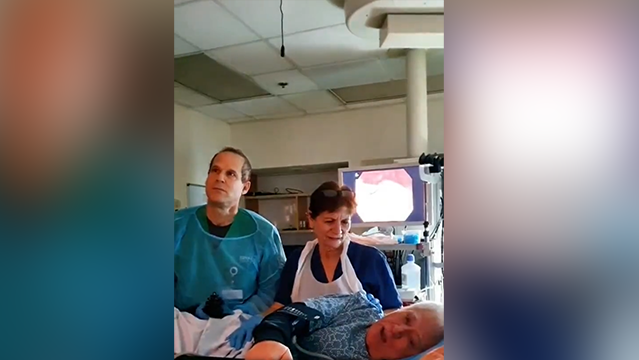
Sheba offers no-sedation tests so patients can reach shelter during sirens
(Photo: Sheba Medical Center)
Tzarfati added: “Nothing hurt. The only thing he told me was to take a deep breath, and I did.”
The approach emerged out of necessity. “On a normal day, we perform about 100 colonoscopies. Now we’re doing only 25,” Ben-Horin said. “We don’t know how long the war will last, but we do know there will be a major backlog when people try to reschedule delayed appointments.”
He stressed that colonoscopy without sedation is not new. “I’ve had the test twice without sedation. It’s common in many parts of the world. It’s not comfortable, but it’s not painful. There is abdominal discomfort. Senior staff at Sheba have done it, got up, dressed and returned immediately to routine activity.”
Prof. Naim Abu-Freha, head of gastroenterology at Assuta Medical Center in Beersheba, said that even in the past two weeks, after the Health Ministry approved reopening fortified gastroenterology units, the picture remains concerning.
“At least hundreds of people are postponing their colonoscopy appointments and may pay for it with their health,” he said.
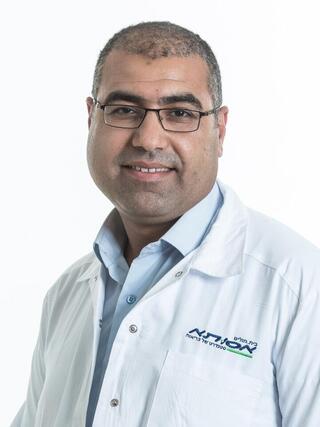 Prof. Naim Abu-FrehaPhoto: Assuta
More than 100,000 colonoscopies are performed each year in Israel’s public system, with average wait times already ranging from eight months to a year.
“I don’t want to describe the bottleneck that already exists and is expected to worsen, and the delays facing those who postpone,” he added.
According to Abu-Freha, two factors are driving the trend: Health Ministry directives that halted activity in the first week of the war, and patients who continue to avoid coming in even after services resumed.
The reasons are clear. Preparation for a colonoscopy requires staying close to a bathroom, and for those without a protected room, a siren during preparation creates a real problem. Others are simply afraid to leave their homes.
“Colon cancer hasn’t been told there is a war, so it doesn’t stop,” he warned. “Someone with mild rectal bleeding who postpones testing may be examined later when the bleeding becomes severe, and what could have been prevented may no longer be treatable this way and could require surgery.”
To reduce the impact, Assuta has directed patients nationwide to its two fortified facilities in Ramat Hahayal and Beersheba.
“Just this week, patients from Ashdod came with their gastroenterologists and underwent the test without delay,” he said.
A similar trend is troubling cardiologists.
“In the first week and a half of the war, patients who needed to come in didn’t. When they finally arrived, it often ended in death,” said Prof. Israel Barbash, head of invasive cardiology and cardiac catheterization at Sheba.
Under normal conditions, five catheterization labs operate daily. Now only one is functioning.
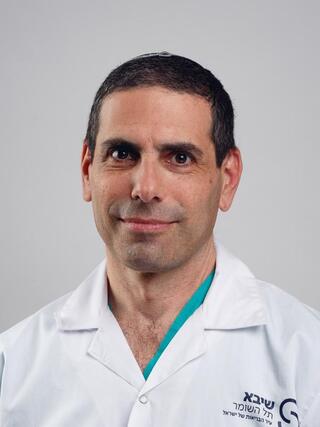 Prof. Israel BarbashPhoto: Sheba Medical Center
“Just last week, a mobile intensive care unit brought in a man in cardiac arrest. He collapsed at home and died shortly after arrival,” he said.
Barbash said many patients arrive with heart attacks after ignoring warning signs.
“They tell themselves, ‘I’ll go to the hospital after the siren, in the morning.’ By the time they arrive, their condition is severe.”
Patients needing valve replacement procedures are also delaying care.
“Medical literature shows that delaying valve replacement leads, at best, to heart failure and, at worst, to death. A patient recently died at home after postponing catheterization,” he said.
Barbash urged the public to act immediately if symptoms appear.
“Anyone experiencing chest pain, shortness of breath, sweating or nausea should not wait, should not delay and should not hesitate out of embarrassment. A false alarm is better than not coming at all, which can have far-reaching consequences.”