

Israel’s Health Ministry has ordered, in recent days and in an exceptional step, the removal from educational institutions of children who were exposed to a measles patient and are not vaccinated. The decision was first reported by ynet. The directive comes against the backdrop of a significant measles outbreak Israel has been grappling with in recent months, which has claimed the lives of 14 children so far. The order applies to six children who were removed from two kindergartens located in the same compound in a community in Samaria.
“I was informed that on February 4, the children and staff at the kindergarten were exposed to a patient who was diagnosed with measles during the contagious stage of the disease,” wrote Dr. Udi Klainer, the Central District physician, in a letter sent this week to Moshe Hezekiah, the local official responsible for education.
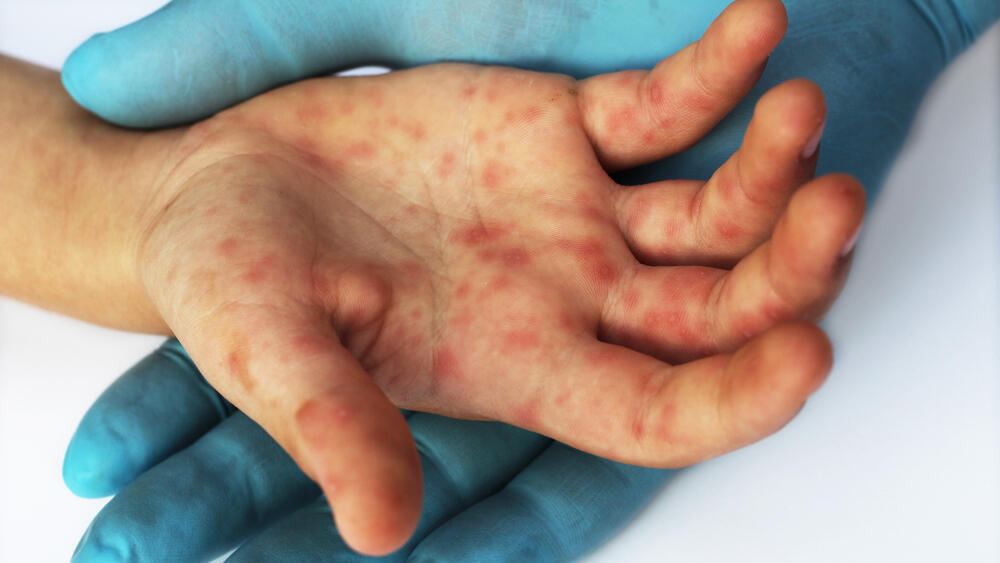
According to Klainer, most of the children in the kindergarten received the first dose of the measles vaccine in line with the routine vaccination schedule at age 1, or received post-exposure vaccination within 72 hours, which is intended to protect against severe illness. “However, some of the children in the kindergarten were not vaccinated with any measles vaccine, and there is a very high likelihood that they were infected and that the disease is currently in its incubation period,” he wrote.
“I believe there is no alternative but to prohibit children who were exposed to a measles patient and are not vaccinated from entering the educational framework,” Klainer stated, citing Section 19 of the Public Health Ordinance. He said the step was necessary to protect residents of the community from infection, and especially to protect kindergarten children and their families. Klainer emphasized that in order to minimize harm to the right to education, the prohibition applies only to children who are known to have been exposed to a measles patient and who were not vaccinated before exposure or within three days afterward. The decision will be reexamined weekly or upon receipt of new medical information, including the appearance of symptoms.
"The vaccine can save lives'
The Health Ministry stressed that bringing a sick child to an educational institution may constitute a criminal offense. The directive initially applied to two children and was later expanded to include four additional children from another kindergarten in the same compound. Health officials explained that unvaccinated children who remain in an educational setting, in the same room as a measles patient or even a room previously occupied by a measles patient, face a risk of more than 90 percent of becoming infected. “This makes clear the need to remove an unvaccinated child from an educational framework where children spend several hours a day together, usually in an enclosed space, particularly when a measles patient was present,” Klainer wrote. “Unvaccinated children in these settings face an extremely high risk of infection and of infecting others, especially vulnerable populations such as the immunocompromised, pregnant women or those who cannot be vaccinated.” Symptoms of the disease appear several days after infection, and measles is contagious even before symptoms emerge. The incubation period can last up to 21 days.
The most contagious virus in humans
Measles is caused by the measles virus, the most contagious virus known in humans. In some cases, complications can be severe and life-threatening. The fatality rate is about one in 1,000 cases, alongside a similar rate of severe complications involving brain damage. In the long term, measles can cause a rare chronic brain inflammation that appears seven to 10 years after the initial illness and is fatal in all cases. It is more common among children who contract measles before the age of 2. “Once there is an illness event and exposure to a patient, the risk of developing the disease is extremely high,” said Dr. Or Krieger, deputy head of the Health Ministry’s Public Health Division, in an interview with Ynet. “That is why we offer those who were exposed preventive vaccination within 72 hours, which is highly effective in preventing illness.” Krieger said some parents of exposed children refused vaccination. “They are allowed to do that, it is their responsibility and we cannot force them,” he said. “But if they return to kindergarten while they are in the incubation period, they expose other children to measles.”
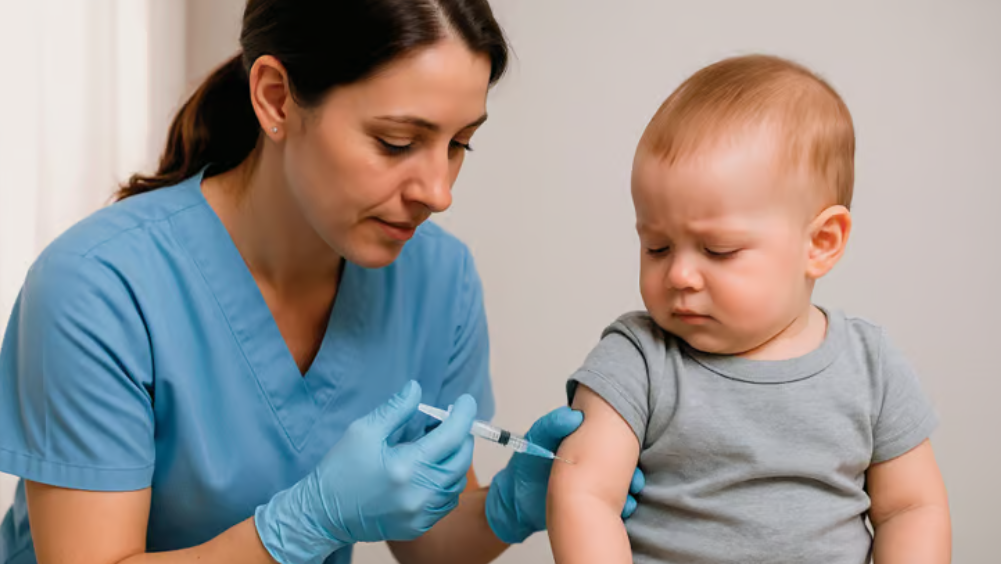
The measles vaccine is scientifically proven and safe for use.
(Photo: AI Illustration)
“The letter from Dr. Klainer prohibits their arrival at the kindergarten, thereby preventing them from exposing other children to illness and severe disease,” he said. “Parents cannot decide on behalf of other children,” Krieger added. “Bringing unvaccinated children who were exposed to measles patients into kindergarten exposes other children and effectively makes decisions about their health.” He urged parents to vaccinate their children. “The vaccine can save lives, and with a very simple action it is possible to protect the health of young children who are exposed to a disease that can be very dangerous and should not be taken lightly,” he said.
‘To protect the children’
According to Health Ministry data updated as of today, about 2,900 confirmed measles cases have been reported since the outbreak began in April last year. Officials say the figure is partial and estimate the actual number of cases exceeds 10,000. Currently, 20 measles patients are hospitalized, 10 of them in intensive care. Outbreak hotspots include Jerusalem, Beit Shemesh, Bnei Brak, Modi’in Illit, Kiryat Gat, Petah Tikva and Netivot.
Health Ministry efforts to curb the outbreak have faced major challenges in recent months. The fight against misinformation, particularly in the ultra-Orthodox sector, has also encountered difficulties. Krieger said the current action was taken only now because it is a dramatic step. “This is not done lightly. Preventing a child from attending their educational institution is a serious measure, and it is taken only in extreme cases,” he said. “A few months ago there was no need for it. Once the need arose, we acted.” He added, “We are acting based on the precautionary principle, after very thorough consideration, in order to protect children’s health. If there is a need to take similar steps in additional cases, we will consider it.”
The measles vaccine is scientifically proven, safe for use and accepted worldwide. In Israel, it is administered as part of the routine vaccination schedule at age 1 and in first grade. Vaccination can be completed at any time and is provided free of charge up to age 18. Health professionals stress that receiving the measles vaccine is significantly safer than contracting the disease and risking its potential complications, both for the individual and for those around them, as well as for public health as a whole. This assessment applies in routine circumstances and even more so during a measles outbreak.