

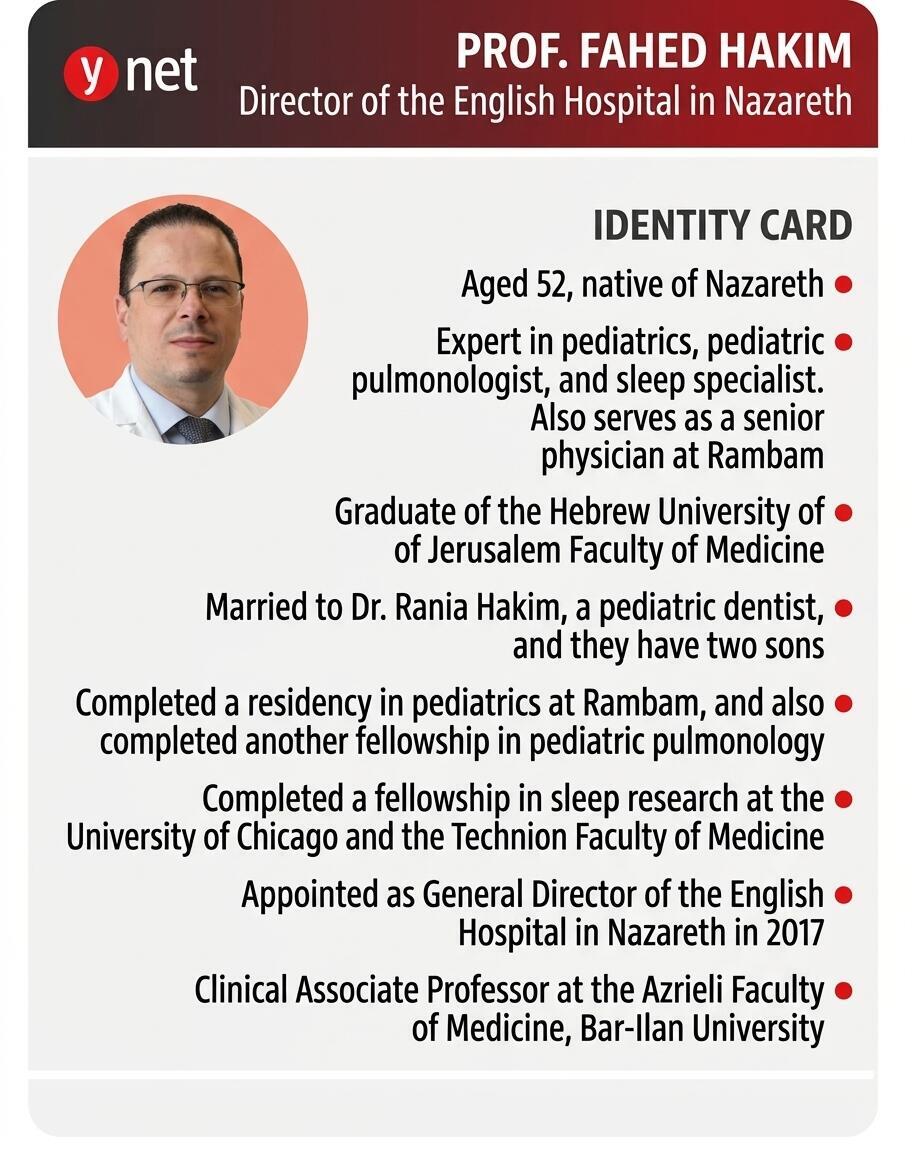
Roughly 10,000 kilometers separate Mayo Clinic in the United States from Nazareth English Hospital. But the enormous distance, as well as Mayo Clinic’s prestige and global reputation, do not deter Prof. Fahed Hakim, director of the Nazareth Hospital EMMS.
“Rochester is a city about the size of Nazareth, around 120,000 to 130,000 residents, and it is also considered peripheral in the United States. Yet it is a city that was built around a hospital. Can we make a Mayo Clinic here in Nazareth? Yes, absolutely. Why are people there smarter? Do they have a stronger sense of commitment? I don’t think so,” Prof. Hakim said during our visit to the hospital.
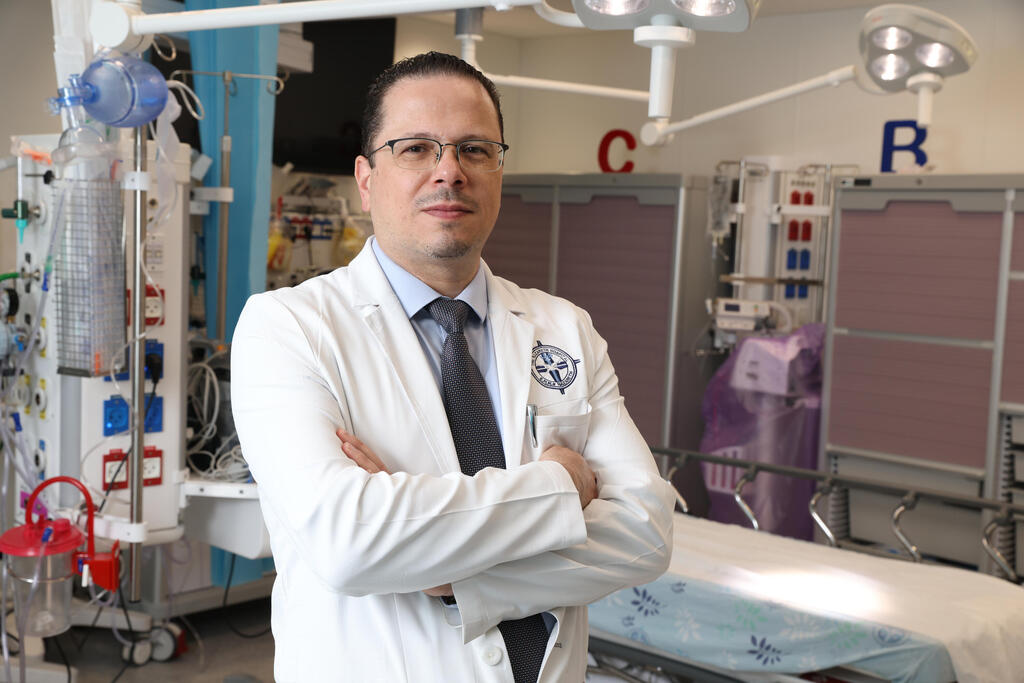
He is setting his sights very high. This is a small hospital in Nazareth, far from Israel’s major medical centers, but Prof. Hakim makes no apologies.
“With the medical excellence we are promoting, we really can be Mayo Clinic, and even more, and I’m not ashamed to say that. There are doctors here who have traveled the world and could have worked at Mayo, Cleveland Clinic and Yale for high salaries, but chose to come here.”
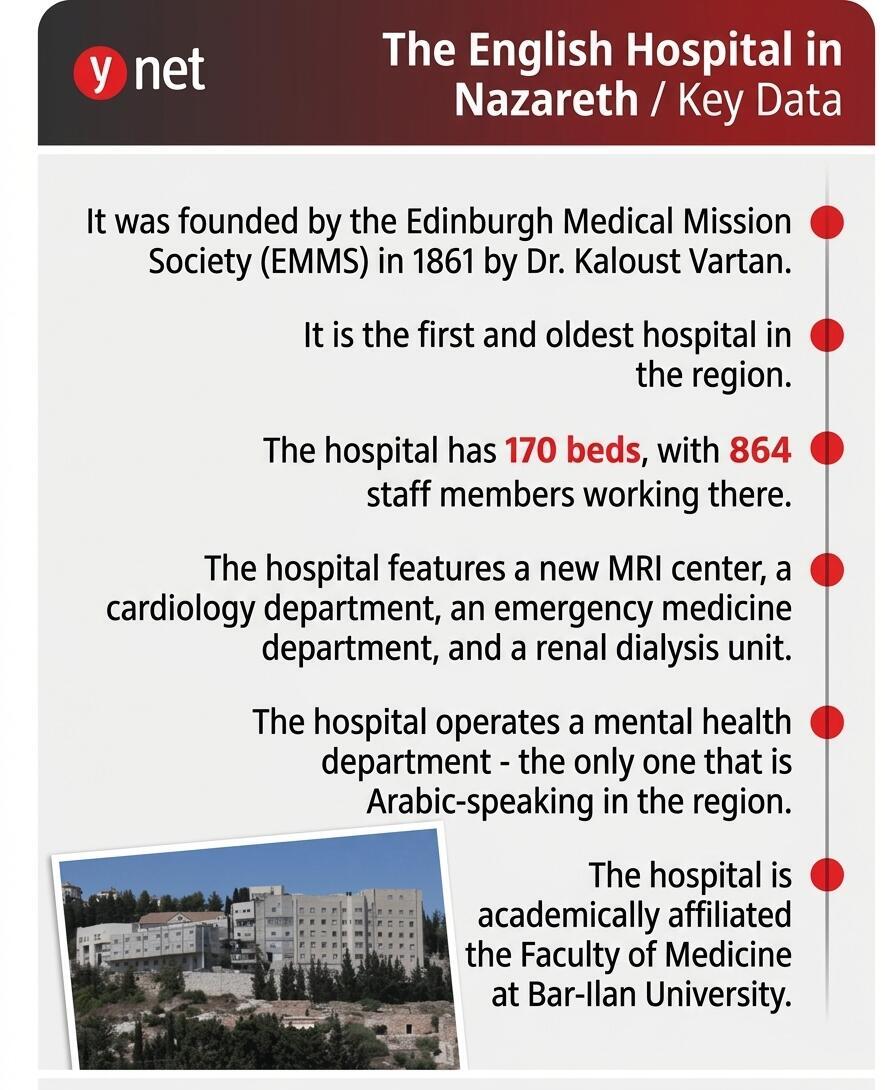
Nazareth English Hospital is the first and oldest hospital in the region. Its official name is the EMMS Nazareth Hospital. It was founded in 1861 by Dr. Kaloost Vartan, who came to the area as an emissary of a Scottish charitable organization and established a small clinic that grew over the years into a full-fledged hospital. Today, it has 170 beds and about 860 employees. Alongside it are a nursing school, founded in 1924, and a tourist village, all operated under the same nonprofit organization.
“Our DNA is working with the community, and the people of this region are always before my eyes. I’m here to serve them,” Prof. Hakim said, emphasizing the hospital’s social role alongside its medical one.
“This is the DNA of caring for people who cannot afford it, but we empower them rather than provide charity — not donations and not money,” said CPA Wassim Dibini, CEO of the EMMS Nazareth nonprofit. “We want to give people equal opportunities. It doesn’t make sense that because I was born in Nazareth I will live five years less than someone born in Tel Aviv, or that because my parents cannot afford to send me to a good school, I should pay the price. We are working to close the gaps on every level — education, health, infrastructure and opportunities — and serve as a regional anchor. The hospital’s impact goes beyond medicine.”
Prof. Fahed Hakim: ‘With the medical excellence we are promoting, we really can be Mayo Clinic, and even more, and I’m not ashamed to say that. There are doctors here who have traveled the world and could have worked at Mayo, Cleveland Clinic and Yale for high salaries, but chose to come here’
This medical-social approach is also reflected in the expansion of medical services.
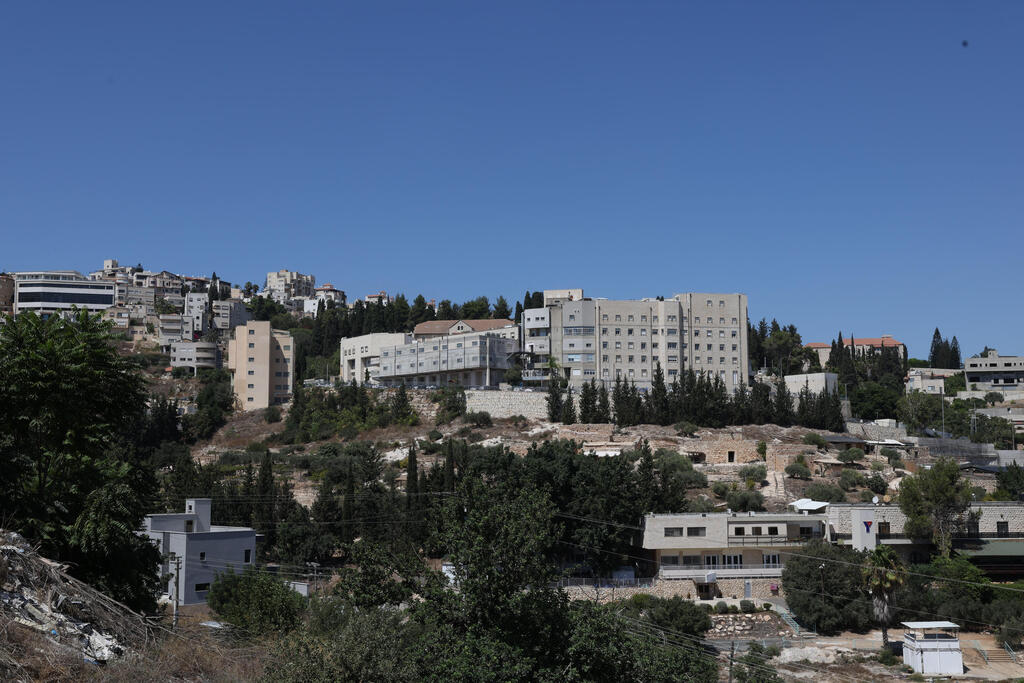
Located in Nazareth, dreaming of Rochester: Nazareth English Hospital promotes excellence under challenging conditions
(Photo: Elad Gershgoren)
“There are many centers of excellence here. We established 47 different units and departments over five years,” Prof. Hakim said, citing the new stroke unit, a protected dialysis department, a psychological center for teenagers from the Arab community and an advanced IVF unit.
“Our IVF unit is the new standard in terms of the required specifications nationwide, and even women from Bnei Brak come here. There are technologies here that don’t exist elsewhere, and our success rate is also higher than that of other units in Israel.”
‘They have to choose between an inhaler and food at home’
The drive for excellence is reflected in the results, with the hospital standing out in several of the Health Ministry’s quality measures.
According to the ministry’s hospital infection report, the number of sepsis cases stood at just 0.5 per 1,000 hospital days, compared with a ministry target of no more than three cases. The hospital also recorded a relatively low readmission rate in its internal medicine departments, ranging from 3% to 6%.
But unlike the more affluent populations in central Israel, the Nazareth hospital’s starting point is much more difficult. Parts of the local population are considered poor and experience high rates of chronic illness and lower access to medical services.
According to Health Ministry smoking data for 2025, 46.2% of Arab men smoke — twice the overall average. In 2023, the highest smoking rate among men was recorded in the Nazareth subdistrict, at 39.7%.
The Arab sector also has the highest rate of diabetes: 26.4% of people ages 45 and older have the disease, compared with 18.2% in the general population. Poorly controlled diabetes, which increases the risk of complications such as eye damage leading to blindness, kidney failure, nerve damage and cardiovascular disease, is 1.45 times more common among Arabs than in the general population.
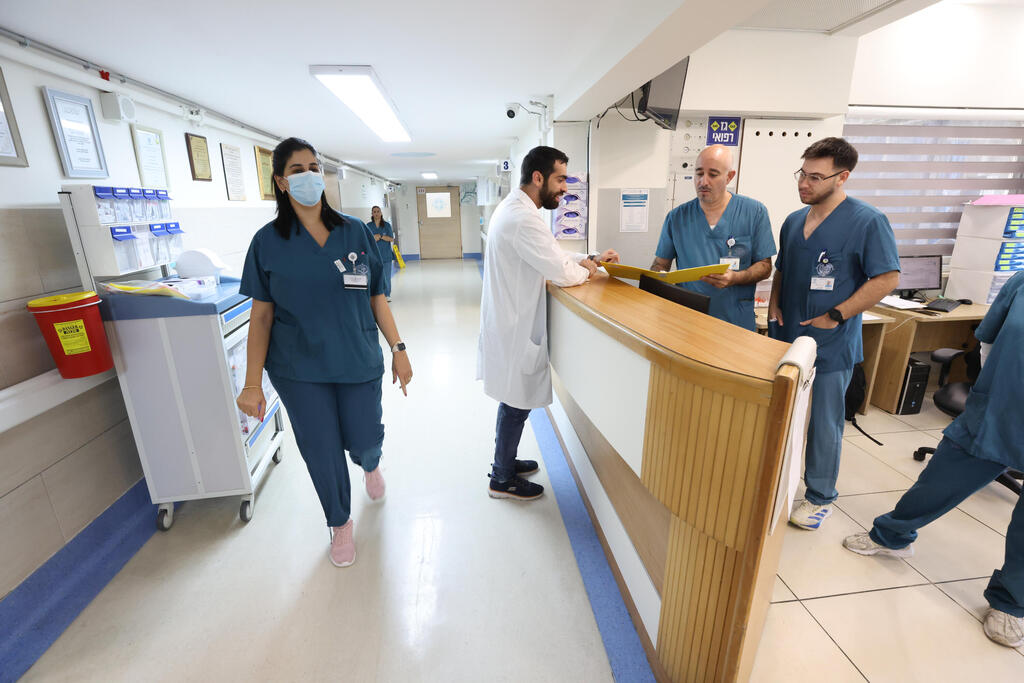
The hospital has stood out in infection rates and readmissions. Staff at Nazareth English Hospital
(Photo: Elad Gershgoren)
“There are 40-year-olds here with amputated legs,” Prof. Hakim said.
‘The person who comes to the hospital usually has a negative bank balance and no money. So even when I write a prescription, I’m not sure they’ll buy it. They have to choose between an inhaler and food at home, and both are important’
The disparities are also reflected in life expectancy. According to the 2023 Health Inequality Report, average life expectancy in Israel is 81.3 years for men and 85.4 for women, while in the Arab population it is significantly lower, at 76.9 and 82.7 years, respectively.
“We live in a difficult area. Our residents and doctors don’t see patients from high socioeconomic groups, 8 and 9, but people classified in clusters 2 and 3,” Prof. Hakim said. “The person who comes to the hospital usually has a negative bank balance and no money. So even when I write a prescription, I’m not sure they’ll buy it.
“How can they take care of their health if they don’t have enough money to make it through the month? They have to choose between an inhaler and food at home, and both are important.”
Against this backdrop, Prof. Hakim said the greatest challenge is not only bringing advanced medicine, innovative equipment and artificial intelligence systems to Nazareth, but ensuring that patients who need them can actually access them.
“I live among my people,” he said. “I know the people and their difficulties. There are gaps everywhere. The foundation is accessibility, and culture is part of that.”
Making services accessible sometimes requires decisions that are not economically viable.
“Sometimes even Form 17, the simplest and least expensive thing, isn’t used because people don’t have the means,” he said, referring to the Israeli authorization form required for certain medical services outside a patient’s health maintenance organization. “We understand that, so sometimes we take on tests and treatments that aren’t economically viable for us because we understand that the population needs them.”
‘Wait two or three months’
In addition to economic and health disparities, the dramatic rise in crime and violence in Arab society is also affecting hospital staff.
“It’s not something that happens somewhere else. We treat these people, both those who were shot and those who did the shooting,” Prof. Hakim said. “You see five children who have arrived here with serious injuries, so how can you go home and keep dealing with it, telling your children that everything will be OK? You can’t even send your child out to buy 10 pitas because you’re afraid. The statistics today show that Arab society is experiencing higher levels of anxiety than Jewish society did after Oct. 7. It’s crazy.”
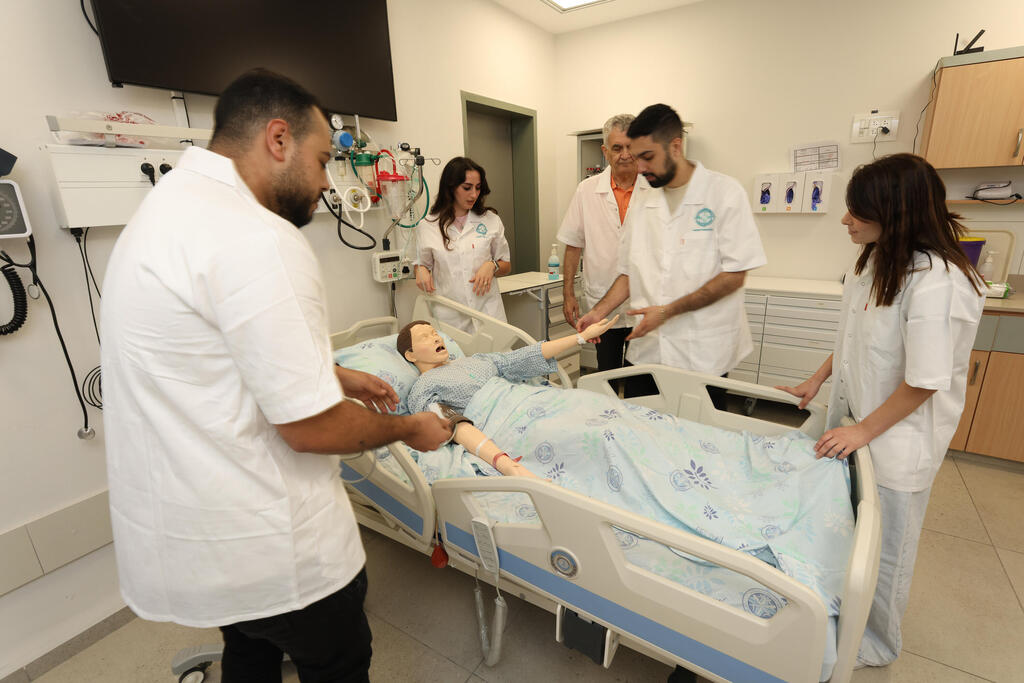
A large simulation center costing millions of shekels was established at the nursing school in recent years
(Photo: Elad Gershgoren)
Against this backdrop, demand for mental health services in the Arab community is also growing.
“Where are you going to treat them? At the psychological center for children, there are 600 children waiting in line. Your son tried to kill himself today? OK, wait two or three months.”
In recent years, the hospital has sought to expand its mental health services. Since Oct. 7, the mental health department has grown from eight beds to 33. The goal is to reach 40 beds by the end of the year, alongside plans to construct a new building that has encountered a major budgetary obstacle.
“The hospital went around the world and raised donations, and the Health Ministry provides matching funds, but we’re stuck with the Ministry for Social Equality,” Prof. Hakim said. “We can’t close the deal because another 20 million shekels are supposed to come from the Ministry for Social Equality. We wrote letters and appealed again and again, but it isn’t working.”
“We don’t only take care of robots and new technologies. We also take care of the pain in society,” Prof. Hakim added. “The hardest thing for me is that we work so hard to bring progress to the hospital, but in the end it’s construction funding that prevents you from being in contact with patients. That’s something I’m ashamed of. It’s not that the country lacks money, it simply lacks a decision. We are not beggars. In the end, we are here to serve a population that needs us.”
The budget battle
Nazareth English Hospital is an independent public hospital that receives partial government support. That support itself came after a lengthy struggle by Israel’s independent public hospitals in 2021.
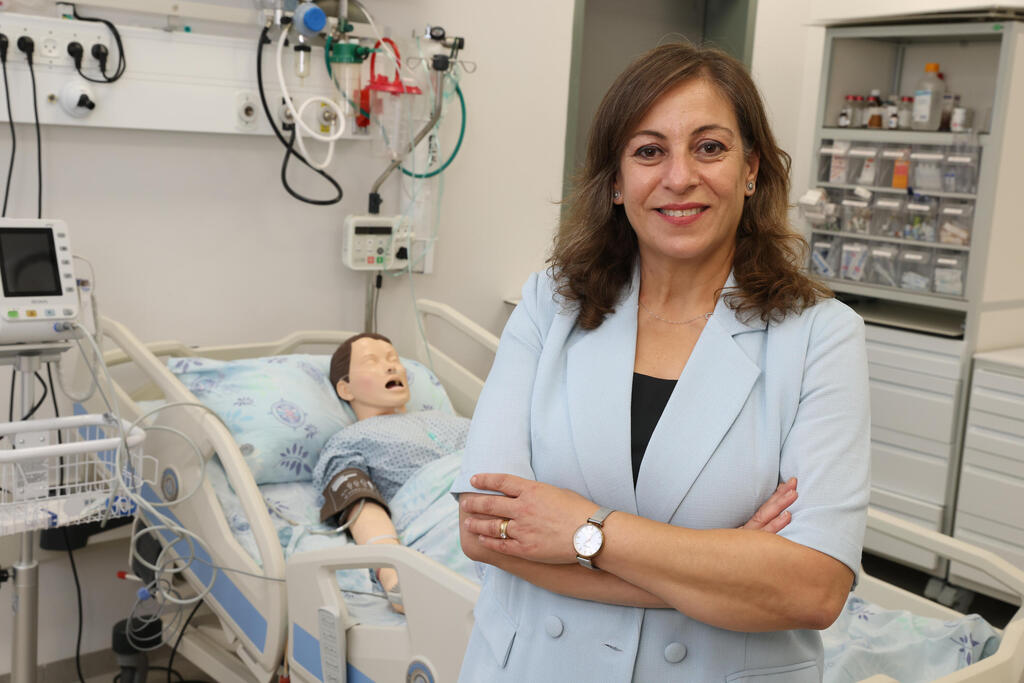
Dr. Salam Hadid, director of the nursing school in Nazareth
(Photo: Elad Gershgoren)
“We fought a difficult battle to equalize the subsidy and government support we receive with what other hospitals in the country receive,” Prof. Hakim said. “The state made a change and we narrowed the gaps, but it’s still not 100%. We still have problematic infrastructure and need budgetary support in additional areas.”
Like other hospitals in Israel, Nazareth English Hospital relies heavily on donations to finance construction and development. But fundraising is also more difficult in the periphery, where large and well-known institutions in central Israel are often more attractive destinations for donors.
“That’s not the problem, it’s the result,” Dibini said. “The state is designing hospitals in the periphery to be deficit-ridden and problematic, and no one wants to invest in failing hospitals. The state makes agreements with the health funds and allows them to receive huge discounts from hospitals in the periphery, so by definition it determines that they will operate at a loss. How can a hospital invest, develop and conduct research? Once you force it into this situation, even donors don’t always want to come here.”
Prof. Hakim: ‘You can’t even send your child out to buy 10 pitas because you’re afraid. The statistics today show that Arab society is experiencing higher levels of anxiety than Jewish society did after Oct. 7’
Even when donations are available, not everything goes smoothly. In recent years, a large simulation center costing millions of shekels was established at the nursing school.
“We were supposed to receive a donation from USAID, the U.S. Agency for International Development, but the day after Trump was elected we received a letter canceling a $1.5 million grant that was supposed to fund the entire simulation center,” Dibini said. “They simply canceled the grant overnight, after we had already spent the money. It was a devastating blow.”
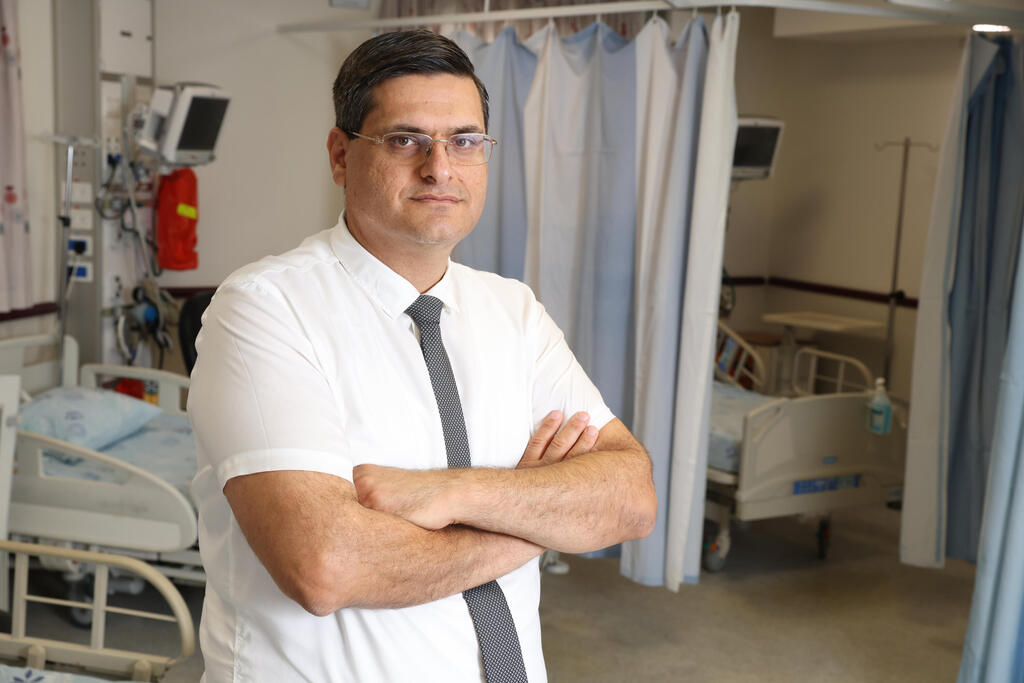
‘They canceled our grant overnight.’ CPA Wassim Dibini, CEO of the EMMS Nazareth nonprofit
(Photo: Elad Gershgoren)
The employees themselves stepped in, he said, in an unprecedented move.
“The organization’s employees were the ones who funded the shortfall. They gave up salaries to make up the difference, and this isn’t the first time. You don’t see this in other places — employees with this kind of social commitment.”
At the nursing school, headed by Dr. Salam Hadid, a transfer program has operated for the past two years as part of a joint initiative with Ono Academic College.
“For many citizens, it’s very simple to go study at any university in the country. But for others, it’s almost impossible if higher education isn’t close to home, their culture and their language, and we make it possible,” Dr. Hadid said.
As part of the transfer program, the nursing school reaches out to high school graduates facing linguistic and cultural challenges, as well as the psychometric entrance exam, and develops tailored programs for them.
The reverse path: From Harvard to Nazareth
That same social commitment is one of the hospital’s strengths. At a time when Israel’s health system is concerned about a brain drain abroad, Nazareth English Hospital takes pride in doctors who have taken the opposite path, returning from leading medical centers around the world, including Mayo Clinic and Harvard, to work specifically in Nazareth.
“There is meaning here. It goes far beyond money,” Dibini said. “It’s about social and community significance.”
The choice can come at a financial cost for those doctors because unlike government hospitals in the area, Nazareth English Hospital does not receive funding for salary supplements intended to attract doctors to the periphery.
“These people can go anywhere. They could get another 25% added to their salary, not at Mayo Clinic but 20 minutes from here, and they don’t go because the story here is completely different,” Prof. Hakim said.
At the same time, the hospital is trying to develop high-quality staff from within through its own programs.
“We invested in a doctor from Bir al-Maksur, an orthopedic surgeon, and sent him to Australia, where we funded part of his subspecialty training. Today, he performs shoulder replacements,” Prof. Hakim said. “How many people from Bir al-Maksur have been to Australia? None. He was the first.”
Despite these efforts, Israel’s health system as a whole is facing a shortage of doctors. From 2021 to 2023, there were 3.2 active doctors per 1,000 residents in the Northern District, below the national average of 3.9 and even lower than the Central District, with 4.2 doctors per 1,000 residents, and the Tel Aviv and Haifa districts, with 5 and 5.5, respectively.
There are concerns that the shortage in the periphery will only worsen, partly because many Israeli doctors who studied abroad have worked in the region over the years, including graduates of institutions that are no longer recognized under Israel’s Yatziv reform, which tightened the criteria for recognizing foreign medical schools.
‘Don’t stigmatize an entire population’
According to Dibini, in addition to the clear need for more positions throughout the health system, there must also be a change in the way graduates of those institutions are treated.
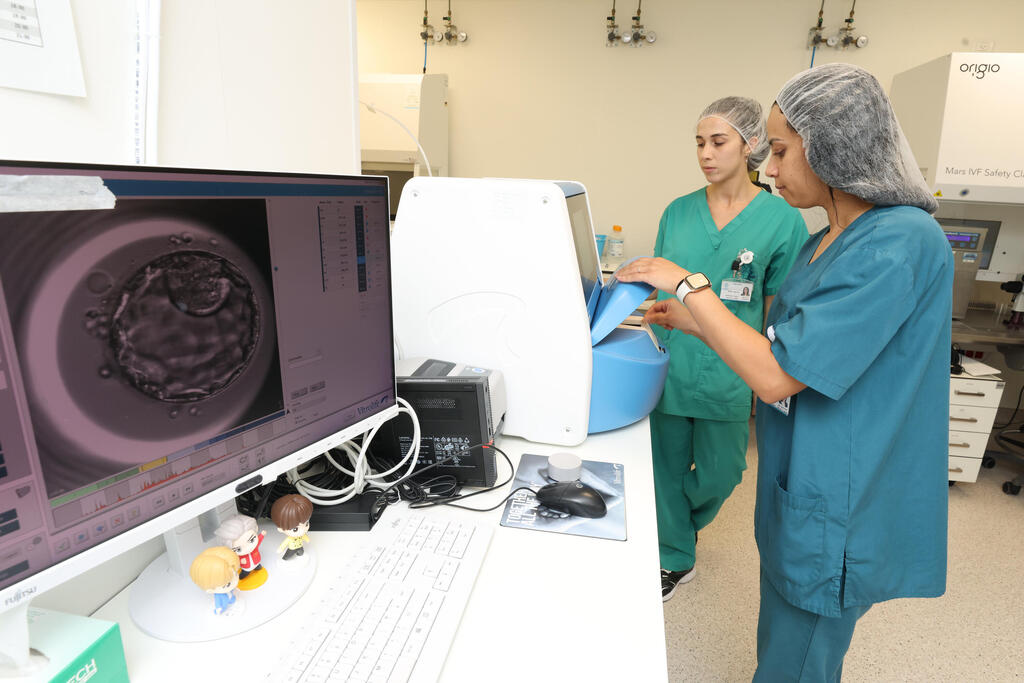
‘Our IVF unit is the new national standard’
(Photo: Elad Gershgoren)
“In the end, those doctors passed the exams in Israel,” he said. “There are 5,000 doctors from the community who already studied there before the reform took effect, but they are sitting without residency positions and there is a stigma that they don’t know anything — and that’s not true.”
Prof. Hakim also believes those doctors should not be categorically rejected, while stressing that this does not mean compromising professional standards.
“I don’t want to produce doctors who don’t know how to treat my mother, absolutely not,” he said. “I have no desire to fight for bad doctors, but let’s not stigmatize an entire population. These are people who sold their homes and land to send their sons or daughters to study medicine abroad, and that’s significant. Among them are people who deserve to work in the health system. We need to identify them and give them an opportunity.”
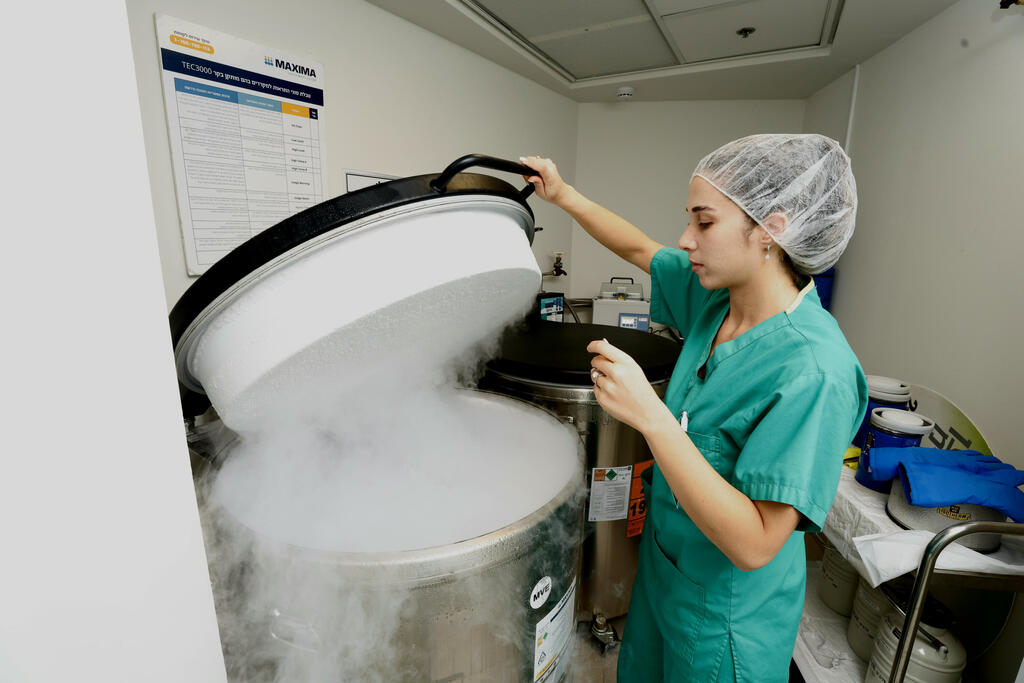
The surprise: Couples from central Israel also come to the IVF unit at Nazareth English Hospital
(Photo: Elad Gershgoren)
Hospital management believes the main gap it faces today is not necessarily professional ability, but infrastructure.
“We have the people and the technology. What we need is funding to improve the old infrastructure,” Dibini explained. “We have a 31-bed internal medicine department occupying 500 square meters, when the standard is 1,700 square meters. That can’t be.”
The distance between Nazareth and Rochester remains vast, but Prof. Hakim is not giving up and is looking ahead.
“We have a gem here, and it isn’t competing in the neighborhood. It is competing internationally. We want to turn Nazareth into a center of the Middle East.”