

A new combination treatment for one of the most aggressive forms of lung cancer reduced the risk of death by 58% and extended patients' median survival by more than eight months, according to a major Phase 3 clinical trial published Saturday in the New England Journal of Medicine (NEJM). The findings prompted a standing ovation at a leading international oncology conference in Madrid, where specialists described the results as a potential turning point in treating a disease with historically poor survival rates.
The treatment combines tarlatamab, a drug that directs immune cells to attack cancer cells, with the immunotherapy drug durvalumab. Patients receiving the combination survived a median of 21.1 months, compared with 12.7 months among those receiving durvalumab alone. The 58% figure represents a relative reduction in the risk of death during the study, not an absolute reduction in mortality.
The audience gave a standing ovation at an oncology conference in Madrid as results of a new drug combination for small cell lung cancer were presented
(Video: Prof. Ido Wolf, X)


"The audience is absolutely ecstatic. Amazing results for tarlatamab in small cell lung cancer," wrote Prof. Ido Wolf, head of oncology at Tel Aviv Sourasky Medical Center, also known as Ichilov Hospital, on X following the presentation at the European Society for Medical Oncology (ESMO) Congress.
"Combined treatment extended median survival for small cell lung cancer patients beyond 21 months. That's an extraordinary figure for this disease," Wolf wrote, adding that the results were even more exciting than recently reported advances in pancreatic cancer treatment.
The international DeLLphi-305 trial involved 563 patients treated at 175 medical centers across 29 countries. All participants had extensive-stage small cell lung cancer, meaning the disease had spread beyond its original location, and had responded to initial chemotherapy and immunotherapy without their cancer progressing.
The patients were randomly assigned to two groups. One received maintenance treatment with tarlatamab, marketed as Imdelltra by Amgen, together with durvalumab, marketed as Imfinzi by AstraZeneca. The other received durvalumab alone, a standard maintenance approach following initial chemotherapy and immunotherapy.
Maintenance treatment is intended to keep cancer under control after the initial phase of treatment. In this trial, it continued until the disease progressed or side effects became intolerable.
After a median follow-up of approximately 16 months, 87 patients in the combination group had died, compared with 156 in the control group. At the one-year mark, 79.4% of patients receiving the new combination were alive, compared with 53.3% of those receiving durvalumab alone. Survival was measured from the beginning of maintenance treatment, excluding the preceding months of initial chemotherapy.
How the treatment works
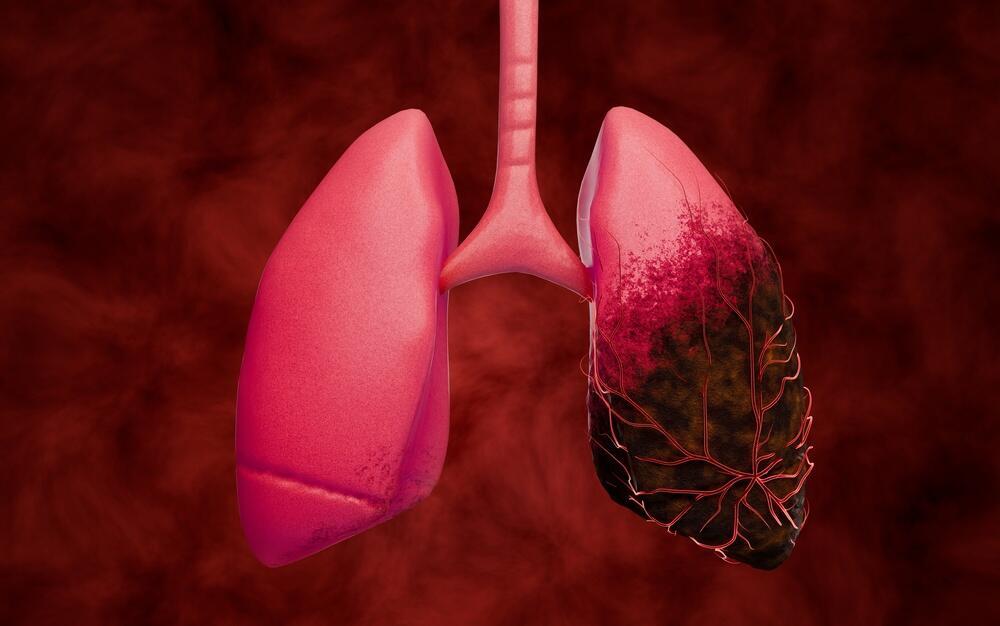
Small cell lung cancer accounts for approximately 13% to 15% of lung cancer cases and is particularly difficult to treat because it grows rapidly and frequently spreads before diagnosis. The five-year survival rate across all stages is approximately 9%, according to the American Cancer Society.
Although patients often respond initially to chemotherapy and immunotherapy, the cancer frequently returns within months. Many patients deteriorate before they can receive a second line of treatment, making it particularly important to extend the effectiveness of the initial therapy.
Tarlatamab belongs to a relatively new class of drugs known as bispecific antibodies, which can attach to two different targets simultaneously. One part of the drug recognizes DLL3, a protein found on the surface of most small cell lung cancer cells, while the other binds to CD3, a protein on immune system T cells.
By physically bringing these cells together, the drug directs the immune system toward the tumor and helps trigger the destruction of cancer cells. DLL3 is present at high levels in most small cell lung cancer tumors but is rarely expressed on healthy cells, making it a useful target.
The drug is administered intravenously, beginning with gradually increasing doses to reduce the risk of serious immune reactions. After the initial treatment period, it is generally administered every two weeks.
Tarlatamab is already approved in the United States for patients whose extensive-stage small cell lung cancer has progressed during or after platinum-based chemotherapy. The new trial investigated whether introducing it earlier, immediately after initial treatment, could improve survival further.
The results also showed a substantial delay in disease progression. Patients receiving the combination remained alive without their cancer worsening for a median of 7.4 months, compared with just 1.9 months in the control group.
After one year, 38.4% of patients receiving the combination were still alive without disease progression, compared with 9.5% of those receiving durvalumab alone. Tumors shrank or disappeared in 26.4% of patients in the combination group, versus 4.1% in the control group.
The survival benefit was observed across most patient subgroups examined, including those with brain or liver metastases, although the study was not specifically designed to establish the treatment's effectiveness in each subgroup separately.
"In a disease where sustained survival is so difficult to achieve, the magnitude and consistency of the benefit in DeLLphi-305 are particularly striking," said Dr. Jacob Sands of the Dana-Farber Cancer Institute in Boston, who presented the results in Madrid.
The risks and unanswered questions
The improved survival came with additional side effects. Severe or life-threatening adverse events occurred in 46.8% of patients receiving the combination, compared with 40.6% in the control group. Hospitalizations related to adverse events were also more frequent, although patients receiving the combination remained on treatment substantially longer.
The most common distinctive side effect was cytokine release syndrome, an inflammatory immune reaction that can cause fever, low blood pressure and a rapid heartbeat. It occurred in approximately half of the patients receiving tarlatamab, usually after the first two doses. Nearly all cases were mild or moderate, with no deaths attributed to the syndrome in the trial.
Serious neurological complications were uncommon but remain another concern. The drug carries a boxed warning in the United States for cytokine release syndrome and neurological toxicity, requiring careful monitoring, particularly when treatment begins.

(Photo: shutterstock)
The researchers also emphasized several limitations. The results represent an interim analysis, meaning survival figures may change with longer follow-up. The trial included only patients whose disease had not progressed after initial treatment and who were in relatively good physical condition. Patients with certain inflammatory or autoimmune conditions, or symptomatic brain metastases, were excluded.
Furthermore, the control group did not receive a newer maintenance combination of lurbinectedin and atezolizumab, which has also demonstrated survival benefits in a separate trial. The two approaches therefore cannot yet be directly compared.
The study was funded by Amgen and AstraZeneca, the manufacturers of the medications involved. Cost could also become a significant obstacle: according to Reuters, tarlatamab's U.S. list price is approximately $30,000 per treatment cycle, potentially exceeding $390,000 annually before discounts or insurance arrangements.
Nevertheless, the findings offer hope for patients facing a disease in which meaningful advances have been difficult to achieve. Amgen has announced plans to submit the results to regulatory authorities worldwide, while additional studies are investigating tarlatamab earlier in treatment and in patients with less advanced disease.
If the survival benefit is confirmed with longer follow-up and the combination gains regulatory approval, the findings could significantly change treatment expectations for extensive-stage small cell lung cancer.