


Speaking more than one language may give the brain a powerful advantage in the fight against aging, according to a large-scale international study. Researchers found that multilingual individuals are half as likely to experience accelerated brain aging compared to those who speak only one language.
The study, based on an analysis of the brain-age gap (BAG)—a measure comparing biological brain age, calculated from health and lifestyle data, with chronological age—looked at more than 80,000 participants aged 51 to 90 from 27 European countries. The findings were clear: monolinguals were twice as likely to exhibit signs of accelerated brain aging compared to those who spoke two or more languages.
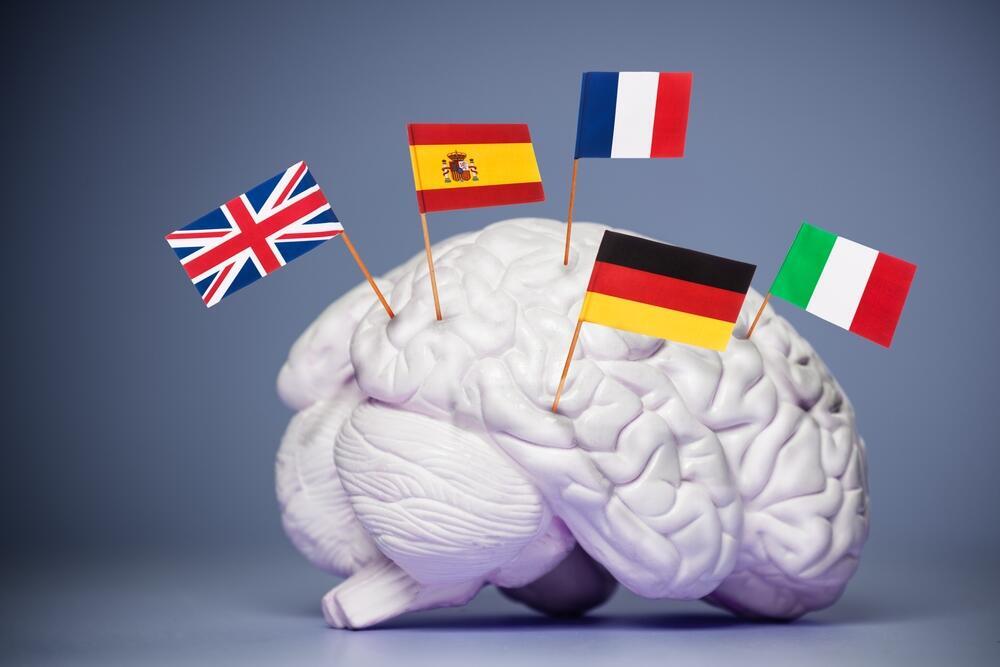
According to the researchers, the protective effect may stem from the ongoing cognitive load required to manage multiple languages, even when not used daily. This mental effort is believed to strengthen executive function, memory and concentration, gradually building cognitive resilience over time.
The study, published in Nature Aging, adds a significant layer to our understanding of brain aging and suggests that knowing additional languages could be a key factor in maintaining cognitive vitality later in life.
Dr. Ludmila Shopin, a neurology specialist with Clalit Health Services in the Dan–Petah Tikva region, emphasized the importance of an active lifestyle in slowing brain aging, especially amid rising life expectancy and increased prevalence of cognitive disorders such as dementia and Alzheimer’s.
“This study supports and reinforces existing knowledge about the critical role lifestyle plays in preserving cognitive health,” she said, “with an emphasis on prevention rather than late, more complex treatment.”
The growing need to slow cognitive decline
The global population is aging faster than ever before, as more people now live into old age—a result of advanced medical care, better treatments, improved living conditions and reduced mortality from once-deadly diseases. As a result, the proportion of older adults in the population continues to rise year after year. According to World Health Organization projections, by 2030, one in six people worldwide will be aged 60 or older.

(Photo: Shutterstock)
The implication is clear: an aging population means a higher incidence of age-related conditions such as cognitive decline and dementia. That growing trend is driving increased research into the factors that accelerate brain deterioration—and more importantly, what might delay it.
Studies suggest that aging is not dictated solely by genetics. Lifestyle plays a major role in the pace of aging, and the number of languages a person speaks has emerged as a factor with potential benefits for brain health. Earlier studies had already hinted that multilingualism may offer a form of protection against accelerated cognitive aging. New findings now reinforce that hypothesis.
Until now, most evidence linking multilingualism to brain aging came from studies on patients already experiencing cognitive decline—such as those with Alzheimer’s disease or mild cognitive impairment. That means existing knowledge has been limited, lacking long-term data from healthy individuals that could shed light on how language skills affect the aging process over a lifetime.
Monolinguals age cognitively faster
To fill that gap, researchers used a new computational tool called the Brain Age Gap (BAG) model to assess whether a person is aging faster or slower than their chronological age. The model was applied to a vast sample of 86,149 healthy adults across 27 European countries.

(Photo: Shutterstock)
The BAG tool incorporates a range of positive and negative factors—including cognitive abilities, education, physical activity, heart disease, sensory issues and even biological sex. Based on these variables, it calculates a biological brain age and compares it to chronological age. A positive BAG score indicates accelerated aging—a health profile "older" than one’s actual age—while a negative BAG score reflects slower aging, suggesting better-than-average cognitive health.
This study represents one of the most comprehensive efforts to date to understand how language use affects brain aging in healthy individuals.
The results showed that people who speak only one language experience faster cognitive aging compared to those who speak multiple languages. In a cross-sectional analysis, multilingual individuals were found to be half as likely to show signs of accelerated brain aging. In long-term follow-up, monolinguals were found to be 1.4 times more likely to develop such accelerated decline over time.
The protective effect was also linked to the number of languages spoken: the more languages a person knew, the stronger the benefit. Researchers note that even languages not used daily activate the brain by requiring attention, memory and executive function—building up cognitive resilience over the years.
A cognitive 'gym' for the brain
In addition to multilingualism, slowing brain aging requires careful management of key physical risk factors, says Dr. Shopin. “It’s critically important to maintain balanced health indicators—particularly by managing blood sugar and blood pressure levels, and controlling weight through obesity prevention and reduction,” she explains. “Regular physical activity is also essential for heart and vascular health, which form the brain’s vital support system.”
 Dr. Ludmila ShopinPhoto: Courtesy
According to Dr. Shopin, combining these health measures significantly reduces the risk of conditions such as strokes, heart attacks, Alzheimer’s disease and Parkinson’s, thereby supporting long-term cognitive health.
Beyond maintaining physical well-being, she also stresses the importance of what she calls “cognitive fitness”—a kind of mental workout routine that helps protect the brain against dementia.
“This includes learning foreign languages, where consistent practice strengthens neural networks,” she says. “It also includes integrated motor and cognitive activities such as dancing, playing music and singing, as well as lifelong learning through courses and workshops that bring enjoyment and fulfillment. These act as positive reinforcement, encouraging the brain to stay alert and adaptable over time.”
Her central message: to slow the brain’s aging process, avoid inactivity and passive television watching. “We need to continually seek out cognitive challenges and enjoyable activities, especially after age 50, in order to preserve cognitive function over time. This latest study provides further scientific validation for the importance of these well-known principles.”