


Millions of people work through the night and sleep during the hours when their biological clock is signaling the body to wake.
Research in recent years has linked shift work and chronic sleep disruption to increased risks of dementia, heart disease, metabolic disorders and some forms of cancer. At the same time, a new study suggests that the timing and intensity of light exposure during the day may also affect when people sleep and how deeply they rest.
Gallery

Working night shifts forces the body to operate when it is programmed to sleep
(Photo: Shutterstock)
Dr. Amit Green, a sleep psychologist at Assuta, said light is the main signal that sets the biological clock and regulates the sleep-wake cycle.
“In the modern world, we are exposed to too little natural light during the day, especially when we work in offices, from home or in enclosed spaces,” he said. “At the same time, during the evening and at night, we are exposed to excessive artificial light from lamps and screens. The biological clock is therefore disrupted in both directions.”
Light is detected by the eyes and transmitted as a signal to the body’s internal clock, which adjusts melatonin production accordingly.
“A dedicated mechanism in the eye detects the intensity and characteristics of light and sends that information to the biological clock,” Green said. “Based on those signals, melatonin production is either activated or stopped.”
Melatonin plays a role not only in regulating sleep and wakefulness, but also in processes associated with the immune system, cognitive function and digestion, he said.
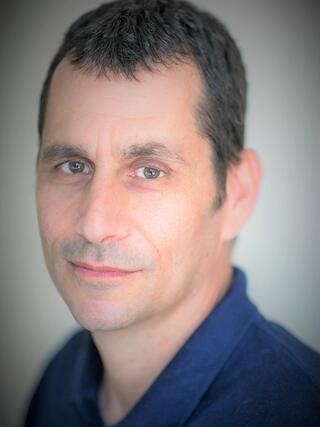 Dr. Amit GreenPhoto: Yossi Tzabker, Assuta Sleep Institute
 “Exposure to light at the wrong time can disrupt the timing mechanism of the biological clock.”
Night-shift workers are particularly vulnerable.
“Many systems now operate around the clock, so a significant proportion of employees are required to work at night,” Green said. “Exposure to light at night, being awake when the body is programmed to sleep and sleeping during the day disrupt the circadian system and may increase the risk of illness.”
‘The night is not dead time’
The possible effects of night work are not determined only by the number of hours a person sleeps. They may also involve disruption to vital processes that occur during sleep.
While people are asleep, the brain consolidates memories and processes emotions. The body also activates mechanisms that support immune function, recovery and tissue repair.
“The night is not dead time,” Green said. “The fact that we are not active does not mean the body is not active.”
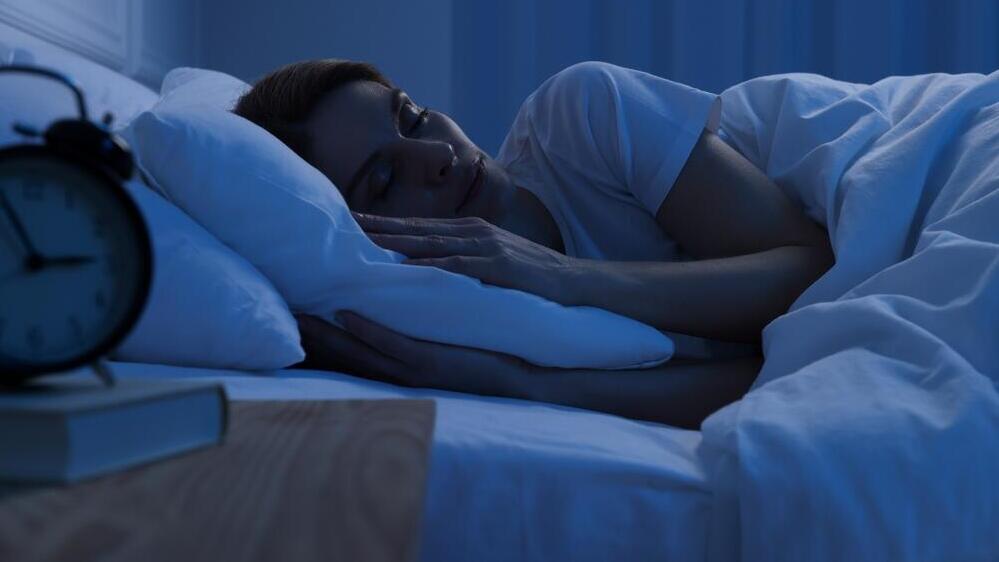
During sleep, essential mechanisms in the brain clear waste that accumulated throughout the day
(Photo: Shutterstock)
During deep sleep, the body releases growth hormone, which remains important in adulthood because of its role in physical recovery, tissue repair and muscle maintenance.
“At the same time, many processes essential to cognitive function are taking place in the brain,” he said.
One of the systems active during sleep is the glymphatic system, which helps clear waste accumulated in the brain during waking hours. That waste includes amyloid and tau, proteins found in elevated levels in the brains of people with Alzheimer’s disease.
Studies have found that even one sleepless night can measurably increase amyloid levels in the fluid surrounding the brain. That does not prove that sleep deprivation causes Alzheimer’s disease.
“When we do not sleep enough, or when the sleep is of poor quality, the clearance process does not function properly,” Green said. “This likely increases the risk of illnesses associated with Alzheimer’s and dementia because essential brain processes depend on sleep.”
A study reviewed by the BBC examined the relationship between the brain’s waste-clearance system and the risk of developing dementia.
Researchers analyzed brain scans from more than 40,000 people using data from the UK Biobank, which has collected medical information for more than a decade. All the participants were healthy when their scans were performed.
The researchers identified participants whose systems for clearing fluid and waste from the brain appeared to function poorly. Those with the most significant impairment were more likely to develop dementia years later.
However, the researchers emphasized that the findings suggest only a possible connection and remain a hypothesis. Other factors, including high blood pressure, smoking and diabetes, may also affect dementia risk.
Shift work linked to 36% higher dementia risk
A Swedish study conducted by the Karolinska Institute followed more than 13,000 shift workers, including night workers, for periods of up to 41 years.
Researchers found that working shifts during middle age was associated with a 36% higher risk of dementia. The risk increased among workers who remained in shift-based jobs for more years.
Here too, the finding represents a statistical association and does not prove that shift work causes dementia.
The possible health effects are not limited to the brain.
An analysis of 35 studies found that restricting sleep to about 4.5 hours a night for three nights or more significantly increased immune-system activity.
Heightened immune activation can also promote inflammation, and chronic inflammation is associated with the development of heart disease.
Disrupted sleep has also been linked to higher levels of cortisol, a hormone released as part of the body’s response to stress.
High cortisol levels may encourage insulin resistance and push the body toward a metabolic state associated with diabetes. Cortisol may also further disrupt sleep, creating a self-reinforcing cycle.
Night work and cancer risk
The World Health Organization’s International Agency for Research on Cancer has classified night-shift work as “probably carcinogenic to humans,” the same general risk category that includes red meat, according to the BBC.
The classification is based on evidence of possible associations with breast, prostate, colon and rectal cancers.
Possible explanations include disrupted melatonin production, limited daylight exposure and chronic low-grade inflammation linked to disturbed sleep.
The classification does not mean that night work inevitably causes cancer. It indicates that available evidence is strong enough to justify concern and further study.
Could split sleep help?
Alongside research into long-term health risks, scientists are also examining ways to reduce harm among people who must sleep during the day.
One option is biphasic, or split, sleep. Instead of trying to sleep continuously for many hours after a shift, workers divide their sleep into two separate periods over the course of the day.
“Researchers are always looking for ways to help people who work at night and struggle to sleep well in the morning after their shift,” Green said.
“One possibility is split sleep: sleeping for several hours after the shift, getting up for daily activities or to care for children, and then sleeping for several more hours before the next shift.”
Several studies reviewed by the BBC found that taking a nap during a shift was associated with reduced sleepiness and improved alertness.
Research involving health care workers suggested that a nap lasting between 20 and 50 minutes, either during or after a shift, may improve concentration and reduce the risk of drowsy driving on the way home.
The possibility that split sleep reflects a natural biological tendency was explored in an earlier experiment led by American psychiatrist Thomas Wehr.
Participants were exposed to 14 hours of darkness a day under conditions designed to simulate a winter night before the era of artificial lighting.
Within several weeks, without being instructed to do so, they naturally began sleeping in two separate periods.
Can weekend sleep make up the deficit?
Many people who sleep too little during the workweek try to recover on weekends.
Green said catch-up sleep is a common way to address accumulated sleepiness, though it is not a substitute for getting sufficient and regular sleep every night.
“Many people build up a deficit of one or two hours each night during the week and try to make it up over the weekend,” he said. “The greater the deficit, the more significant the recovery sleep may need to be.”
“In an ideal world, we would sleep every night for the number of hours we need. But the pressure of work, caring for children and daily life does not always make that possible. In such cases, catching up on sleep during the weekend is one way to deal with accumulated sleepiness.”
Daylight may improve sleep timing
While research on shift workers focuses on sleep occurring at times that conflict with the biological clock, another study examined how daytime light exposure is associated with sleep patterns at night.
The study, led by researchers at the University of Manchester, was published in the journal NPJ Biological Timing and Sleep.
It included 89 adults and collected more than 500 days of measurements.
Participants wore sensors that recorded their exposure to light and devices that monitored their sleep. They also completed daily sleep diaries.
Those exposed to stronger light during the day tended to fall asleep and wake earlier. More consistent daytime light exposure was also associated with healthier sleep timing and a longer period of deep sleep during the first part of the night.
However, the study identified only an association between light-exposure patterns and sleep characteristics. It does not prove that light caused the differences.
The published report also did not provide numerical data showing the size of the changes in sleep time, wake time or deep-sleep duration.
The study had other limitations. Light exposure was measured using wrist-worn sensors rather than at eye level, where light affects the biological clock.
Researchers also did not account for other variables that may influence sleep, including physical activity and meal timing. The findings therefore show correlation but cannot establish cause and effect.
Mood changes may appear first
Fatigue and sleepiness are the clearest signs of insufficient sleep, but Green said mood is among the first areas that may be affected in shift workers.
“Alzheimer’s is not a disease we usually see at age 30 or 40, but mood is highly sensitive to sleep deprivation and can be affected much earlier,” he said.
“If we become depressed, lack vitality or feel drained of energy, that is a sign that we need to stop and reassess the situation. The damage to quality of life can be significant.”
When such signs appear, he said, workers should seek professional advice and examine possible treatments.
“Melatonin or various medications may be used, but they must be tailored to the individual and taken under expert supervision,” Green said. “In some cases, it is also necessary to consider whether shift work is suitable for that person.”