

In collaboration with Rambam Health Care Campus
A patient's heartbeat, oxygen levels, breathing patterns and laboratory results may seem like routine medical information. But when collected over years, and across millions of patient records, these details can become something far more valuable: the foundation for artificial intelligence systems capable of predicting medical emergencies, improving treatment and potentially generating billions of dollars in economic value.
For hospitals, medical data has become one of their most significant scientific and financial assets. Yet the growing value of that information raises equally important questions: Who owns it? Who should benefit from it? And how can hospitals use it to develop lifesaving technology without compromising patient privacy?
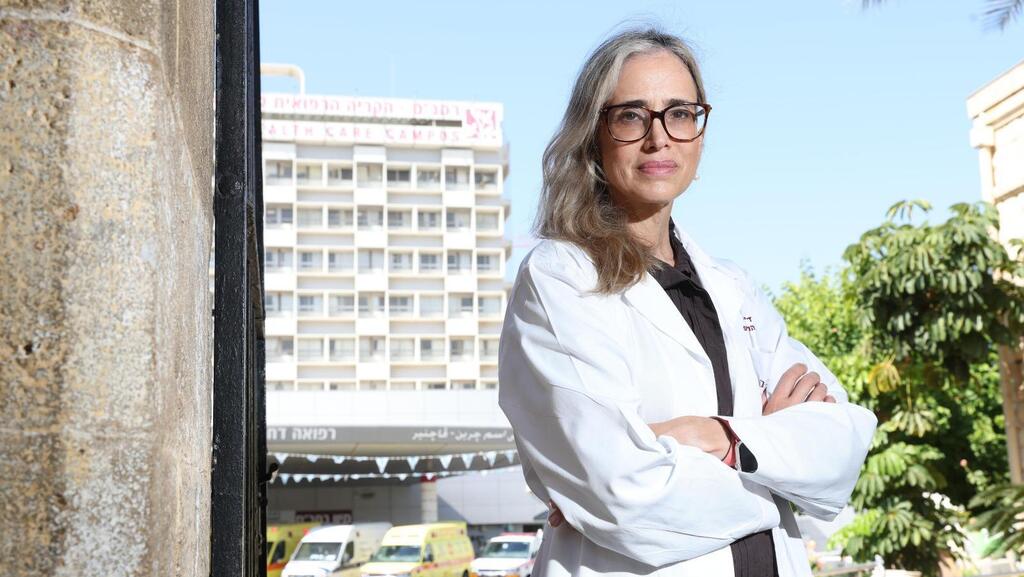
Dr. Michal Mekel, director general of Rambam Health Care Campus
(Photo: Elad Gershgoren)
Ahead of RAMBAM TOMORROW, the medical innovation conference organized by Rambam Health Care Campus and ynet, hospital executives and researchers explain how decades of digitized medical records are transforming hospitals into technology incubators, and why public trust may ultimately be more valuable than the data itself.
The hospital's most valuable asset may be its data
Prof. Danny Eytan, director of the Pediatric Intensive Care Unit at Rambam and a researcher at the Technion – Israel Institute of Technology, sees the potential of medical information every day.
"A patient in intensive care is monitored through dozens of channels, from respiratory monitoring to blood pressure," he explains. "Even healthy people at home generate information through smartwatches and wearable devices. AI tools can take this ocean of data and extract insights that can predict medical deterioration and save lives."
Israel, he says, has a distinctive advantage in the global competition to develop AI-based medical technologies.
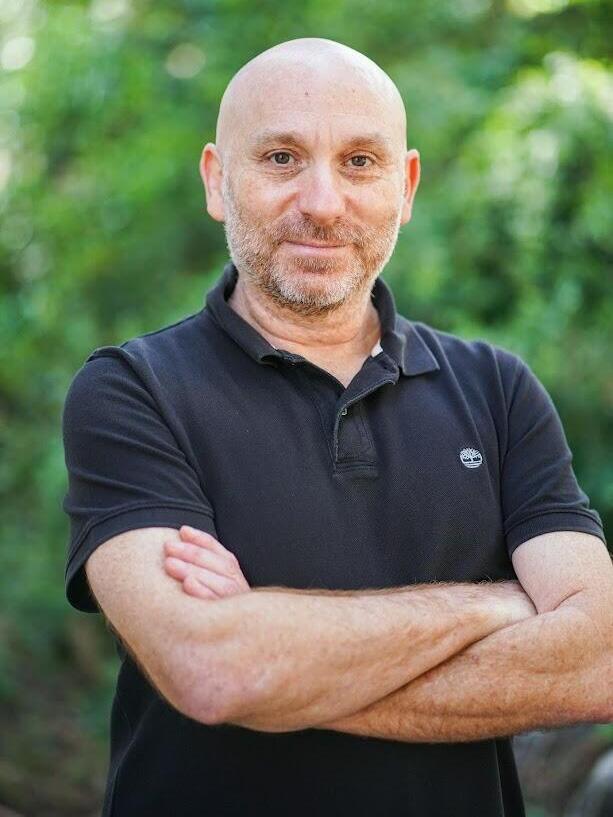 Prof. Danny Eytan, director of the Pediatric Intensive Care Unit at Rambam Health Care Campus
 "Israel is unique because of its public healthcare system and the fact that we were among the first countries in the world to introduce electronic medical records," Eytan says. "While doctors in the United States were still writing things down in notebooks, everything here was already electronic. In addition, the continuity of care between hospitals and health funds allows us to see the patient from every angle."
Decades of accumulated records, combined with Israel's interconnected healthcare system, give researchers access to detailed medical histories that can help them identify patterns otherwise difficult to detect.
Dr. Michal Mekel, director general of Rambam Health Care Campus, believes this is fundamentally changing the role of hospitals.
"The most valuable asset in a major hospital is no longer necessarily its MRI machine, surgical robot or new inpatient building, but the information generated during every medical encounter," she says.
"Laboratory results, imaging scans, diagnoses, treatments, medications and clinical developments accumulate over the years into a database of enormous value for research, drug development and artificial intelligence."
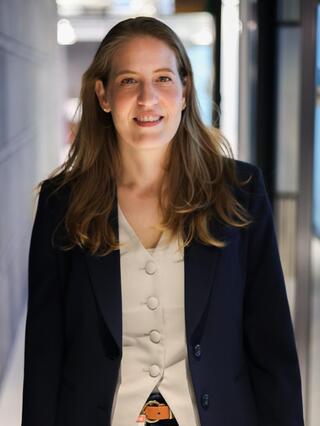 Hagar Trau, head of the Digital and Information Technologies Division at Rambam Health Care CampusPhoto: Rambam Health Care Campus
The economic possibilities, she explains, extend well beyond improving existing medical services.
"When we combine information, infrastructure and clinical expertise, we can shorten development processes, identify patient deterioration earlier, improve treatment decisions and even establish companies and technologies whose value could reach billions."
For Mekel, the implications are clear.
"The hospital of the coming decade is not just a medical institution. It is also a data laboratory, an innovation platform and a high-tech engine, where doctors, researchers, engineers and data scientists work together using the same raw material: medical information."
Eytan also emphasizes the financial significance of these records.
"Data has substantial monetary value," he says, citing what he describes as a transaction around 20 years ago in which IBM paid $5 billion for medical information concerning millions of patients enrolled with a major American health insurer.
According to the account he provides, such information has been used to develop algorithms for patient treatment and improve insurance operations.
But possessing vast quantities of information does not automatically produce useful medical technology.
"To develop practical tools, you also need the context in which the information was generated and clinical experts who can give it meaning," Eytan explains.
That principle is central to TERA, a joint initiative established by Rambam and the Technion to advance medical artificial intelligence.
The collaboration brings together clinicians, researchers, engineers and data scientists to translate medical research into practical tools for patient care, including digital twins designed to model the condition and potential treatment of complex patients.
One of Rambam's additional advantages, Eytan says, is its proximity to leading technology companies in Haifa and northern Israel, creating opportunities for cooperation between medicine, academia and industry.
Protecting medical data like classified information
The more deeply artificial intelligence becomes integrated into clinical care, the more complicated the questions surrounding patient safety, privacy and ethics become.
Hagar Trau, a retired IDF colonel who heads Rambam's Digital and Information Technologies Division, is responsible for protecting the hospital's sensitive medical information. She entered the civilian healthcare sector after serving in the IDF's communications and information technology establishment.
"As in the security world, we treat medical information as confidential and classified in every respect," she says. "The use of this information takes place in approved and controlled environments operated by the hospital and the Health Ministry."
According to Trau, protecting privacy requires different safeguards depending on how the information will be used.
"In broad research projects, we work with information that contains no identifying details," she explains. "When demographic data such as age and weight are needed, the models operate within the hospital's internal network, or the information receives specific approval from a designated committee. And in interventional research, patient consent is required."
To address the regulatory challenges posed by rapidly developing AI technology, Rambam has established a dedicated oversight committee.
"We created a special AI committee that includes hospital management and senior staff, clinicians, ethics experts, quality and safety professionals, legal experts, privacy protection specialists and digital technology professionals," Trau says.
"The committee examines medical validation, safety, confidentiality and ethics through a careful, multistage process."
The objective is to assess new tools before they become part of clinical practice, while allowing promising innovations to advance.
Who owns the information?
Beyond the technological challenges lies a fundamental ethical question: Does medical information belong to the patient, the institution that collected it or the companies developing products from it?
For Eytan, the starting point is clear.
"First and foremost, the information belongs to the patient, who can request their medical record at any time," he says.
At the same time, hospitals invest considerable resources in collecting, organizing, refining and labeling the information that eventually becomes useful for research.
"The hospital has invested in collecting, improving and labeling the data," he explains. "I see the hospital as a trustee of that information. Its use must be approached with the utmost care."
But Eytan argues that protecting privacy cannot mean automatically rejecting every opportunity to use medical information.
He offers an example from his own field.
"If I take all the children who were treated in intensive care over the past 20 years and use their data to develop a tool that identifies children whose condition is about to deteriorate, deciding not to use that information is not a neutral decision. I am denying the next child treatment."
The challenge, he believes, is finding an appropriate balance between protecting personal information and using it to prevent serious medical harm.
Eytan also points to a contradiction in how society approaches privacy.
"Every day, all of us are willing to share enormous amounts of information with commercial companies without thinking twice," he says. "Highly sensitive, identifiable information from email, chats and smartwatches. And we receive very little in return."
Medical information, he argues, deserves strong protection, but privacy safeguards should be weighed against the potential benefits of using it responsibly.
The risk to patients must remain small and proportionate to the expected benefit, he says, with the entire process conducted transparently.
Trau believes the demand for artificial intelligence tools in healthcare will only continue to grow.
"Doctors and medical teams are hungry for AI tools, for clinical care, research and everyday productivity," she says. "Our role is to create enabling regulation that does not block innovation."
The most valuable asset is trust
For Rambam's leadership, the central challenge is not merely developing advanced algorithms or establishing partnerships with technology companies. It is ensuring that patients continue to trust the healthcare system with their most sensitive information.
"There is a trust-based contract between us and our patients, and that is our most valuable asset," Eytan says.
He calls for nationally agreed standards governing the use and sharing of medical information.
"At present, the country does not have an agreed national mechanism for this issue," he says. "There are laws and regulations, but we still have work to do toward a unified, nationally agreed system."
Mekel agrees that medical information cannot be treated like an ordinary commercial asset.
"This information does not belong to the hospital in the same way that a medical device belongs to it," she explains. "It was entrusted to doctors and administrators as part of a relationship built on trust with patients, and therefore cannot be treated as a commodity."
The hospital's economic ambitions, she argues, must remain inseparable from its responsibility to protect that relationship.
"The economic value of medical information can only be realized if we build a foundation of trust around it that is at least as strong as the technological infrastructure," Mekel says.
"If we do this correctly, Israeli hospitals can become not only places of treatment, but engines of innovation and growth. If we do it incorrectly, the price will not merely be the loss of economic value, but damage to public trust, which is the most valuable currency in the healthcare system."
These questions will be central to RAMBAM TOMORROW, the medical innovation conference organized by Rambam Health Care Campus and ynet, taking place Wednesday, October 14, at Rambam in Haifa.
The event will bring together senior figures from Israel's healthcare system, high-tech industry and academic institutions to explore the technologies shaping the future of medicine.
The conference will be broadcast on ynet from 10 a.m. to 1:15 p.m.