

A baby boy born in Ohio has set a new record for the longest-known frozen embryo to result in a successful birth. Thaddeus Daniel Pierce was born on July 26, developing from an embryo that had been cryopreserved for 30 and a half years.
“We had a rough birth, but we are both doing well now,” said Lindsey Pierce, his mother. “He is so chill. We are in awe that we have this precious baby!”
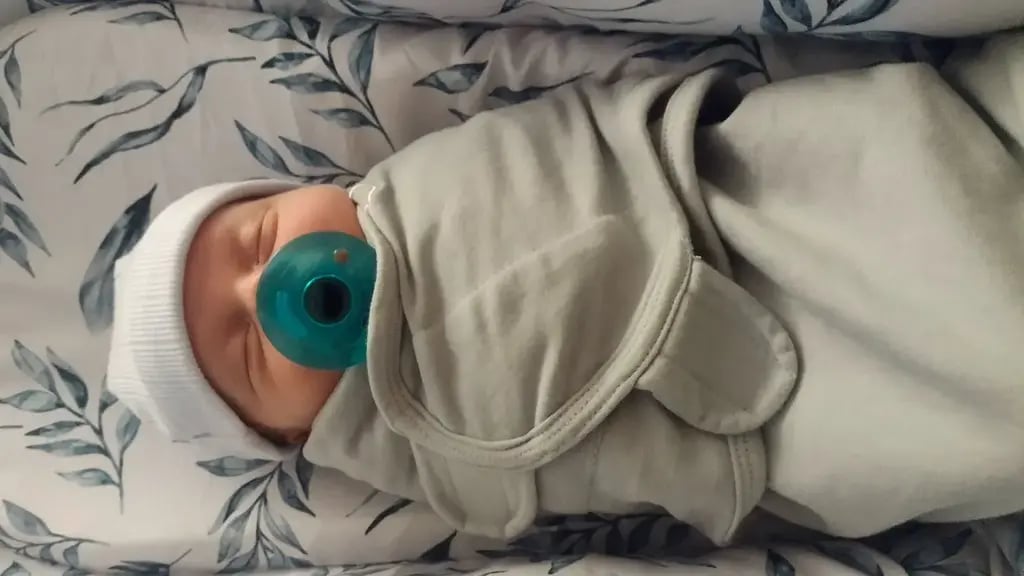
Lindsey and her husband, Tim Pierce, of London, Ohio, adopted the embryo through a Christian adoption agency specializing in embryo adoption. The embryo was created in 1994 and donated by Linda Archerd, now 62, who said, “It’s hard to even believe.”
Archerd underwent IVF in 1994 after six years of fertility struggles. She and her then-husband created four embryos. One was implanted and resulted in a healthy baby girl, now a 30-year-old woman with a daughter of her own. The other three were cryopreserved and remained in storage.
“I always wanted another baby desperately,” Archerd said. She divorced her husband but retained custody of the embryos and kept them frozen, paying around $1,000 per year in storage fees.
As she reached menopause, Archerd said she couldn't bring herself to discard the embryos or donate them for research. She also didn’t want an anonymous donation. “It’s my DNA; it came from me … and [it’s] my daughter’s sibling,” she said.
She eventually discovered embryo “adoption,” a process overseen by mostly religious agencies that treat embryos as potential children. Archerd connected with the Snowflakes program, operated by Nightlight Christian Adoptions, which agreed to take her embryos on the condition that she could provide decades-old medical and lab records.
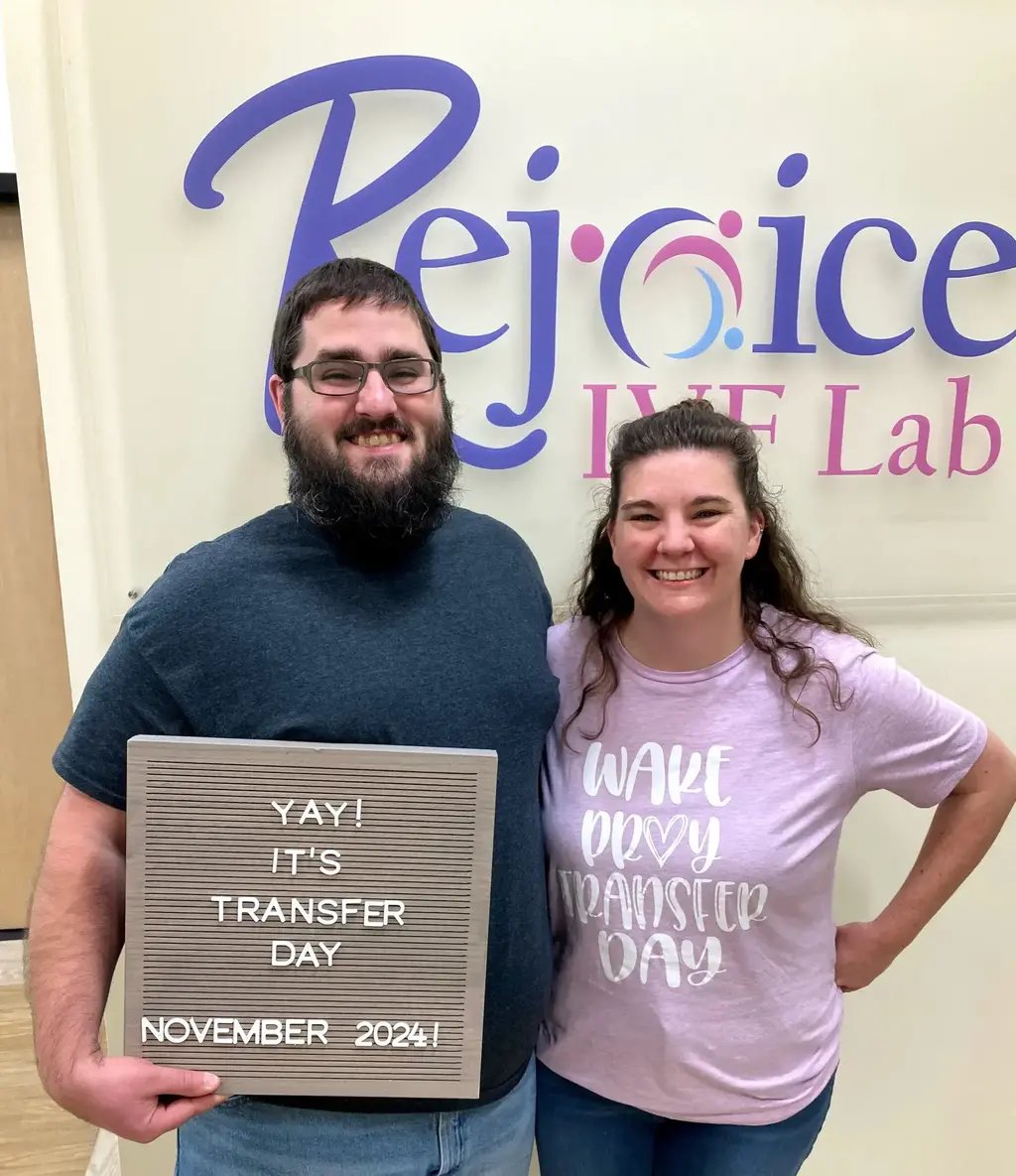
Tim and Lindsey Pierce
(Photo: Lindsey Pierce)
“I still remembered [the doctor’s] phone number by heart,” said Archerd. Her fertility specialist, now in his 70s, retrieved handwritten records from his basement, allowing the embryos to be added to Snowflakes' matching pool in 2022.
Beth Button, Snowflakes’ executive director, said most fertility clinics wouldn’t accept such old embryos. “I would say that over 90% of clinics in the US would not have accepted these embryos,” she said. Archerds were placed in the agency’s “Open Hearts” program for hard-to-place embryos.
That’s where the Pierces entered the picture. Lindsey and Tim, ages 35 and 34, had spent seven years trying to have a child and were open to adopting any embryo. “We checkmarked anything and everything,” Tim said. “We thought it was wild,” added Lindsey. “We didn’t know they froze embryos that long ago.”
The couple worked with Rejoice Fertility in Knoxville, Tennessee, run by Dr. John Gordon. His clinic aims to reduce the number of embryos in long-term storage and accepts embryos of any age.
Get the Ynetnews app on your smartphone: Google Play: https://bit.ly/4eJ37pE | Apple App Store: https://bit.ly/3ZL7iNv
“We have certain guiding principles, and they’re coming from our faith,” said Gordon. “Every embryo deserves a chance at life, and the only embryo that cannot result in a healthy baby is the embryo not allowed to be transferred into a patient.”
Rejoice’s lab supervisor, Sarah Atkinson, said thawing old embryos can be risky and requires expertise. “You don’t want to kill someone’s embryos if you don’t know what you’re doing,” she said. The record-breaking embryos were slow-frozen and stored in a plastic vial—a more complex process than modern vitrification.
Despite the challenge, all three embryos survived thawing. The Pierces traveled five times from Ohio to Tennessee for the process. One embryo stopped growing, but two were transferred to Lindsey’s uterus on November 14. One developed into a healthy fetus.
Archerd, who sees the child as her daughter’s sibling, was stunned by baby Thaddeus’s resemblance to her daughter as an infant. “There is no doubt that they are siblings,” she said. “He is perfect!”
Though they haven’t met in person yet, Archerd hopes to one day. “It would be a dream come true,” she said.
“We didn’t go into it thinking we would break any records,” said Lindsey. “We just wanted to have a baby.”