

At the World Robot Conference, Chinese tech firm Kaiwa Technology presented a concept that ignited public uproar: a humanoid robot embedded with an artificial womb, capable of carrying a fetus through a 10-month pregnancy and delivering a human baby.
Priced at about $14,000, the robot is being marketed as a low-cost alternative to human surrogacy—potentially enabling millions of couples worldwide to realize their dream of parenthood. The announcement has generated both hope and deep unease.
Company founder and CEO, Dr. Zhang Qifeng, said the robot simulates the full process of human pregnancy—from fertilization to birth. He claimed the technology itself is mature, and the remaining step is to integrate it into a robotic body. Zhang noted that China, once plagued by overpopulation and notoriously known for its "One Child per Family" rule, now faces the opposite issue: around 18% of couples in the country suffer from low fertility rates.
Ethical battles and scientific skepticism
The unveiling triggered intense debate online. Enthusiasts hailed it as a breakthrough for solving rising infertility, while critics voiced alarm at the ethical, social and legal consequences. Detractors questioned the emotional bond between mother and fetus and warned of a “production line” of cheap babies. Medical experts pointed out that science has not yet replicated the full complexity of natural pregnancy—such as hormonal and immune processes, or the impact of the maternal-fetal relationship.
Zhang, who launched the company to tackle China’s declining birth rate, said he is already in talks with Guangdong officials to draft regulations, and has submitted policy proposals to local authorities.

Despite the bold claims, most information on Kaiwa Technology originates from Chinese and Korean outlets, with some early reports already deleted. Experts doubt near-term feasibility, noting that Chinese law currently bans growing embryos in artificial wombs beyond two weeks.
Other breakthroughs around the world
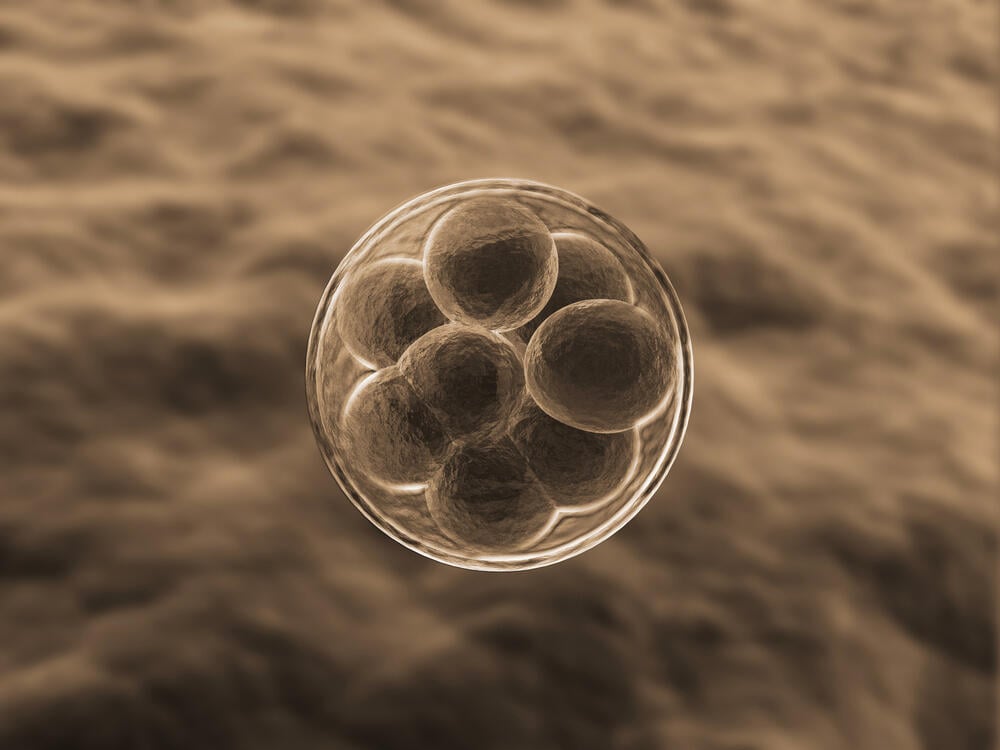
Parallel research elsewhere is advancing in smaller but significant ways. Scientists at the Institute for Bioengineering of Catalonia (IBEC) in Spain recently documented, in real time, how a human embryo implants itself into womb-like tissue. Published in Nature Communications, the study revealed that embryos actively “dig” and “pull” into the tissue, with stronger embryos exerting greater force—an indicator of pregnancy success.
This finding sheds light on one of fertility’s weak points: about 60% of pregnancies fail at implantation. A deeper understanding may improve fertility treatments, especially IVF, where even high-quality embryos implant successfully less than 80% of the time.
Not ready for surrogate robots
For now, full artificial womb technology is far from enabling complete pregnancies. Current experiments have only supported embryos for short periods—such as studies on lamb fetuses. The idea raises difficult questions about maternal bonds, human trafficking, and even the definition of family.
(Photo: shutterstock)
In Israel, robotic surrogacy is illegal. The Surrogacy Law requires agreements between intended parents and a human surrogate mother. The Genetic Intervention Prohibition Law also bans cloning and permanent genetic modifications of reproductive cells. Embryo growth in labs is limited to two weeks. Any legal change would demand extensive public, medical, ethical, and legal debate.
Although Israel leads the world in IVF treatments per capita, and local startups like AiVF are using AI to optimize fertility processes, a fully functional artificial womb remains science fiction—at least for the foreseeable future.