


Today, the gym is an inseparable part of daily life for many. It is a place where we work hard, push ourselves, and either start or end the day with a sense of accomplishment. But within this healthy routine, small mistakes often hide, mistakes that can undermine results. From imprecise technique to unnecessary overloads, these seemingly minor errors can make workouts less effective and sometimes even cause more harm than good. Are you making them without realizing it? Probably. Here are 10 of the most common ones. Read and save.
Training without a structured plan
Do you work out without a clear plan? According to Pavel Eynis, a fitness trainer and owner of the Power Up studio in Netanya, this is one of the most basic mistakes people make at the gym. “People come in, try every machine, do a mishmash of exercises and do not remember their working weights,” he explains. “When there is no consistency, it becomes very difficult to follow a training program. A trainee cannot know whether they have improved in a certain exercise, and it becomes hard to see results.”
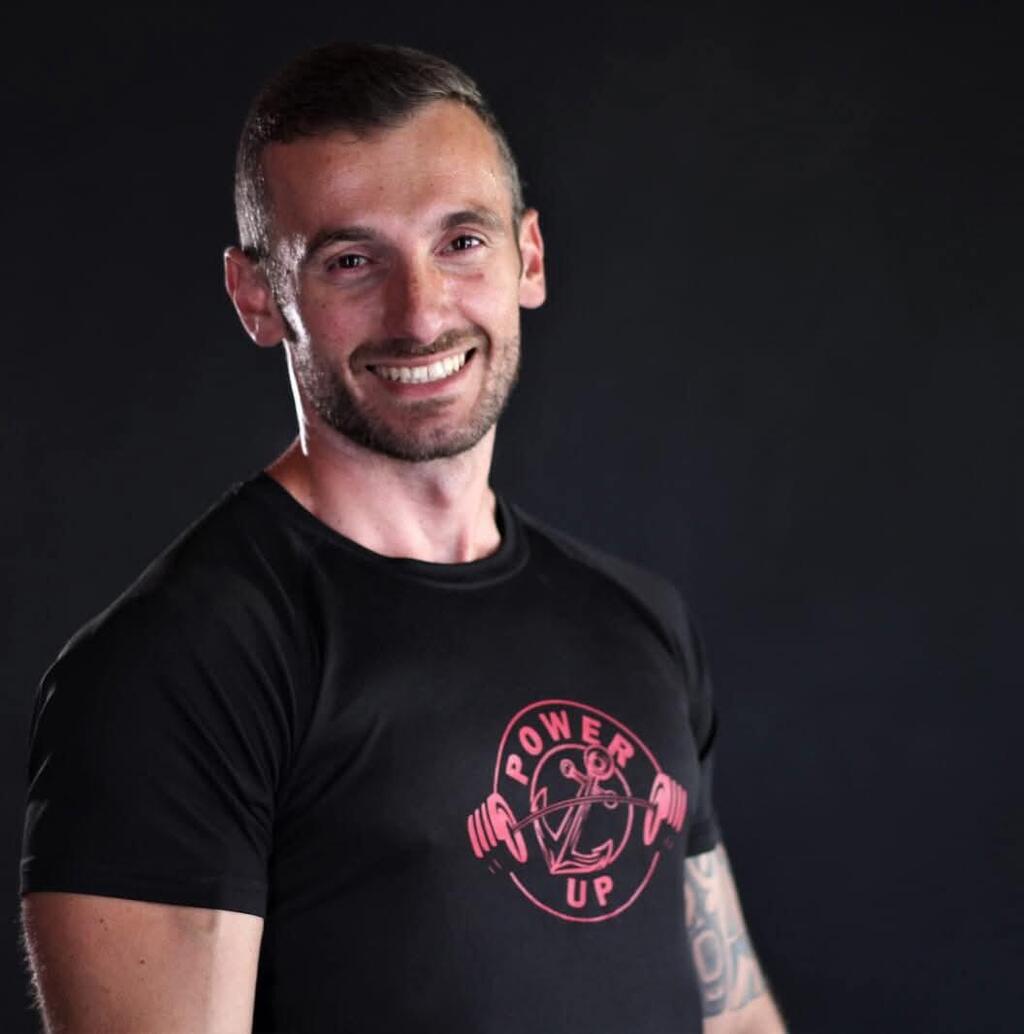
How can this be prevented? Simply work in an organized way. “It is important to work with blocks, a specific set of exercises tailored to you,” Aynis says. “Then you can stick with that block for one to two months, depending on the predefined time frame. Working with the same set of exercises makes it easier to track weight increases and, at the end of the training cycle, assess progress.”
Ego lifting is a real thing
Ego lifting, training driven by ego rather than ability, is another common gym mistake. “Many trainees lift weights that are too heavy and do not allow them to perform an exercise with proper technique. As a result, they sabotage their own progress,” explains Yossi Zeevi, a fitness trainer and owner of YoSport.

Lift with your arms, not with your ego
(Photo: Shutterstock)
“For example, an average trainee approaches a squat and instead of lifting a weight that allows them to perform, say, 12 repetitions with good technique, they load excessive weight that lets them do only eight repetitions with poor form. They do not squat as deep, their positioning is less optimal, and as a result the exercise is less effective. Good technique allows for long-term consistency, while poor technique can expose trainees to health problems.”
According to Zeevi, the solution is simple. “In general, we tell people to leave their ego outside the gym and work with a weight that allows them to connect with the exercise in the best possible way.”
Failing to apply progressive overload
One of the most important principles of gym training, and physical training in general, is gradual progressive overload. Yet many trainees forget to apply it. “People can get stuck on the same weights for months,” Aynis notes. “For example, someone works with 100 kilograms and does not notice they have been using the same weight for several months. It is comfortable for them. In these cases, the body does not receive a new stimulus or a strong enough impact on the muscles, and trainees fail to challenge themselves. You need progressive overload over time, adding weight or stimulus to encourage muscle growth.”
How do you know when it is time to increase weights? “It is important to set a small target,” Aynis explains, describing an effective method. “There is something called a ‘rate of perceived exertion’ scale, where one indicates a very easy effort and 10 indicates unbearable difficulty. A general rule of thumb is this: rate your effort at the end of each workout, and once you reach seven, increase the weight.”
Wearing inappropriate clothing
That new tank top may highlight everything just right, but is it comfortable and suitable for training? Not necessarily. This brings us to another mistake, failing to wear appropriate gear. “For example, some people have very comfortable running shoes, but they come to squat workouts wearing shoes that do not provide proper stability, or shoes with very high soles that prevent proper grounding during squats,” Zeevi says.

'Come dressed in appropriate training gear,' Yossi Zeevi
(Photo: Private album)
Another example is clothing that restricts range of motion. “There are many workout clothes on the market today, but a lot of them have cuts that do not allow freedom of movement. Sometimes I see trainees working out in board shorts. They try to squat and the shorts get stuck and uncomfortable. The same goes for oversized shirts that do not allow proper sweat evaporation.”
The takeaway is simple: choose clothing that allows you to train properly.
Wasting time on distractions
Since smartphones entered our lives, they have become the official distraction in gyms. Almost no trainee goes without stopping mid-workout and getting pulled into scrolling through apps. Yes, this too disrupts your training, and no, it is not just the phone’s fault.

Ease up on the phone
(Photo: Shutterstock)
“Many people linger at the gym. They arrive and do not work with a timer, stay on their phones, take long rest breaks, chat with people they know, lose focus, and stretch the workout to an hour and a half or two hours,” Aynis explains.
“To fix this, it is important to work with a timer, set fixed rest periods between sets of 90 seconds to three minutes, in order to make the workout more efficient and avoid wasting time.”
One-dimensional training
Sticking to the same type of training for a long period? That is another mistake in your routine. “It is important to remember that the goal is hypertrophy, muscle growth, but many trainees chase the heaviest weights and miss an entire world of training,” Zeevi says. “For example, working in repetition ranges that allow heavier lifting, or exposing the body to different stimuli than what is commonly thought to be beneficial. Many people say, ‘I always work in eight repetitions because that is what I was taught,’ but this prevents exposure to a wider training range and metabolic stress.”

Variety is important
(Photo: Shutterstock)
Another example Zeevi mentions is sticking to one type of exercise. “Some people only work with free weights. For them, anything that is not free weights is inferior. They do not try machines, believing machine work is a downgrade. But there are excellent machines that allow for constant tension throughout the movement.”
What should you do? Vary your training. “If you usually work only with free weights, try machines. If you usually work with machines, ask a trainer at the gym to teach you how to use free weights,” Zeevi says.
Copying social media influencers
Just because the influencer on your phone screen has a lean, muscular body and performs a certain exercise does not mean that exercise will deliver the results you want. In other words, adopting workouts from social media personalities is another common mistake. “Many people see a pumped-up guy who looks like what they want to look like performing a certain exercise and copy it without understanding or background,” Aynis explains. “In reality, most influencers do not truly present what they do in training. That social media celebrity is not necessarily a trainer or an authority in fitness.”

Do not copy anyone
(Photo: Shutterstock)
He gives an example. “An influencer who looks great on Instagram with a lifted, firm backside demonstrates an exercise using resistance bands. To build muscle, you need heavy weights. The band can mislead people into thinking it is the only thing that gave her those glutes. The solution is to follow a personal, specific training program and not chase everything you see online. Or, as I like to put it, train smart.”
Not allowing time for rest and recovery
Muscle grows during rest, and to get that rest, you need to allow time for recovery. Yet many trainees work the same muscle groups day after day, preventing the body from recovering. “Many people do not allow themselves to recover between workouts,” Zeevi says. “I regularly encounter people who want to train every day. For example, someone does a full-body workout on Tuesday and wants to repeat it on Wednesday.”

Let your muscles rest. They need it
(Photo: Shutterstock)
“It is important to understand that when we train, we create a stimulus. During the rest that follows, we allow the body to recover, compensate, and adapt, so that the next workout we arrive stronger. People who do not allow this time expose themselves to a phenomenon called overtraining.”
How can you avoid it? “It is important to allow at least one day of rest between workouts,” Zeevi emphasizes. “If you train a muscle on Tuesday, you should train it again only on Thursday.”
Skipping warm-ups
Warm-ups are an integral part of any workout, so why do so many people skip them?
“Many people start their workout without a proper warm-up or do not perform a warm-up that matches the type of training they are doing,” Aynis says. “This does not mean just jumping around to get the blood flowing. It is important to perform a specific warm-up before each exercise.” This can be done by dedicating the first set of each exercise to warming up. “Use a lighter weight and repeated movements to lubricate and warm the joint,” he says.
Setting unrealistic goals
Setting unrealistic goals is another common mistake many trainees fall into. “Suddenly someone has a wedding or an event and they go all in,” Aynis describes. “Instead of working with a structured program and a reasonable number of weekly workouts, they train every day. It takes time to build a routine. It is not realistic to jump from zero to six or seven workouts a week.”

Be realistic
(Photo: Shutterstock)
What does this lead to? “In the best case, motivation quickly runs out. In the worst case, the person gets injured.”
The solution, according to Aynis, is choosing a realistic number of workouts that can be maintained over time. “Three workouts a week are enough for most people,” he says.