


Do you avoid sunlight in the morning? You may be increasing your risk of early death. Do you drink a glass of red wine because you were taught it is good for your heart? That is nonsense, and it may be time to stop. Do you shower with a loofah? It can irritate the skin and is largely unnecessary.
We asked 10 experts from different fields to name the most common habit they recommend we all get rid of. These are their answers.
1. You do not get natural light in the morning
Most of us wake up, turn on artificial light, get into the car and arrive at the office without even five minutes of direct sunlight. It may seem harmless, but biologically, it is a particularly damaging habit. Morning light is the body’s central signal for synchronizing the biological clock. It helps determine when we release melatonin, the sleep hormone, at night; when we feel alert; and how we regulate blood sugar, stress and hunger throughout the day.
Gallery

Morning light is the body’s central signal for synchronizing the biological clock
(Photo: Shutterstock)
A 2024 study that followed about 89,000 participants found that people exposed to more light during the day had a significantly lower risk of death, including up to a 34% lower risk of all-cause mortality among those exposed to the most daylight, compared with those living in the darkest environments. By contrast, exposure to light at night was linked to up to a 34% increase in mortality and a higher risk of heart disease and diabetes.
The problem is that typical office lighting provides only about 300 to 500 lux, while daylight, even on a cloudy day, ranges from 10,000 to 25,000 lux. In other words, our bodies simply do not receive the biological light they were built to get.
Expert recommendation: Get 10 to 20 minutes of natural outdoor light during the first hour after waking, even on cloudy days, preferably without sunglasses. Take a short walk to get coffee, eat breakfast on the balcony or simply stand outside with your phone.
Dr. Nitzan Anu, director of longevity at Maccabi Healthcare Services
2. You clean your ears with cotton swabs
Cleaning the ears with cotton swabs is one of the most common daily habits, and also one of the most harmful. Contrary to popular belief, earwax, or cerumen, is not dirt. It is a natural substance that protects the skin of the ear canal from infections and irritation, and also helps the ear clean itself naturally.
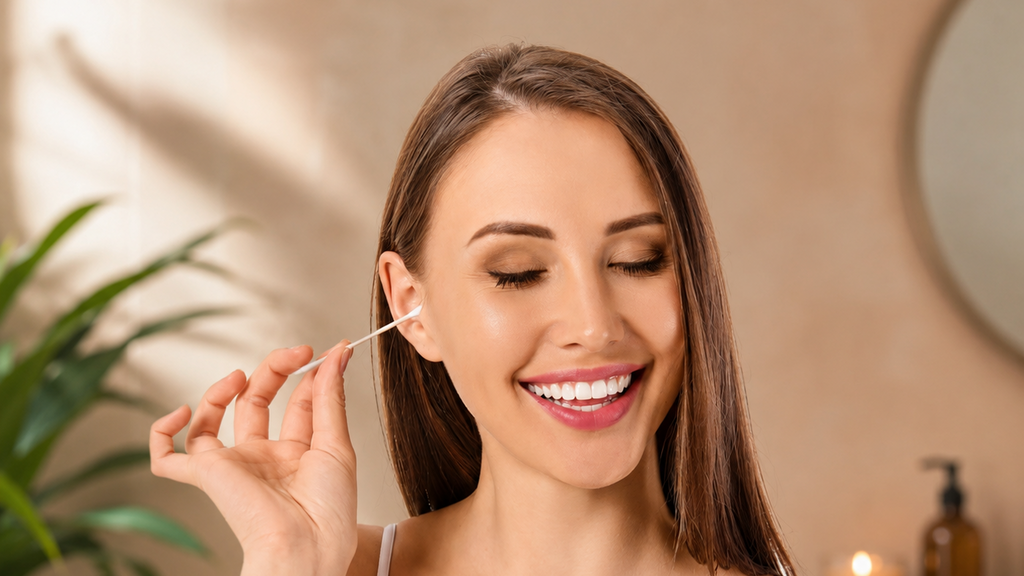
You clean your ears with cotton swabs
(Photo: Shutterstock)
In most cases, the ear knows how to clean itself, so there is no need to dig inside it. Inserting a swab into the ear not only fails to remove the wax, but usually pushes it deeper toward the eardrum. This can create an earwax blockage that causes hearing loss, a feeling of fullness, pain and sometimes infections.
Thousands of people go to emergency rooms each year after injuries caused by attempts to clean their ears on their own. Studies show that mechanical injuries inside the ear canal are among the common causes of acute external ear infections. In more severe cases, one careless movement can cause a perforated eardrum or even damage to the small hearing bones, injuries that may require surgery.
Expert recommendation: Avoid inserting any object into the ear canal, including cotton swabs, pins or other home remedies. Gently clean only the outer ear with a towel or tissue after showering.
Dr. Noga Lipschitz Tayer, senior specialist in ear and lateral skull-base surgery in the ENT, head and neck surgery department at Beilinson Hospital, part of Clalit Health Services
3. You start the day with your phone in bed
One daily habit many of us perform almost without noticing is reaching for the phone the moment we wake up. Before we get out of bed, drink water, stretch or understand how we feel, we are already inside messages, news, emails, social media and tasks.
(Photo: Shutterstock)
It may seem like a few innocent minutes of slow waking, but in practice, we are bringing the outside world into bed before we have even met ourselves. The morning begins not from choice, but from reaction: to what someone wrote us, to what happened in the world, to what is waiting for us or to what it seems everyone else already has and we do not.
Psychologically and physically, starting the day this way can quickly push the body into a state of over-arousal. Scrolling provides a rapid sequence of stimuli and small rewards, activating the brain’s reward and dopamine systems and training us to begin the day with a high stimulation threshold. At the same time, stressful messages, news or a flood of tasks can increase alertness and affect the stress system, including cortisol levels.
Put simply: the body is still in bed, but the brain is already overloaded.
Expert recommendation: Create a small transition before letting the world in. Get up, breathe, drink something and only then check what is waiting outside.
Yarden Gabay, clinical psychologist
4. You save all your exercise for the weekend
The “weekend warrior” pattern, in which all physical activity is concentrated on the weekend, is a fascinating medical paradox. On the one hand, recent studies show that this concentrated effort provides major health benefits similar to those gained by people who exercise consistently throughout the week, including up to a 30% reduction in overall mortality and a 40% reduction in death from heart disease.

(Photo: Shutterstock)
On the other hand, combining relative inactivity during the week with a burst of energetic activity on Saturday creates unusual stress on tissues that have not adapted. The result is overuse injuries, with nearly 30% involving knees and ankles harmed by the sudden strain.
The good news is that it is possible to protect the heart without damaging the skeleton through smart risk management. Studies show that using appropriate protective equipment, such as ankle supports during intense activity, reduces the risk of sprains by 51%.
Expert recommendation: Adopt the principle of gradual progression and add exercises that improve muscle and joint control. Do not let the weekend become the time you injure yourself. Turn it into the time you build your health wisely.
Dr. Elad Spitzer, orthopedic specialist in prevention and treatment of sports injuries at Meuhedet’s Jerusalem district and MedES clinic
5. You take unnecessary supplements
Taking dietary supplements without a medical need, blood tests or personal adjustment may be ineffective and sometimes even harmful. People tend to treat vitamins as wellness products, but in reality they are active substances with physiological effects that can also create drug interactions.

(Photo: Shutterstock)
Large-scale studies show that in healthy populations, routine use of multivitamins does not reduce illness or prolong life. Fat-soluble vitamins such as A, D, E and K accumulate in the body, so excessive intake over time can cause toxicity. Excess supplements do not simply “leave through the urine,” as many believe. Some supplements can affect the liver, kidneys, blood clotting and nervous system.
Even supplements sold without a prescription may affect regular medication, which is why it is important to inform a doctor or pharmacist about any supplement taken regularly.
Expert recommendation: Take supplements according to medical need, risk factors or a proven deficiency, not according to social media trends.
Patti Zohar, director of pharmacy services for Clalit Health Services in the Central District
6. You smoke
The best-known risk of smoking is lung cancer, but smoking also increases the risk of additional cancers, including cancers of the oral cavity, pharynx, larynx, esophagus, bladder, kidney, pancreas and cervix.
Globally, lung cancer is the leading cause of cancer death, with about 2.5 million new cases and about 1.8 million deaths in 2022. Most preventable lung cancer cases are attributed to tobacco smoking.

The best-known risk of smoking is lung cancer, but smoking also increases the risk of additional cancers
(Photo: Shutterstock)
According to the U.S. Centers for Disease Control and Prevention, smoking is linked to about 80% to 90% of lung cancer deaths in the United States. In addition, smoking increases the risk of heart attack, stroke and vascular disease.
This year, a screening test for smokers was included for the first time in Israel’s health basket, allowing eligible patients to undergo low-dose CT screening. Early detection saves lives.
Expert recommendation: Avoid smoking completely.
Prof. Elizabeth Dudnik, oncology specialist and head of thoracic tumors at Assuta Medical Centers
7. You drink only when you are thirsty
Maintaining proper fluid balance throughout the day is very important for daily function. Even so, a significant share of the population does not drink enough and remains in a constant state of dehydration. According to surveys conducted by various water companies, although Israel is a hot country with a long summer, an appropriate drinking culture has not taken root.

Maintaining proper fluid balance throughout the day is very important for daily function
(Photo: Shutterstock)
It is important to remember that thirst is not a reliable enough sign that it is time to drink. Rather, it signals that the body is already in a state of partial dehydration.
Expert recommendation: Make sure to drink throughout the day, mainly water. Drinking enough will affect bodily function, vitality, mental and cognitive ability and, of course, physical performance.
Rakefet Arieli, clinical and sports dietitian, dietitian for Maccabi Tel Aviv’s soccer and basketball clubs
8. You drink wine because ‘it is good for the heart’
For decades, the idea took hold that a glass of red wine a day was a kind of natural health insurance for the heart, mainly because of antioxidants. But in recent years, large-scale studies have presented a more sober and accurate picture: the link between moderate alcohol consumption and heart protection is far weaker than previously believed, and it is now clear that the possible benefits do not outweigh the health risks.

The link between moderate alcohol consumption and heart protection is far weaker than previously believed
(Photo: Shutterstock)
Alcohol is toxic to the body. Even in quantities once considered “safe” or “moderate,” it can raise blood pressure, increase the risk of heart rhythm disorders and even damage the heart muscle itself.
More and more studies show that there is effectively no alcohol consumption that can be defined as healthy, especially when it comes to daily drinking over many years.
Antioxidants can be obtained in a much safer, more effective and healthier way through a balanced diet based on dark grapes, berries and a Mediterranean-style diet. So if you do not drink, there is no medical reason to start “for the heart.” If you have become used to a daily glass, it may be time to consider a healthier alternative.
Expert recommendation: Do not drink wine, certainly not for your heart.
Prof. Yitzhak Biton, director of the cardiology unit at Hadassah Ein Kerem and specialist in heart rhythm disorders
9. You shower with a loofah
Many people see a loofah as an inseparable part of a proper shower, but scrubbing too hard or too often can irritate the skin. When the skin undergoes repeated friction, especially in prominent areas such as elbows, knees and shins, it can develop a mild inflammatory reaction or repeated mechanical trauma.

(Photo: Shutterstock)
In response, the skin’s pigment cells may produce more melanin, which can lead to dark spots or gradual darkening of the area. The phenomenon is common and more visible in people with darker skin tones or a tendency toward pigmentation.
Expert recommendation: Proper washing does not require aggressive scrubbing. In most cases, water, mild soap and the palms of the hands or a soft washcloth are enough. If you still use a loofah, do so gently, no more than once or twice a week, and avoid using it on irritated, dry, itchy or inflamed skin.
Dr. Mor Pavlovsky, director of the dermatology clinics and pigmentation and vitiligo clinic at Tel Aviv Sourasky Medical Center
10. You rub your eyes
People who suffer from itchy eyes know the feeling of uncontrollable irritation, and sometimes rubbing the eyes seems like the only way to get immediate relief. In reality, rubbing worsens the allergic process.

(Photo: Shutterstock)
In allergic eyes, the immune system overreacts to environmental substances such as pollen, dust or animal fur. This reaction causes the release of inflammatory substances, mainly histamine, which is responsible for itching, redness, tearing and swelling.
When the eyes are rubbed, mechanical pressure is applied to the delicate tissues of the conjunctiva and eyelids. This gives momentary relief, but it actually encourages further release of those inflammatory substances. The result is a self-feeding cycle: more itching leads to more rubbing, and more rubbing leads to more inflammation and itching.
Expert recommendation: Instead of rubbing, use cold compresses and chilled preservative-free artificial tears, and reduce exposure to allergens as much as possible.
Dr. Eilat Priel, senior physician at the eye institute and oculoplastic unit at Sheba Medical Center