


A new coronavirus variant known as "Cicada" (BA.3.2), characterized by an unusually high number of mutations, has come onto the radar of health authorities around the world in recent days. At this stage, it is not yet the dominant strain, but it has already been identified in dozens of countries and is drawing particular attention in Europe and the United States.
The nickname "Cicada" was given because of its resemblance to the insect’s pattern of activity, tending to disappear for long periods and then reappear in waves.
According to reports, the variant was first identified in South Africa in November 2024, then disappeared for an extended period before resurfacing and spreading again toward the end of 2025. In the United States, it was first detected in June 2025 in a traveler returning from the Netherlands, and then reappeared only in December and January. Since then, according to the Centers for Disease Control and Prevention, it has been identified in at least 25 states across the United States.
Dr. Itamar Netzer, chief physician at Assuta Haifa Hospital, stressed that vaccines may still provide protection against severe illness. "At this stage, there are no signs that this is a more virulent strain, and it is difficult to assess how contagious it is," he said, adding that the security situation and the decline in travel to Israel could delay the variant’s arrival in the country, meaning more information may be gathered from other countries before it spreads here.
 Dr. Itamar NetzerPhoto: Assuta
Prof. Amnon Lahad, a family medicine specialist with Clalit Health Services in the Jerusalem District, stressed that "this is not truly a new strain, but one that has already existed for more than a year, and the emergence of variants is a natural process in the evolution of viruses."
According to him, COVID has become a disease that is with us on a permanent basis, similar to influenza, and most of the population has already been vaccinated or exposed to the virus and is therefore largely protected against severe illness. "There is no cause for alarm with every appearance of a new variant, especially when the data point to illness that is no more severe and may even be relatively mild."
 Prof. Amnon LahadPhoto: Arnon Bosani
At the same time, he stressed that vulnerable populations — older adults, people with chronic illnesses and the immunocompromised — should continue to be protected, and vaccination should be considered as needed.
Rising prevalence in Europe
What is BA.3.2?
BA.3.2 is a subvariant of the Omicron family, but it stands out because of an especially high number of mutations — about 70 to 75 in the spike protein, an unusually high figure compared with other strains currently in circulation.

(Photo: Shutterstock)
“It has a lot of mutations that may cause it to look different to your immune system,” one researcher told TODAY. According to laboratory data also cited by PBS, the large number of mutations may allow it to partially evade the protection provided by vaccines or prior infection.
At the same time, experts note an important caveat: Some of the mutations may actually impair the virus’s ability to bind to the body’s cells, meaning it may be less contagious.
Is it spreading widely?
Despite the concern, at this stage it is not a dominant strain. According to the CDC, it is still classified as a “minority variant” in the United States and is not included in the main prevalence indicators. In Europe, however, a marked increase in its presence has been recorded: During the past winter, about 30% of cases in Germany, Denmark and the Netherlands were attributed to “Cicada,” and it has so far been identified in at least 23 countries worldwide. In the United States, wastewater monitoring data point to the variant’s presence in about 11% of samples in the week ending March 21, alongside a gradual upward trend in its detection.
Is it more dangerous?
Based on the information available so far, no. Experts say there is no evidence that the variant causes more severe illness or more hospitalizations.
“It looks scary on paper, but it hasn’t really made a big impact in terms of disease in most places yet,” one researcher told TODAY. It was also reported that preliminary data do not point to unique symptoms or to clinical deterioration compared with previous variants. However, because this is still a relatively new strain, most of the knowledge about it is currently based on laboratory studies rather than broad clinical data.
Is a new wave of illness expected?
At the moment, the answer appears to be no. Despite the increase in detection of the variant, it has not yet led to a significant wave of illness in any country. According to the World Health Organization, it has no clear transmission advantage over other strains currently in circulation. Experts note that if it had such an advantage, it likely would already have become dominant on a global scale — which has not happened so far. Still, they stress that the virus continues to change, so it is too early to determine how it may behave going forward.
Symptoms, vaccines and recommendations
What are the symptoms?
The symptoms of BA.3.2 are similar to those of other coronavirus variants and include cough, fever or chills, sore throat, nasal congestion, shortness of breath, loss of taste or smell, fatigue, headaches and gastrointestinal symptoms. According to experts, in most cases, the symptoms resolve on their own with supportive care, and the variant remains susceptible to existing antiviral drugs.

(Photo: Shutterstock)
What about vaccines?
Here, the picture is more complex. Lab studies indicate that the variant may partially evade the protection provided by current vaccines, which are targeted at other strains. However, according to both the CDC and the World Health Organization, the vaccines are still expected to protect against severe disease.
PBS noted that even if effectiveness against infection is lower, “it is still worth getting vaccinated” because of the protection against complications. The vaccines are updated annually, and it is possible that the next formulation developed for the coming fall will also include protection against “Cicada.”
Do the tests still work?
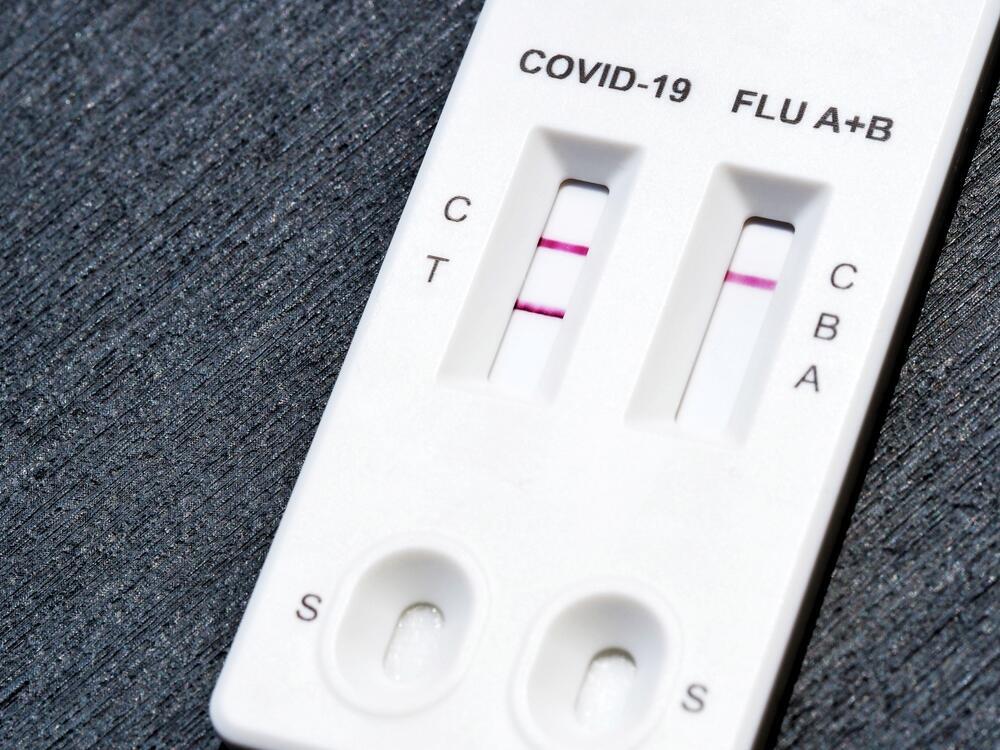
Yes. According to experts, at-home tests continue to detect the variant because they focus on parts of the virus that do not change quickly.
What are the recommendations?
The recommendations are no different from the familiar ones: get tested if symptoms appear, stay home when sick and wear a mask in crowded indoor spaces. In addition, anyone who has not been vaccinated or infected during the past six months to year is advised to consult a doctor about a booster shot, especially if they are in a high-risk group such as adults over 65 or people with underlying medical conditions.