

SpaceX took a major step Monday toward turning Starship into an operational, reusable spacecraft, successfully attempting for the first time to place the giant vehicle into orbit around Earth.
The orbital insertion unfolded with drama during the live broadcast after one of the spacecraft’s six engines shut down during the initial maneuver. SpaceX initially announced that the orbital insertion burn, scheduled for 25 minutes after launch, would not be carried out. Minutes later, the company said the decision was not final, and after lengthy discussions among flight control and engineering teams, it decided to proceed with orbital insertion after all.
Starship's 14th mission
(Video: Reuters / SPACEX)


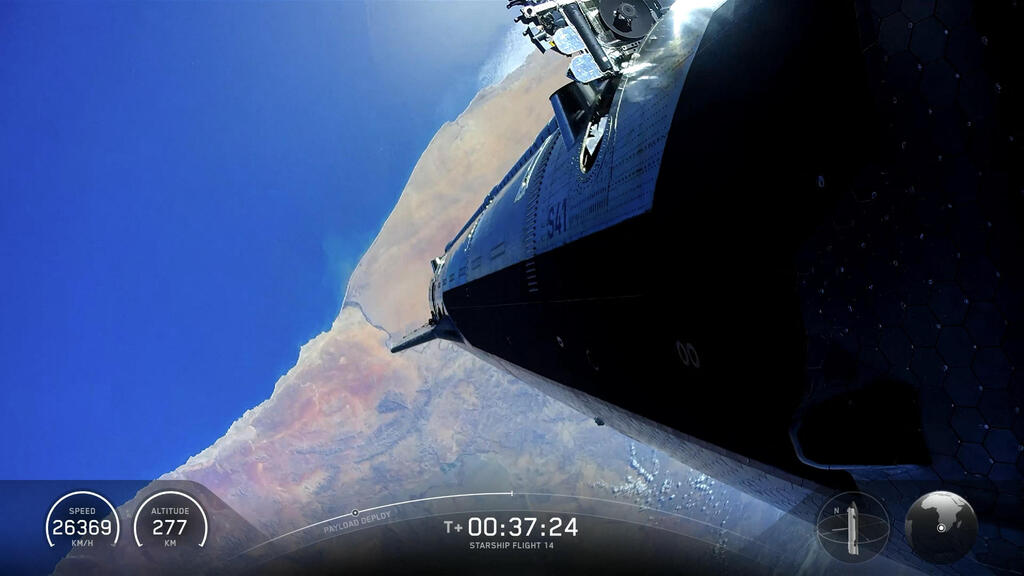
One of the spacecraft’s six engines fired as planned for 19 seconds at an altitude of 175 kilometers, accelerating Starship from about 25,000 kph — a speed that would have led to a passive atmospheric reentry, as in previous tests — to just over 26,300 kph, placing it into a stable orbit around Earth.
The spacecraft had been scheduled to complete nearly six orbits over nine hours before landing in the eastern Pacific Ocean, several hundred kilometers off the coast of Chile. However, about an hour and a half after launch, SpaceX announced that the mission would be shortened to fewer than two orbits.
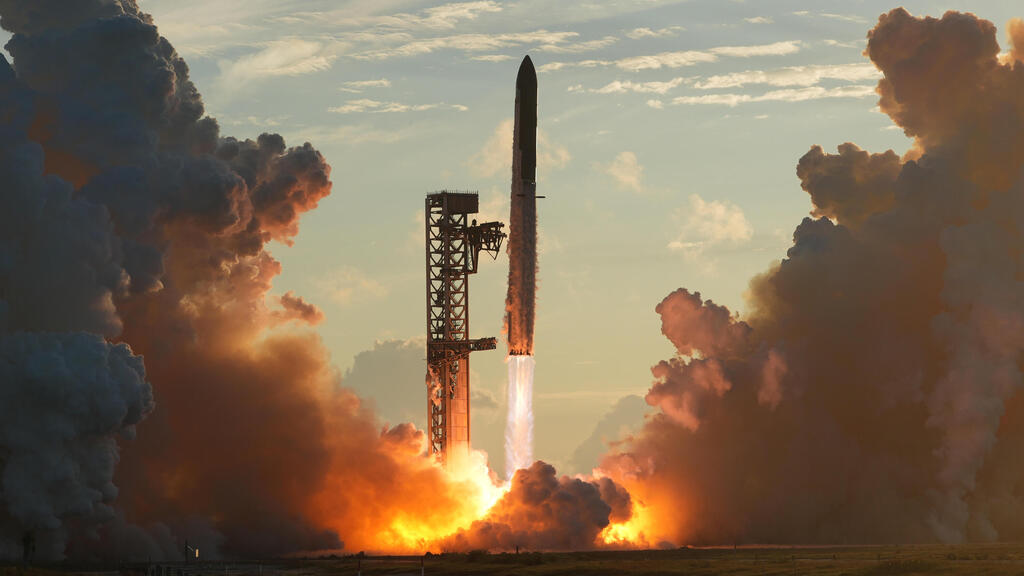

Starship on its way to space
(Photo: Eric Gay/AP)
Two hours and 12 minutes after launch, the spacecraft fired one engine as planned in the opposite direction of travel to reduce its speed and allow for a controlled atmospheric reentry and landing at an alternate site designated by the company in the northern Pacific Ocean.
The 11-second engine burn over South Africa proceeded without incident, and the spacecraft began gradually descending toward atmospheric reentry. It successfully carried out its landing maneuver above the ocean and stabilized vertically before dropping into the water.
Unlike the previous mission, the contact with the water was less gentle, and the spacecraft caught fire. Even so, SpaceX marked the landing as a success.
The next generation of Starlink
Starship launched on its 14th test flight at 3:49 p.m. Israel time from SpaceX’s Starbase in southern Texas. The launch was successful despite one of the 33 engines on the Super Heavy booster shutting down earlier than planned.
About 2.5 minutes after liftoff, all six of the spacecraft’s engines ignited successfully, and Starship separated as planned from the booster.
The booster continued climbing slightly to an altitude of about 100 kilometers before beginning a planned descent ahead of a simulated landing maneuver over the Gulf of Mexico, not far from the launch site.
This was the third launch of the third generation of the Super Heavy booster. Because the booster failed in the two previous simulated sea landings, the company decided to repeat the maneuver over the ocean rather than attempt to catch the booster with the launch tower until it had successfully completed the simulated landing.
Although only 11 of the booster’s 13 central engines were operating during the landing maneuver, SpaceX reported that the maneuver was successful and that the booster stabilized itself vertically at low speed above the ocean.
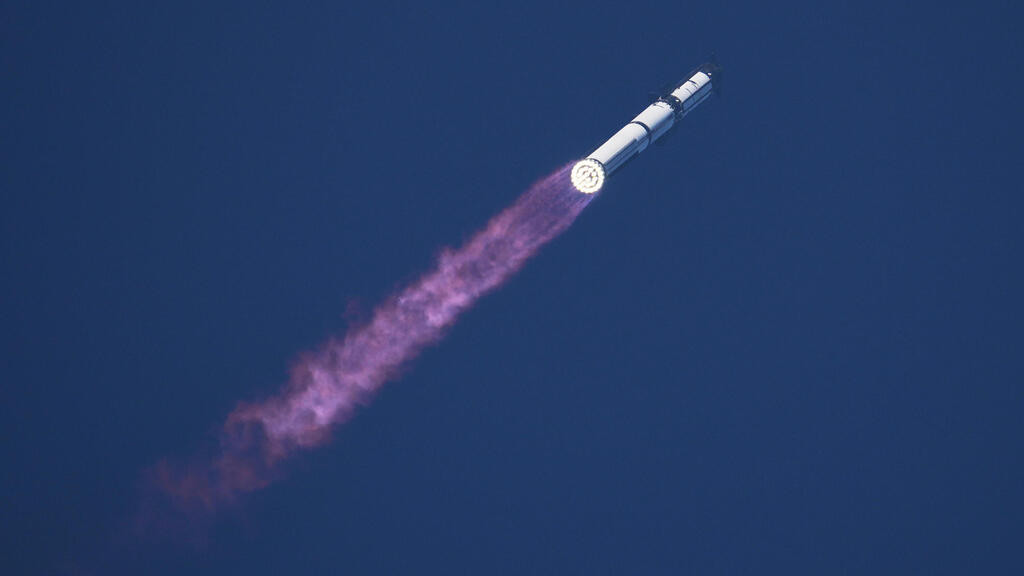
The launcher on its way back to the sea
(Photo: Eric Gay/AP)
Unlike its usual practice, however, the company did not release photos or video of the landing, raising the possibility that it was less successful than the initial report suggested.
On the previous test flight, about two months ago, the spacecraft successfully deployed several new-generation Starlink V3 satellites in space. But because Starship was on a ballistic trajectory rather than a closed orbit around Earth, the satellites also were placed on that kind of trajectory and operated as planned for only about 20 minutes, allowing SpaceX to test their interface with its communications network.
In the current test, the spacecraft deployed 26 such satellites into orbit, with a total mass of 45 tons. These are the first V3 satellites to join the network and, in effect, mark Starship’s first operational mission after more than three years of test flights.
Satellite deployment began about 34 minutes after launch and lasted roughly half an hour. Shortly afterward, the company confirmed that all the satellites were functioning and communicating with ground stations.
As in the previous test, several of the satellites were equipped with cameras and are expected to transmit external images of the spacecraft, allowing engineers to inspect the heat shield and determine whether any of its tiles fell off or were damaged during launch.
For the first time on this mission, SpaceX launched two reused heat-shield tiles, out of thousands, that had been removed from the previous spacecraft after it landed successfully and was recovered in a complex operation.
A historic step
Starship is the largest spacecraft ever built. The spacecraft itself is 52 meters long and is launched atop a 72-meter Super Heavy booster. With the ability to carry 100 tons into Earth orbit, it is the largest and heaviest object ever placed into orbit in a single flight. The International Space Station is far larger, but it was assembled in orbit over many missions.
Reaching orbit is a major step in Starship’s development. The system is ultimately intended to be reusable, with a short turnaround time between launches.
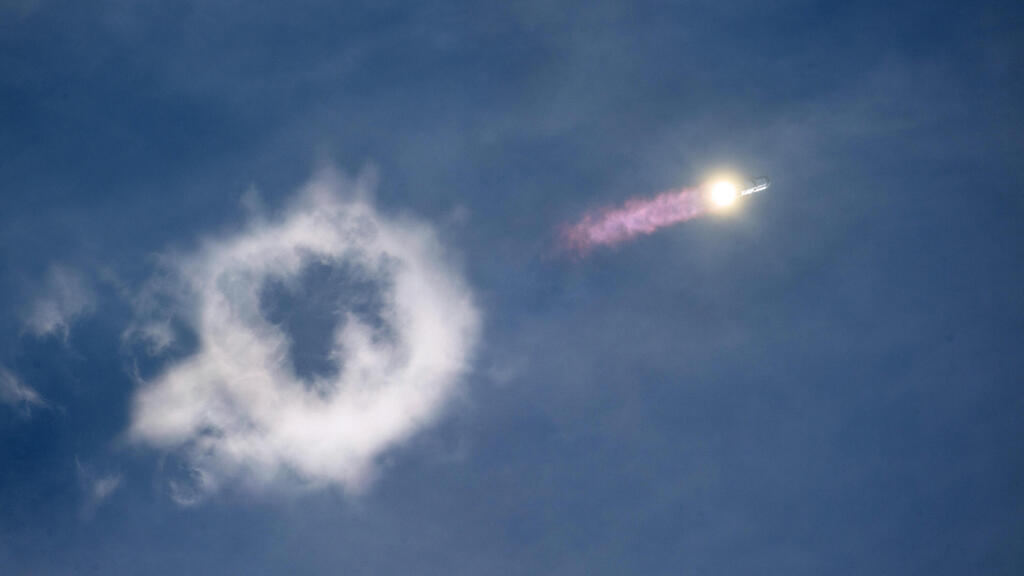
Starship's 14th test flight to enter orbit around Earth
(Photo: Brandon Bell/Getty Images)
(Photo: SpaceX/AFP)
SpaceX’s long-term goal is to land humans on Mars, but well before that Starship is expected to become a key component in expanding the Starlink network, developing the company’s planned space-based data center infrastructure for artificial intelligence and even enabling rapid travel between distant points on Earth.
The company is also developing a specialized version of Starship that is intended to serve as a crewed lunar lander.
To meet those goals, particularly missions to the moon and Mars, SpaceX will still have to overcome several major challenges, foremost among them refueling in space.
It will also have to demonstrate a high launch cadence and successful landings of both boosters and spacecraft at the launch tower, allowing them to be rapidly reused and prepared for another flight.
Meeting those goals will likely require many more test flights. Starship’s development is progressing more slowly than the public timelines laid out by SpaceX founder Elon Musk, but such delays are common in space development, particularly when attempting something unlike anything done before.
The success of Starship’s first orbital flight is an important milestone in that historic journey.
Ettay Nevo is part of the Davidson Institute of Science Education, the educational arm of the Weizmann Institute of Science