


COVID-19 could increase the risk of lung cancer. More than six years after the pandemic began, researchers are still examining the long-term effects of the infection. A new international study led by the Hebrew University of Jerusalem and Hadassah Medical Center now points to a troubling possibility: the coronavirus spike protein may contribute to the development of lung cancer through a complex biological mechanism in lung tissue.
The study, led by Professor Alex Gileles-Hillel of the Hebrew University and Hadassah Medical Center, together with Kylie Wallace, Dr. Hong Yu, Professor David Gozal and Dr. Wei Li of Marshall University, was published in the journal Frontiers in Immunology. It combines large-scale analysis of human medical data with experiments in mice and laboratory cells to examine whether and how COVID-19 may leave a lasting impact on the lungs.
Gallery
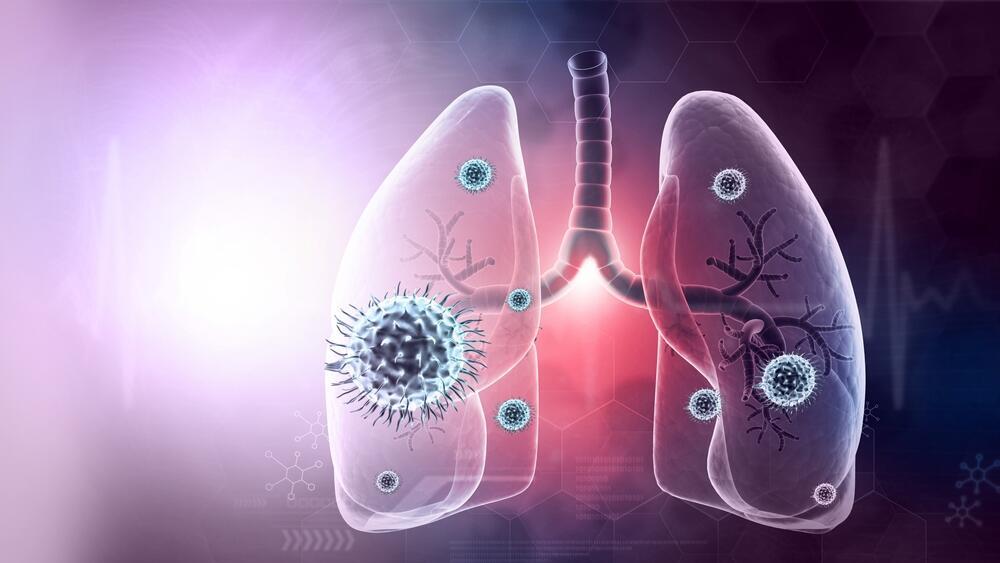
New study suggests possible link between COVID-19 and increased risk of lung cance
(Photo: Shutterstock)
In recent years, physicians have noted that some COVID-19 survivors develop interstitial pulmonary fibrosis — a condition marked by scarring of lung tissue. According to the study, the phenomenon appears in about 25% of patients three months after recovery and in about 14% even a year later. Such fibrosis is a known risk factor for lung cancer, but until now it has been unclear how viral infection might lead to tumor development.
What is the link between COVID-19 and lung cancer?
“The central question was whether the virus itself, and especially its spike protein, can create conditions that promote cancer development,” according to the researchers.
To examine this, the team analyzed data from the international TriNetX health database, which includes medical records from patients worldwide. The study included more than 166,000 individuals, comparing COVID-19 survivors with people who had not been infected, with careful matching by age, sex and ethnicity to isolate the effect of the disease as much as possible.
 Professor Alex Gileles-HillelPhoto: David Harris
The analysis found that COVID-19 survivors face a higher risk of developing lung cancer. Among active smokers, the risk stood at 1.7% compared with 1.4% in the control group — an increase of about 22%. Among former smokers, the risk was 1.5% versus 1.2%, and among non-smokers, 0.21% versus 0.18%. A significant increase was observed across all groups, with the highest risk among smokers.
By contrast, no consistent increase was found in the risk of other cancers, such as oral or bladder cancer — a finding that strengthens the hypothesis that the virus’s effect is primarily concentrated in the lungs.
How the researchers tested the mechanism
To understand the mechanism behind this link, the researchers turned to laboratory experiments. They used mice engineered to carry the human ACE2 receptor and directly introduced the spike protein into their trachea. One day later, they initiated a controlled process to induce lung cancer using a chemical agent. The substance was administered over eight weeks, after which the mice were monitored for about 20 weeks to assess tumor development and severity.
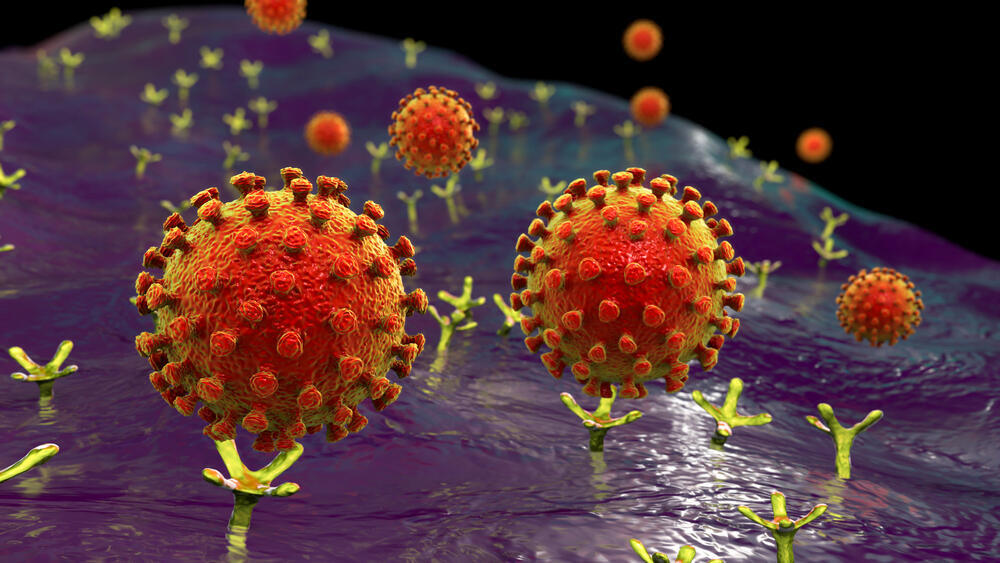
SARS-CoV-2 viruses bind to ACE2 receptors on a human cell - the initial stage of COVID-19 infection
(Photo: Shutterstock)
The results were clear: in mice exposed to the spike protein, tumors were found in 10 out of 20 lung lobes, compared with only one tumor in 10 lobes in the control group. Moreover, when the enzyme TYMP was inhibited, the tumor rate dropped to just 18% of lobes, compared with about 50% in untreated mice.
The tumors also differed in nature: after exposure to the spike protein, they were larger and more aggressive. Pathological analysis showed expression of p40, a marker characteristic of squamous cell lung cancer — an unusual finding for the experimental model used.
At the same time, the study found that the spike protein alone can cause direct lung damage: it leads to acute inflammation, infiltration of neutrophils, formation of micro-blood clots and worsening of fibrotic processes in the lung.
The enzyme linking COVID-19 to cancer
At the center of the identified mechanism is an enzyme called thymidine phosphorylase (TYMP). According to the study, levels of this enzyme rise during COVID-19 and it plays a key role in linking lung damage to tumor development. Its activation is associated with increased inflammation, collagen accumulation and worsening fibrosis, as well as activation of the STAT3 pathway — a critical biological pathway that promotes cancer-related processes.
“The findings suggest that the enzyme not only affects tumor development, but also reshapes the entire immune environment of the lung in ways that may promote cancer,” Gileles-Hillel explained.
No evidence found that the coronavirus vaccine increases the risk of lung cancer
(Photo: Shutterstock)
The researchers also identified significant changes in immune response. In mice with active TYMP, there was an increase in inflammatory factors that promote tumor growth, such as G-CSF and CCL2. In contrast, mice in which the enzyme was inactive showed a different response, with an increase in factors that help the immune system fight tumors, primarily through T cells.
In addition, the spike protein was found to alter the function of the ACE2 receptor — the same receptor the virus uses to enter cells. This change leads to the formation of smaller protein fragments, a process that may indicate impaired tissue function and altered cellular regeneration.
An environment that promotes tumor development
Taken together, the findings outline a possible chain of events: the spike protein damages the lungs and triggers inflammation, leads to increased TYMP levels, activates the STAT3 pathway, causes fibrosis and alters the immune system — thereby creating an environment that promotes tumor development.
However, the researchers emphasize that this is a retrospective study — meaning it is based on analysis of existing data — and therefore cannot establish a definitive causal relationship. In addition, the laboratory experiments were conducted using the spike protein alone, rather than full viral infection, limiting the ability to draw direct conclusions about real-world conditions.
Researchers examined the connection using data from hundreds of thousands of patients and laboratory experiments
(Photo: Shutterstock)
They also note that they did not have complete data on the vaccination status of all participants, making it impossible to fully assess the impact of vaccines. It is important to stress that, according to this study and previous research, there is no evidence that COVID-19 vaccination increases the risk of lung cancer.
Alongside the warning signs, the study also points to a possible direction for future treatment. Identifying TYMP as a central factor opens the door to targeted therapies that could reduce long-term lung damage. Drugs that inhibit the enzyme, such as tipiracil, which is already in use, may in the future help reduce both fibrosis and cancer risk.
“While the risk for any individual remains relatively low, the population-level impact could be significant — especially among people with risk factors such as smoking,” Gileles-Hillel said. “A better understanding of the mechanisms may enable earlier detection and more effective treatment.”
First published: 09:25, 04.13.26