


We reach for it without a second thought, eyes half closed. The towel hanging in the bathroom, soft and familiar, the one that dries our face and body every day. But behind the feeling of cleanliness and routine lies a hidden world, teeming with life of a far less welcome kind.
Heat, moisture and skin residue create an ideal breeding ground for millions of bacteria, fungi, viruses and even parasites, some of which can survive for hours or even days. Without noticing, the towel can become one of the most contaminated items in the home, especially when it is not allowed to dry properly or is reused repeatedly.
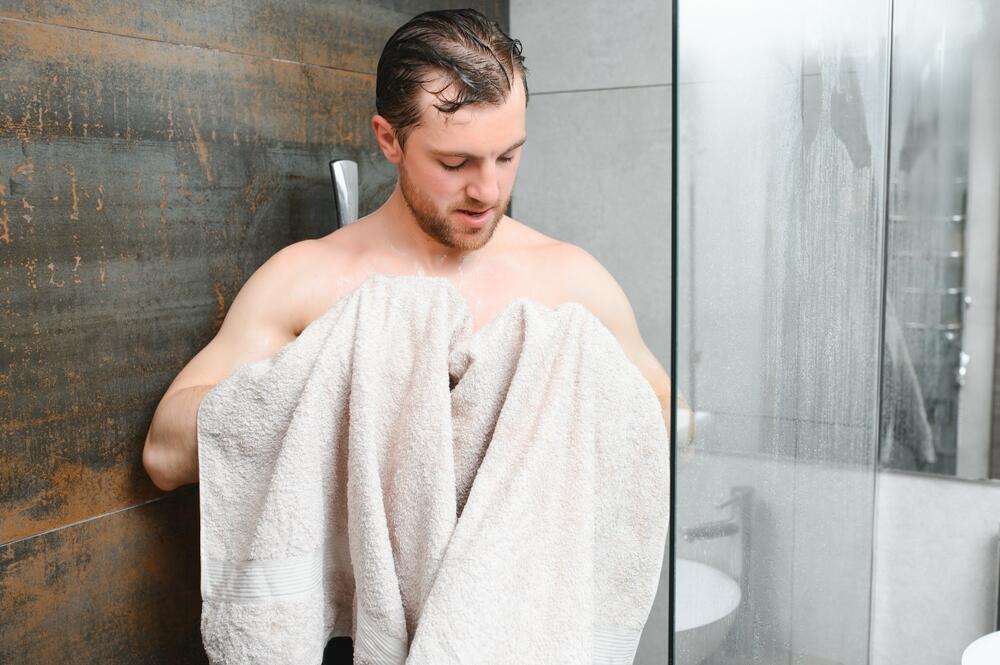
“A bathroom towel can become a breeding ground for millions of bacteria after just one day of use,” said Dr. Efrat Solomon-Cohen, a dermatologist and head of the Dan Regional Medical Director, at Clalit Healthcare in the Dan-Petah Tikva District. She explained that towels can transmit various pathogens, primarily bacterial infections, but also viral and fungal infections, as well as different types of parasites.
“In terms of bacteria, these are usually organisms that live on everyone’s skin, such as Staphylococcus aureus,” she said. “It is present on the skin of most people, but it can sometimes cause skin infections through contact, direct transmission from person to person, or from surfaces. A towel, in this case, is a surface.”
The most common infection caused by this bacterium is folliculitis, an inflammation of the hair follicles. “It tends to appear on the buttocks, legs and back, areas where the towel rubs against the skin,” Solomon-Cohen said.
 Dr. Efrat Solomon CohenPhoto: Omer Hacohen
“Another very common and contagious infection, especially among children, that can also be transmitted through towels is impetigo. It is caused by the same bacterium and requires antibiotic treatment.”
Dr. Mohammed Seh, a dermatologist with Maccabi Healthcare Services, noted that towels can also harbor antibiotic-resistant bacteria. “These bacteria are more common among chronically ill patients who receive care in hospitals or community clinics and are treated with antibiotics,” he said. “They are at higher risk of carrying resistant bacteria, which can cause problems such as recurrent abscesses.”
Other bacteria may be present in slow-healing wounds, such as diabetic ulcers. “There is a bacterial environment that grows quickly and can be transferred via a towel to another person,” Seh said.
Bacterial infections are only part of the picture. “Fungal infections are also common,” Solomon-Cohen said. “Some fungi thrive in heat and moisture, so they accumulate in towels that do not dry completely. This can lead to ringworm of the body, foot or fungal infections in the groin. Candida, for example, can affect the groin area. It exists on everyone’s skin but can also be transmitted through damp towels. This is common in families that share towels.”
 Dr. Mohammed SehPhoto: Maccabi Healthcare Services
Viruses can also linger in towel fibers. “Shingles is a viral infection that can spread through the air, for example by coughing, but also through towels,” Seh said. Solomon-Cohen added that among children, sharing towels can spread molluscum contagiosum, a viral skin disease that causes highly contagious bumps. “If one child in the household has molluscum lesions, we advise against shared baths with siblings and against using shared towels,” she said.
Parasitic infections can also be transmitted through towels. “Scabies is one example,” Seh said. “It is highly contagious through contact with towels and causes intense itching. If one family member has scabies, it can easily spread to others.” Head lice can also be transmitted via towels, though pubic lice are usually spread through skin-to-skin contact and are less commonly passed this way.
When should you replace and wash towels?
Once it becomes clear how easily a bathroom towel can turn into a hub for bacteria and fungi, the next step is understanding how to use it more safely. How often it is replaced, where it hangs to dry and whether it stays damp for long periods all directly affect contamination levels.

The workout towel is recommended to change daily
(Photo: Shutterstock)
According to Dr. Solomon-Cohen, even simple habits can significantly reduce the number of microorganisms on a towel and lower the risk of skin problems.
“There is no need to replace it every day, but it is advisable to change towels every two to three days,” she said. “Most importantly, do not share towels and make sure they dry completely. Hang them in a way that allows full drying between uses. This significantly reduces the ability of microorganisms to multiply.”
The same principles apply to other towels used daily. Face towels, often hanging in the bathroom, are not as harmless as they seem. “They are no less contaminated,” Solomon-Cohen said. “Not necessarily with pathogens, but with environmental residues such as dirt and makeup, which can cause irritation or allergic reactions. I recommend washing the face first and not using the towel to remove makeup or cream residue.”

Do not to share towels between people
(Photo: Shutterstock)
Gym towels pose an even greater risk. “Exposure to sweat is much more intense at the gym, which makes towels a more fertile environment for infections, fungi, molds, yeasts and bacteria,” she said. “If a towel is used during a workout, it should be treated as single-use and sent straight to the laundry.”
Solomon-Cohen also advises bringing a personal towel from home rather than using towels provided by gyms and never sharing towels between people. “Wash them after every workout and do not wait,” she said.
As for beach towels, the principle is similar. “Sand can contain parasites, although this is less common in Israel and more typical of exotic destinations such as Thailand,” Solomon-Cohen said.
First published: 00:05, 01.26.26