


Sgt. L is only 20, yet since enlisting for the demanding role of an IDF paramedic, she has already been through more than most, during one of the most complex security and diplomatic periods Israel has known. Behind her is a significant service in Gaza during the war against Hamas. Now she is maneuvering in Lebanon, where there is never a dull moment.
But you will not hear her complain. In the eyes of L, the paramedic, there is only determination and drive. She fears only one thing: not being good enough when the moment of truth arrives.
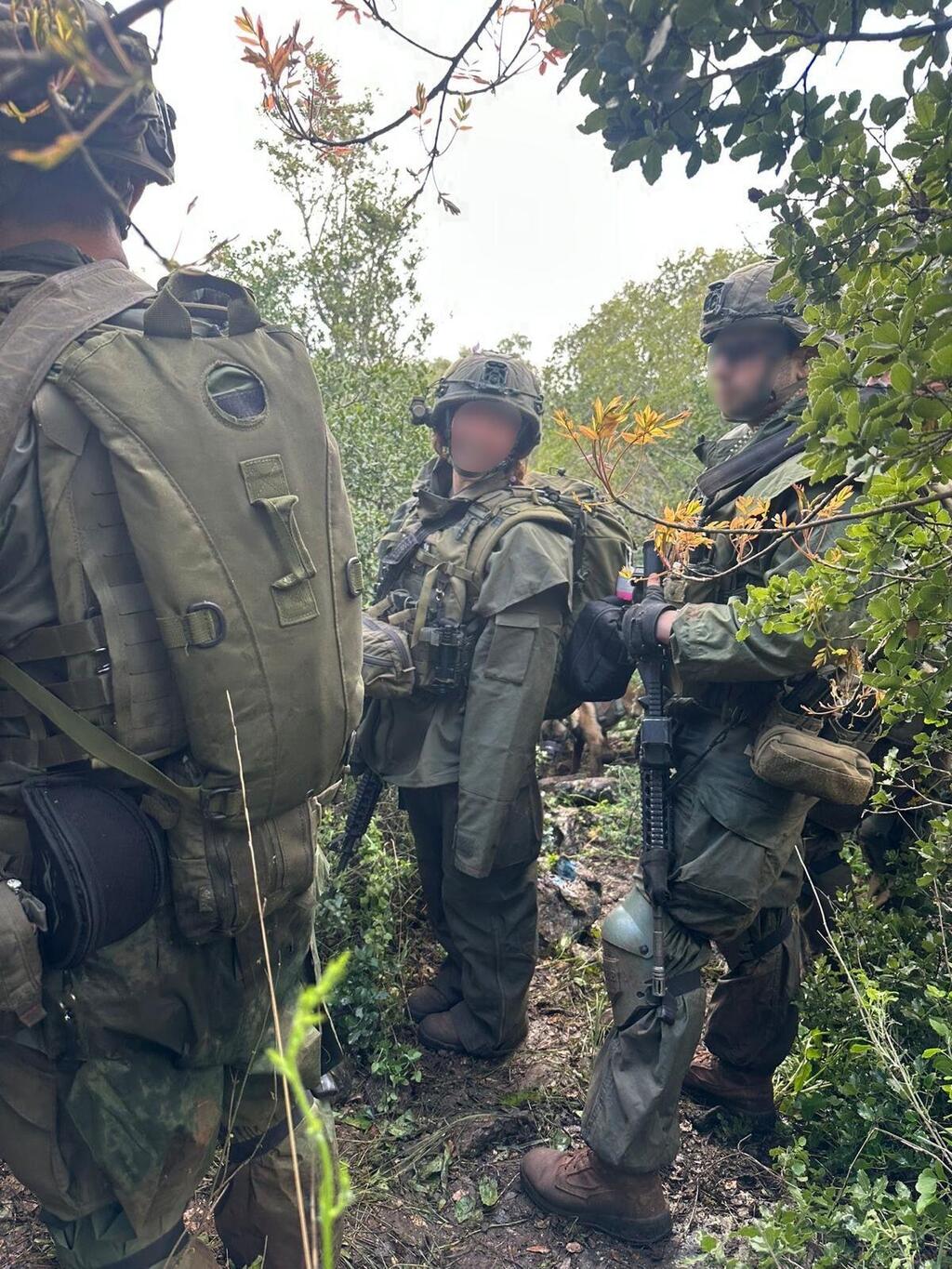
“There was a case in Gaza where I wasn’t able to save someone,” she says candidly in a phone call from the fortified position where she is stationed in southern Lebanon. “There was sniper fire. We reached the wounded soldier. We were the evacuation team, but he died. After I saw the ‘cleared for publication’ notice, I understood there was no way I would let more cases like that pass through my hands. I want to be the absolute best I can be, with as few bereaved families as possible, as little loss as possible. That is my job.”
How do you cope?
“It is a feeling that stays with you. It doesn’t go away. There was a treatment I performed here in Lebanon, and at the end I remembered that same soldier. It is not something that passes. I think the most significant challenge is accepting that we will not always have something to do. I can be the best and provide the best care, and my medics can be excellent, but in the end there are things bigger than us, and sometimes you have to accept that. If I fall into the fact that I wasn’t able to save someone, my medics will fall with me. In the end, we will do the best we can, whether that means knowing that even during leave I have to do Magen David Adom shifts to maintain my readiness.”
She pauses for a moment.
“You must not fall into mediocrity. That is the word. Always aim high.”
While many women her age elsewhere in the world are likely busy with college studies or taking their first steps into adult life, Sgt. L sleeps in an abandoned building in southern Lebanon, inside a makeshift fortified position, surrounded by combat soldiers and waiting for the next call about wounded troops.
She enlisted in the IDF in March 2024, straight into a paramedics course at Training Base 10, an intensive year-and-two-month program during which she was certified as a civilian paramedic through Magen David Adom, and then as a military paramedic. After completing her training, she was assigned to the Nahal Reconnaissance Battalion.
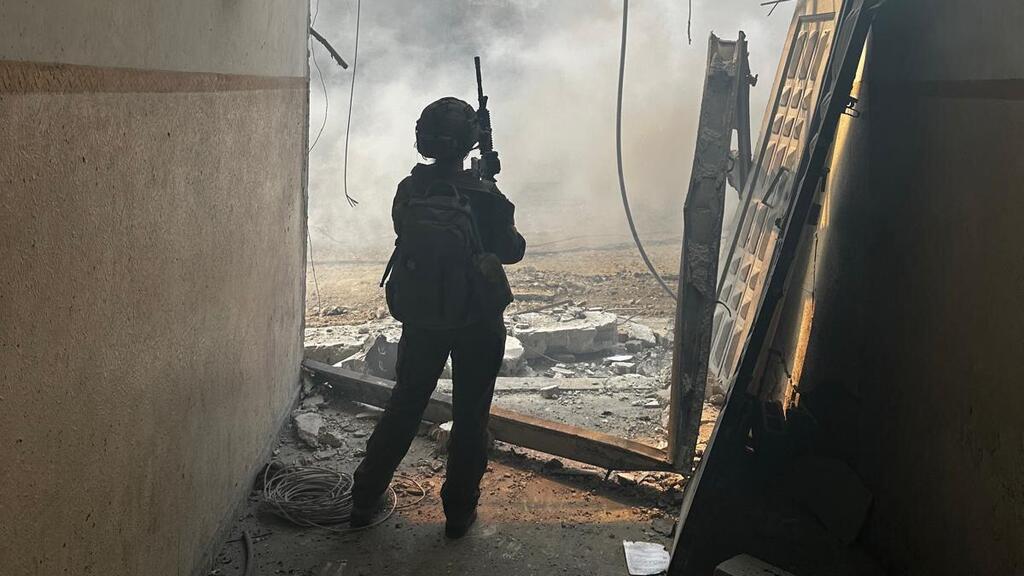
Sgt. L
(Photo: IDF)
“I see this role as a mission. I think it proved itself very much on October 7 and afterward. There were many paramedics up front on October 7. There were also paramedics who were killed: Amit Mann and Itamar Shemen. You hear about them. We may not be doctors, but we are 20-year-old kids doing a meaningful job. It is a responsibility.”
“I am the paramedic for the reconnaissance battalion, and we are divided by platoons. I am organically attached to the command platoon, meaning I have a permanent platoon, and I maneuver with them and go out on operations with them,” she says. “We are the medical team. I have been with them for almost a year, 11 months.”
How is the weather in southern Lebanon?
“Chilly. It’s cold here.”
Twenty-year-old kids with responsibility
Life inside the force, the departures for operations and the responsibility in the field are only part of Sgt. L’s story. Behind them is also a clear understanding of what she was looking for in this service.
“I wanted an interesting role, something that breaks routine, something I could take with me into civilian life and where I would feel meaningful,” she says. “We enlisted into the war, and I felt that this was the role in which I could express myself and push myself to the limit.”
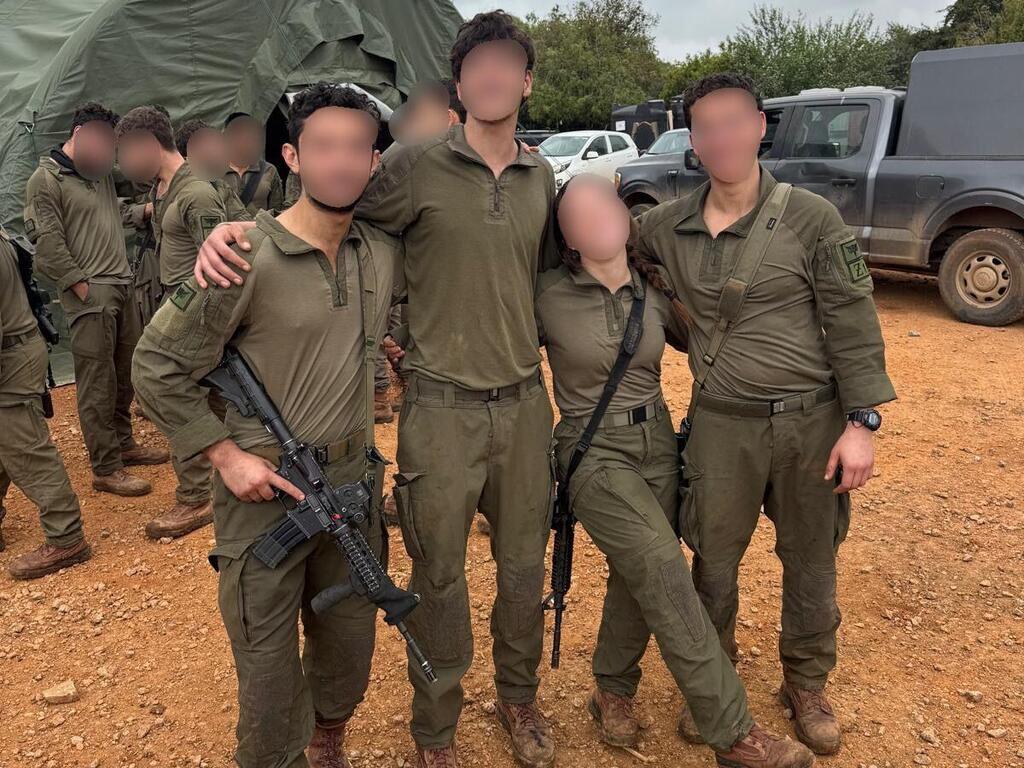
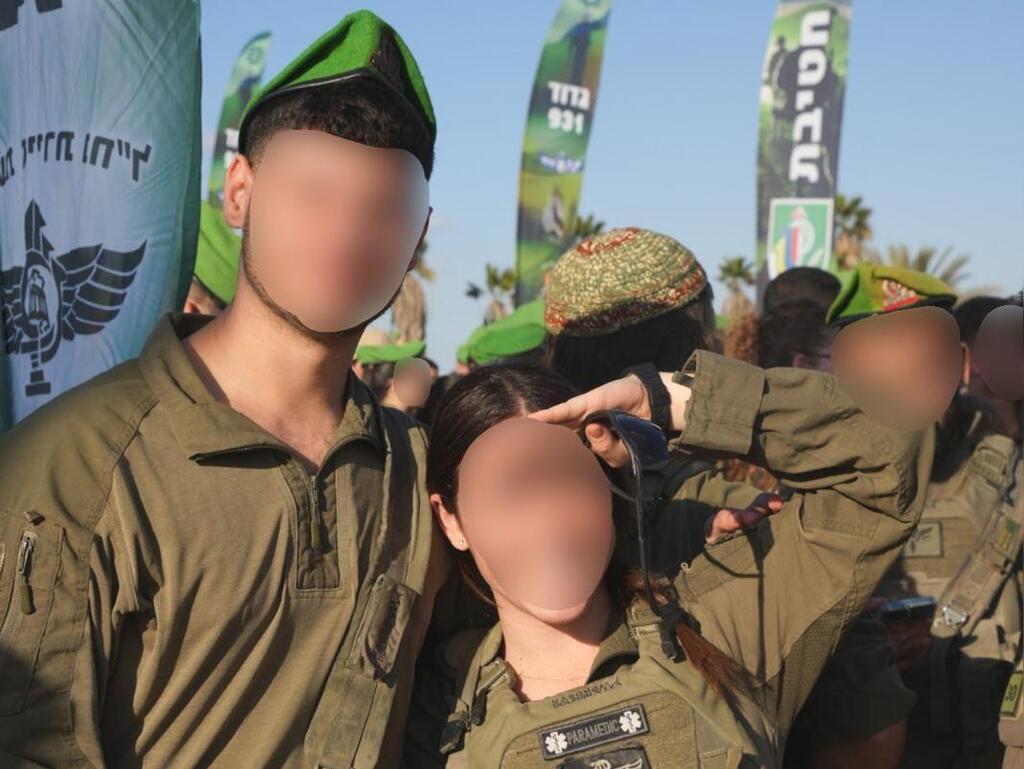
An odd bird in a platoon of men. Sgt. L and her platoon mates
(Photo: IDF)
Now she is here, meaning there, in southern Lebanon, three weeks after the renewed campaign against Hezbollah began. The boundaries between routine and emergency have long since blurred.
“From the moment the reconnaissance battalion went in, I have been inside with them,” she confirms. “There is no real routine in Lebanon, during a maneuver. It changes according to operational needs, because if there is some operation or activity where they need us, we go out as the medical team. Afterward, we sit together and hold a Passover Seder. It is an insane dissonance, but on the other hand, it keeps you sane. I have been with my platoon for 10 months now, and they have become my best friends. I feel most comfortable with them. In the end, they are the people I live with, maneuver with, and I trust them 100%.”
Amid all this, her personal life has also become part of the war. About three weeks ago, during a Nahal Reconnaissance Battalion operation in southern Lebanon, the troops encountered short-range fire and later, during an evacuation attempt and assault, came under additional fire from several directions. By the end of the incident, four soldiers had been killed: Capt. Noam Madmoni, Sgt. Gilad Harel, Sgt. Maxsim Entis and Sgt. Ben Cohen.
Ben Cohen was L’s childhood friend.
“He was a very good friend from home. We studied together all through high school,” she says. “When I arrived at the reconnaissance battalion, he was my first friend here. We would come together from home before every entry, sit together, talk, stand guard together. He was an exceptional soldier, and he deserves to be remembered that way. He was like that until the very last moment.”
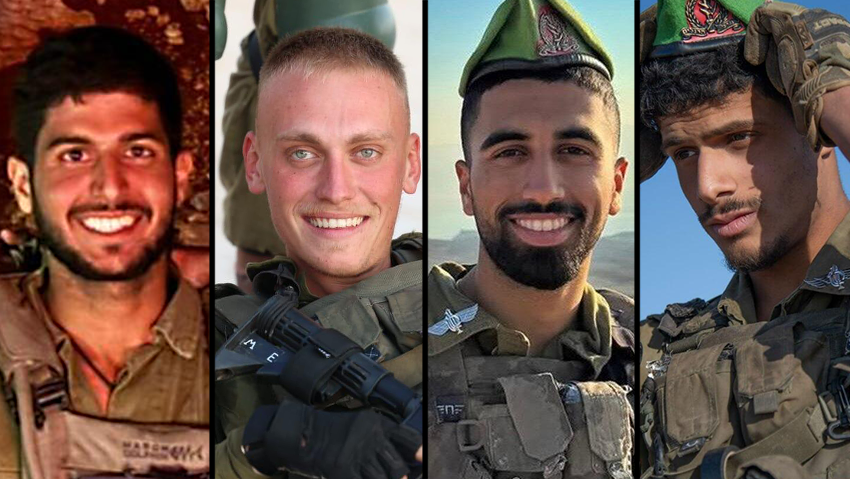
Capt. Noam Madmoni, Sgt. Maxsim Entis, Sgt. Ben Cohen, and Sgt. Gilad Harel
(Photo: IDF)
Meanwhile, there is work to be done inside the complex reality of a prolonged war, in the shadow of declarations about a cease-fire.
“We see mortar fire, suicide drones, everything is here. It is frightening. On the other hand, I feel safest with the fighters around me,” L says. “I trust them completely. Their job is to make me feel protected. My job is to be there for them. I think we do that mutually. In the end, without them, I don’t think I would succeed.”
Saving lives under fire
It is striking to think how normal this has become for us: a routine of mortar fire and suicide drones. But this is the reality in Israel right now. Given the past few years, it is hard to grasp how much responsibility rests on the shoulders of such a young woman.
“There is a doctor, but he is not with us. The moment there is an incident, the entire initial response, all the treatment, is under our authority. If there is fire, I am the most senior authority in the field,” she says.
\
(Photo: IDF)
What goes through your mind when you are called to treat a wounded soldier under fire?
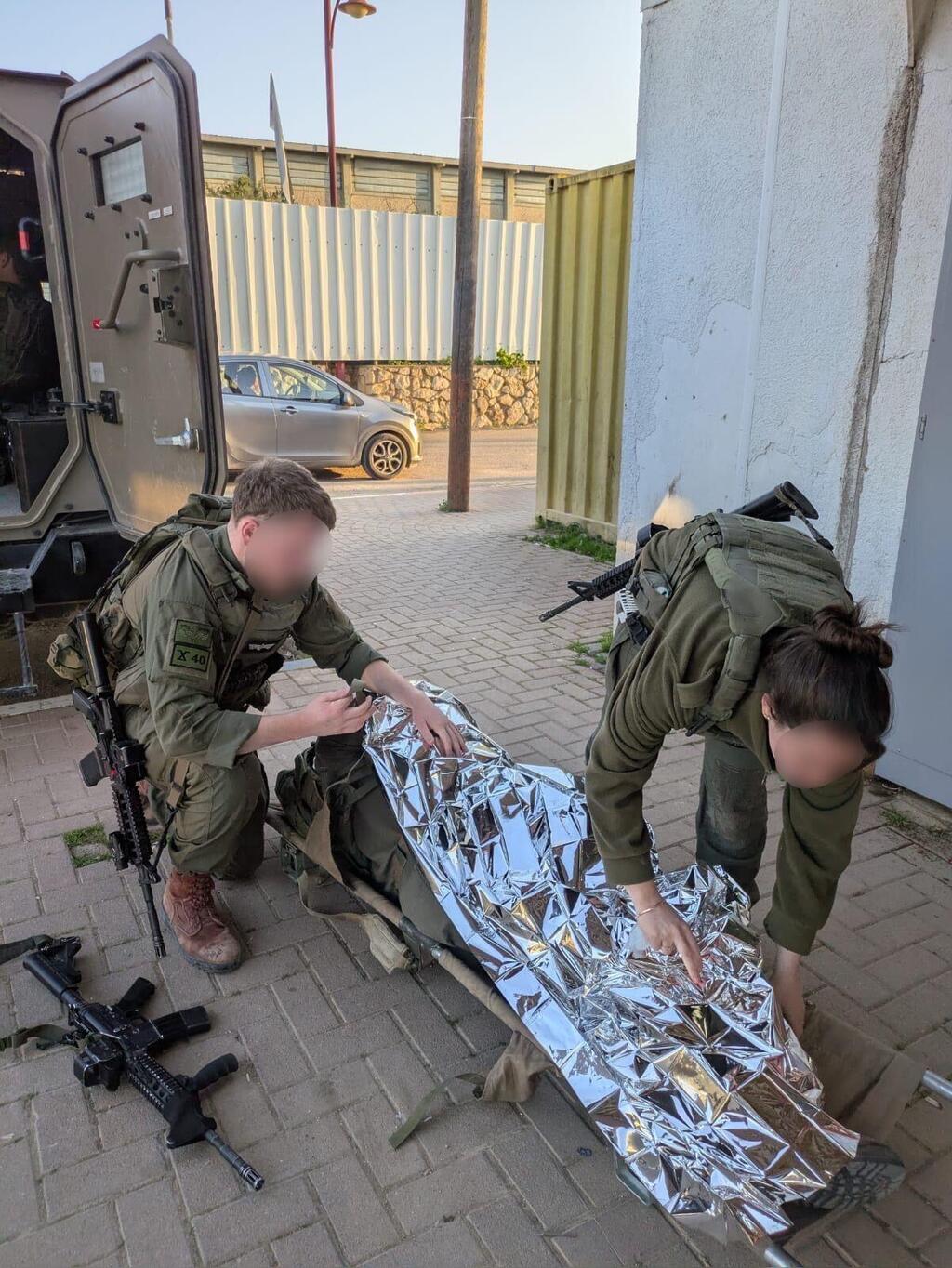
“I don’t come to treat him alone. I am with my medics. From my perspective, I prepare them for extreme scenarios. It is frightening to come and provide treatment. Suddenly, your pulse rises, you sweat a bit, and your thoughts get confused. On the other hand, everything we do is meant to prepare us for that moment, to push ourselves to the edge and be ready for that extreme point. In the end, when I arrive to treat a wounded person, he is all I see in front of me, and all I want to do is help him, whether that means lifesaving care or just giving him pain treatment so he feels better and preventing post-traumatic stress disorder. My goal in the end is the welfare of the wounded soldier and the welfare of my medics, so they do not feel helpless, so they stay focused all the time. They really hold me up. I don’t think I would be able to run alone to a wounded soldier if I didn’t have my medics with me.”
How do you stay focused and calm when there is chaos and life-threatening danger around you?
“It is frightening. On the other hand, I did not come from a combat soldier track. I come from the world of medicine, so I am kind of programmed to think medicine. In the end, when people are shooting at me, there are fighters around me dealing with securing the area, with fire and with everything related to combat, and I focus on preparing the area for the wounded and preparing the next forces. My mind is organized around medicine, and precisely within that adrenaline of fire and an encounter, I think medicine.”
(Photo: IDF)
How has this service affected you personally and emotionally?
“I think the service is amazing. I am a kind of odd bird inside a platoon of men. I learn a lot about myself. I learn a lot about my femininity, about my space. I know how to stand my ground much more, and stand by my principles much more than I thought I could before. I feel that I will come out of this stronger. Before I enlisted, I did not think I would be a combat soldier. I was not aiming there. And I think that even now, I have learned a lot about myself and my capabilities, and that in the end, every woman can do what she dreams of, and what she dreams of doing matters a great deal.”
This conversation took place a few days before Memorial Day, but for Sgt. L, the line between that day and the rest of the year is no longer clear. Loss is no longer an abstract concept. It has a face, a name and shared memories. And like L, for thousands of new families, this day now represents terrible personal pain. She asks that they be remembered, along with wounds that are not always visible.
“This is essentially the first Memorial Day in which I have a close friend who fell, in which I truly have the grave of someone I know to visit during the year as well,” she says. “There are so many bereaved families. We need to be there for them. I think this is the time for us to be a little more able to contain, to embrace the bereaved families, and also those whose injuries we do not see. That is our role and our responsibility.”