


For many new immigrants, the first real encounter with Israel’s healthcare system can feel almost unsettling. You book a doctor, see a specialist, pick up medication and then wait for the bill that never comes. Nothing arrives. No invoice. No follow-up charge.
Healthcare in Israel for olim


For Americans, that absence can feel suspicious. For those arriving from Europe or Canada, the confusion is different. The system may be public, but it does not behave the way they expect. “The first thing to understand is that this is a completely different system from most places in the world, but it’s also an excellent one,” says Patricia Zimmermann, Clalit Central District manager, who oversees healthcare services, clinics and community care across one of the health fund’s key regions.
What kupat holim actually means
At the center of that logic is something every new immigrant quickly hears: kupat holim, often translated as “health fund” and sometimes compared to an HMO. The terms overlap, but they are not identical. A health fund is the most accurate description. It reflects a publicly funded system that provides care to its members. The comparison to an HMO can help Americans orient themselves, but it can also mislead. Unlike private HMOs, Israel’s health funds are part of a universal system, regulated by the state and funded through national insurance.
'The first thing to understand is that this is a completely different system from most places in the world, but it’s also an excellent one,' says Patricia Zimmermann
In practice, a kupat holim functions as a patient’s medical home. It is where your family doctor is based, where referrals begin, where prescriptions are managed and how most care is accessed. “In Israel, every resident must be insured through one of the health funds,” Zimmermann explains. “You don’t just have insurance. You belong to a system.” There are four health funds in Israel, and every resident must join one. That choice determines how and where you receive care.
Why there’s no bill waiting
The absence of a bill is not a glitch. It is the result of how the system is funded. Healthcare in Israel is built on a national insurance model. Residents pay a health tax based on income, which is collected by the state and distributed to the health funds. “The payment is built into the system upfront,” Zimmermann says. “So when you go to a family doctor or pediatrician, you’re not paying at the point of service. You’ve already paid through your insurance.”
Primary care, including family medicine, pediatrics and women’s health, is typically covered without additional cost. Specialist visits may involve small co-payments, but these are limited and regulated. For many new immigrants, the experience can feel almost too smooth. The expectation of a bill lingers. But in this system, the financial transaction happened long before the appointment.
A system built on equality
If the lack of billing feels unfamiliar, the principle behind it can feel even more surprising. “Israel’s healthcare system is very egalitarian,” Zimmermann says. “It doesn’t matter what your income is, everyone receives the same basic coverage.”
Under national law, every resident is entitled to a defined “health basket” that includes doctor visits, hospital care, tests and medications. “All the health funds provide the same basic services,” she adds. “The difference is in how you receive them.”

'It doesn’t matter what your income is, everyone receives the same basic coverage.'
(Photo: Shutterstock)
For immigrants used to tiered systems, that uniformity can feel counterintuitive. Lower cost is often associated with lower quality. In Israel, outcomes tell a different story. “People often think that if it’s not expensive, it must not be good,” Zimmermann says. “But when you look at Israel’s health outcomes, we’re among the best in the world.” The country consistently ranks high in life expectancy and other health indicators, reflecting a system built on access and continuity.
What a ‘medical home’ looks like in practice
In many countries, healthcare is fragmented. Patients move between providers and manage their own care. In Israel, the kupah centralizes that process. “You’re not just seeing a doctor,” Zimmermann says. “You’re receiving care from a full team, doctors, nurses and pharmacists working together.”
Medical records are integrated, referrals are coordinated and many services are delivered within the same network. That structure can feel restrictive at first. “Once you belong to a kupah, you receive your services through that kupah,” Zimmermann explains. “The choice is which system you join.” What you give up in flexibility, you gain in coordination and accessibility.
Why your kupah choice matters
Because the system is structured, your initial choice matters. That decision often happens quickly, sometimes even at the airport during the aliyah process. But it shapes your day-to-day experience. “The most important factor is location,” Zimmermann says. “Your experience depends on how accessible services are where you live.” That includes proximity to clinics, availability of specialists and range of services in your area.
Language can also play a role. “We can match patients with medical staff who speak their language,” she says. Within each health fund, patients can choose their family doctor and switch if needed. “That relationship is very important, and if it doesn’t work, you can change,” Zimmermann adds.
What supplemental insurance actually adds
The public system provides broad coverage, but it does not include everything. Each health fund offers supplemental plans, known as Shaban, which expand access to additional services. “These plans don’t replace the public system,” Zimmermann says. “They complete it.” These plans can include expanded specialist access, private consultations, dental care and alternative medicine. “They’re very different from private insurance,” she says. “They’re significantly more affordable and designed to complement the public system.” For new immigrants, joining early can sometimes reduce waiting periods for certain benefits.
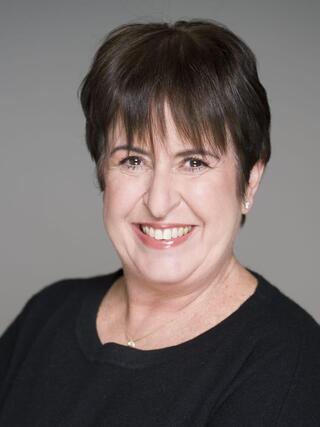 Patricia Zimmermann, Clalit Central District manager Photo: Private album
The part that surprises people most
Hospital care is one of the clearest examples of how different the system is. “In Israel, hospitalization is included,” Zimmermann says. “You don’t pay upfront and you don’t get reimbursed later. You simply don’t pay.” In many countries, hospital visits are the most expensive and stressful part of healthcare. In Israel, they are built into the system. That does not eliminate all choices. Patients who want private care can use supplemental or private insurance. But essential care is not tied to immediate payment.
The mindset shift
For many olim, the biggest adjustment is psychological. In other systems, healthcare is transactional. You pay, submit claims and wait for reimbursement. In Israel, it is structural. You join a system, and it carries you through most of your care. At first, that can feel limiting. But over time, many find it efficient, predictable and accessible.
The missing bill is not an oversight. It is the result of a system designed to handle the cost long before the patient ever walks into the clinic.
For more useful articles for olim click Global aliyah
in cooperation with Clalit Health Services
First published: 11:47, 05.06.26