

Multiple sources, including historical texts and ancient art, indicate that female gladiators did exist during the Roman Empire, though they were far less common than their male counterparts.
For example, the Roman Senate passed laws in 11 and 19 CE prohibiting women of the upper classes and free women under the age of 20 from participating in gladiatorial combat. Another written reference, dated around 200 CE, notes that Emperor Septimius Severus banned women from taking part in the brutal fights.
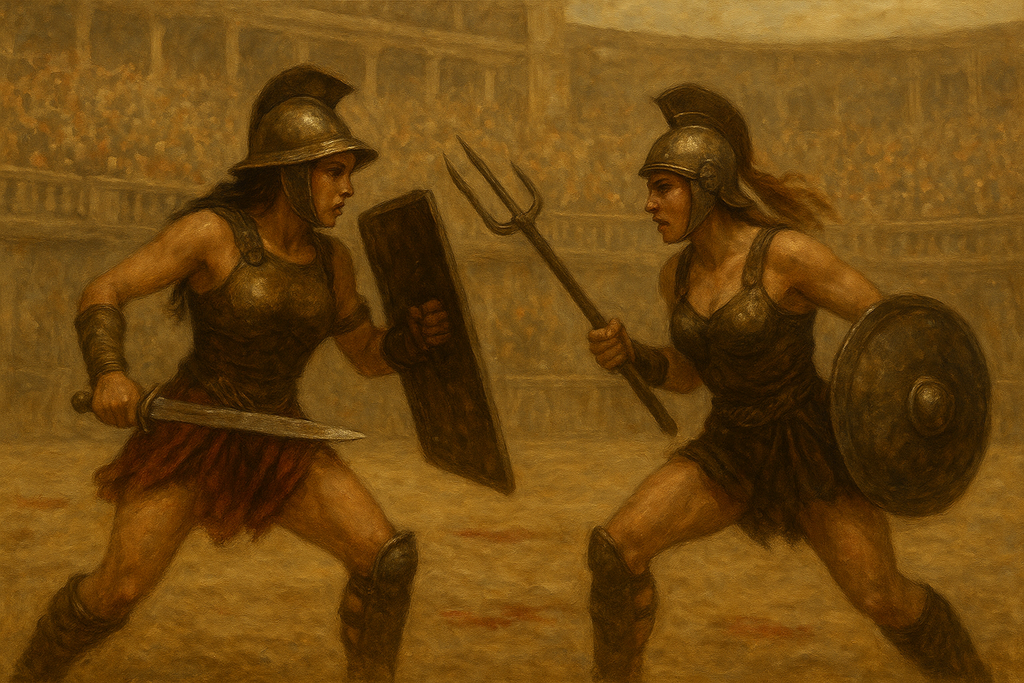
In ancient Rome, women were largely excluded from politics and barred from serving in the military. Still, they did enjoy certain freedoms: some ran businesses, worked as physicians, owned property and signed contracts. Far less is known about female gladiators, making it difficult to determine who they were or how they competed.
Most male gladiators were enslaved, and this was likely true for most female gladiators as well. Enslavement could result from being captured in war, punished for crimes, indebtedness or other causes.
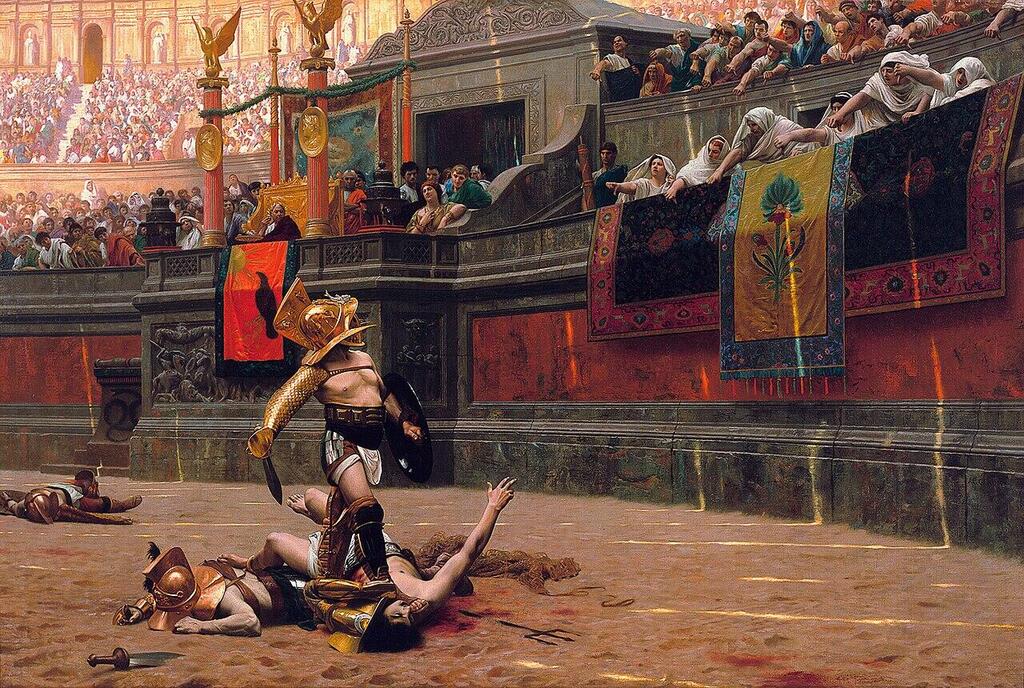
Gladiators in the arena
(Illustration: Jean-Léon Gérôme/Wikipedia)
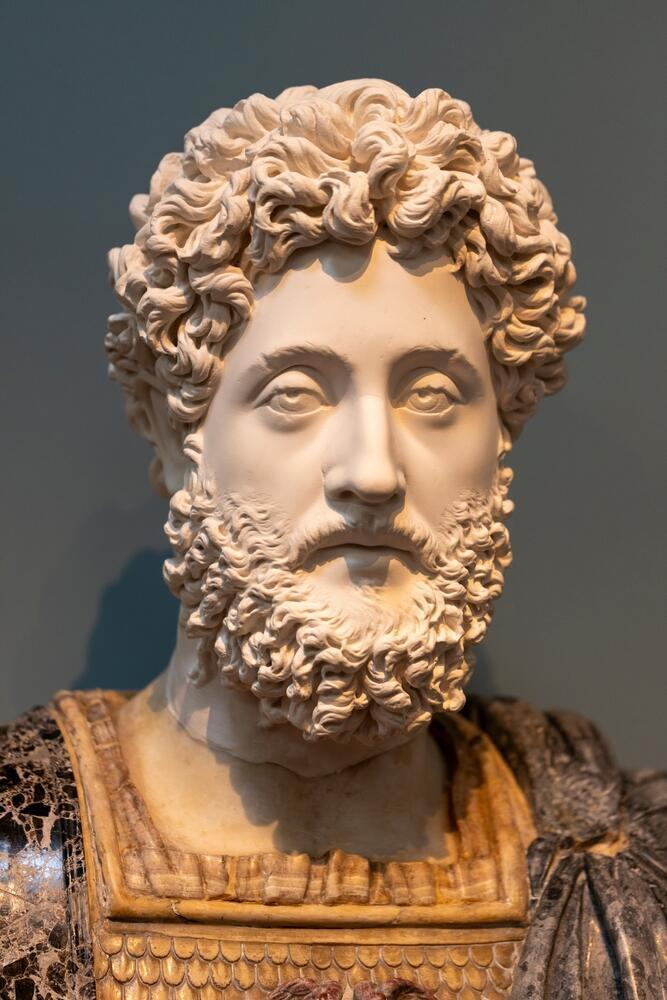
Statue of Commodus, a gladiator from Rome’s elite class
(Photo: Adam Mark Hill/Shutterstock)
“I believe women-gladiators were primarily slaves who committed crimes,” Dr. Anna Miączewska of Maria Curie-Skłodowska University in Poland, who has researched and written extensively on the topic, told Live Science. She noted that another source of female gladiators could have been free women with high debts who were forced to sell their freedom to a gladiator school.
There were, however, exceptions. A few male gladiators came from the upper echelons of society—most famously, Emperor Commodus, who ruled from 176 to 192 CE. Commodus is said to have dressed as the god Mercury and forced the Senate to watch his victories in the arena, likely as a display of power. Similarly, ancient texts suggest that a handful of elite women may also have competed as gladiators.

Interior of the colosseum in Rome
(Photo: V_E/Shutterstock)
Gladiators typically wore helmets and various forms of armor, and they often fought in specialized roles—such as the retiarius, who used a net and a trident. Combat training was rigorous, and the arena served as the ultimate stage, where crowds eagerly watched the violent clashes. While some bouts ended in death, others were decided by the emperor, who could grant mercy with a thumbs-up or order execution with a thumbs-down.
There is considerable uncertainty about how female gladiators were selected, trained or fought. One relief from Halicarnassus—modern-day Turkey—depicts two women armed with swords and shields, bearing the stage names “Amazon” and “Achillia,” likely inspired by mythology. Like many male gladiators, the women are shown bare-chested. Neither appears to be wearing a helmet, and an inscription says that the women were "released while still standing" with neither of them being killed.
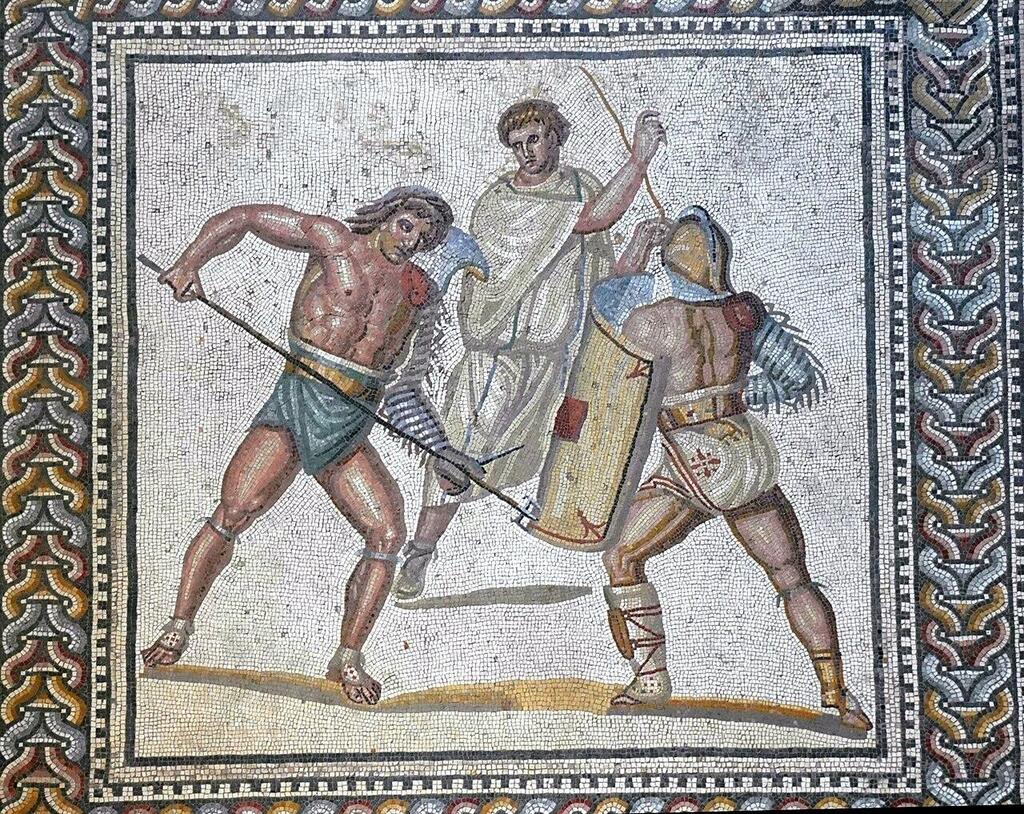
A retiarius (left) in battle
(Photo: TimeTravelRome/Wikipedia)
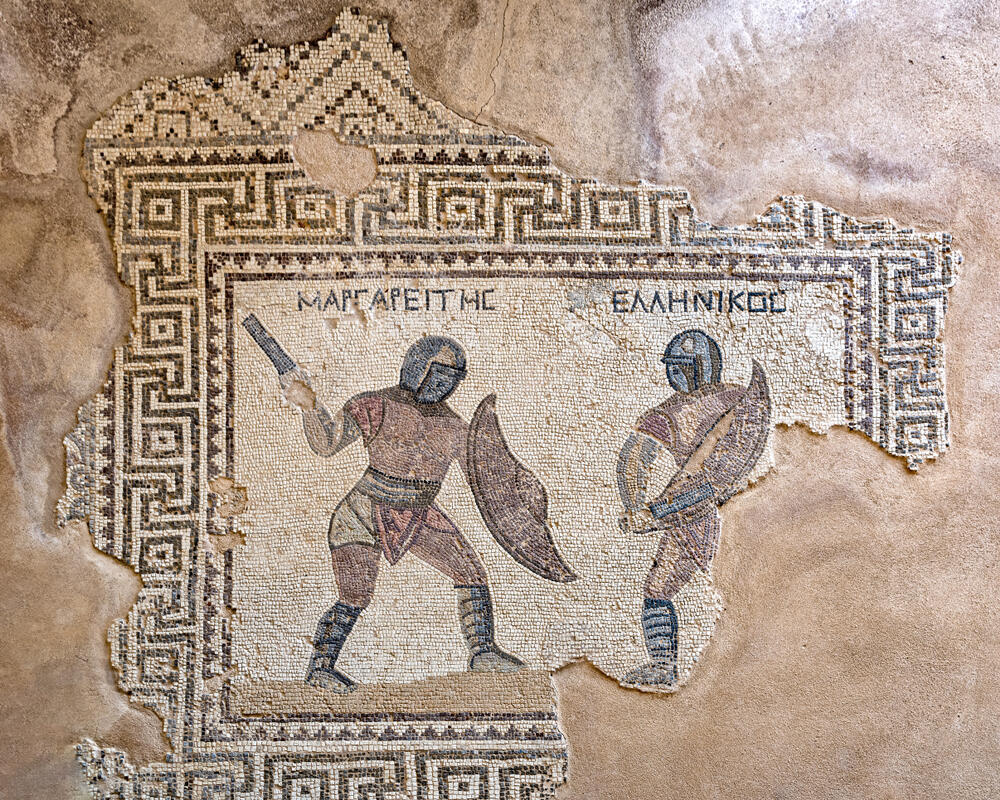
Cypriot mosaic depicting two gladiators in combat
(Photo: Sytilin Pavel/Shutterstock)
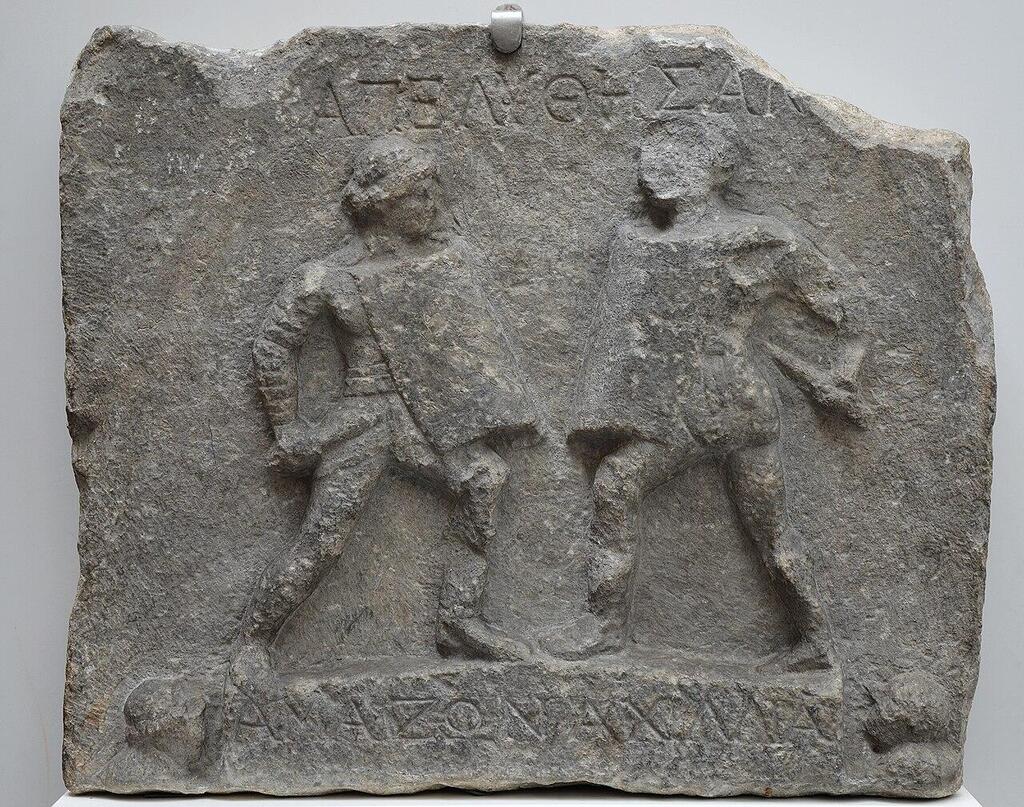
Relief from Halicarnassus featuring two female gladiators named 'Amazon' and 'Achillia'
(Photo: Carole Raddato/Wikipedia)
Another artifact, a statuette, shows a female gladiator holding a curved dagger known as a sica— a type of weapon used by a type of gladiator called a "thraex." Similar to the Halicarnassus relief, the figure is helmetless, wearing only a loincloth and a knee guard.
Dr. Alfonso Mañas of the University of California, Berkeley, who identified the statuette as a female gladiator in 2011, told Live Science he believes appearance played a sizeable role in selecting female fighters.
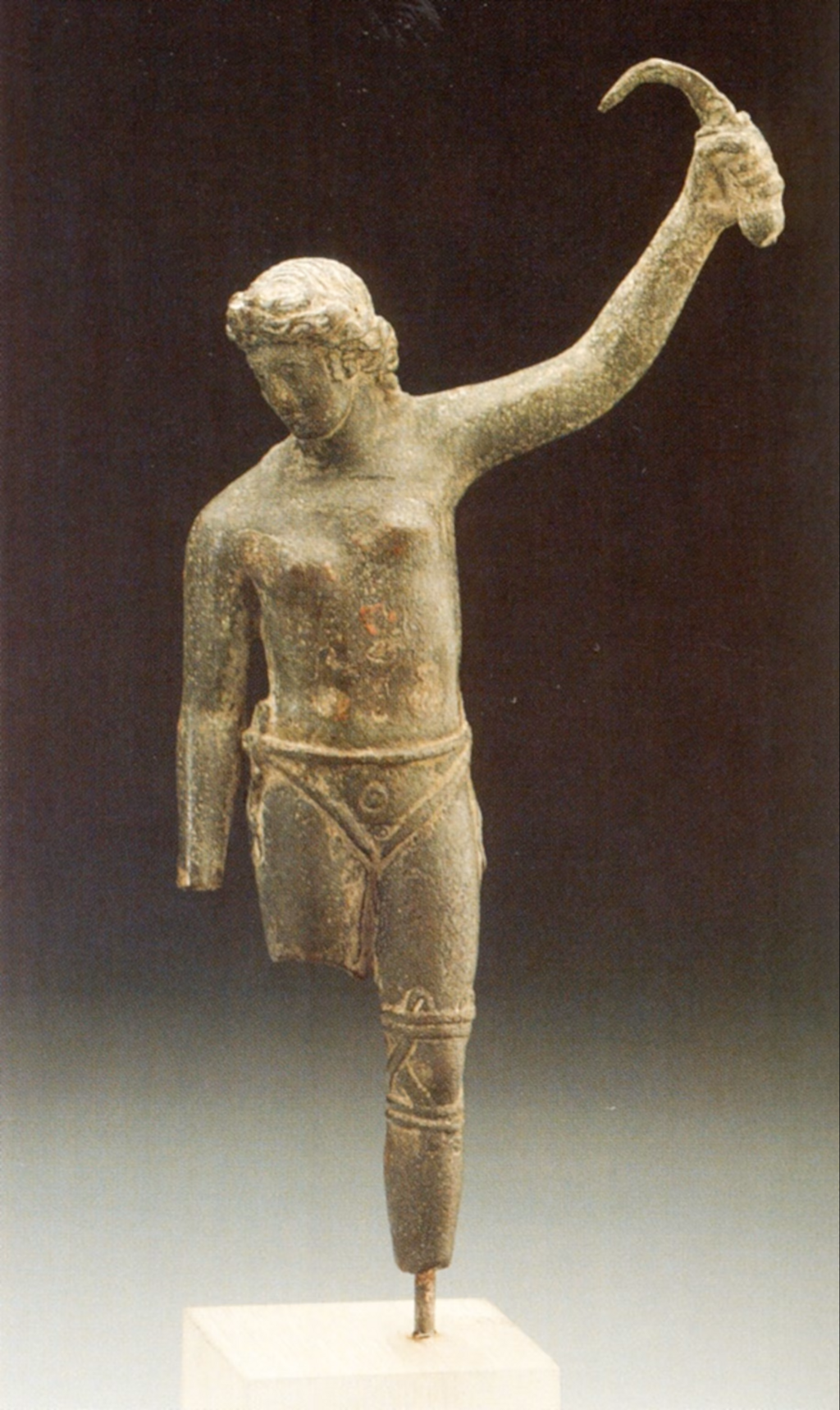
Statuette of a female gladiator holding a curved dagger (sica) in a pose possibly signaling victory; she wears only a loincloth and knee guard
(Photo: The History Collection/Alamy)
According to Mañas, one of the earliest sources mentioning female gladiators—Nicolaus of Damascus—wrote that the women chosen to fight were not the strongest or most skilled, but rather “the most beautiful.”
Mañas said that the textual references often refer to female gladiators performing in shows put on by Roman emperors. The use of female gladiators was likely a "very expensive and exclusive show, strongly associated with the emperor, so that it would be offered on very few occasions," he said.
He added that no ancient texts mention a female gladiator dying in combat—possibly because they were forbidden from fighting to the death. Furthermore, while more than 1,000 gravestones of male gladiators have been documented, not a single one has been found for a female.