


In January, Teva signed a deal worth up to $500 million with investment firm Royalty Pharma, aiming to accelerate development of a new antibody for autoimmune diseases, a field where the gap between medical need and available treatments remains significant.
Under the agreement, Teva will receive tens of millions of dollars in initial funding to advance clinical trials, with the potential for hundreds of millions more depending on research outcomes.
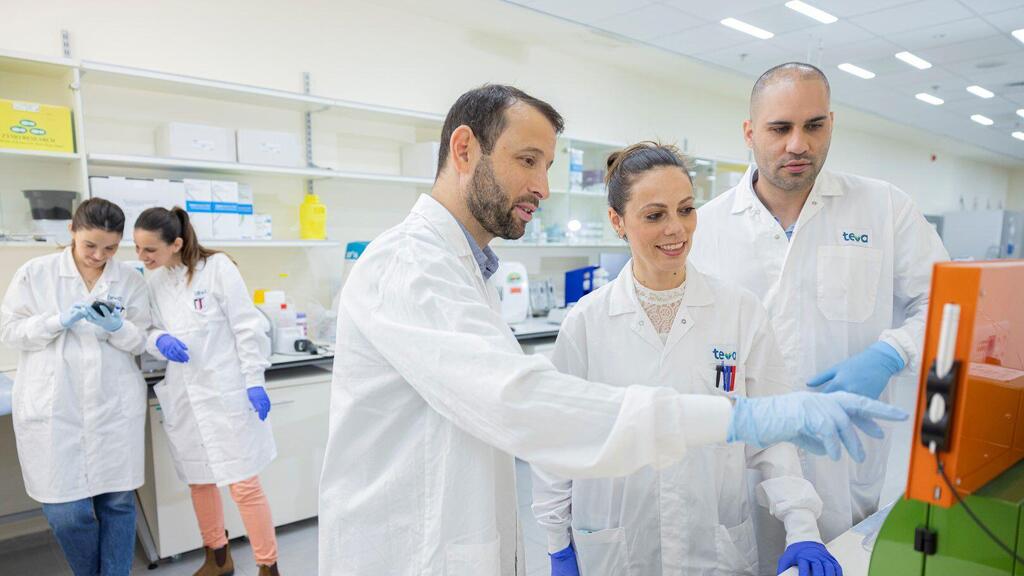
At first glance, it is another strategic move in the pharmaceutical industry, designed to strengthen the company’s pipeline and secure future growth engines. But behind the investment lies a broader ambition, one that could carry implications far beyond a single drug. The goal is to shift the point of intervention in autoimmune diseases, from treating damage at the end stage to addressing the process at its origin.
Providing a rare look behind the scenes is Inbal Ben-Eliezer, a director and team leader in Teva’s preclinical department, where early-stage science is gradually translated into therapeutic potential.
At the center of the effort is TEV-53408, an experimental antibody currently being developed for two conditions: celiac disease, a chronic intestinal disorder, and vitiligo, an autoimmune skin condition with limited treatment options.
The pairing is intentional. In both diseases, the immune system becomes dysregulated, and researchers believe a shared biological mechanism could unlock treatment for both. Such a shift could redefine care, moving from managing symptoms to influencing disease progression.

Inbal Ben-Eliezer
(Photo: Teva)
“It all starts in the discovery department,” Ben-Eliezer said. “They identified a protein on immune system cells that, under normal conditions, signals the presence of a foreign body and triggers localized inflammation. When this protein is expressed in an uncontrolled way, it can drive celiac disease. They created an antibody, which is essentially our drug, designed to block that protein.”
Celiac disease occurs when the immune system reacts abnormally to gluten, a protein found in wheat, damaging the lining of the small intestine.
“People with celiac are sensitive to gluten,” Ben-Eliezer explained. “When they consume it, immune cells in the gut become overactive and attack the intestinal lining, causing chronic inflammation. Patients experience symptoms such as pain, cramps, bloating, diarrhea and nausea. Over time, nutrient absorption is impaired, which can lead to anemia and other deficiencies.”
Despite advances in other autoimmune conditions, treatment options for celiac disease remain limited.
“The only ‘treatment’ today is avoiding gluten, which is the trigger,” she said. “Most patients feel better when they avoid it, but not all. Some continue to experience symptoms. There are still no approved drugs.”
A similar immune dysfunction appears in vitiligo, though it manifests differently.
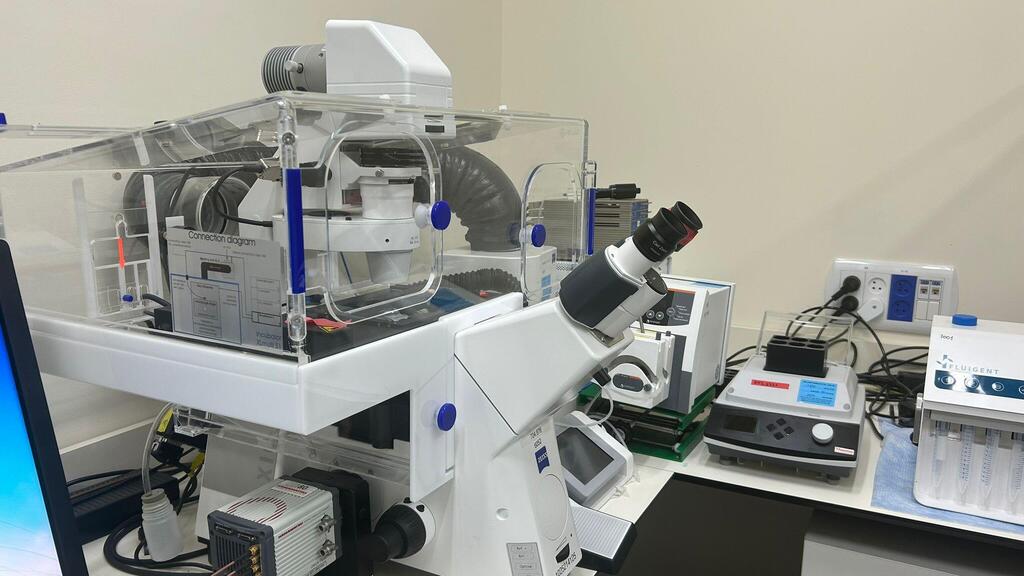
A look inside Teva’s laboratories
(Photo: Teva)
“It’s a very similar mechanism,” Ben-Eliezer said. “There are memory immune cells in the skin that also become dysregulated. In this case, they attack melanocytes, the cells that produce pigment. When those cells are damaged or destroyed, white patches appear on the skin.”
Unlike celiac disease, vitiligo does not cause physical harm, but its psychological impact can be profound.
“It doesn’t affect physical health, but it has a major emotional impact,” she said. “People often think it’s contagious. Patients face social stigma, which affects self-esteem and mental health. It is strongly associated with depression and social withdrawal.”
From broad suppression to targeted biology
Until recently, many autoimmune treatments relied on broadly suppressing the immune system, reducing damage but often causing side effects. In recent years, a more precise approach has emerged, focusing on specific proteins or pathways.
Biologic drugs, such as the one Teva is developing, are a product of this shift.

Celiac disease, the only treatment to date is avoiding gluten
(Photo: Shutterstock)
“Unlike small molecules, which are less specific and can cause more side effects, biologics are highly targeted,” Ben-Eliezer said. “They tend to remain in the body longer and can be administered less frequently. This is a major direction in drug development today.”
Still, identifying a promising molecule is only the beginning. The path from lab discovery to approved treatment is long and complex.
“The challenge is understanding the drug’s mechanism of action,” she said. “We need to know exactly what it does. Does it affect other cells? What pathways can it influence in other diseases? What happens to the cell when the drug binds to it? Does it reduce activity, block interactions, or prevent signaling?”
The process begins in Teva’s discovery unit in Australia, where the antibody was first developed for celiac disease. Once early feasibility is demonstrated, the project moves to the preclinical stage.
For Ben-Eliezer, that work takes place in Netanya, at one of Teva’s major research and development centers. The site spans more than 9,000 square meters of laboratories and employs over 400 researchers working on treatments ranging from neurological disorders to autoimmune diseases.
“At our stage, we receive a drug with initial signs of efficacy and prepare it for clinical trials in humans,” she said. “We use scientific research to understand how it works, assess risks and determine how to advance it.”
Expanding potential and testing limits
The preclinical stage also explores broader applications.
“When the drug reaches us, we ask what else it could be used for based on known biology,” she said. “Vitiligo immediately stood out as a relevant indication.”
Laboratory studies suggested the antibody could also target immune activity in the skin, leading to preparation for clinical testing in both diseases.
The drug is now in clinical trials for celiac disease and vitiligo, with teams in Israel and the United States working together on development and trial operations.
Clinical trials proceed in three phases, gradually increasing the number of participants to assess safety and effectiveness.
“At each stage, we expand the number of people and evaluate both safety and efficacy,” Ben-Eliezer said. “All parts of the company must work together, from manufacturing to clinical teams to commercialization, to ensure the drug progresses and reaches patients as quickly as possible.”
From idea to production
Another critical step is transforming a scientific concept into a scalable manufacturing process.
“Biologic drugs are produced in living cells, unlike small molecules that can be chemically synthesized,” she explained. “We develop cells that produce the antibody and then extract it from the surrounding medium. The process starts at a small scale and gradually expands to support clinical trials and, eventually, commercial production.”
Teva operates dedicated units in Israel and the United States focused on developing these manufacturing processes.
Looking ahead, the timeline remains uncertain.
“We are currently in clinical stages and progressing step by step,” Ben-Eliezer said. “The goal is to reach the market in the coming years, but it is still too early to say when.”
The broader ambition, however, is clear.
“We are already testing the drug preclinically for additional autoimmune diseases,” she said. “We hope to bring it into clinical trials for more conditions. That is definitely the direction, but it is still early.”
From a protein identified in a lab to a potential therapy for multiple diseases, the process remains long, uncertain and highly complex. But for the researchers involved, it represents a place at the frontier of science, where biology is translated, step by step, into the possibility of treatment.