

Israel is avoiding its obligation to share COVID-19 vaccines with poorer countries, having failed to transfer almost any jabs or funds since joining the international initiative, according to information obtained by Ynet Wednesday.
The UN COVAX scheme aims to provide equitable access to coronavirus vaccines worldwide. Israel joined the program in April.

As Jerusalem continues to expand its booster campaign, a number of international organizations have slammed the third vaccine drive, arguing that it is hampering supply to poorer nations, many of which struggle to inoculate the public with the initial two doses.
The booster drive has also faced criticism in Israel, with WHO Regional Emergency Director Dr. Nitzan and "Physicians for Human Rights" - a U.S.-based NGO that uses medicine to advocate against mass atrocities - calling for the Health Ministry to do its part and donate some vaccine doses or money to COVAX.
Besides the humanitarian issue, scientists explain that sending jabs to developing countries with low vaccination rates prevents the creation of new and stronger variants that eventually find their way to the West.
While in Israel the inoculation rate stands at around 60%, in South Africa - where a new variant was formed - that rate is only at 8.5%.
In India, the origin of the highly infectious Delta strain, the vaccination rate is only at 9.5%.
As richer countries managed to secure more vaccines at higher prices, poorer states with a larger population find it near impossible to secure even basic supplies.
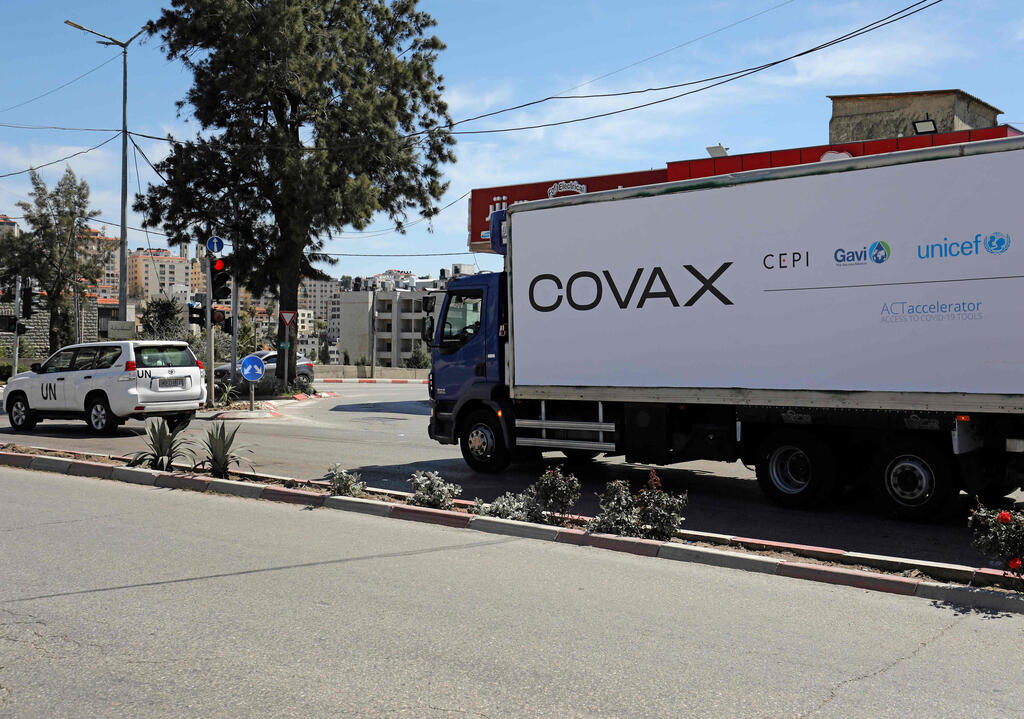
A refrigerated truck loaded with the first delivery of coronavirus vaccine via the United Nations COVAX program drives toward the West Bank city of Ramallah, on March 17, 2021
(Photo: AFP)
"No one is secured until everyone is safe," said Dr. Nitzan. "The virus treats all of us equally and mutations will continue to spread from areas with low vaccination rates elsewhere, including Israel. We are not dealing with the Delta variant and its 12 sub-categories."
Pointing to the highly infectious strain that has caused cases in Israel to skyrocket, Dr. Nitzan explained that its evolution could have not come about if inoculation rates in India weren't so low.
"When we do not care for global vaccination, the variants well get us all and humanity must work together against this," she said.
"We can take care of ourselves, put this is only a temporary solution. The Health Ministry is receptive to our calls, but it feels that this issue has not been discussed in the government's upper echelons."
Dr. Nitzan warned that the low vaccination rates among the Palestinians, who are also part of the COVAX scheme, are as much a danger to Israel as it is to them.
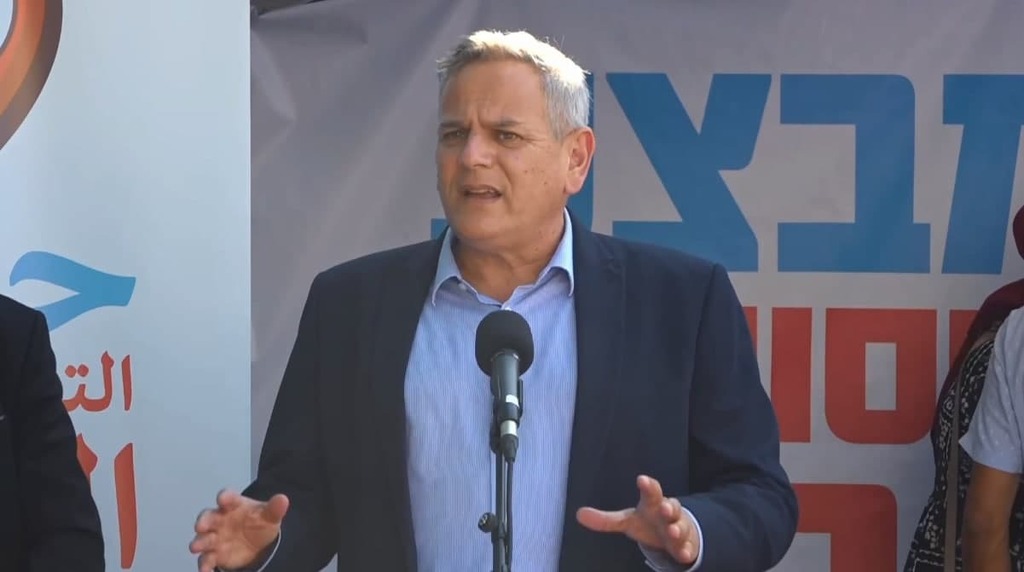
Health Minister Nitzan Horowitz
(Photo: Nadav Abas)
Hadas Ziv, Vice-Chair of Ethics in Physicians for Human Rights, says that the transfer of money or doses to COVAX is a moral obligation of the highest order for rich and developed countries.
"This is also an action with sound health and economic reasons," she added. "As long as the majority of the global population remains unvaccinated, the variants will continue to evolve and the economy and all of us will continue to suffer."
In response, the Health Ministry said that before COVAX's creation, Israel has signed bilateral treaties with the vaccines' manufacturers - which aided in a quick rollout.
"The Health Ministry manages the stock of vaccines responsibly, so that there is no shortage or surplus in Israel - with the full understanding that the vaccines are life-saving and thus a valuable product for the citizens of the world. Israel was supposed to receive some vaccines under the agreement, it had decided to waive them off in favor of other countries. This is in accordance with the situation in the supply of vaccines to citizens and the understanding that vaccines are a life-saving product," a statement said.