


An apparent tissue-sample identification error led to a false cancer diagnosis and an irreversible surgery that was not medically necessary. Cassandra Barksdale, from the Atlanta area, has filed a lawsuit against Kaiser Permanente, alleging that a biopsy taken from another patient was mistakenly attributed to her, leading doctors to diagnose her with an aggressive form of endometrial cancer. Months after undergoing extensive surgery, the lawsuit says, she learned that the biopsy containing the malignant tumor actually belonged to another patient.
Barksdale went to Kaiser Permanente's Southwood Medical Center in Jonesboro, Georgia, in early 2025 after experiencing abnormal bleeding and uterine fibroids, common noncancerous growths. She underwent an endometrial biopsy on March 10, and a week later, on March 17, was told the test showed an aggressive, high-grade form of endometrial cancer.
According to NBC News, the sample was sent to an outside laboratory for pathology testing. Barksdale later underwent a CT scan that, according to the lawsuit, showed no signs of cancer. Nevertheless, based on the pathology findings and her previous medical records, she was referred to a specialist who recommended surgery.
On May 15, 2025, when she was 43, Barksdale underwent surgery that included removal of her uterus, cervix, both fallopian tubes and ovaries. Lymph nodes were also sampled during the procedure. The removal of her ovaries caused her to enter premature surgical menopause, the lawsuit alleges.
But tests performed on the tissue removed during surgery found no evidence of cancer. According to the lawsuit, postoperative pathology detected no malignancy in the endometrial cavity. Despite that finding, Barksdale continued for months to face uncertainty about her condition and was even told she might need chemotherapy.
'I even started making funeral plans'
Beyond the physical harm, Barksdale described months of fear that she was suffering from a life-threatening illness. She said the diagnosis also took a severe toll on her two sons, who fell into a deep depression after believing their mother had an aggressive cancer.
"I even started making funeral plans with them to let them know, you know, if I don’t make it out, this is what I want done," Barksdale said, according to The Associated Press.
Her uterus, cervix, fallopian tubes and ovaries were removed: all because of an error
(Photo: Shutterstock)
The turning point came only in September 2025. According to the lawsuit, Barksdale was informed that DNA testing of the original biopsy showed that the tissue in which cancer had been detected was not hers but belonged to another patient.
Exactly how the mix-up occurred remains unclear. Her attorney, Shannan Young, said Barksdale entered the health care system looking for answers but left with "a diagnosis that did not belong to her," and that every step that followed was based on incorrect information.
According to NBC News, the lawsuit alleges that employees of the diagnostic company negligently handled the specimen before it was sent to an outside laboratory for testing. The laboratory itself is not being sued and is not accused of wrongdoing. It remains unclear exactly how the specimen identification error occurred.
The condition of the other patient is also not publicly known. AP noted that because of medical privacy laws, no details have been released about her, including whether the error delayed her cancer diagnosis or treatment.
Company apologizes, lawsuit demands accountability
In response to the case, Kaiser Permanente said, "Ms. Barksdale should not have experienced this."
The company added that it employs highly trained staff and has processes designed to prevent such errors, and said immediate steps were taken after the incident to prevent a similar case from happening again.
"We realize the impact of this incident and are committed to working with Ms. Barksdale and her counsel to resolve this in the most fair and accountable way we can," the company said.
The lawsuit was filed in Clayton County, Georgia, against several Kaiser Permanente entities as well as laboratory personnel who allegedly were involved in handling the sample. Barksdale is seeking a jury trial and unspecified damages.
It is unclear how often pathology samples are switched or mislabeled during medical testing. According to AP, similar cases have previously been documented in the United States, and laboratories have adopted various safeguards over the years, including barcode systems for labeling specimens and procedures for identifying samples at the point of collection.

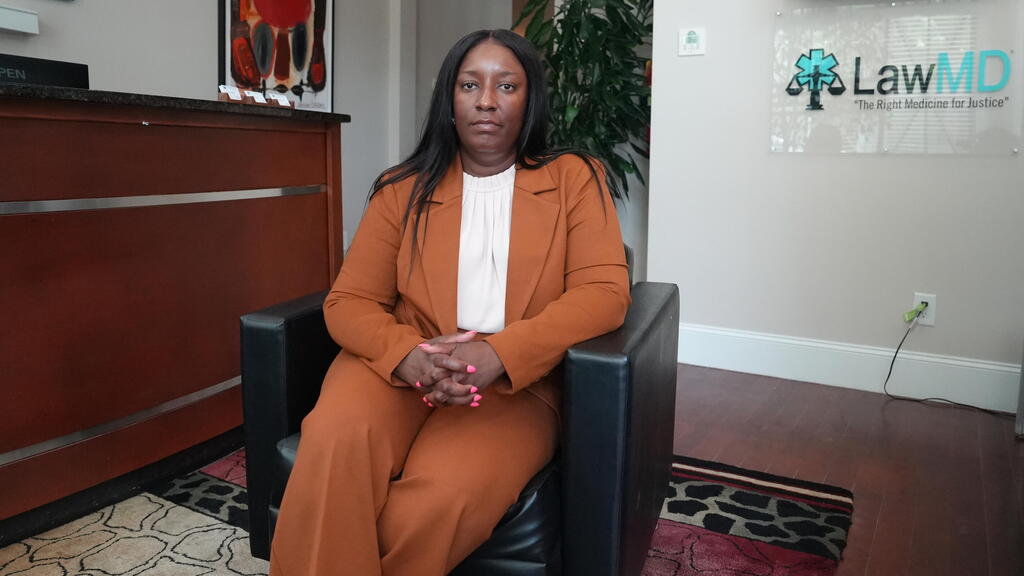
Barksdale and her attorney, Shannan Young
(Photo: Emilie Megnien/AP)
Young said that even if the lawsuit ultimately results in compensation, no amount of money can restore Barksdale's healthy organs or erase what she went through.
"There’s no amount of money that’s going to return back to her, her healthy organs, or erase the experiences and the pain that she’s had," Young said. "But our justice system recognizes that when somebody’s negligence harms another person, accountability requires more than 'I'm sorry.'"
Similar cases have also occurred in Israel. In 2014, ynet reported on a woman in her 40s who underwent a mastectomy after being told that cancer cells had been found in a test. No malignancy was found in the tissue removed during surgery, and subsequent DNA testing showed that the original sample containing the cancer cells was not hers but belonged to another woman.
Years earlier, in 2004, ynet reported on a 50-year-old woman who had her uterus, ovaries and fallopian tubes removed after being told that she carried mutations associated with an increased risk of cancer. Repeat testing at another hospital later found that she did not carry the mutations, and she alleged in a lawsuit that the surgery had been unnecessary.
First published: 09:26, 08.10.26