


A large Israeli study led by Wolfson Medical Center and recently published in the scientific journal Maturitas offers the first full national picture of hysterectomy surgery in Israel, showing a major shift over 17 years: fewer women are undergoing the procedure relative to population size, and more operations are being performed using advanced, less invasive techniques.
The study, conducted with the Health Ministry’s Health Information Division, reviewed all hysterectomies performed in Israel between 2005 and 2021, covering nearly 89,000 surgeries. Researchers say it is one of the most comprehensive Israeli studies on the subject because it is based not on one hospital or a limited group of patients, but on nationwide data from across the health system.
Gallery

Recent data reveals a revolution in the operating room in women’s treatment methods
(Photo: Shutterstock)
The research was led by Prof. Shimon Ginath and Dr. Liat Mor of the Obstetrics and Gynecology Department at Wolfson Medical Center, which is affiliated with Tel Aviv University’s Gray Faculty of Medical and Health Sciences.
Hysterectomy is among the most common gynecological surgeries, but also one of the most emotionally charged. For some women, it is a medically necessary solution to serious health conditions. For others, the decision can involve fear, uncertainty and, at times, a sense of loss.
According to Prof. Ginath, director of the Urogynecology Unit at Wolfson, there are three main reasons women undergo hysterectomy.
“Fibroid uterus, benign tumors of the uterus that cause enlargement of the uterus, pain and irregular bleeding, to the point of decreased hemoglobin and severe anemia,” he said. “Another reason is cancer of the uterus and ovaries, and the third indication is pelvic organ prolapse.”
Other, less common indications include endometriosis, infections, precancerous conditions and chronic pain. Ginath said the distribution among the main causes is relatively similar.
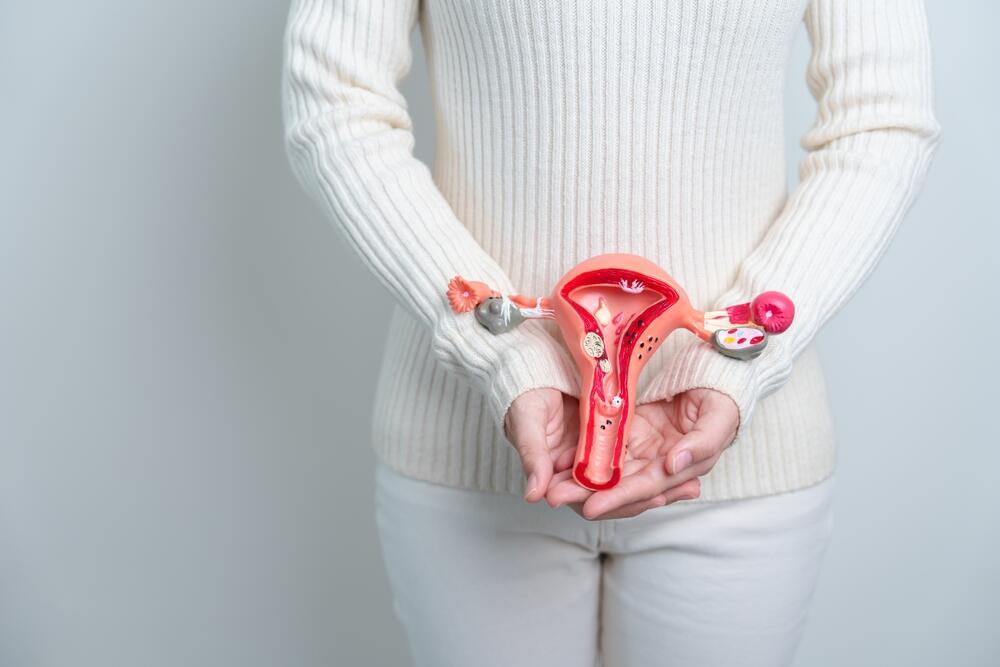
Hysterectomy data in Israel revealed
(Photo: Shutterstock)
“Fibroids account for about 30% of cases, malignant conditions account for about 28%, and pelvic organ prolapse accounts for about 26%,” he said. “These three reasons together make up about 84% of all hysterectomies, and all the rest, about 16%.”
The study found that not only have the reasons for surgery become better defined over the years, but the way the operations are performed has also changed significantly.
“Hysterectomy operations were traditionally performed through abdominal incisions,” Ginath said. “The incision was usually made horizontally in the lower abdomen, as in a cesarean section, or vertically from the navel downward if the uterus was very large.”
Today, he said, doctors tend to use less invasive approaches. “There is the laparoscopic approach, which is minimally invasive and involves fewer scars in the lower abdomen, and it can also be performed through the vaginal approach, through the vagina.”
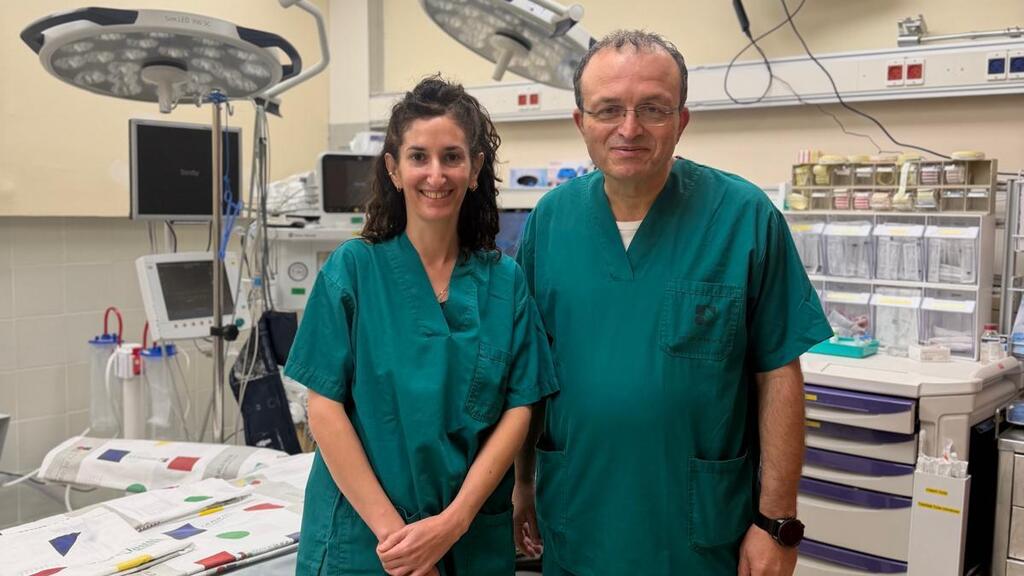
Prof. Shimon Ginath and Dr. Liat Mor, Wolfson
(Photo: Wolfson Medical Center)
To understand the scale of the change, the researchers sought to build a complete national picture: how many hysterectomies were performed in Israel, which methods were used, what medical conditions led to the surgeries and at what ages women underwent them.
“We turned to the Health Ministry and requested information on hysterectomies in the State of Israel,” Ginath said. “The Health Ministry receives data from across the country, from every hospital, both private and public. We received information on the types of operations performed and the reason they were performed among all women who underwent surgery in Israel, regardless of origin or religion.”
The researchers then compared the surgery figures with data on the general female population in Israel to determine not only how many operations were performed, but their rate among women each year and in each age group.
“We took the data on the total female population in the State of Israel according to the Population Registry,” Ginath said. “There is an accurate annual record of the number of women in Israel, including the number of women in each age group, and we compared how many women underwent hysterectomies and at what ages, against the number of women in Israel according to the data.”
The findings point to two parallel trends: a decline in hysterectomies relative to population size and a deep shift in surgical practice. While hysterectomy was once associated mainly with open abdominal surgery, a larger procedure that involves an abdominal incision and often longer hospitalization and recovery, the study found a decrease in open surgeries and a clear rise in minimally invasive methods, especially laparoscopic surgery.
“What we found is that it is a relatively common procedure,” Mor said. “The risk of a woman in Israel undergoing a hysterectomy during her lifetime is one in six. This is very significant in terms of the burden on the population. At the same time, we do see a decline in the number of hysterectomies over the years, and this is related to alternative medical treatments that we offer for the common reasons that existed in the past.”

Laparoscopic surgery, which has become the leading method
(Photo: Shutterstock)
That decline has been accompanied by a change in surgical technique. In 2005, abdominal hysterectomy was still the dominant method. By 2021, laparoscopic hysterectomy had become the leading approach.
Laparoscopic procedures are performed through small incisions in the abdominal wall using a camera and delicate instruments. In appropriate cases, they may involve less pain, fewer scars, faster recovery and a quicker return to routine.
“The main surgical finding is that there has been a change in the types of operations over the years,” Mor said. “We saw a move toward minimally invasive surgery, easier operations with fewer scars and simpler recovery, even though these are operations that require more expertise and more medical skill, which points to a higher level of surgical skill among surgeons in Israel.”
Alongside the move toward laparoscopy, the study also notes that the vaginal approach, removing the uterus through the vagina without opening the abdomen, remains important, particularly in cases of uterine and pelvic organ prolapse.
In other words, the shift is not only technological but clinical: doctors are better matching the type of surgery to the medical indication, the woman’s age and her overall condition.
The study also found that the reasons for hysterectomy vary by age. In middle age, particularly in the 40s and 50s, uterine fibroids and bleeding are among the main reasons for surgery. In older age groups, uterine and pelvic organ prolapse becomes a more significant indication.
These differences help explain why there is no single surgical method that fits all patients, and why the choice between open, laparoscopic or vaginal surgery depends on a range of medical considerations.
Mor said the trend is also connected to characteristics of Israel’s health system.
“The system enables a broad range of both conservative and surgical treatments under the umbrella of health fund subsidies, and a woman can make an independent decision on whether to choose hysterectomy or an alternative treatment,” she said.
“In the U.S., for example, a woman who is considering a hysterectomy because of bleeding during reproductive age has to think about whether she will spend a lot of money over many years on hormonal treatments or one time on surgery,” Mor said. “In Israel, she can decide on both, and both are funded for her. It is a system that, fortunately, has retained some of its good components and enables a broad range of options.”
Ginath said the figure showing that one in six Israeli women may undergo a hysterectomy in her lifetime should also be viewed in a broader international context.
“Although one in six sounds impressive, in the U.S. it is one in four, in Canada it is one in five, and that is also the case in Australia and in some European countries such as Ireland and Switzerland,” he said. “There are countries where they operate much more than we do. We are not at the top globally, but rather relatively in the middle, and by 2020, we had already dropped to one in seven women. In other words, the downward trend continues all the time, and we are offering women more conservative treatments.”