

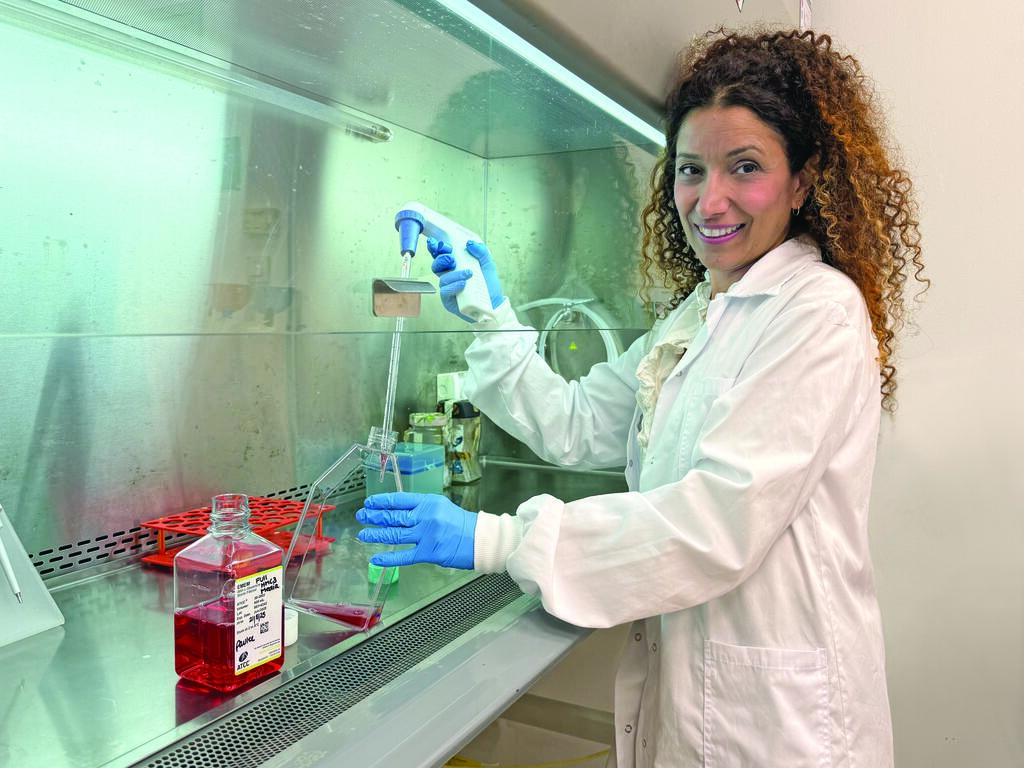
Prof. Carmit Levy, a senior faculty member in human molecular genetics and biochemistry at Tel Aviv University and head of its human molecular genetics department, is challenging long-held assumptions about the dangers of sun exposure.
Levy, 50, who lives in Ramat Gan and is a mother of two, has led research suggesting that moderate exposure to sunlight may boost fertility among women ages 30 to 40, opening a broader scientific debate about the sun’s effects on the human body.
How does a skin cancer researcher end up studying the benefits of the sun?
“I set out to study the normal function of the skin, tanning. Cancer begins in a normal cell when something goes wrong, and in the skin these are the pigment-producing cells, melanocytes, from which aggressive melanoma develops. In the study we played with the timing of UV exposure and discovered that the skin has a biological clock, a cyclical process that spreads in a wave over 48 hours after exposure to ultraviolet radiation. We saw, in both mice and humans, that people tan best if they are exposed to the sun every other day.”
When did it shift from tanning research to studying the whole body?
“That happened thanks to the veterinarian who accompanied the study. When we examined the mice after radiation exposure, she noticed things that didn’t remain only at the level of the skin: changes in fat distribution, in the lymph nodes and in overall appearance. She told me, ‘The mouse looks different.’ From there we were drawn into research on the sun’s effect on our physiology and metabolism.”
And what did you find?
“We found that males eat more after sun exposure, while in females estrogen protects against this effect. When I approached Prof. Noga Kronfeld-Schor of the School of Zoology to understand the mechanism, she told me, ‘It’s all about fertility, check the testes.’
"I told my student, ‘Go check the size of the mice’s testes.’ We found that after mild sun exposure, about 10 minutes a day, not frying, the testes grow. From there we launched a large study on fertility and sexual behavior. In collaboration with Israel’s health funds and Sheba Medical Center, we saw that UV radiation increases sexual and romantic desire in both sexes. The male wants the female more, and females are more responsive.”
People have always said those from warmer countries are more “passionate.” You’re explaining cultural behavior through physiology.
“When we looked at data we received from the health funds, we clearly saw a rise in testosterone levels in the summer, which also means an increase in sexuality and aggression.”
What does this mean for women?
“In female mice we saw more fertile follicles, a longer estrus period and an increase across the entire hormonal system. When we moved to data from women at Sheba’s fertility department, we saw that the hormone responsible for ovarian reserve was significantly higher in the summer. The implication is that women with fertility problems, according to our data, may be in a better, more fertile state in the summer.”
Does that mean they would be more fertile from sunbathing or using tanning beds?
“I can’t say. My data are based on the dates when those women were tested. We checked what the UV level was on those days.”
What other beneficial effects of the sun did you find?
“We published a paper examining what happens to the internal immune system after UV exposure. We saw that some elements improve; we measured cells and cytokines (proteins that mediate communication between immune cells) and saw that certain immune markers improve significantly. For example, while sun exposure can weaken local skin defenses and trigger herpes outbreaks, it appears to benefit the immune system that fights viruses in the lungs, such as COVID-19 or influenza.
“Our latest paper describes a study in which we injected mice with cancer cells and then treated them with mild UV radiation. We were able to increase survival and reduce tumor size.”
That sounds contrary to years of warnings about the dangers of the sun.
“When I met someone from the Israel Cancer Association, she was shocked and said, ‘UV is terrible.’ I told her, ‘This is what we found.’ I want to broaden the discussion. If we’re talking about the sun’s effects, about exposure and dosage, let’s expand the range of experts at the table. That’s the flag I’m raising.”

(Photo: shutterstock)
How does this align with your melanoma research?
“There’s a fascinating complexity. Throughout history the pendulum has swung: in ancient Egypt the sun was worshiped as a healer, in the Middle Ages pale skin was idealized, and in the early 20th century heliotherapy, treatment using sunlight, was practiced until the 1930s, when the link between sun and cancer was established.”
Are you now pushing the pendulum the other way?
“There are others like me. I’m not alone. Right now I’m holding both ends.”
What about vitamin D? In a sunny country like ours many people still have a deficiency. Can supplements replace sun exposure?
“There are large studies comparing groups that received vitamin D to those that didn’t, showing that the sun has effects not necessarily mediated by vitamin production. Our papers show exactly that: the sun has direct benefits for our physiology that are completely independent of the vitamin D mechanism.”
And now people are staying indoors because of the war, with little sun exposure.
“I assume that has an effect. At the end of the coronavirus pandemic I wanted to test this, to take blood samples from people who had been indoors for long periods during lockdown, but I couldn’t obtain ethics approval in time.”
So what’s the bottom line? Should people start going out into the sun?
“I’m cautious about practical recommendations. When people ask me whether to apply sunscreen to children or go sunbathing, I say I haven’t tested amounts and intensities of sun exposure for every skin tone, and there’s still a long way from science to practice. I’ll just say this: there are benefits to the sun that we shouldn’t forget.”
In your studies, how long do you expose the mice to UV?
“Exposure equivalent to 10 to 15 minutes outside in the sun.”
In August at 2 p.m. or in May?
“In May. But as I said, it’s important for me to be cautious. I’m not giving recommendations. Everyone should feel what’s right for their body.”
What are you working on now?
“We have follow-up fertility studies that will be published soon, and we’re conducting research on the effect of the sun on osteoporosis with Prof. Yankel Gabet, head of the Bone Research Laboratory. I also want to study menopause. There’s still a lot to discover.”