


Another poll, another political argument, another alarming headline. For many Israelis, the final days before Tuesday's election have become an exhausting cycle of checking the news, worrying about the outcome and struggling to switch off. What begins as an effort to stay informed can gradually turn into a source of constant psychological stress, affecting sleep, relationships and everyday life.
The election arrives at a time when many Israelis are already emotionally depleted. After three years of war, an unstable security situation and prolonged social and political tensions, the mental resources needed to cope with another period of uncertainty are running low.
Gallery
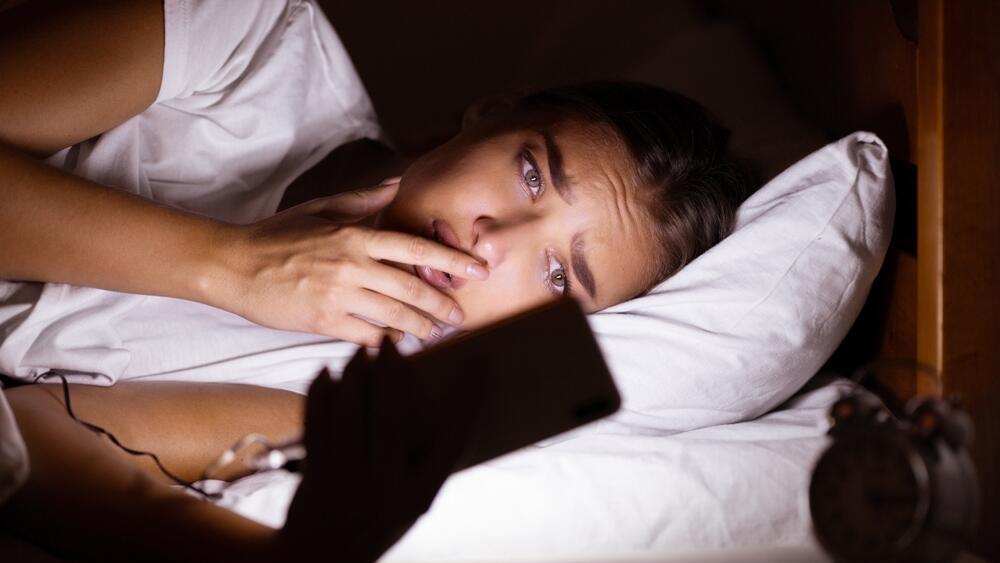
Using a smartphone in bed. Repeated exposure to election coverage can reinforce feelings of threat
(Photo: Shutterstock)
There is even a name for the feelings that emerge during such periods: election anxiety, sometimes described in English as "election stress disorder."
Despite the terminology, it is important to clarify that this is not an officially recognized psychological diagnosis. Rather, it describes the stress, worry and heightened vigilance that can develop around elections and their potential consequences. In a sense, it is an emotional side effect of democracy.
And although Israel's political circumstances are unusual, election-related anxiety is hardly unique to the country.
In a survey conducted by the American Psychological Association ahead of the 2024 U.S. presidential election, 69% of respondents identified the election as a significant source of stress. Another 72% feared that the results could lead to violence, while 32% reported that the political climate had created tension between them and family members.
These American figures do not necessarily reflect the prevalence of election anxiety in Israel. They do, however, illustrate how political uncertainty can extend beyond public debate and affect personal well-being and relationships.
When does political concern become psychological distress?
Not every concern about politics amounts to anxiety, and regularly following the news does not necessarily mean someone is experiencing psychological distress.
However, when the election becomes a persistent source of tension, several warning signs are worth recognizing.
The first is heightened vigilance: the feeling that you must constantly monitor developments, check what has happened and remain informed about every new announcement.
Another common sign is compulsive scrolling. People move repeatedly between social media platforms, political comments, opinion polls and news websites, even when they realize that doing so is not making them feel any calmer.
Stress can also manifest physically. The heart rate may increase, the body may remain in a heightened state of arousal, and sleep or appetite may be disrupted. Falling asleep, relaxing and maintaining an ordinary routine can become more difficult.
Relationships can suffer as well. Election stress may lead to irritability, angry outbursts, frequent arguments and difficulty tolerating political opinions that differ from our own.
As political developments occupy more of our attention, worries about possible election outcomes may continue throughout the day, even when we are not actively reading or watching the news.
Why the brain treats political disagreements like a threat
Why can an election provoke such intense emotional reactions, even when there is no immediate physical danger?
One explanation lies in how the brain processes threats. It does not always distinguish clearly between immediate physical danger and perceived threats to our security, values or future.
When political messages repeatedly portray victory by the opposing side as a catastrophe, disagreement can begin to feel like a genuine threat.

Liat Ariel and Dr. Adi Lavi Rotenberg
(Photo: Rambam Health Care Campus)
In response, the body may activate its emergency stress system, commonly known as the "fight-or-flight" response. This can produce physical tension and heightened alertness that persist long after we have finished reading the latest headline.
Another important mechanism involves our need to belong.
According to social identity theory, people tend to divide the social world into groups of "us" and "them." Identifying with a political camp can provide a sense of belonging, stability and meaning.
But during periods of intense polarization, that same identification can deepen hostility toward those who think differently.
Political disagreements may stop feeling like debates over policies and instead become struggles between good and evil. Someone with a different political opinion may be perceived as a threat to our identity and values.
Past experiences, feelings of insecurity or discrimination, and emotional wounds related to belonging can further intensify these reactions.
This is where endless scrolling becomes part of the problem. We check another poll or read another argument because we hope that obtaining more information will restore a sense of control.
Instead, repeated exposure can renew the feeling of threat, creating a cycle in which the search for reassurance generates still more anxiety.
How to stay informed without becoming overwhelmed
The first step toward managing election anxiety is setting boundaries around news consumption.
There is no need to check for developments every few minutes. Instead, it can help to establish specific times during the day to catch up on the news and avoid repeatedly refreshing polls, headlines and political comments, particularly before bedtime.
(Photo: Reuters/Ronen Zvulun)
The goal is not to disconnect from reality or stop caring about public affairs. It is to make a conscious decision about when and how to engage with information.
Another useful approach is learning to recognize the moment when stress begins to influence our behavior.
Before responding to an inflammatory social media post or entering a heated argument, consider asking yourself: Am I reacting to the facts themselves, or to the sense of threat they have triggered?
Taking a moment to recognize that distinction may make it easier to respond thoughtfully rather than impulsively.
It is also important to remember that disagreement is not necessarily a threat.
People can hold strong political convictions without treating everyone who disagrees with them as an enemy. Recognizing that others have different perspectives does not require abandoning our own values.
If conversations about politics repeatedly create tension with relatives or friends, it may help to establish boundaries, change the subject or temporarily step away from the discussion.
Not every disagreement needs to end in agreement.
Replace helplessness with meaningful action
Another way to reduce election-related anxiety is to restore a sense of personal influence through concrete activities.
Instead of remaining trapped in a cycle of worrying and repeatedly checking for developments, some of that energy can be directed toward civic participation, community involvement and everyday responsibilities.
Meaningful action can help people remain engaged with society without feeling that their emotional well-being depends entirely on the next news update.
Ordinary routines are important, too. Spending time with loved ones, maintaining familiar activities and taking breaks from screens can help reduce the intensity of political stress.
The aim is to remain involved while recognizing that no individual can control every political development or determine the outcome of an election.
What if the anxiety doesn't go away?
Anger, fear and frustration are understandable human responses during periods of uncertainty.
Rather than attempting to suppress these emotions or immediately acting on them, it can be helpful to identify what we are feeling, pause and choose how to respond.
Sometimes stepping away from the screen, speaking with someone close to us or returning to an ordinary activity can reduce the emotional intensity of the moment.
However, when anxiety persists, disrupts sleep, affects daily functioning or makes ordinary life increasingly difficult, professional mental health support should be considered.
Ultimately, no one can guarantee a calm election campaign or control its results. What we can learn to recognize are the emotional forces that political conflict activates within us.
Developing greater tolerance for uncertainty, maintaining perspective and preserving the ability to communicate with people who disagree with us can help protect our psychological well-being.
The objective is not to stop caring about politics. It is to stay engaged with the world without allowing every development to unsettle us, strain our relationships or cause us to lose ourselves in the process.
Liat Ariel is director of the psychological services department at Rambam Health Care Campus in Haifa. Dr. Adi Lavi Rotenberg is a rehabilitation psychologist in Rambam's psychological and psychiatric services.