


“Forever young, I want to be forever young,” Alphaville sang in their iconic 1980s hit. Forty years later, we are certainly not there yet, but there is no doubt that much has changed. If in the previous century reaching age 70 seemed like an impressive milestone, in the 21st century, it looks as though we are only getting started.
Quietly and steadily, life expectancy continues to rise in much of the world — and there is also a surprising local statistic. According to OECD data, Israel ranks an impressive fourth in life expectancy, at more than 83 years, behind Japan, Switzerland and Singapore. Hard to believe?

Thank you, antibiotics
“In the early 20th century there was a major leap in life expectancy driven by improved sanitation, advances in medicine, the invention of antibiotics and, of course, a dramatic decline in infant mortality,” says Prof. Ella Cohn-Schwartz, head of the master’s program in gerontology and director of the Multidisciplinary Center for the Study of Aging at Ben-Gurion University of the Negev.
“In the past, death from infections was one of the main causes of mortality. Infant mortality was widespread, something we can hardly fathom today. Many babies simply did not survive their first year. Interestingly, Jewish tradition has no mourning rituals for infants who die before 30 days, which shows how common it once was. If families had observed shiva for every infant, they would have been in mourning far more frequently.”
Even simple illnesses could once be fatal. “Measles, smallpox, pneumonia — all could be deadly. Antibiotics alone saved countless people who once would have died from ordinary infections. Today people do not die from chronic diseases; they live with them. Diabetes, heart disease — we have many more ways to treat the body, manage conditions and live alongside them. Modern medicine has enabled not only longer lives, but better ones.”
But rising life expectancy is not just a story of medicine and statistics. It is also shaped by environment, culture and lifestyle. If once a difference of a few years seemed dramatic, today gaps between countries — and even among different population groups within the same country — can reach a decade. Why do people age slowly in one place and decline quickly in another? The answer is more complex than we once thought.
“Life expectancy is influenced by many factors,” Prof. Cohn-Schwartz explains, “and the trends differ between countries. In the United States, for example, life expectancy has declined somewhat in recent years, especially among middle-aged men. One reason is increased use of opioids and alcohol — what we call ‘deaths of despair.’ When life becomes harder, people turn to addictive substances, leading to more accidents and premature death.”
 Prof. Ella Cohn-SchwartzPhoto: Dani Machlis, Ben-Gurion University
By contrast, in other parts of the world, such as Singapore, life expectancy keeps rising. “They have a system that strongly supports aging and a government that prioritizes it,” she says. “There is excellent healthcare, high accessibility to medical services and good nutrition, along with public spaces that encourage walking and physical activity. People age within the community, not in isolation — and that affects both body and mind.”
Prof. Cohn-Schwartz raises another key point: a person’s social environment is no less important than their medical condition. “Social connections matter immensely,” she stresses. “When you have family and friends, you eat better, you get out of the house, you have someone to accompany you to appointments and remind you to take medication. It reduces the risk of depression, which is also linked to physical health. Some studies even found that people with positive attitudes toward aging are more likely to live longer.”
Why do women usually live longer?
One of the most consistent findings worldwide is that women outlive men — in almost every country. Science offers some biological explanations, but lifestyle, social habits and behavioral patterns appear to play an equally significant role. According to Prof. Cohn-Schwartz, psychosocial factors shape health as much as genetics or medication.

Women have more support networks
(Photo: Shutterstock)
“Psychosocially, women have wider support networks and more people they can rely on. Men, on the other hand, smoke more, drink more alcohol, are involved in more fatal accidents, experience higher suicide rates and go to the doctor less often. These things are connected to lifestyle. Interestingly, Israeli men rank relatively high compared with global averages — they live longer here than one might expect, especially given compulsory military service and higher security risks.”
Even she is unsure how Israel reached such a high global ranking. “I don’t fully know how to explain it,” she admits. “Maybe it’s because we are a small country and people live fairly close to their families, which keeps them active. Family ties here are strong compared with other Western countries. We have access to healthy food — the Mediterranean diet is easy to follow in Israel. We also have a good, accessible healthcare system.”
In other words, the Israeli blend of family life, community networks, natural nutrition and accessible healthcare may be what is keeping us young.
The fortunate few who live beyond the average
Alongside society, culture and family, there is another factor that cannot be ignored: the body itself. Even though lifestyle, environment and community dramatically shape how long we live and how we age, underlying all of it are delicate biological mechanisms that govern the pace of aging. Prof. Anat Ben-Zvi, head of the Department of Life Sciences at Ben-Gurion University of the Negev, says the story of longevity is not only psychological or social, but also genetic and physiological.
“In principle, life expectancy has two major components,” she explains. “One is genetics. We have genetic programs that influence our lifespan. For example, there are entire families who live past age 100, known as centenarians. You can see that many family members live longer and seem to age more slowly. In some of them, researchers identified mutations in pathways related to metabolic regulation and stress response, and those mutations affect lifespan in model organisms.”
This phenomenon is not unique to Israel — it is observed in other populations around the world. Various regions have “genetic pockets” of people who live far longer than average, often thanks to biological pathways that influence metabolism and stress responses.
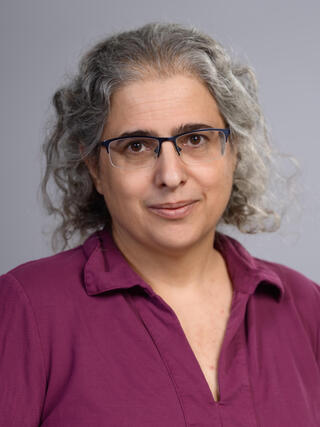 Prof. Anat Ben-ZviPhoto: Dani Machlis, Ben-Gurion University
“In Japan, you can find such groups. In Florida, there is a cluster of Ashkenazi Jews with high life expectancy. There are more examples,” Prof. Ben-Zvi says. “You can ask these people for their ‘recipes’ for long life, but ultimately, we can map mutations in genes that contribute to extended lifespan. Many of these genes are already known from model-organism research and regulate key metabolic programs that influence how fast an organism ages.”
But genetics is only half the equation. “The other side involves environmental pathways, stress and surroundings. There’s a well-known photo of a truck driver who drove the same route for years; one side of his face was exposed to the sun daily, and that side shows far more aging. It’s the clearest example of environmental impact on lifespan — though, of course, the full picture is much more complex,” she says.
When asked how these pathways connect to actual longevity, she points to one of the hottest fields in aging research today: dietary restriction. This is not new — studies about intermittent fasting and meal timing are abundant and have fueled modern nutrition trends.

(Photo: Shutterstock)
“There’s an entire field of dietary restrictions,” she says. “Some relate to what you eat — proteins, fats, carbohydrates — and some relate to eating patterns. Many people today practice intermittent fasting. It’s based on results from studies in various organisms. In model animals, when they are placed under dietary restriction — not starvation, but nutritional limitation — their lifespan can be extended. And if not lifespan, then at least their healthspan. The idea isn’t to starve, but to introduce nutritional deficits that activate resilience pathways. These studies begin with simple model organisms but extend all the way to humans.”
Significant factor — stress
Diet, however, is only one piece of the puzzle. It turns out that stress — usually associated with pressure and illness — may play a surprising role in extending life. Not chronic or overwhelming stress, but small, controlled doses that challenge the body and activate its protective systems.
“What’s interesting about stress is that it isn’t inherently good, but a little stress is good, because mild stress reduces the load on cellular systems — for example, the production of new proteins — and triggers programs that increase the expression of protective proteins,” Prof. Ben-Zvi explains. “They activate genes that repair DNA, proteins and oxidative damage. The whole idea is to activate stress responses without causing harm, stimulating the body’s defense systems. On one hand it slows some protein-production pathways and reduces cellular workload, and on the other it increases protective mechanisms. Ultimately, these processes can extend lifespan.”
“From an evolutionary perspective,” she adds, “these pathways are often tied to reproduction. When an organism must reproduce, it pours its energy into that. But if conditions don’t allow reproduction, the strategy shifts to conserving resources, repairing damage and waiting for better conditions. Many of these pathways are basically about ‘holding on’ for a better moment — and that translates into longer life.”
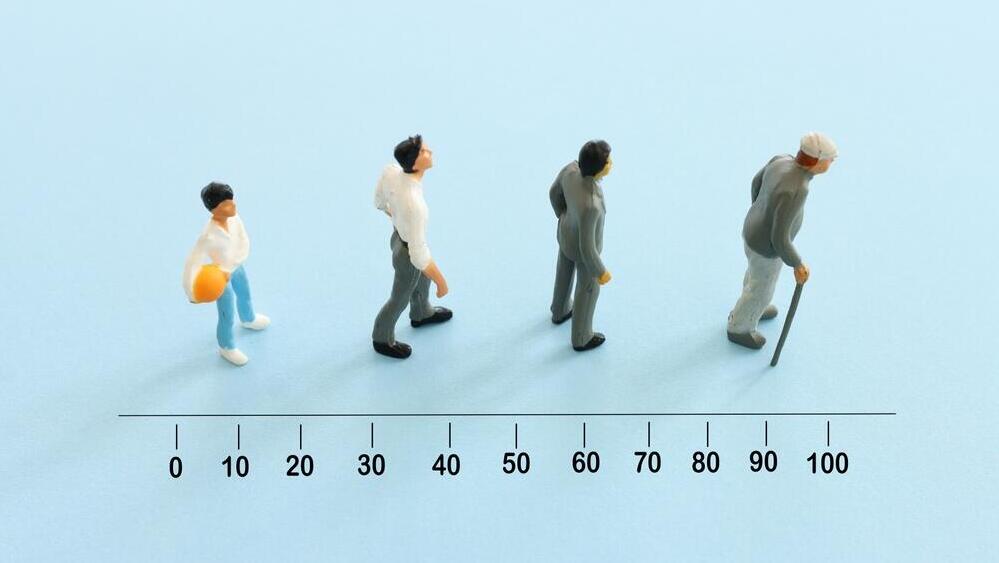
Will life expectancy continue to rise?
(Photo: Shutterstock)
In other words, it is a delicate balance of activation and rest. At the cellular level, as in the body as a whole, there must be a constant equilibrium between breakdown and rebuilding, between stress responses and self-repair.
“The concept is that many of these pathways ultimately connect to metabolic systems — processes that set the cell’s metabolic pace and determine where energy is invested. On the other side are repair systems that are energetically costly. The balance often shifts between these two poles, and that links back to genetics. Environment influences that balance, and so does genetics. If you ask me about Israel — well, we certainly have a bit of stress,” she says with a smile.
‘Aging isn’t defined as a disease — and that’s unfortunate’
Returning to the broader question: how did humanity nearly double its lifespan in just a century? After discussing genetics, nutrition and stress, Prof. Ben-Zvi emphasizes once again that the answer lies in the interplay of science, medicine and the body’s innate wisdom.
“First, you have the entire field of medical advances, which have a huge impact — lifesaving treatments and preventive care,” she says. “Today, for example, we don’t wait for diabetes to cause damage; we identify it early with relatively simple tests and intervene before complications develop.”
One major challenge, she says, is that aging itself is not classified as a disease, so medical treatment targets the conditions that arise from aging rather than the underlying mechanisms that drive those conditions. “Many diseases have age as a central risk factor. Alzheimer’s is a perfect example — the risk is directly tied to age. But since aging isn’t defined as a disease, you can’t run full FDA trials for drugs that prevent, delay or alter the rate of aging. We can’t change our genetic lottery, but if we could influence these pathways through medications or metabolic interventions, that could be a powerful tool.”
In other words, the path to extending life may not lie in a single miracle drug, but in strengthening the body’s natural ability to repair itself. “If treatments target not the specific disease but the body’s repair capacity — strengthening its resilience — we can potentially affect many conditions with one intervention,” she explains. “But it’s not simple to identify the right targets, influence them effectively and receive FDA approval.”
On the gender question — why women live longer — Ben-Zvi offers a clear biological explanation rooted in genetics, hormones, metabolism and the immune system. “It’s not unique to humans; we see it in other animals as well. Sometimes a mutation lengthens lifespan only in females, sometimes only in males,” she says. “Why? There are profound differences between the sexes that we often overlook. Hormonal differences translate into metabolic differences, which translate into differences in maintenance pathways. There are disparities between men and women in disease risk and how they experience illness. Aging is another dimension of that.”

(Photo: Shutterstock)
She adds that many of these processes ultimately tie back to reproductive systems, which differ sharply between men and women. “Men can reproduce until they die, while women have menopause and all that comes with it. There are also genetic mechanisms that affect lifespan in sex-specific ways. The immune system differs too — men often complain more when they’re sick, and women wonder what the fuss is about. Men and women truly experience illness differently because their immune responses differ.”
Will we all reach 100?
This leads to one final question: not just “how did we get here,” but “how much farther can we push the limit?” Will turning 100 become a norm rather than a rarity, or will it remain an exclusive club?
“It’s an excellent question,” Ben-Zvi says. “In simple organisms, we’ve managed to double lifespan. But humans are different. We are already among the longest-lived species in nature, so it’s hard to know how far the boundary can be extended.”
Still, she stresses, the very existence of people who reach such ages proves it is possible. “If we understand the biological pathways that enable it, we may be able to activate them through other means — medication, nutrition or metabolic interventions. It doesn’t mean living forever, but delaying aging and improving quality of life. Of course, that brings challenges too — employment, pensions, healthcare systems treating older populations. On one hand, it’s a blessing: people can fulfill themselves more, learn, work, travel. On the other hand, delaying aging increases the likelihood of late-life diseases.”
For her, the goal is not immortality but prolonged health. “The aim isn’t to get everyone to 100, but to help more people reach 80 or 90 in good health — active and independent. That is the real achievement. That is how aging research can truly change the world.”