

Sigrid is a 48-year-old Danish woman. Twenty-five years ago, we studied together at the same university in New York. One night, after a lot of alcohol, we made a bet: Who could hold out longer without settling into the conventional routine of marriage, work, children, a house, a car, two vacations a year and a joint tax return? If we were still tied after 20 years, we wrote on a napkin in the pub, we would have children together. I surrendered to bourgeois life after seven years. She is still waiting for me to pay my debt. And for children.
After university, Sigrid returned to Copenhagen and a few years later started an event-planning business. “It’s a natural process in Denmark, in Scandinavia, and I think in Northern Europe generally, to take your time,” she says. “Get a degree, travel, build a career, become independent and financially secure, maybe even buy a home, and only then start thinking about a husband and children. For me, that was great, because I realized that as a woman I had something my mother didn’t have: options.”
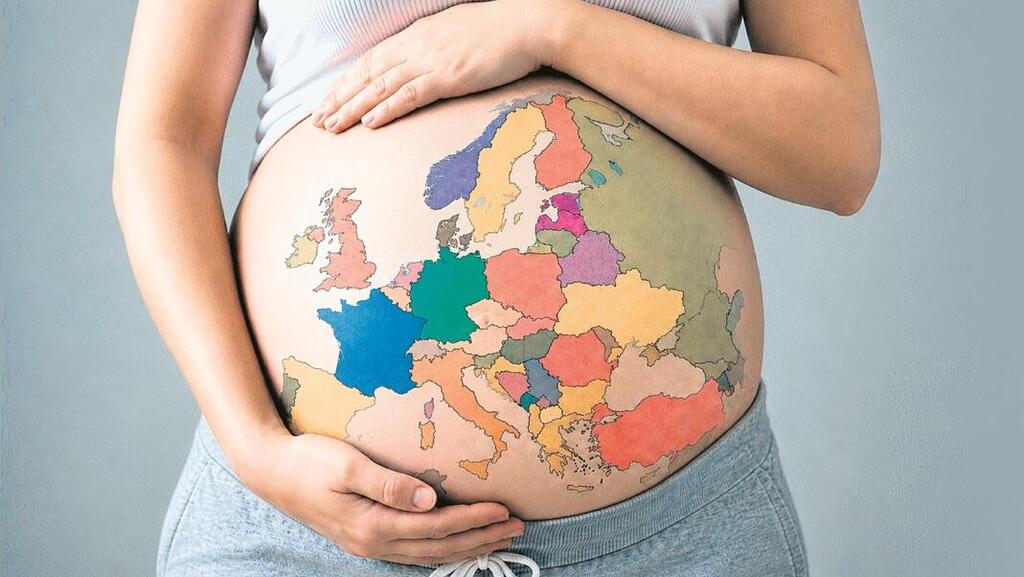
She checked every box. She found cool hobbies, traveled to exotic places and advanced in her career. She never once envied childhood friends or colleagues who had children.
“I didn’t see enjoyment there. I mostly saw a kind of job, a burden,” she says.
In the Nordic countries, there is no stigma attached to women who choose to live without children. No JD Vance or other figure on the right accuses them of selfishness or of destroying the Western world.
Then came the point when Sigrid decided she was tired of coming home to an empty house.
“I started to feel that what I was doing had no real meaning, that I felt empty, that I was telling myself a lot of stories and excuses about ecology or the economy or the state of the world so I wouldn’t have to admit that I did want a child,” she says. “And from that moment, emotional decisions had to be made alongside practical ones: finding a partner, finding the right time. At my age, and in the circles I had moved in until then, it was impossible.
“In Denmark, we say there is no more effective contraceptive than a smartphone. Our deepest recession is in our sex lives.”
She tried adoption and surrogacy, both generously funded by the state, but neither worked out.
“I won the bet, but I lost at life,” she told me when we spoke.
× × ×
This is one of the biggest problems facing the West, except no one is taking to the streets to protest it on Fridays and it has no poster girl like Greta Thunberg. But if Europe’s fertility rate remains at its current level, the continent’s population will shrink and age. There will not be enough workers for the labor market and not enough money to subsidize pensions and other payments to retirees. The current social order will not survive, and that will be only the beginning.
“This is a problem that really isn’t discussed enough,” says Prof. Martin Bujard of Germany’s Federal Institute for Population Research. “Unlike climate change, the war in Ukraine, energy prices or tariffs, it’s not a problem you feel now. You will feel it only 20 or 30 years from now, when our entire social pyramid is turned upside down and its broad base moves to the top.”
In other words, a relatively small number of young people will be forced to financially support a very large number of older people.
“But I don’t subscribe to the chaos theory,” Bujard says. “At some point, countries will realize they are heading toward a huge problem and that they have to find solutions.”
The period Bujard is talking about is one generation. At this pace, within a generation the populations of European countries are expected to shrink by about 15%.
But what exactly is the fertility rate we are talking about?
The magic number is 2.1. Statistically, that is the average number of children each European woman of childbearing age would need to have for the population to remain stable, excluding migration in either direction, and for each generation of parents to fully replace itself.
Europe is far from that number. Across the continent, the average stands at 1.34. In Germany, Europe’s largest economy and most populous country, the rate fell last year to 1.32. In France, which traditionally had a relatively high fertility rate, it fell last year to 1.56. At the bottom of the list are Poland, at 1.09 children per woman, Spain at 1.11 and Italy at 1.14.
Italian Prime Minister Giorgia Meloni has warned that at this pace, Italy will disappear. Her friend Elon Musk believes the issue is the biggest problem facing America, where fertility has fallen 20% over the past two decades.
Israel has little to worry about in this category. Religion, as among Mormons and the Amish, is generally a direct indicator of high fertility. Israel’s average is 3.0 to 3.1 children per woman, the highest among OECD countries. But there are exceptions: In religious Turkey, for example, the fertility rate is only 1.48.
Demographers and population researchers point to many reasons for this steep decline: economic instability, job insecurity, wars, the energy crisis, violence in schools, the housing crisis, difficulties balancing careers and parenthood, shortages of infant day care, green ideology and more.
Every one of these explanations is valid, but there is no single reason, and the causes vary from country to country.
“Weltschmerz,” says Kerstin Stiebner, a 44-year-old lawyer from Berlin, summing up in a single word the collection of reasons that kept her from deciding to have children.
In other words: The state of the world pains me.
What is clear is that social changes and severe global crises directly affect fertility rates. Some of the causes are actually the result of positive developments. The feminist movement’s achievements in gender equality, access to abortion, widespread sex education and contraception, for example, all contributed to declining birth rates in Europe.
But negative shocks also clearly lead to quieter maternity wards. The 2008 financial crisis and, of course, the coronavirus pandemic caused significant declines in fertility rates, including in countries that had already begun to see birth rates recover.
Another thing that appears clear, at least from history and especially from looking at the numbers in Asia, is that once the graph starts falling, it is very difficult to push it back up.
“There is a growing view in the field that our target should not be to raise the average back to 2.1,” says German demographer Helena Gebhardt, “but to make sure we don’t continue falling below 1.35.”
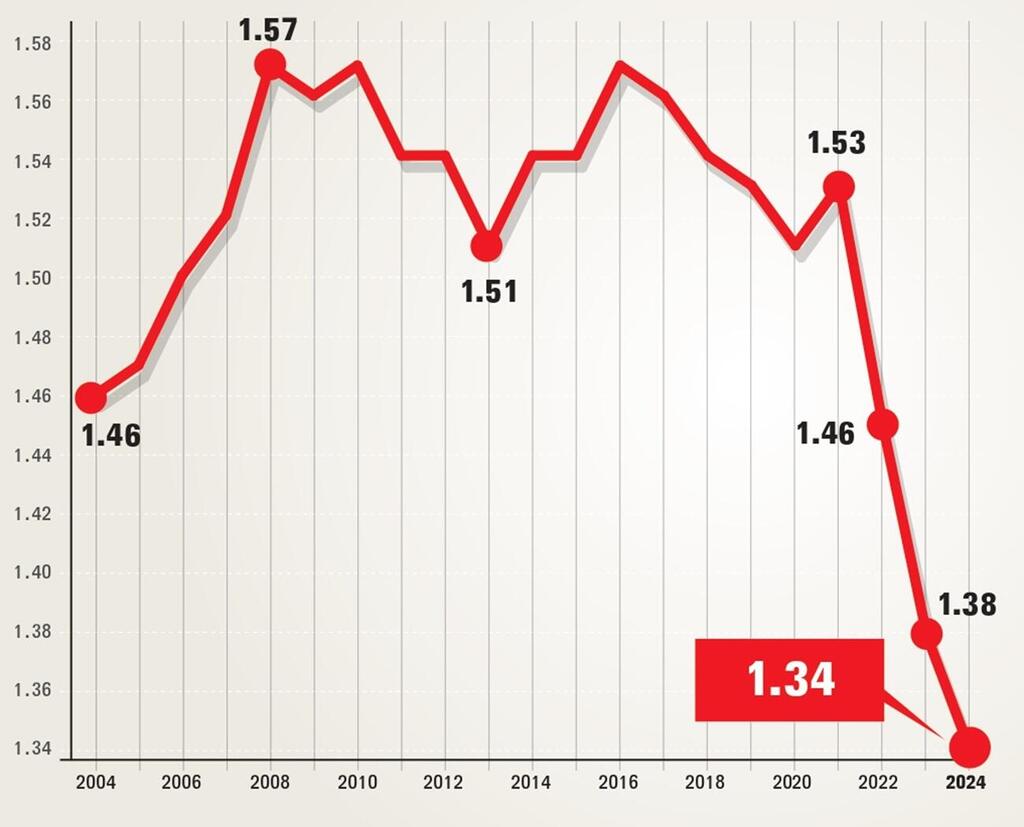
The decline in the number of births per woman in Europe, 2004-2024
× × ×
And here the elephant enters the room, bringing up a subject that is not considered particularly politically correct in Europe.
One way of overcoming the problem is immigration. The data show that foreign-born women tend to have more children than native-born women. In Germany, for example, the figures are 1.89 births among immigrant women compared with 1.23 among native-born women.
But over time, it has become clear that immigration is not necessarily the answer.
In 1990, only 2% of Spain’s population was foreign-born. Today the figure has soared to 19%. But immigrant women eventually adapted to the fertility patterns of native-born women, and the country’s fertility rate continued to fall.
Over the past decade, that trend has changed somewhat. Immigrant women arriving in Spain from countries such as Syria still tend to have more children. But this immigration has generated other problems in Europe, including the dramatic rise of the far-right.
And therein lies the catch: Europe very much wants more children, but it wants them to come from the “right” background.
“There is something very European, and very racist, about this discussion,” a population researcher at the University of Helsinki, who asked not to be named, told me.
“Since the coronavirus pandemic, Europe has experienced five years of population growth because immigration and births have exceeded deaths. But hanging over that is a very clear message: We want higher fertility rates among European children, not immigrant children.”
That is one reason this important debate barely takes place on the continent, except within academia and, at the opposite end of the spectrum, in far-right circles.
Another reason the issue receives relatively little attention in Europe is the argument that declining birth rates are actually a positive development. European women now have far more choices and are no longer “enslaved” to raising children.
Feminists also argue that the discussion around birth rates treats women as biological machines for producing children and that, in practice, even in Europe gender equality remains far from true equality.
“Women are expected to build a career like men, come home from work and then begin their second career,” Stiebner says. “There are no such expectations of men, the vast majority of whom are not Scandinavian.”
The Greens add another renewable source of energy to the debate, arguing that lower birth rates are actually good for the planet: fewer people, less consumption, less pollution, less hunger and disease.
“I know that argument,” Bujard says. “My answer is: Who exactly do they expect to lead the ecological revolution? Who will bring innovation, ideas, vision? That can happen only if there are a lot of young people in society.”
× × ×
But while Europeans avoid this debate, the consequences of declining birth rates are already being felt.
In Germany, for example, 654,300 babies were born last year. During the same year, 1.01 million residents died. It was the lowest number of births since 1946, immediately after World War II, when the population was much smaller, everything lay in ruins and the future looked far more frightening than it does today.
Today, a quarter of German men ages 45 to 50 have no children.
A walk through the streets of Berlin or other major European cities sketches out a conservative, aging, quiet, beige picture.
“I remember how I felt when my friends around me started becoming mothers,” Sigrid says. “I heard their reasons for having children and I didn’t connect with any of them. Then I saw their relationships fall apart, and they would say that financially they regretted having children.
“They said it was hard and demanding work that you could never quit. There was no physical reward and it was full of sacrifices and giving up your ego. You were always in second place. There was never any time to relax. The kids always brought something home from day care. Vacations were full of uncontrollable tantrums. And in the end, the children kind of hated them anyway.
“The child became a kind of commodity: How much money will we get from the state for having one? How much does it cost to raise a child to age 18? Endless calculations like that. I saw parents who weren’t happy with the product they themselves had created, people who lived from one state of exhaustion to another. I wasn’t willing to give up my hobbies and career for that.”
Is that really the case? Have European women given up children in exchange for their own happiness? Not necessarily.
A study by the sociology department at the University of Cologne involving 43,000 respondents in 30 countries found that parents were no happier than childless adults, but they felt a greater sense of meaning and value in their lives.
In the Nordic countries, however, that distinction almost disappears. Parents there are significantly happier and also report a strong sense of meaning in their lives.
One reason is the generous support Nordic countries provide to parents: cash bonuses, abundant day care, generous parental leave for mothers and fathers, tax breaks, flexible working hours and substantial financial assistance even for women who choose to have children outside the traditional family structure.
In the early 2000s, those conditions helped produce a modest increase in birth rates and turned Scandinavia into a model for others. But it became clear that government funding is not always the answer.
After the 2008 financial crisis, fertility rates in Scandinavian countries fell again. Hungary under Viktor Orban offered sweeping financial incentives to parents, including loans that did not have to be repaid after the birth of a third child and lifetime income-tax exemptions for mothers with more than four children. Once again, births rose for a while and then fell.
Meanwhile, countries that are not known for providing extensive support to new parents, such as Albania and Bulgaria, rank near the top of Europe’s fertility table.
Day care is free in Austria and extremely expensive in Switzerland, yet the fertility rates in the two countries are similar.
Denmark tried another creative solution. In 2014, the country launched a widely discussed campaign under the slogan “Do it for Denmark.” The campaign was built around the advertising insight that couples have more sex while on vacation.
It encouraged Danish couples to take a romantic trip and then document any pregnancy that resulted. Couples who did so received three years’ worth of free disposable diapers.
The campaign generated enormous discussion and widespread coverage, and spawned follow-up videos and parodies. But in the end, Denmark’s fertility rate continued to fall.

From the 'Do it for Denmark' campaign encouraging childbirth
(Photo: YouTube)
“The real problem, as I see it, is less the fertility rate than the fertility gap,” Bujard says, referring to the difference between how many children people say they would like to have and how many they actually have.
“In our studies, most respondents say they want two children. But they wait for conditions in the world, the economy or housing to improve. Sometimes they wait until it is too late. In most Western countries, the average age at which women have their first child is over 30.
“The problem is that there is a negative narrative hanging over all of this, and that is what has to change. Everyone — politicians, the media, society — has to create a positive narrative.”
And not just provide financial support.
“Today it is already clear that cash bonuses are not a strong enough incentive.”
× × ×
If there is one point in time when population size became a global issue, it was 1968.
That year, scientists Anne and Paul Ehrlich published “The Population Bomb,” which became a bestseller and predicted that within a few years the world would suffer terrible famine and millions would die.
The Ehrlichs — both Jewish, incidentally — proposed sensible measures such as sex education, investment in contraceptive research and legalizing abortion. But they also floated extreme ideas, including adding sterilizing agents to water supplies in places without birth control.
Most of their predictions have since proved wrong, but the population-reduction revolution was already underway.
Some countries took it to extremes. China, famously, limited most families to one child until 2016. Today China gives financial incentives to women who give birth.
Singapore reduced the number of births per woman from six in 1960 to 1.6 in 1985. It is now below one, less than half the replacement rate of 2.1, and the government offers $5,000 for every child born.
In South Korea, the rate is 0.7, meaning that in each generation more than half the population could disappear.
Japan is losing about 350,000 residents a year.
Economics professor Hiroshi Yoshida created a kind of clock showing the exact date when there would no longer be a single child under age 14 anywhere in Japan. In April 2012, when the display first went live, the projected date was May 18, 3011. At the time of writing, the clock has moved forward to Aug. 13, 2664.
The global trend is clear. In 2018, 103 of the world’s 204 countries had fertility rates below 2.1. That number is expected to rise to 198 countries by 2100.
In this respect, Europe is no different from much of the Western world. But because of its cultural and economic importance, it is Europe that the West watches most closely.
Culturally, it does not take much imagination to see what this process could do to the continent.
Last year, for example, fewer than 10,000 babies were born in Estonia. According to local demographers, if that pace continues, the Estonian language could eventually disappear.
Some predictions take the idea to its extreme. Ian McEwan’s much-discussed new novel, “What We Can Know,” depicts a dystopian world in which Nigeria is the dominant global superpower. Nigeria’s fertility rate today stands at 4.4 children per woman, more than three times the European average.
Economically, however, the issue is more complicated.
Economists warn that in the relatively near future, young people could rebel against taxes used to fund the pensions of generations that came before them.
This generation, shaped by the coronavirus pandemic and growing up in the shadow of the Russia-Ukraine war, is entering the workforce at a time when artificial intelligence is driving a new industrial revolution.
Amid all of this, they will be expected to finance a social welfare system supporting far more elderly people with contributions from far fewer young people.
People aged 65 and older, who made up 20% of Europe’s population in 2019, are projected to account for 31% by 2100.
There is no scenario in which Europe’s current economic system can withstand ratios like that. Some of the more radical sociologists argue that the situation will force Europe to reinvent society itself.
“Capitalism pushed me to pursue education, a career, success and self-fulfillment. Less love,” Sigrid says. “I was given limitless freedom until I no longer knew what to do with it and got lost.
“We became addicted to dating apps whose algorithms are built around keeping us single as a business model and as consumers. I’m not a woman who regrets her decisions, but for years I have gone to sleep with the same question: ‘What if?’”
She describes billboard campaigns in Denmark featuring pictures of eggs beneath hens and asking, “Have you counted your eggs today?” or drawings of sperm accompanied by a question about whether they are swimming too low.
“I think the great failure of the authorities and employers,” she says, “is their inability to allow work and parenthood to coexist. Having children has become an interruption to the path of life.”

Maternity ward in France
(Photo: BSIP/Universal Images Group/Getty Images)
Instead of the idea that children are the essence of life, or at least an important part of it.
“Exactly. That idea of ‘Children are the best and most important thing that ever happened to me’ no longer exists. People have other things with which to fill their lives and build an identity. Capitalism and feminism gave us an alternative system of values, and there is no requirement that children be part of it.”