


China is currently grappling with its largest-ever outbreak of the chikungunya virus, with more than 7,700 confirmed cases and growing concern over the virus establishing itself in the local population. The mosquito-borne illness has prompted aggressive containment measures from authorities, particularly in the southern city of Foshan, where the majority of infections have been recorded.
According to the Associated Press, over 7,000 cases were confirmed in Foshan, located in Guangdong Province, roughly 170 kilometers from Hong Kong. Between July 27 and August 2 alone, 2,770 new cases were documented in the city, as reported by the provincial disease control bureau. Additional cases have surfaced in nearby Guangzhou and, as of last Saturday, a first case was also confirmed in Hong Kong.
Gallery
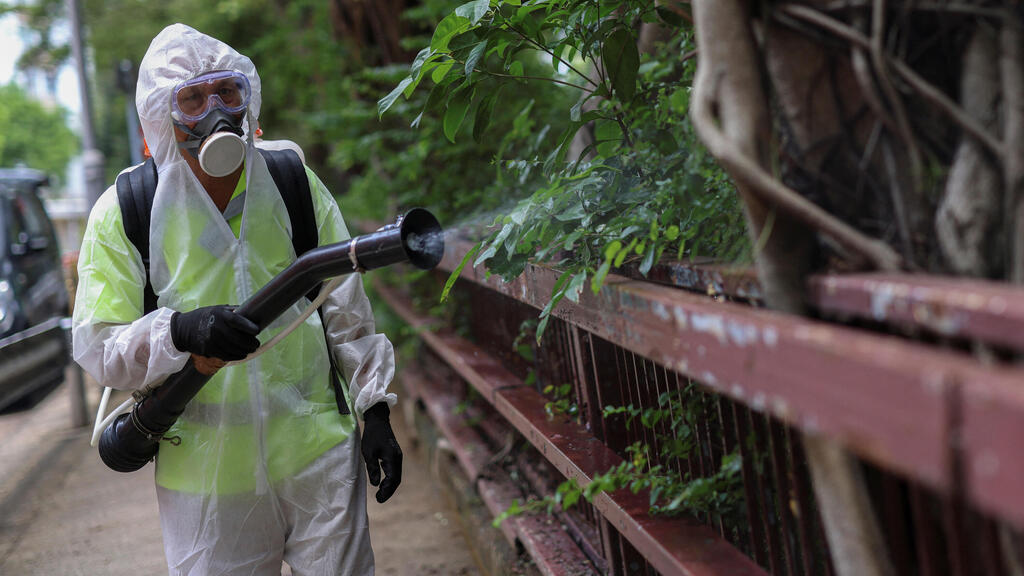
Pest control spraying in public housing in Hong Kong following chikungunya cases
(Photo: Reuters/Tyrone Siu)
“What makes this event so significant is that chikungunya has never been established in mainland China before,” said Dr. Cesar Lopez-Camacho of Oxford University. “This suggests most of the population has no prior immunity, allowing the virus to spread quickly.”
Imported virus, local conditions
Prof. Eyal Leshem, an infectious disease expert at Sheba Medical Center in Israel, said the outbreak in China is not surprising. “It’s a classic story—heavy rains and flooding create ideal breeding grounds for the mosquitoes that carry the virus. Once the mosquito population surges, it takes just one infected traveler from India or Thailand to kickstart local transmission. We’ve seen similar patterns in France, Italy, and now in Florida, where U.S. officials are reporting dengue cases.”
Leshem added that China has implemented a wide range of response strategies. “These include conventional tactics like spraying insecticides, draining standing water, using mosquito nets, and applying repellents. But in typical Chinese fashion, there are also strict public health enforcement measures: people face hefty fines for keeping water-filled flower pots, mosquito-eating fish are being released into ponds, and in some cases, patients are being hospitalized against their will.”
Could it reach Israel?
While the risk of a similar outbreak in Israel is currently low, Prof. Leshem cautioned that it’s not out of the question. “We know these types of mosquitoes are present in Israel, and from time to time, we do identify chikungunya cases. It’s certainly a possibility, as we saw with last year’s West Nile virus outbreak.”
A painful, prolonged illness—but rarely fatal
Chikungunya is spread by infected Aedes mosquitoes—the same species responsible for transmitting dengue and Zika viruses. Symptoms include high fever and debilitating joint pain, which can last for months. Though rarely fatal, chikungunya can be difficult to distinguish from dengue or Zika, complicating outbreak tracking.
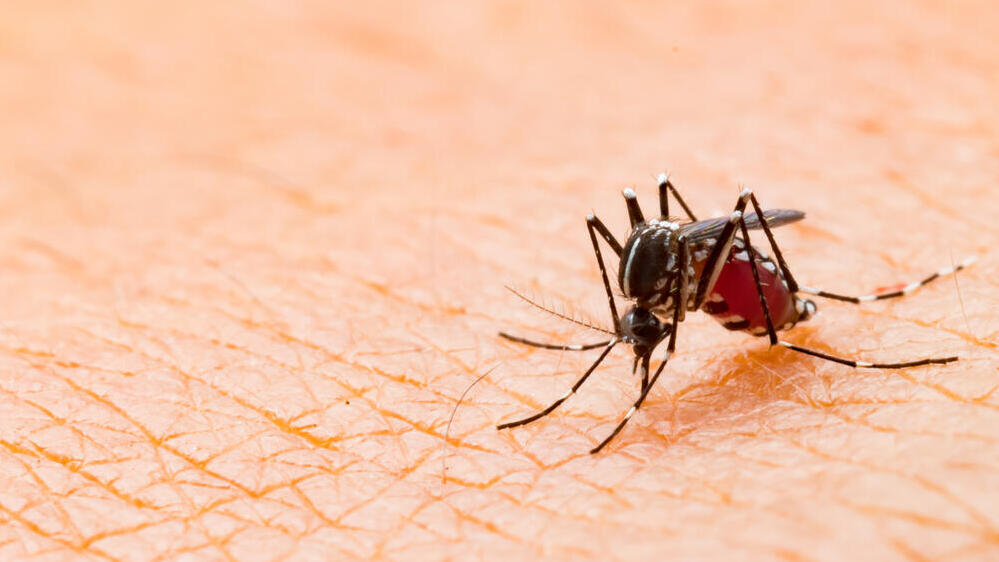
Aedes albopictus
(Photo: shutterstock)
Two chikungunya vaccines were recently approved in a handful of countries but are not yet widely available. As a result, most patients receive only supportive care, typically paracetamol to relieve symptoms.
China’s response has been sweeping. Authorities have placed mosquito nets around hospital beds, conducted widespread spraying of insecticides in public parks, construction sites, and abandoned buildings, and deployed drones to locate and eliminate standing water where mosquitoes breed.
According to The New York Times, there have been reports of government workers entering private homes without consent to inspect for mosquito breeding grounds. Some patients have even been ordered to report for hospitalization with no option to refuse.
“The initial surge in infections has been contained to some extent,” said Kang Min, chief expert at Guangdong’s disease control office. “However, authorities still face complex and serious challenges,” including the potential for imported cases via the region’s international trade hubs and continued heavy rainfall and typhoons that create ideal mosquito-breeding conditions.
Get the Ynetnews app on your smartphone: Google Play: https://bit.ly/4eJ37pE | Apple App Store: https://bit.ly/3ZL7iNv
In some areas, authorities have taken unusual steps such as releasing mosquito predators that hunt virus-carrying species and introducing mosquito larvae-eating fish into water sources.
Power cuts and fines to enforce compliance
On Saturday, officials in Guangdong called for a “full-scale elimination campaign” against the outbreak, urging the public to remove standing water from flowerpots, gutters, and containers. In one Foshan town, electricity was cut to homes that failed to meet anti-mosquito guidelines, according to local committee reports. Businesses that fail to take mosquito-control measures face fines of up to 1,000 yuan (about $140 USD).
The U.S. Centers for Disease Control and Prevention (CDC) has issued a travel advisory urging caution when visiting affected areas in southern China, as well as Bolivia and islands in the Indian Ocean. However, the World Health Organization (WHO) has not yet issued specific travel guidance for China. Chinese health authorities maintain that the disease is “preventable, controllable, and treatable.”
Unlike COVID-19, chikungunya is not spread from person to person, but only through bites from infected mosquitoes. As such, there is no need for lockdowns or movement restrictions. Still, China’s forceful approach to containment echoes the tough strategies employed during the COVID-19 pandemic, with broad limitations imposed on the population in affected areas.