

The gap between the moment of injury and the start of medical treatment has, over the past two and a half years, become a race against time, one that has saved the lives of hundreds of soldiers. Alongside the complex reality in which the IDF Medical Corps operates, under the Technological and Logistics Directorate, the system-wide effort in the field has produced unprecedented results.
The most notable achievement is an especially low mortality rate among the wounded — about 7% — roughly half the rate recorded in the Second Lebanon War. When multiplied by the number of casualties, that means, according to Col. Dr. A., the medical commander of Southern Command, “another 600 soldiers who came home alive to their families.”
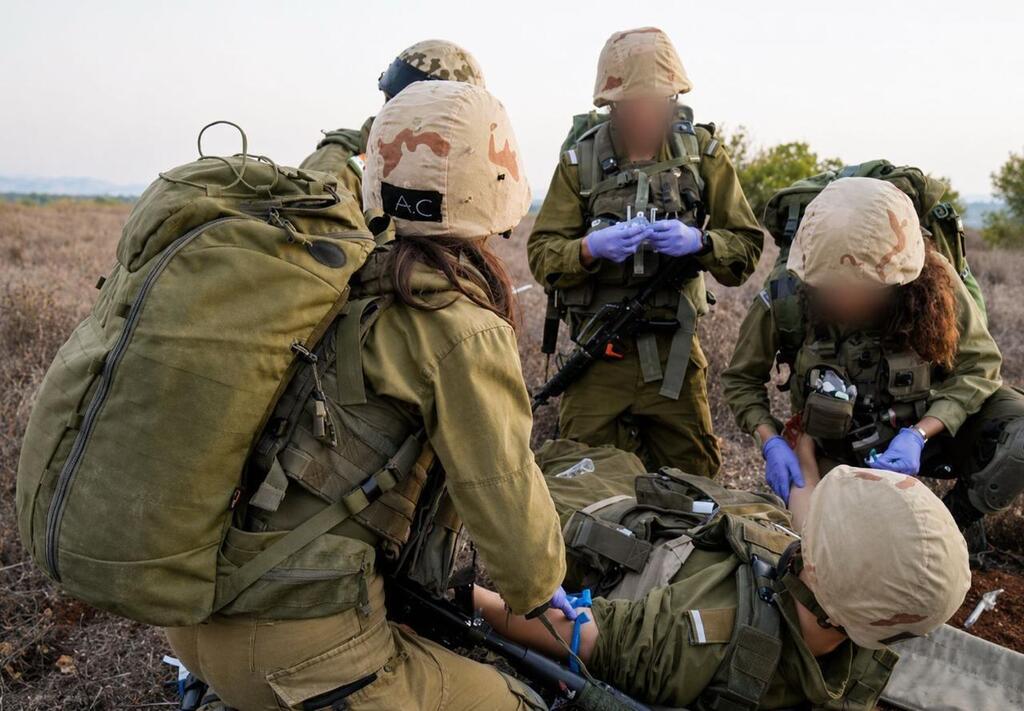
The data also show a dramatic improvement in evacuation times to hospitals. The median evacuation time by helicopter was 61 minutes in Gaza and 79 minutes in Lebanon. When evacuation was carried out by vehicle, the median time rose to 91 minutes in Gaza and 115 minutes in Lebanon.
“Evacuation times have changed beyond recognition,” says Dr. A. “At the beginning of the campaign in Gaza, they were around an hour and 18 minutes. Today, they have dropped to under an hour. It is no longer just a matter for the doctor or the paramedics. Commanders at every level address it in every operational plan. It is constantly in front of our eyes.”
The high survival rates are also the result of a strategic decision to bring specialist doctors and advanced equipment into the heart of the fighting, while changing protocols — reducing time-consuming invasive procedures such as intubation, the insertion of a flexible plastic tube into the windpipe for ventilation, in favor of stopping bleeding and relying on the soldiers themselves to provide immediate aid to their comrades.
“Some of the wounded in the war, including critically wounded soldiers, were saved thanks to their friends, who put tourniquets on them,” Dr. A. says.
But the most dramatic treatment breakthrough was bringing units of “whole” blood, which contains all the natural components of blood — red blood cells, plasma and platelets — to the front line. In the past, a wounded soldier in the field who was losing blood would receive fluids or freeze-dried plasma, for the simple reason that units of whole blood must be stored under specific refrigerated conditions that were not possible in the field until recent years. Logistical solutions such as cooling backpacks broke through that barrier. To date, more than 500 units of blood have been administered across the various combat zones.
Col. Dr. R., the medical commander of Northern Command, says: “Today we are focused on what we call ‘preventable death,’ because we understand that most of the wounded we can save on the battlefield will die from bleeding. This is a very significant logistical challenge, because it is a sensitive product that must be refrigerated at all times. But I can point unequivocally to cases in which, had that wounded soldier not received blood, he would have died.”
A medic in half the time
Compared with Gaza, the campaign in Lebanon has presented the corps with different challenges because of the long distances, mountainous terrain and aerial threat.
That threat from above struck the heart of the IDF medical system earlier this month.
“The ground fell out from under my feet,” Col. Dr. A. says, describing his feelings after Capt. Dr. Ori Silvester, the medical officer of the Givati Brigade’s Shaked Battalion, was killed by an explosive drone in Lebanon. For Dr. A., the loss was close and searing: Ori, the first regular-service doctor killed during a maneuver, belonged to the system he commands, and Ori’s wife, Shahar, also serves as a doctor in the command.
“We are used to coming into close contact with death, to treating others,” he says. “But this time it touched us, the caregivers. We gathered all the battalion and brigade medical officers, some of them by phone because they were far away, to make them understand that we are all in the same boat and to give them legitimacy to talk to one another about what happened.”
So far, in the war in Lebanon, only a quarter of evacuations have been by helicopter, compared with a third of evacuations in Gaza.
“Lebanon requires choosing the right evacuation method,” says Col. Dr. R. “If I want to take a wounded soldier to the hospital entirely by vehicle, without a helicopter, it is a very long drive. We have to decide when to risk forces in order to get a wounded soldier out quickly and when it is possible to wait with him until dark so as not to expose the force to ambushes or fire.”
The drone and UAV threat has also produced a new and complex type of injury.
“These injuries require us to constantly adapt our equipment and treatment, in the midst of combat, to a threat we did not know before,” Dr. R. explains.
In order to streamline the evacuation of the wounded, an innovative technological system was introduced during the war, allowing every caregiver in the field to enter critical medical data about the wounded soldier’s condition, from blood pressure to the type of injury. The information is reflected in real time from the medic at the edge of the battlefield, through the rescue force and up to the brigade medical officer.
“The evacuation force racing toward the wounded soldier sees this data in real time and knows what to prepare for,” R. says. “It allows for informed decisions about treatment and eliminates the need to transmit complex medical information over the radio by shouting.”
But alongside the proven successes and praise received by the corps — including in the Mor-Yosef Committee report on expanding responses for wounded IDF soldiers, published this month, which praised the insertion of specialist doctors into the heart of combat zones — criticism has also been voiced by soldiers and their families. They cited reliance on helicopter evacuation even in cases where ground evacuation would have been more efficient and faster, communication difficulties that prevented rescue teams from being dispatched in time, insufficient access to mental health services and severe accumulated burnout among caregivers.
Recently, Kan News reported the claims of a reserve company commander who warned of a series of serious failures related to medical readiness in Lebanon. The company commander claimed the battalion doctor was forced to enter operational activity without some essential medical equipment, including life-saving plasma. According to him, during a rocket fire incident in which several soldiers were wounded, the doctor treated them under fire while lacking critical supplies.
Within the corps itself, there are disagreements over one of the most dramatic changes to emerge this year from Training Base 10, the Medical Corps’ training base: a drastic shortening of the combat medic course from 12 weeks to just six. The new model separates forces: the rear-area medic is responsible for routine medicine, while the combat medic is trained purely for operational medicine under fire.
Col. E., commander of the School of Military Medicine, rejects claims that this amounts to a substantive concession stemming from a manpower shortage.
“This is a conscious decision based on an analysis of injuries in the field,” he says. “Someone going to the battlefield does not need to know how to treat routine medical issues. The result is a far more skilled combat medic, focused solely on battlefield injuries.”
The training of battalion doctors for war begins already on the school bench and includes marches with heavy loads, rifle training and intensive physical and mental tests.
“A doctor who studied for six years at university and enters a combat zone needs preparation that is not only medical,” Col. E. explains.
More than half of the paramedics come directly from the ranks of combat soldiers after brigade basic training, and medical cadets are also sent for a month of operational experience in a maneuvering battalion before completing the course.
“There is nothing better than having them experience, with their own feet and hands, what it means to save people,” E. says.
To bridge gaps in experience and prepare forces for sharp transitions between sectors, Training Base 10 has integrated mixed reality, which merges the physical and digital worlds, along with artificial intelligence. A unique simulator places trainees in a room projecting a three-dimensional incident scene, fed by real data and debriefings from Gaza and Lebanon. There, they are woken in the middle of the night to practice treating mass-casualty incidents and extreme scenarios involving delayed evacuation.
The trainees also practice on mannequins that, when special glasses are worn, become living, breathing figures in an environment simulating gunfire, explosions and shouting over the radio.
“The trainees feel the wounded person’s body, feel the tremor of explosions, hear the battalion commander on the radio and experience intensive treatment far removed from any sterile environment,” E. says.
The central task now facing the corps is formulating a new doctrine for the next campaign, in which past certainties may disappear. The era of rapid evacuation to the hospital, which saved hundreds of soldiers in the current war, is giving way to scenarios involving distant, multi-front threats and the treatment of severely wounded soldiers under complex field conditions.
“In the past, we would say, ‘A few terrorists will come in from here and a few from there, let’s see how we deal with it,’” says Dr. A. “Today we understand that the next incidents could be on a completely different scale. These events could take place in several sectors at the same time, and we need to think big and mobilize every possible source of help from all forces in the field, including civilians. We understand today that the communities in the south are a very strong base for the medical response that will be provided in such cases. We have already held several joint drills, with the aim of working with people inside the communities who operate according to the same protocols and speak the same language. When things work well in routine times, they will also work well in a real incident.”
The medical professional of tomorrow will also need advanced surgical capabilities, complete independence and the ability to sustain life over time even when the skies or transport routes are inaccessible.
“In such situations, immediate adaptation is required. If the wounded soldier does not reach the hospital within an hour, but only after three hours or even longer, you need to operate under a special protocol, add antibiotics and carry out certain procedures in the field. We know how to provide the response even when we do not have the luxury of rapid evacuation.”
The most dramatic implication of such preparation is bringing the operating room to the wounded soldier.
“In certain scenarios, some units are also preparing for the possibility of performing life-saving surgical procedures in the field,” A. reveals.
Robotic vehicles and AI sensors
These challenges are now converging into the corps’ next main objective: establishing the new eastern division, Division 96, which is planned to operate across a vast area — from Hamat Gader in the north, through the Jordan Valley and the Dead Sea, to the approaches to Eilat — where geographic distances shatter every familiar protocol and there is not a single hospital in its sector.
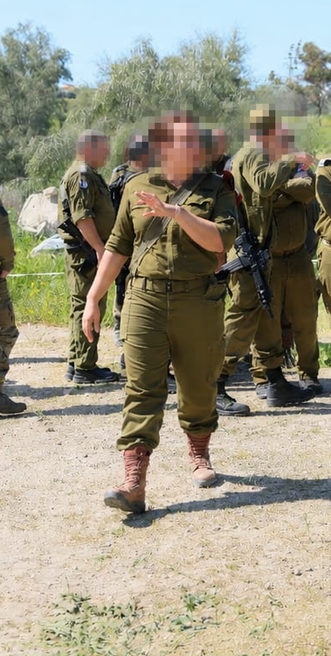
Lt. Col. Dr. P.
(Photo: IDF Spokesperson’s Unit)
Overseeing this complex effort is Lt. Col. Dr. P., a psychiatry specialist and the new division’s medical officer, who in her previous role managed the medical system of Division 252 during the fighting in Gaza. Now she is building an entire medical system from scratch.
“Evacuation capabilities in relation to the distances are an enormous challenge,” she admits. “We are in direct dialogue with the hospitals and working with four Magen David Adom districts and representatives of the residents in order to create one shared medical language.”
Here too, the most advanced medical capabilities will have to be moved to the front line in order to allow forces to function as independently as possible in the field.
“We have to invest heavily at the operational edge,” Dr. P. says. “We have military intensive care ambulances with advanced equipment, but we need to reach the soldier himself, who must know how to provide basic medical treatment, and the medic who is with him. The more we train them, the more ready they will be for the moment of truth. Every second counts. Whether it is doing better triage of the wounded or finding the better evacuation vehicle, every component in this chain matters.”
The ability to adapt and change is the name of the game as the corps prepares for the next campaign. The corps is now in the midst of advanced development and pilot programs involving large unmanned aircraft and robotic vehicles that will evacuate wounded soldiers and deliver medical equipment and fresh blood to forward points without risking human lives.
At the same time, efforts are underway to move from active monitoring that depends on a medic to continuous passive monitoring: tiny wearable AI-based sensors embedded in soldiers’ uniforms, transmitting vital signs in real time and able to predict in advance a deterioration in a wounded soldier’s condition.
“This is not a distant dream. The technologies are already here,” says Col. Dr. A. “We are adapting the method to the battlefield — constantly changing and learning.”
But behind the protocols and innovative technologies are always the people: the medics, paramedics and doctors who find themselves treating their comrades in arms while exposed to mortal danger themselves.
“Our caregivers today know how to provide the best and highest-quality treatment on the battlefield,” Col. Dr. A. concludes.
“They are fighting not only for the country, but also for their friends in the battalion and the company,” adds Dr. R. “That is why they are there.”