


We are facing an important decision, and all the reasons to go ahead with it are neatly lined up in our minds. The offer is good, the person across from us sounds convincing and everything adds up. Almost. Something still bothers us. We go over the details again, looking for the catch, but struggle to explain, even to ourselves, why we feel like getting up and walking away.
"Forget it," we tell someone who tries to understand. "I have a gut feeling."
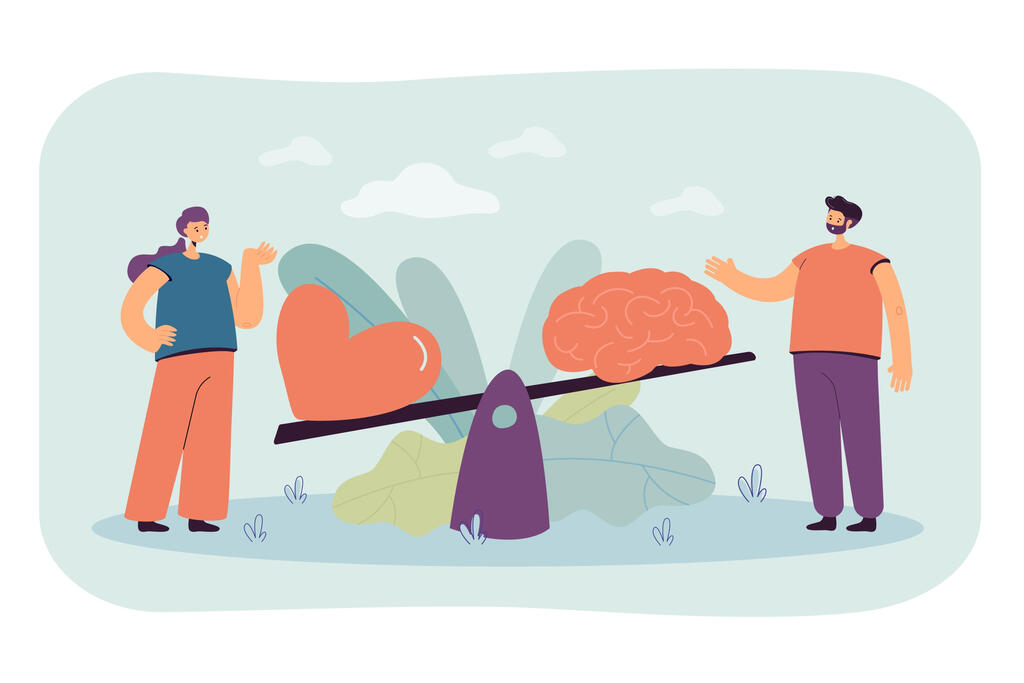
Four words that can be enough to turn everything upside down — cancel plans, reject opportunities or distance ourselves from people, even without a shred of evidence that anything is actually wrong. Sometimes we take pride in having listened to that feeling. Other times, we are left wondering what we gave up.
In Israel, we like to call it "listening to your gut," but gut feelings are a universal concept. In English, it's a "gut feeling," in German, Bauchgefühl, while in French and Spanish, people also speak of a premonition, a kind of knowledge that arrives before an explanation.
Researchers call it intuition: a judgment that emerges quickly, without our being able to explain how we arrived at it. The term sounds more scientific, but the mystery remains the same: What exactly are we picking up on in that moment, and how much can we trust a conclusion that comes without any supporting arguments?
"Our nervous system consists of more than just the brain. The body has about 135 billion nerve cells, approximately 90 billion of them in the brain," explains Dr. Liat Yakir, a biologist with a doctorate in genetics, lecturer and researcher specializing in the biology of emotions. In her view, even decisions that seem entirely rational are not made independently of what is happening in the body.
"Intuition, gut feelings, all these sensations are connected to the way our entire nervous system functions. Until the early 2000s, the assumption was that people made decisions and acted based on reason. Then research in behavioral economics showed that people do not always make rational decisions and are often influenced by emotions," she says.
Research challenging the image of humans as rational decision-makers began appearing as early as the 1970s, in the work of Daniel Kahneman and Amos Tversky of the Hebrew University of Jerusalem. They demonstrated that our choices are also influenced by biases and by the way options are presented to us. In 2002, Kahneman received the Nobel Prize for his contributions to the field.
Emotions at their peak
Perhaps we should first try to understand what an emotion actually is.
"A change in our state of consciousness following the release of chemicals and changes in the nervous system in response to signals from the environment," Yakir answers.
"Most of it happens without our awareness. The nervous system is constantly scanning the environment, looking for signals of threat and safety. Ninety-five percent of our communication is nonverbal. These signals can be sights, voices, facial expressions, sounds, what we like to call 'vibes' or 'energy,'" she explains.
To illustrate, she describes a familiar feeling that most of us can relate to.
"Many people say, 'I walk into a room and I don't know why, but I feel like leaving. There's something about the energy that doesn't feel right.' But these are actually sensations the body picks up. It's constantly scanning."
 Dr. Liat YakirPhoto: Anat Kazula
And scan it does. Sometimes even the slightest facial expression is enough to change the course of a conversation.
"Someone can tell you, 'I didn't say anything,' but their facial expression triggered a negative feeling of threat in you. The stress response is activated, you feel something tightening inside and you want to leave," Yakir says.
"Some people freeze and don't know what to say, others respond aggressively and some try to appease, comply or please."
"You meet someone and very quickly feel comfortable because they make you feel safe. Sometimes that person simply reminds us of someone or something familiar, and the body feels less threatened. For example, Israelis abroad feel more comfortable around other Israelis."
But why does the same look or passing remark leave one person unaffected while provoking an emotional storm in another?
"Everyone has triggers," Yakir says. "The same word will provoke different reactions in two different people because every nervous system has a memory. That's why even a conversation that seems innocent to one person can end in anger. The other person doesn't understand: What did I say? Why are they getting so upset? And the person who is upset can't explain it either."
It works in the opposite direction, too.
"You meet someone and very quickly feel comfortable, telling them personal things without understanding why, because they make you feel safe," Yakir says.
"If the system feels safe, it relaxes. Sometimes that person simply reminds us of someone or something familiar, and the body feels less threatened around someone familiar than around a complete stranger. For example, Israelis abroad feel more comfortable around other Israelis."

Sometimes people irritate us before they even speak
(Photo: Shutterstock/Mangkorn Danggura)
Only afterward do we begin to wonder why we trusted one person but felt the urge to avoid another.
"Most of this process is unconscious, and it may only become conscious afterward. I always say that we act from the gut first, and then the rational part — the brain, the frontal lobe — provides the logical justification for why we did what we did or acted the way we acted."
It starts from within
But if our gut, thoughts and emotions all work together, why do we give our gut all the credit?
For years, the intestines were assigned a rather unglamorous role: processing our lunch and letting us get on with our lives. In recent years, however, it has become clear just how incomplete that description is.
Researchers have found that the bacteria living in our intestines, collectively known as the gut microbiome, also affects the nervous system, and that the stomach and intestines communicate continuously with the brain through nerves and hormones. The relationship between the microbiome and anxiety and depression is also being studied.
But are these processes also involved in that moment when a stranger makes us uncomfortable before we've even had a proper conversation?
Here, Yakir points to something operating within the intestinal walls themselves: The intestines have their own nervous system.

We don't always have to follow the same patterns
(Photo: Shutterstock/Billion Photos)
"Five hundred million neurons innervate the intestines," she says, referring to the enteric nervous system, sometimes called the "gut brain" or the second brain. "That's an enormous number. It's comparable to the number of neurons in an octopus's brain."
But the system is far from perfect. Even when a gut feeling is wrong, it doesn't hesitate. It doesn't tell us whether it has detected a danger in the here and now or retrieved an old fear from memory. To understand why these two warnings feel so similar, we need to ask what the nervous system is trying to do for us.
"The purpose of the entire nervous system is to prevent us from experiencing pain so that we survive," Yakir says.
"Words like thriving, realizing our potential and self-fulfillment are our own inventions. The evolutionary force that created us, like every other animal, is geared toward avoiding danger. If you meet someone and they make a negative first impression, it takes six meetings to correct that impression. The brain is programmed to focus on the negative roughly three to six times more strongly."
"If we've experienced trauma, sometimes it's better not to listen to our intuition. In business or relationships, for example, the system will want to prevent me from experiencing pain again. I can tell myself: OK, I've experienced trauma, and that's why I'm trying to reject every person I meet."
And sometimes a new person starts a date at a disadvantage simply because someone we met before them left a negative impression.
"A woman who has been through failed relationships, who has been cheated on or abandoned, wants a relationship and is looking for one," Yakir explains.
"But on every date, her gut feeling will tell her why the man isn't right for her. It will always find a reason, in order to avoid pain."
In other cases, the fear begins before we've even had a chance to get hurt ourselves.
"It can also be trauma passed down from parents," Yakir continues. "For example, a father who had financial difficulties and went bankrupt. From an early age, the child hears at home, 'Doing business is dangerous.' The child hears about negative experiences the parents went through and passed on."
History repeats itself
The question, then, is how to prevent the past from vetoing the present without silencing a warning that might be worth heeding.
"If we've experienced trauma, sometimes it's better not to listen to our intuition," Yakir says.
"In business or relationships, for example, the system will want to prevent me from experiencing pain again. I can tell myself: OK, I've experienced trauma, and that's why I'm trying to reject every person I meet. But I also engage the rational part of my brain."
Our relationship with the past, however, is complicated. It doesn't always push us away. Sometimes it draws us right back to what has already hurt us.
"People often say, 'I keep repeating the same pattern,'" Yakir says. "That's also part of trauma, a concept called 'trauma bonding.' The system often seeks out what is familiar, which means we may return to negative experiences we've already had. A new experience, on the other hand, is unfamiliar."
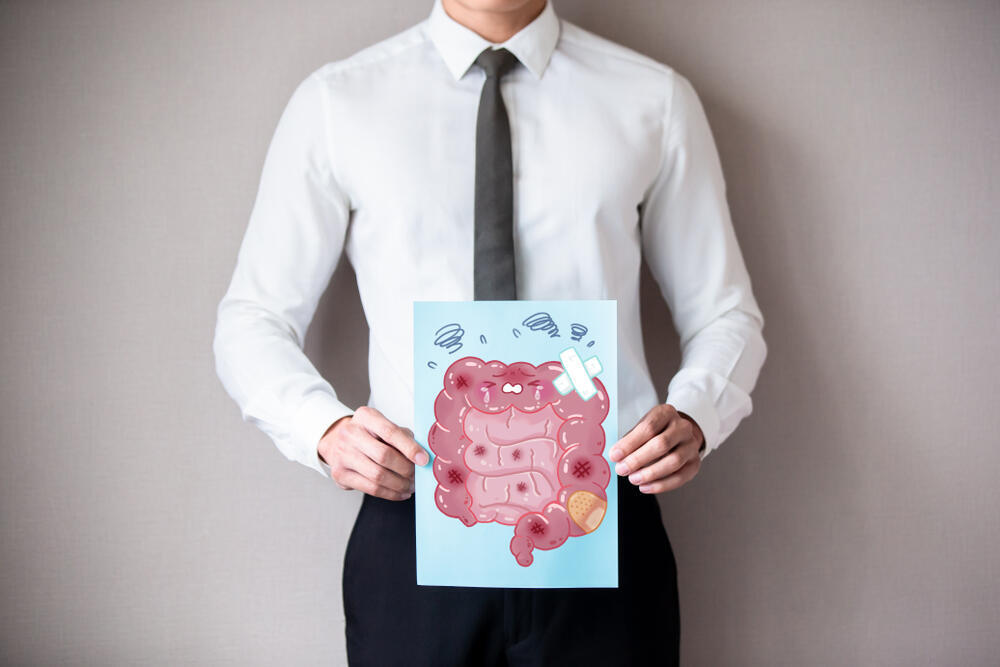
What is your gut telling you?
(Photo: Shutterstock/aslysun)
To avoid becoming trapped in cycles of repeating old patterns or avoiding decisions altogether, Yakir emphasizes the importance of processing the experiences that created those patterns.
"Ideally, we need to process these negative emotional experiences. Only then can we reach an internal balance in which the system no longer unconsciously perceives everything as a threat. Without processing the cellular memory of trauma in the body, the gut brain, the emotional brain and the rational part of the brain, we can't expect to make good decisions."
Still, she stresses that the past does not have to determine our future.
"No matter what we've been through in life, we have the ability to understand our actions, behaviors and decisions. We are the only creatures with the free will to ask: Where is this coming from? If we engage that part of ourselves, we don't have to keep operating according to unconscious patterns.
"It's important to ask: Why do I think this way? Why do I act this way? That's the question we need to ask ourselves to begin understanding how we make decisions. How do I make a decision, what do I base it on, which feelings come from the past and which belong to the present?"
It's a question worth asking even when a gut feeling seems especially convincing, before allowing it to have the final say.
Alongside that self-examination, Yakir suggests paying attention to the conditions under which we are required to make decisions.
"My most important tip for decision-making is to reduce stress," she emphasizes.
"When stress levels are high, we make the worst possible decisions because cortisol shuts down the rational part of the brain. Anyone who thinks people function well under pressure doesn't know what they're talking about. Pressure and chronic stress impair decision-making."
When a decision can be postponed, she recommends first "reducing stress levels so that the system can function in a properly balanced and calm state."