


In 2008, Prof. Ofer Yizhar was a young researcher who had just completed his doctorate. Standing at a crossroads in his career, he was trying to decide where to continue his scientific journey. A paper he had read several years earlier drew him toward a small, relatively new laboratory at Stanford University, led by a brilliant young scientist named Karl Deisseroth.
The researchers there had developed something that captured his imagination: a way to activate nerve cells using light. "It blew my mind," Yizhar recalled. "There were several other papers along those lines at the time, but none of the methods seemed as elegant and simple as the one they had developed. Going there felt a little like taking a gamble."
The announcement ceremony for the 2026 Nobel Prize in Physiology or Medicine winners


It was a gamble that paid off. This week, Deisseroth was awarded the 2026 Nobel Prize in Physiology or Medicine, alongside Peter Hegemann and Georg Nagel, for discoveries that led to the development of optogenetics, a technology that has transformed scientists' ability to investigate the brain.
For Yizhar, now a professor in the Department of Brain Sciences at the Weizmann Institute of Science, the announcement brought back memories of the years when he was among the young researchers helping develop the field's scientific tools, and of the moments when that early gamble began to reveal itself as a revolution in neuroscience.
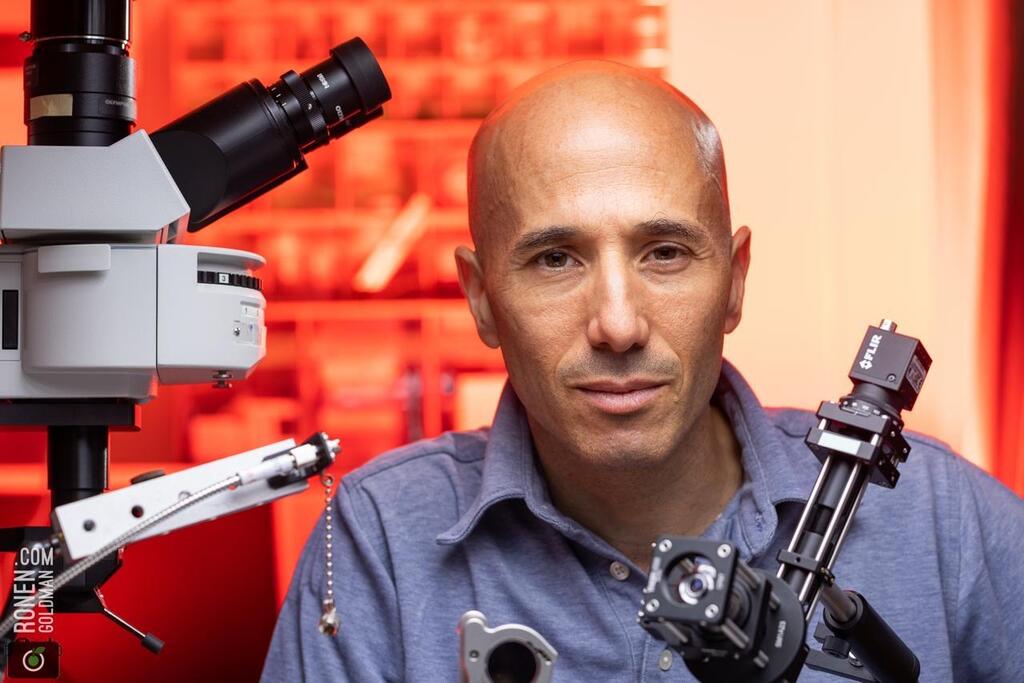
The man behind the revolution
"Usually, people look for a postdoctoral position with someone famous, maybe a Nobel Prize winner. I went to someone who was still quite young. It wasn't a big, well-known laboratory," Yizhar said. "I went there to learn the technique and also to try to develop new tools that would help us understand the brain better."
When he joined the laboratory in early January 2008, it had been operating for just four years. The research team was small, but Yizhar remembers an atmosphere of extraordinary talent and excitement. "There were really excellent people there, each outstanding in their field. There was a lot of teamwork and a lot of excitement about what we were doing."
Not everyone, however, was convinced that the technology would deliver on its promise. "Other people were saying, 'Listen, it's not clear that this will work in a living brain. It's fine that it works in neurons growing in a dish inside an incubator, but inside the brain is something else entirely.'"
The answer came surprisingly quickly. "Within just a few months of my arrival, it was clear that it worked and that the potential was enormous."
What was your relationship with Deisseroth like?
"Very professional. But because he very quickly became something of a rock star in neuroscience, we didn't see him all that much. He was constantly traveling, giving lectures and attending conferences.
"Despite all that, he was incredibly involved in the details. He cared very deeply about how things were done and how everything was progressing.
"We had meetings with the entire group and smaller team meetings, so it was easy to keep him updated about what was happening. And all of this was happening while he was also seeing psychiatric patients at a hospital one day a week. I was always amazed by what he was capable of doing.
"I would get messages from him at three in the morning: 'Listen, I've read these papers, and we could do this or that, and maybe this could be an interesting direction.'
"He was deeply involved in the details of the research. He really is an exceptionally impressive person. "He was only three years older than me. I had just finished my doctorate and started my postdoc, and he had already completed a PhD, medical school and established his own laboratory."
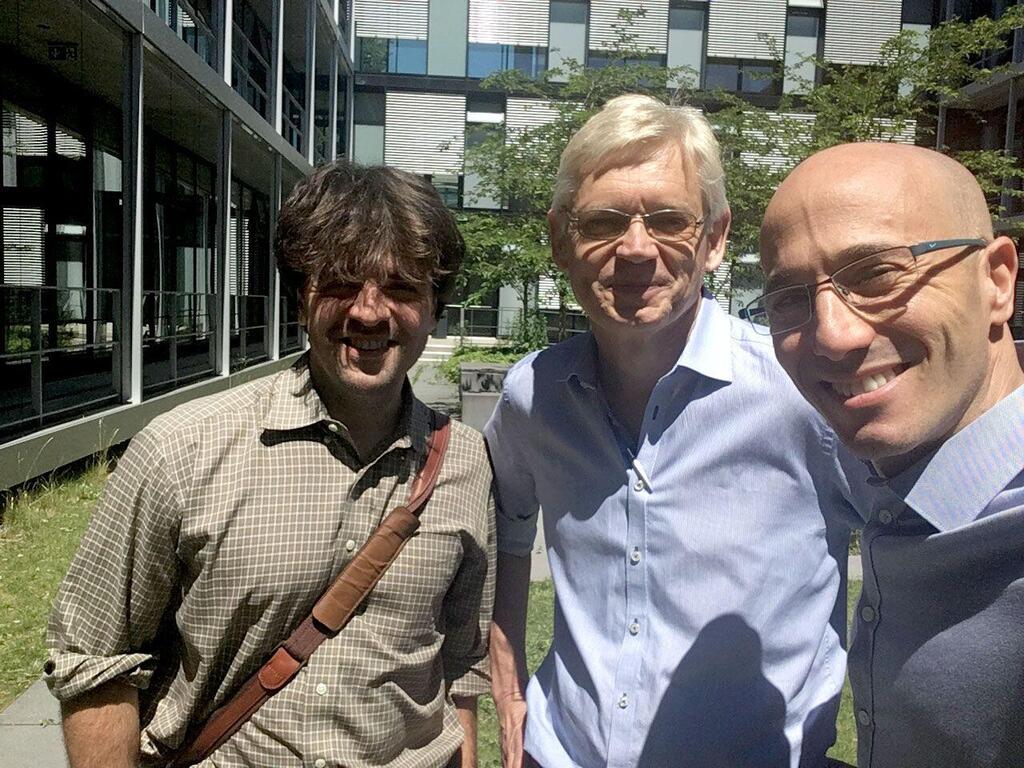
From right to left: Prof. Ofer Yizhar with Nobel Prize in Medicine laureates Prof. Peter Hegemann and Prof. Karl Deisseroth
(Photo: Courtesy)
Is there a particular moment from working with him that stands out?
"At the time, I had become the person developing tools for the laboratory. There was one moment when I was running an experiment with a new tool we had developed, and we weren't sure whether it would work.
"I was doing an electrophysiological recording, and I got incredibly excited. I immediately ran to his office with the paper on which I'd printed the result.
"I burst into his room and put it on his desk. He looked at it and said, 'Amazing, we're writing a paper.'
"That became the paper I brought with me to the Weizmann Institute, and it was the starting point for my independent research career there. The training I received in his laboratory enabled me to continue developing these tools in our own lab at Weizmann."
Have you had a chance to congratulate him?
"Of course. I wrote to him immediately when I heard the news. That same day, I also received an email from his assistant asking whether I could join a Zoom call.
"His entire current laboratory was there, along with various people from the past who joined spontaneously for a celebratory gathering."
Untangling the brain's billions of neurons
Behind optogenetics lies one of science's greatest challenges: understanding how a network of billions of cells enables us to think, remember, feel and move. The human brain contains an estimated 86 billion neurons, nerve cells that communicate with one another.
Within this extraordinarily dense system, neuroscientists are trying to decipher the division of labor: which cells participate in particular activities and how their behavior influences what we do and experience.
For decades, researchers tried to answer these questions using techniques including electrical stimulation and substances that alter neural activity.
These methods produced a vast amount of knowledge, but they shared a major limitation: the difficulty of selecting a particular group of cells within the network, activating or silencing only those cells, and doing so at precisely the right moment.
Optogenetics changed that by combining the ability to target specific cells with rapid control over their activity.
An accompanying video illustrates another way of observing neural activity: nerve cells producing a fluorescent protein called GCaMP. Changes in the intensity of its fluorescence allow researchers to see when neurons are active and track their activity.
Neurons producing a fluorescent protein called GCaM
"I think perhaps the best way to illustrate the problem is to imagine a huge tangle of cables, where you have no idea what's connected to what," Yizhar said.
"If you look at a piece of brain tissue under a microscope, that's more or less what you'll see. Everything is connected to everything else, an enormous jumble that's very difficult to untangle and understand the role of each component in the system. Evolution didn't bother to arrange it in an orderly way."
Optogenetics gives scientists a way to bring order to that apparent chaos. "It allows us to control the activity of specific groups of neurons within that mess, based on the neurons' genetic characteristics," he explained.
Researchers can, for example, distinguish between neurons that release dopamine and those that release glutamate or GABA, chemical messengers known as neurotransmitters that enable nerve cells to communicate. The technology works by using genetic tools to cause selected cells to produce a protein that responds to light.
Yizhar compares the process of building these tools to assembling Lego. "You take a tool that can activate or silence a cell, or change its function in different ways in response to light. Then you attach a genetic component called a promoter, which determines which neurons the tool will act on. "You can build this Lego system relatively easily and create an engineered virus."
The virus serves as a vehicle for delivering the genetic instructions to the targeted cells. Researchers can then illuminate the tissue, causing only the cells equipped with the light-sensitive tool to respond. This makes it possible to investigate exactly what those cells do. "When you shine light on them, you can conduct an experiment and ask what changes in behavior when you activate or stop the activity of those very specific neurons."
From understanding the brain to treating patients
The Nobel announcement came after years in which optogenetics had already fundamentally changed neuroscience. "We've been expecting a Nobel Prize for optogenetics for a long time," Yizhar said. "There aren't many revolutions like this in science.
"From around 2008, when we understood that this worked in a living brain, it was clear that it was changing the way we do neurobiology, the way we investigate the brain. And when something like that happens, there's a very good chance it will receive a Nobel Prize."

One potential application of optogenetics is restoring partial vision to patients with retinitis pigmentosa, a degenerative disease of the retina
(Photo: shutterstock)
Why do you think the recognition came specifically now? "That's a question for the prize committee," he emphasized. Still, he offered a cautious possibility: beyond its impact on basic research, the technology is beginning to demonstrate its potential to improve patients' lives. "It could be connected to the fact that there are now medical treatments using the technology," he said.
"I think there was a certain expectation that once optogenetics became something that contributed to human health, that would justify giving it the prize."
One example involves one of our most fundamental senses: sight. Researchers are investigating whether optogenetics can restore some vision to people with retinitis pigmentosa, a degenerative disease of the retina. "These patients lose their vision because they lose the light-sensitive neurons in the retina," Yizhar explained.
Those cells, called photoreceptors, normally detect incoming light. In retinitis pigmentosa, they progressively degenerate and die. The experimental treatment focuses on other cells that remain in the retina: retinal ganglion cells, which transmit nerve signals toward the brain.
"By injecting an engineered virus containing a promoter that is active in ganglion cells, we make those cells sensitive to light, which they aren't naturally," he explained.
The same technology that allows scientists to select neurons in the brain and alter their activity can therefore give surviving retinal cells an entirely new capability. The ganglion cells remain ganglion cells, but they become sensitive to light, potentially allowing the retina to respond to visual signals even after its original photoreceptors have been lost.
Clinical studies have already demonstrated partial restoration of visual function using this approach. According to Yizhar, several dozen patients have so far received optogenetic treatments, with varying degrees of success. "Some patients have regained quite significant vision," he said.
The treatments remain experimental, but they offer an example of how a technology originally designed to answer basic scientific questions might eventually help patients.
Not just switching neurons on, but turning them off
There have also been exciting developments in Yizhar's own research. Nearly two decades after arriving at Stanford to learn how light could control nerve cells, he continues to develop tools for understanding the brain.
At his Weizmann laboratory, one of the central challenges is no longer how to activate neurons, but how to silence them. That may sound like a minor distinction, but within optogenetics it is a particularly complex problem, with potential implications for treating a range of neurological conditions. "From 2005, activating neurons was relatively simple. It worked wonderfully. All you needed was to deliver short pulses of light," Yizhar explained.
"But when you want to silence neurons, you don't know when they're going to become active. You need to keep them silenced continuously to prevent activity, and that process is more complicated."
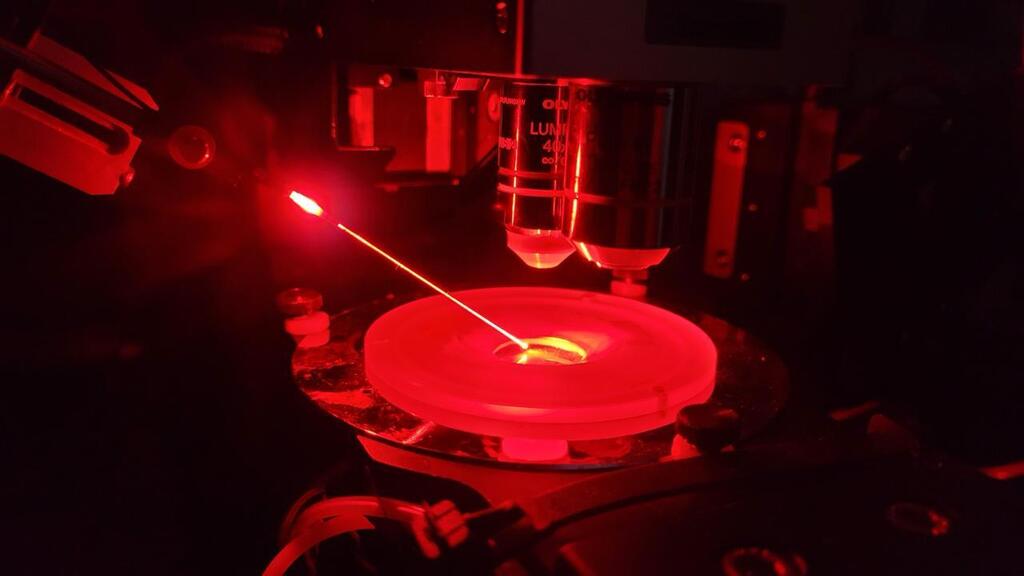
A system for measuring neuronal activity that also allows illumination with different colors of light, from Prof. Yizhar's laboratory
There is also a potential physical cost: intense light directed into biological tissue can heat it and cause damage. One of the challenges, therefore, has been to develop tools capable of silencing neurons while using very little light.
"For years, we worked on tools that make it possible to silence neurons at very low light intensities," he said. "Today, we have tools that allow very effective silencing with a minimal amount of light."
This capability is valuable to scientists trying to understand the roles of specific cells and pathways in the brain. But Yizhar also sees medical potential in suppressing cells whose excessive activity contributes to disease.
Epilepsy is one example. A small region of the brain can generate abnormal electrical activity that spreads and develops into a seizure. "An epileptic focus can be a very small area of the brain, but it produces excessive activity that can turn into a seizure involving the entire brain," Yizhar explained. "If you can reach that area and silence it when the seizure begins, you can prevent the seizure."
Another possible application is neuropathic pain, which results from injury or disease affecting the nervous system. "This is a condition in which excessive activity by nerve cells transmitting pain signals contributes to the sensation," he said. "If you silence those cells, you can provide treatment for people." He hopes that such approaches could eventually help patients whose symptoms are not adequately controlled by existing treatments.

Hope for patients suffering from neuropathic pain
(Photo: shutterstock)
Yizhar also mentioned tremors and Parkinson's disease as areas in which precise control of neural activity might prove beneficial. These remain potential treatment directions rather than established therapies. The underlying idea is to identify the cells and neural circuits responsible for a symptom, then selectively reduce abnormal activity at its source.
How is a thought born?
Beyond the medical possibilities lies an even bigger question. Having learned how to manipulate the activity of nerve cells, Yizhar is also interested in understanding how that activity becomes thought, memory or action.
Despite decades of research, scientists still have only a limited understanding of how the brain generates these abilities. "I think perhaps the holy grail of brain research is understanding how the codes produced by neuronal activity give rise to cognition, thinking and the formation of memories," he said.
"These are things we still understand only at a very basic level, even though we've been studying the brain for decades."
Optogenetics allows researchers to approach this question by deliberately altering neural activity and observing the consequences. "This technique opened the door to asking questions about how the brain functions," Yizhar explained. "Now we can ask about the patterns of activity the brain produces and how they are translated into thought or action.
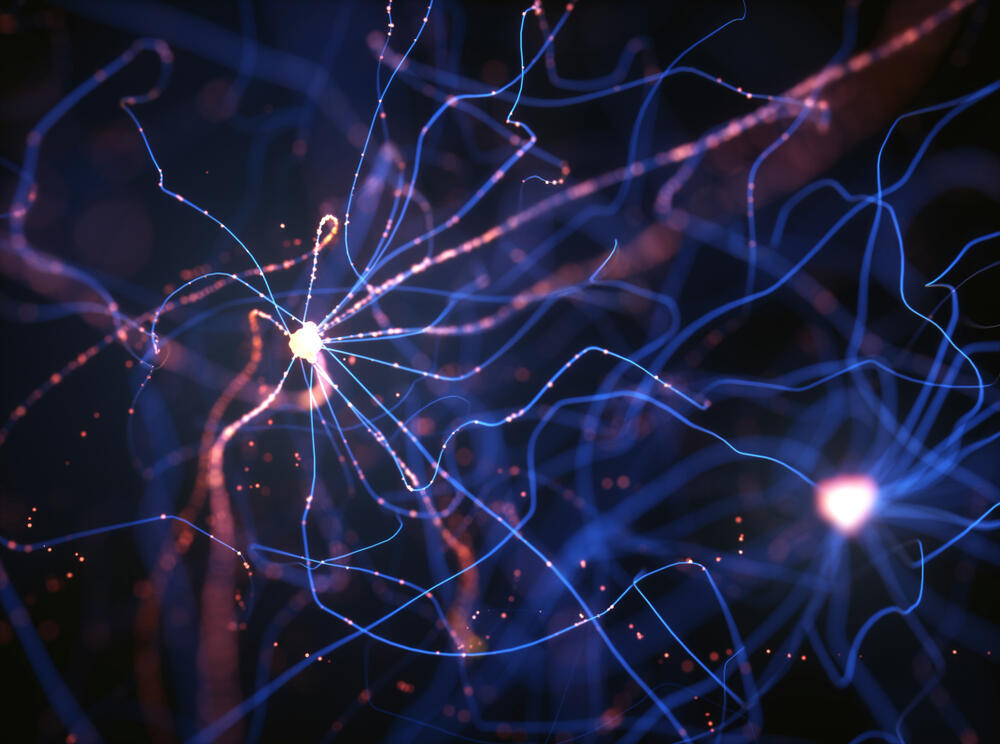
A network of neurons, like a tangle of cables
(Photo: shutterstock)
"At the level of basic research, the goal really is to understand the algorithm through which the brain generates thought and action." Such knowledge could also have profound consequences for people whose cognitive or neurological functions are impaired.
Yizhar pointed to the gap between the vast range of brain disorders and medicine's limited ability to treat many of them effectively. "We have very poor solutions for these diseases, both pain disorders, as we discussed, and various psychiatric illnesses," he said.
"It's clear that we first need to understand the mechanisms of how the brain does things in order to understand what happens when it doesn't do them properly, or when its abilities are impaired."
In that sense, the importance of optogenetics lies not only in the discoveries it has already enabled, but also in the entirely new questions scientists can now investigate. "That's one of the reasons the technique became so popular," Yizhar said. "It allows us to ask questions about the brain in ways that simply weren't possible before it existed."
From one laboratory to a worldwide revolution
Yet perhaps none of this would have happened without the curiosity of scientists willing to look beyond their own disciplines and consider what neuroscience might learn from researchers studying bacteria and algae.
For Yizhar, that openness is one of the most important lessons of the entire story. "We tend to think of these prizes as rewards for extraordinary genius, or for a scientist sitting alone in a room who suddenly has a moment of discovery," he said. "That does happen sometimes, but in many cases, and I think this is one of them, it's the result of scientists from very different fields working together."
The path toward controlling neurons with light began with research into tiny organisms that respond to illumination.
Important contributions came from Peter Hegemann, a biochemist and biophysicist at Humboldt University of Berlin, and Georg Nagel, who studied molecular plant physiology and biophysics at the University of Würzburg.
The discoveries they helped make about light-sensitive proteins provided the foundation for the technology subsequently developed for neuroscience. "It's not a particularly typical combination, and I think it says something about what makes this invention so unique," Yizhar said.
"It was only possible because neuroscientists listened to a field that was very different from their own and found something there that could be useful. They developed the ability to communicate across disciplines, and that's where the breakthrough came from."
Too often, he argued, scientists remain focused on their own narrow areas of expertise. "Many times, as scientists, we're so busy with our own little square centimeter that we don't look outside at fields beyond our expertise.
"This is a beautiful example of how basic research in microbiology, work that began in the 1970s on bacteria and algae that respond to light, led to a breakthrough in a field that seemingly had nothing to do with it."

From left to right: Denise Cai (Mount Sinai, New York), Steve Ramirez (Boston University), Ofer Yizhar (Weizmann Institute), Bianca Jones Marlin (Columbia University) and Nobel laureate Karl Deisseroth (Stanford University)
(Photo: X)
That spirit of openness continued after the experiments succeeded. At Stanford, the newly developed optogenetic tools were quickly shared with researchers elsewhere.
Yizhar remembers the decision particularly well because, in the competitive world of scientific research, a new discovery can represent a valuable advantage that researchers are reluctant to surrender. "Karl and his group, and I witnessed this myself, were extremely open and willing to give away every new tool developed in the laboratory, without asking questions," he said.
"Very often, people keep discoveries close to their chest and try to ride the wave, publishing another paper before everyone else can use the technology.
"What made Karl different was that he distributed these tools to anyone who wanted them."
That openness helped accelerate the field's development. "Very quickly, papers began appearing showing that the technology worked in other people's hands, not just his own," Yizhar said. "That helped convince the world that this really was useful and worth trying. It's an approach called open science, which I strongly support."
Is that something you practice yourself?
"Absolutely. I'm a firm believer in that approach, and I learned it from Karl. I think it's the right way to do science."