


When Dr. Tal Friedman-Koren arrived in Boston, Massachusetts, for a specialized fellowship in women’s neurology, she was not simply pursuing another medical subspecialty — she was entering a new and largely uncharted scientific arena. Few had even considered the possibility of gender bias in medicine, certainly not in neurology. But, as she is quick to explain with visible enthusiasm, that assumption was mistaken.
In a single conversation, it becomes clear that Alzheimer’s disease does not develop the same way in women and men, that stroke in women does not always look like what medical textbooks have taught, and that migraines — yes, the condition that disrupts the lives of millions worldwide — are experienced differently by each sex. Even epilepsy and multiple sclerosis, she says, must be reexamined through the lens of women’s unique biology.
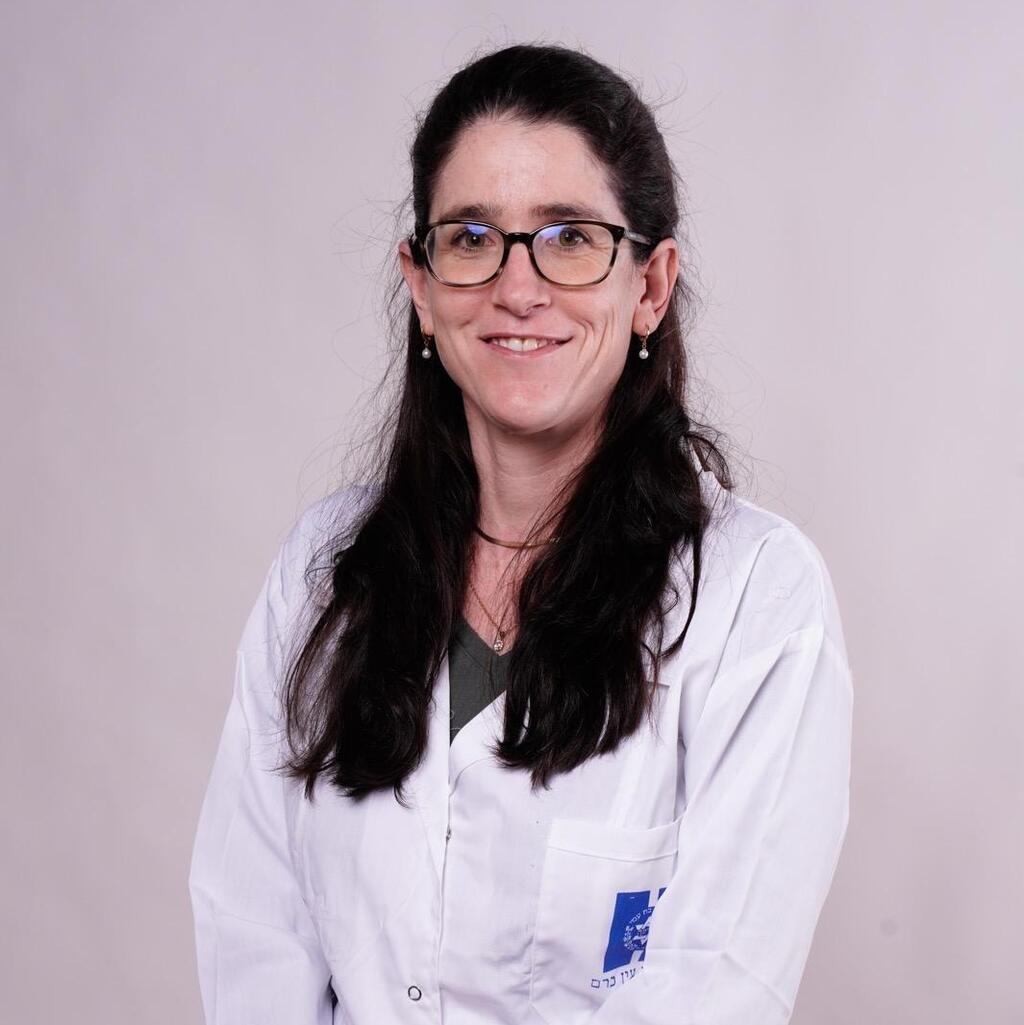
“I’ve been here since last June, at a hospital called Mass General Brigham, which is affiliated with Harvard Medical School,” Friedman-Koren, a married mother of three, says in a Thursday afternoon interview, as Israel experiences a brief lull in sirens. “I came here for a year. My mentor, Dr. Maria K. Houtchens, is Jewish and a strong supporter of Israel. With the support of the Blavatnik family, who provided the funding, they secured four years of fellowships exclusively for Israelis, with the goal of advancing the field in Israel,” she adds, careful to credit her mentor.
For Friedman-Koren, neurology is not just a profession but a family story. In other words, it was almost inevitable. “Both my mother and my aunt are neurologists, so it’s like it passed through the placenta,” she says with a laugh. She completed her residency at Hadassah Medical Center, which also funded part of her time in the United States, and went on to a fellowship in neuroimmunology — inflammatory diseases of the nervous system — in Israel.
“Beyond the family story that influenced my choice, the brain is the most important organ in the body and also the most fascinating,” she says. “So far, it’s also the one we understand the least.”
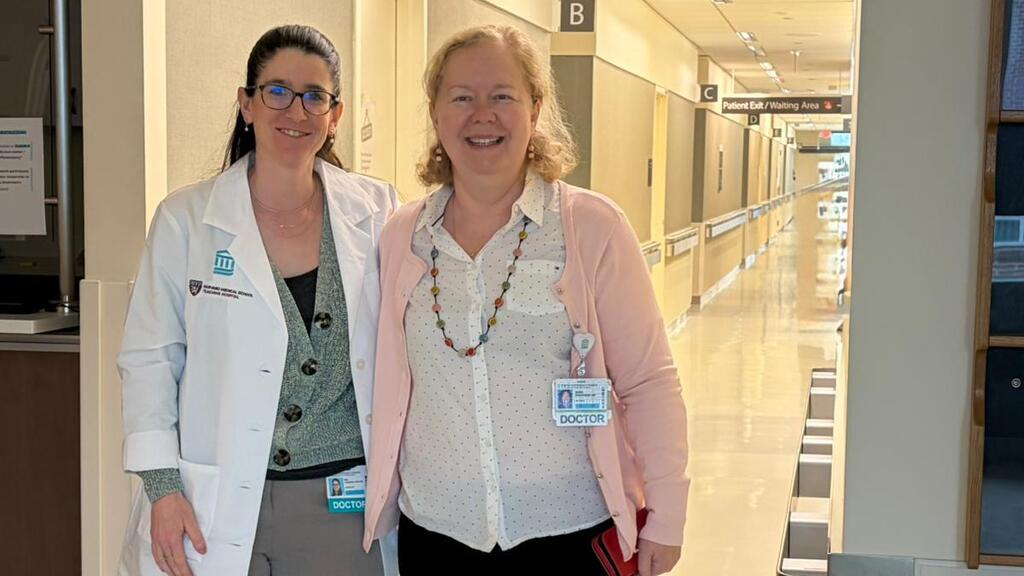
Dr. Tal Friedman-Koren and her mentor, Dr. Maria K. Houtchens
What does that mean? “There are things we can explain well at the level of the neuron — movement or simple sensations like touch or pain — very basic things. But there are things we can’t explain at all: behaviors, emotions, desires. You have biology and neurology that explain the foundation, and psychology or psychiatry that describe behavior at a complex level, but everything in between — we don’t know. Those are fascinating questions. There’s still so much to learn and research.”
When men are the standard — and women the exception
As the field deepens, it becomes clear that the issue goes far beyond isolated differences. Only now, as data accumulates and gaps are exposed, is it becoming evident how even the most basic definitions — what is considered “typical,” and what a disease looks like — have not been as neutral as once assumed.
“In medical school, we were always taught to think in terms of ‘typical’ versus ‘atypical’ — the classic symptoms versus those considered less representative,” Friedman-Koren says. “But as science advances, we’re increasingly realizing that what we define as ‘typical’ symptoms are often based on men, while women’s symptoms are labeled ‘atypical.’”
She cites heart attacks as a classic example. “We know they present differently in women, with symptoms like back pain, compared to men. It took a long time to recognize this. Initially, it was seen as atypical or unusual. Today we understand that this is actually the normal presentation in women, and only by recognizing that can we diagnose it in time and provide optimal treatment.”

Alzheimer's. Women are diagnosed later
(Photo: Shutterstock)
This may sound theoretical, but it can be the difference between life and death. “It’s incredible how different it is, and how many women have been saved simply because doctors — and patients — now know to recognize it,” she says. “Again and again you hear stories of women being told nothing is wrong, that it’s in their head, that they’re imagining it, that they’re hysterical. For years it was treated that way, until we realized the presentation is different and that complaints must be taken seriously. Women receive better care today than in the past. There is still room for improvement, but it’s better.”
This understanding has given rise to a new and emerging field: women’s neurology. “This field is only just developing,” she says. “There are very few physicians worldwide, and only two centers that offer formal training. As we deepen our understanding, we’re realizing that almost all neurological diseases behave somewhat differently in men and women — in their presentation, progression and response to treatment. Everything is different.”

Migraines
(Photo: Shutterstock)
One of the most striking examples — and perhaps the most concerning — comes from Alzheimer’s disease. “Demographically, it affects far more women — nearly 70% of patients are women,” she notes. “What’s interesting is the paradox: women are affected more, but they are diagnosed later than men.”
Why? “Women generally have better verbal memory than men. They can remember details and stories more effectively, so in the early stages they compensate better for deficits, and diagnosis is delayed. That’s a problem because we now have treatments that are more effective the earlier they are given — and we consistently identify women later than men.”

Dr. Tal Friedman-Koren is undergoing unique training in women's neurology in Boston
The gap does not end with diagnosis. It extends into research and treatment. “The number of women included in studies has not reflected the actual prevalence of the disease. There were fewer women in trials relative to how common the disease is among them, and differences in treatment response between men and women were not thoroughly examined,” she says.
“Now, as treatments are used in the real world, we’re seeing differences in how men and women respond. This needs further investigation.” She points to the ApoE4 gene, a known risk factor for Alzheimer’s. “Women are more sensitive. For women, one copy is enough to significantly increase risk, whereas men typically need two copies.”
These disparities are also evident in acute conditions such as stroke. “It’s very similar to heart attacks. Women arrive at the hospital about 20 minutes later than men,” she says. “It may not sound like much, but in stroke care, where the treatment window is about four and a half hours, those 20 minutes are critical.”
The reason is again tied to symptom presentation. “Men tend to present with classic symptoms — speech difficulties, weakness in an arm or leg, sensory deficits. In women, symptoms may be less clear: confusion, headaches — things that are less typical. So it takes longer for them to call emergency services and reach the hospital. But interestingly, once they receive treatment, they respond just as well as men. If we diagnose them in time, outcomes are just as good.”
Science advances — but guidelines lag behind
Migraines offer another clear example. “Migraine is extremely common. It affects women far more than men, and despite being dismissed as ‘just a headache,’ it has significant consequences,” Friedman-Koren says. “It is the second leading cause of disability overall, and the leading cause of disability among young women.”

Women who experience migraines during pregnancy now have more medication options
(Photo: Shutterstock)
Beyond prevalence, migraines behave differently in women. “Women are more likely to develop chronic migraines, and their characteristics change across life stages,” she explains. “Hormones play a major role, so we see variations throughout reproductive years, and changes before and after menopause.”
This hormonal complexity has not always been reflected in treatment guidelines. She cites triptans, a class of migraine medications introduced in the 1990s. “They revolutionized migraine treatment. But pregnant women were advised not to use them due to a lack of data. Animal studies used extremely high doses — far beyond what is given to humans — and based on that, warnings remained.”
“Over time, real-world data accumulated. Women became pregnant and continued taking triptans unknowingly. We now have nearly 30 years of data showing they are very safe,” she says. A large Norwegian study of 26,000 pregnancies found no developmental issues in children exposed to the drug. “Yet the FDA still says ‘at the physician’s discretion.’ They don’t take responsibility, and women are left to suffer.”
Multiple sclerosis. Today we know that the disease can be managed well even during pregnancy
(Photo: Shutterstock)
Epilepsy presents a similar challenge. “Both the disease and its treatments are influenced by hormones,” she says. “During pregnancy, seizure patterns and drug metabolism change. Most neurologists are aware of the need for careful monitoring during pregnancy, but fewer recognize that similar changes occur during perimenopause, when hormones fluctuate. Around 60% of women with epilepsy experience worsening symptoms during this period, and we don’t always ask the right questions.”
Multiple sclerosis, however, illustrates how progress can improve care. “For years, women with MS were advised not to become pregnant,” she says. “The disease tends to be quieter during pregnancy but flares up afterward. Today, with newer medications — some of which are safe during pregnancy — we can manage both the disease and pregnancy effectively.”
A growing gap in care
As understanding of sex-based differences deepens, Friedman-Koren warns of a growing systemic challenge: a shortage of neurologists in Israel. “Despite significant advances in neurology, the reality is complex. There is a shortage of specialists, leading to heavy workloads, long waiting times and difficulty providing optimal care,” she says.
“With the growing recognition of differences between men and women in brain diseases, another layer of complexity is added. Tailoring treatment requires time, knowledge and resources. This highlights the need for greater investment in manpower and infrastructure, to ensure more advanced, precise and accessible neurological care.”
First published: 14:05, 04.20.26